By Construction Dive Reporting Desk Published October 1, 2026
Executive Summary: Main Facts
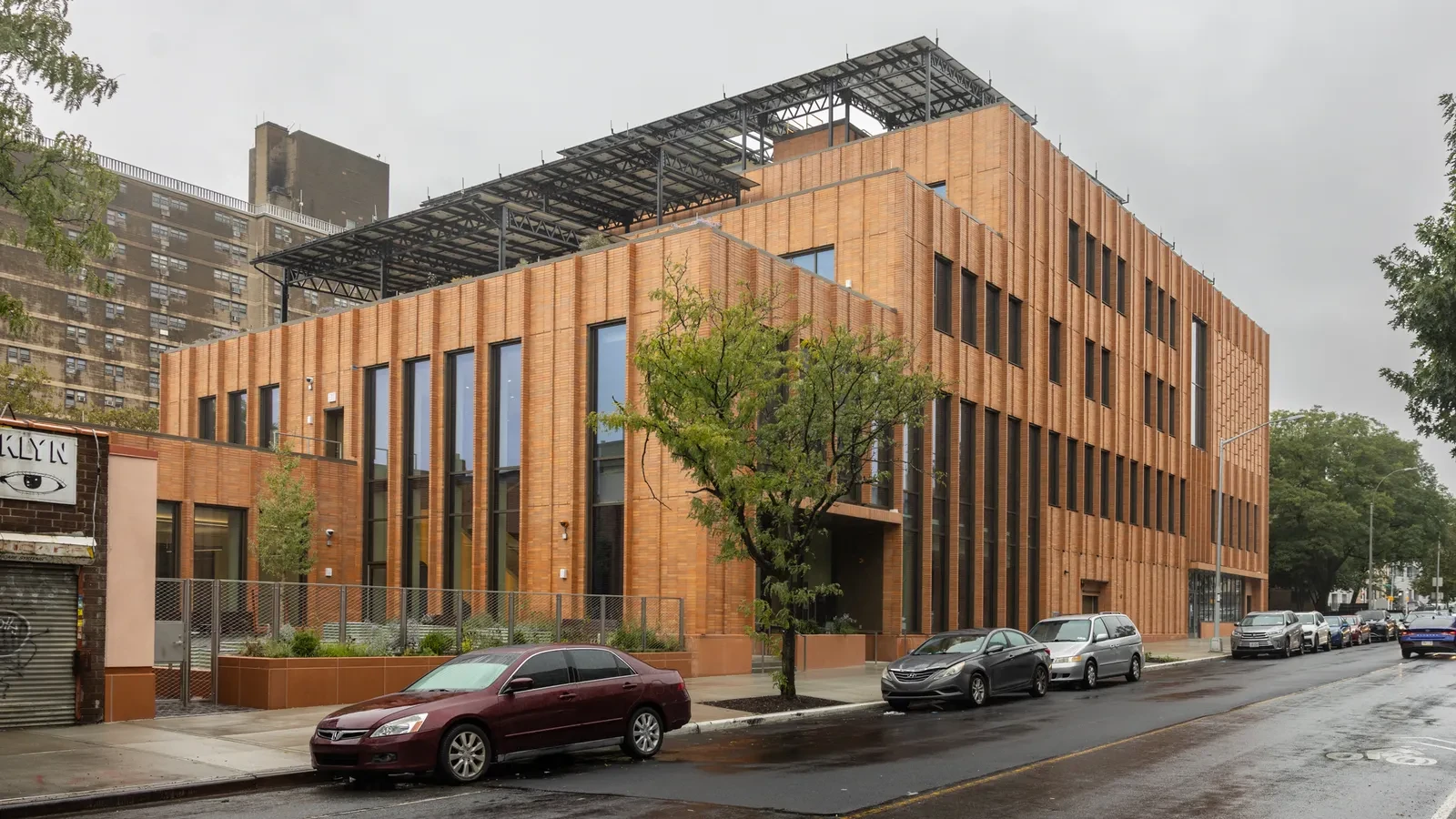
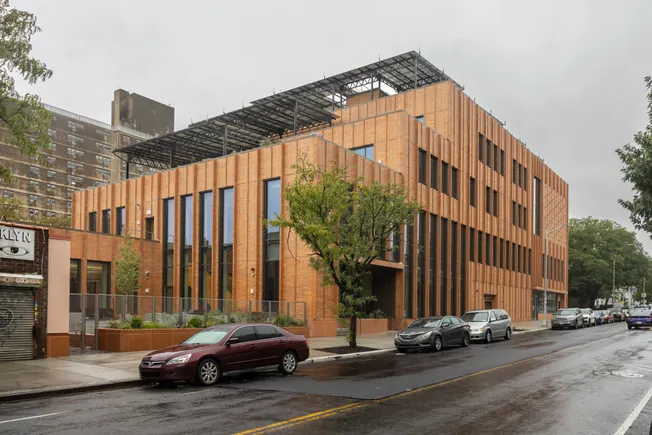
In a landmark achievement for municipal infrastructure development, New York City officials and construction leaders announced the completion of the newly rebuilt Brownsville Multi-Service Center in Brooklyn. Delivered by a project team led by Providence, Rhode Island-based Gilbane Building Company and New York City-based architecture firm Marvel, the facility stands as a shining example of modern project delivery.
The project was completed $10 million under budget and an astounding two years ahead of schedule.
The state-of-the-art, all-electric community hub features:
10 modern office spaces designed to accommodate local administrative and non-profit services.
Three combinable conference rooms equipped with advanced audio-visual capabilities for public and private gatherings.
A fully-equipped commercial kitchen to support community culinary programs, training, and food-security initiatives.
A 1,600-square-foot outdoor community garden, serving as an accessible green space for local flora cultivation and neighborhood engagement.
Extensive green roofs that aid in stormwater management and urban heat-island mitigation.
Integrated public artwork, celebrating the rich cultural history and creative spirit of the Brownsville neighborhood.
According to municipal leaders, this triumph was made possible entirely by the strategic use of the design-build delivery method—a procurement process that continues to redefine how public infrastructure is built across the five boroughs.
A Modern Blueprint: The Chronology of Development
The journey of the Brownsville Multi-Service Center from an aging municipal facility to a cutting-edge, sustainable urban landmark illustrates the transformative power of alternative project delivery methods in the public sector.
Phase 1: Procurement and Pre-Planning
Historically, public construction projects in New York City have suffered from the traditional "design-bid-build" model, where a project is designed by one entity, bid out to a separate contractor, and built in sequential steps. This approach frequently leads to friction, finger-pointing, change orders, delays, and budget overruns.
Recognizing the need for a more streamlined approach, the New York City Department of Design and Construction (DDC) opted for a two-step procurement process utilizing design-build. This framework allowed the city to vet and select the construction team—anchored by Gilbane and Marvel—much earlier in the lifecycle.
Phase 2: Overlapping Workstreams and Fast-Tracking
By integrating design and construction services under a single contract, the project team was able to eliminate bureaucratic delays. Jade Bailey, the assistant commissioner for alternative delivery at the DDC, noted that the two-step procurement allowed the agency to bring Gilbane up to speed rapidly and front-load critical phases of the project.
Most notably, the team employed a concurrent engineering and demolition strategy. While the designers were still finalizing interior and structural details for the new facility, construction crews were actively executing the demolition of the previous, outdated structure on the site. This simultaneous execution of demolition and design saved the project months of calendar time and millions of dollars in overhead costs.
Phase 3: Construction and Sustainable Execution
Once site clearance was complete, vertical construction moved at a rapid pace. Because Gilbane and Marvel collaborated intimately from day one, design decisions were continuously filtered through the lens of construction feasibility, supply chain realities, and scheduling milestones.
The project progressed smoothly through framing, envelope enclosure, MEP (mechanical, electrical, and plumbing) rough-ins, and interior fit-outs. By avoiding the typical adversarial relationships found in traditional builds, the project team resolved potential roadblocks collaboratively, driving the timeline forward until the facility reached substantial completion a full 24 months ahead of its original baseline schedule.
Supporting Data and Technical Specifications
The Brownsville Multi-Service Center is not just an administrative victory; it is a technical marvel engineered to meet the highest standards of modern architecture and environmental stewardship.
Financial and Timeline Metrics
Budget Variance: Completed $10 million under the allocated municipal budget.
Schedule Variance: Completed two years (24 months) ahead of schedule.
Procurement Type: Two-step design-build delivery.
Sustainable Infrastructure and Clean Construction
The facility represents the literal culmination of New York City’s aggressive clean construction policies. Municipal agencies have increasingly pivoted toward low-carbon building materials and energy-efficient systems to help the city meet its long-term climate targets.
Key sustainability components integrated into the Brownsville facility include:
All-Electric Operations: The building completely eschews fossil fuels for its heating, cooling, and cooking operations, relying entirely on the electrical grid—paving the way for a zero-emissions future.
Mass Timber Elements & Green Roofs: Aligned with broader city initiatives—such as the promotion of mass timber studios—the building incorporates biophilic design principles that drastically reduce its embodied carbon footprint.
Executive Order 23 Compliance: Signed in September 2022 by former Mayor Eric Adams, Executive Order 23 mandated that city construction agencies utilize clean and sustainable construction practices. The Brownsville Multi-Service Center serves as the flagship realization of this directive, demonstrating that sustainable public buildings can be delivered quickly and economically.
Official Responses and Industry Insights
The resounding success of the project has generated significant buzz among municipal leaders and private-sector partners alike, who view the Brownsville center as a watershed moment for urban construction.
The Gilbane Perspective
Raquel Diaz, vice president and New York City business leader for Gilbane, emphasized that the project’s success proves the undeniable value of integrated project teams.
"The Brownsville Multi-Service Center shows the value design-build can bring to complex public projects," Diaz told Construction Dive via email.
Diaz explained that the design-build methodology allowed Gilbane and Marvel to collaborate from the earliest stages. By aligning key aesthetic, structural, and logistical decisions with the overarching building schedule long before ground was broken, the team preempted the kinds of delays that typically plague urban construction sites.
The Municipal Perspective
Echoing these sentiments, Jade Bailey of the DDC underscored the regulatory and operational advantages unlocked by alternative delivery methods.
"It’s another feather in the cap for design-build," Bailey remarked, praising the efficiency of the two-step procurement framework.
Bailey highlighted how the ability to front-load work that normally occurs only after a contract award changed the game for this build. By allowing the contractor to oversee demolition while the design was still being fine-tuned, the city bypassed conventional administrative bottlenecks.
Implications for the Future of Urban Construction
The triumph of the Brownsville Multi-Service Center carries profound implications for the future of infrastructure development in New York City and across the United States.
1. Proof of Concept for Design-Build Legislation
For years, municipal agencies in New York faced legislative hurdles in utilizing design-build, often restricted to traditional delivery methods that routinely ran over budget and behind schedule. As success stories like the Brownsville center accumulate, lawmakers and public officials have undeniable, empirical proof that alternative delivery works. The project serves as a powerful lobbying tool for the permanent expansion of design-build authorities across all municipal and state agencies.
2. A New Paradigm for Community-Centric Public Buildings
Public facilities are frequently criticized for being sterile, overly bureaucratic, and disconnected from the neighborhoods they serve. By incorporating community-centric amenities—such as the 1,600-square-foot outdoor garden, public artwork, commercial kitchen, and flexible meeting spaces—the Brownsville Multi-Service Center redefines what a public building can be. It functions not merely as an office building, but as a vibrant civic anchor designed to empower the local community.
3. Raising the Bar for Decarbonization
With building operations accounting for a massive share of global carbon emissions, cities worldwide are scrambling to mandate greener building codes. New York City’s successful delivery of an all-electric, sustainable facility ahead of schedule and under budget shatters the lingering myth that green building is inherently too expensive or too slow. The Brownsville project sets a new benchmark for municipal decarbonization, proving that environmental responsibility and fiscal prudence can go hand in hand.
Conclusion
As the Brownsville Multi-Service Center opens its doors to the public, it leaves behind a legacy of innovation, efficiency, and collaboration. By breaking down the traditional silos between designers, contractors, and city administrators, the project team has delivered a world-class facility that enriches the Brooklyn community while saving taxpayers millions of dollars. As New York City looks toward an ambitious, sustainable future, the Brownsville model will undoubtedly serve as the gold standard for public construction for decades to come.