

By Global Risk & Insurance Desk
Published: February 2025
Main Facts
The global property and casualty insurance, reinsurance, and retrocession markets are facing a foundational reckoning over how they define, model, and price natural catastrophes. For decades, the insurance industry has relied on a binary categorization: primary perils (historically dominated by North American hurricanes and major global earthquakes) and secondary perils (a catch-all classification that originally included severe convective storms, inland floods, wildfires, and hail).
However, escalating climate variability, rapid demographic shifts, and expanding property exposure have broken down these historical boundaries. Today, loss severities from what were once dismissed as "secondary" risks frequently rival or eclipse those of major hurricanes. Convective storms, wildfires, and localized flooding now generate the vast majority of annual insured losses for many global carriers.
Consequently, the industry tag of "secondary peril" is no longer just inaccurate—it is financially dangerous. Risk modelers, actuaries, underwriters, and ceding companies are realizing that the old taxonomy fails to capture the realities of modern portfolios. The market is shifting away from isolated, peril-centric frameworks toward an integrated, multi-hazard paradigm that redefines risk modeling, pricing granularity, underwriting capacity, and reinsurance treaty design.
Chronology: The Evolution of Catastrophe Risk
To understand how the insurance industry reached this inflection point, it is necessary to examine how catastrophe risk has evolved over the past half-century.
1. The Era of Peril Isolation (Late 20th Century)
When commercial catastrophe models were first developed in the late 1980s and 1990s, the primary objective was to solve the industry’s "big event" problem. Reinsurers needed to know their maximum probable loss (MPL) if a Category 5 hurricane struck Miami or a massive earthquake ruptured the San Andreas Fault. During this era, perils like wildfires or flash floods were viewed as localized, low-severity events that could be absorbed by standard loss-adjustment expense ratios and generic aggregate deductibles. They lived inside the margins of the catastrophe boundary, contributing to tail losses sporadically and with low predictive certainty.
2. The Creep of Aggregated Losses (2010–2020)
Throughout the 2010s, reinsurers began noticing a persistent pattern: despite relatively quiet hurricane seasons, annual aggregate loss totals continued to climb. Severe convective storms (SCS)—characterized by straight-line winds, heavy downpours, and large hail—began quietly eroding capital reserves. Wildfire seasons lengthened dramatically, transforming from brief autumn events into year-round threats. Yet, because these events did not carry the single-event multi-billion-dollar price tag of a major hurricane, the industry maintained the "secondary peril" label, effectively downplaying their systemic accumulation risk.
3. The Multi-Hazard Reality (2020–Present)
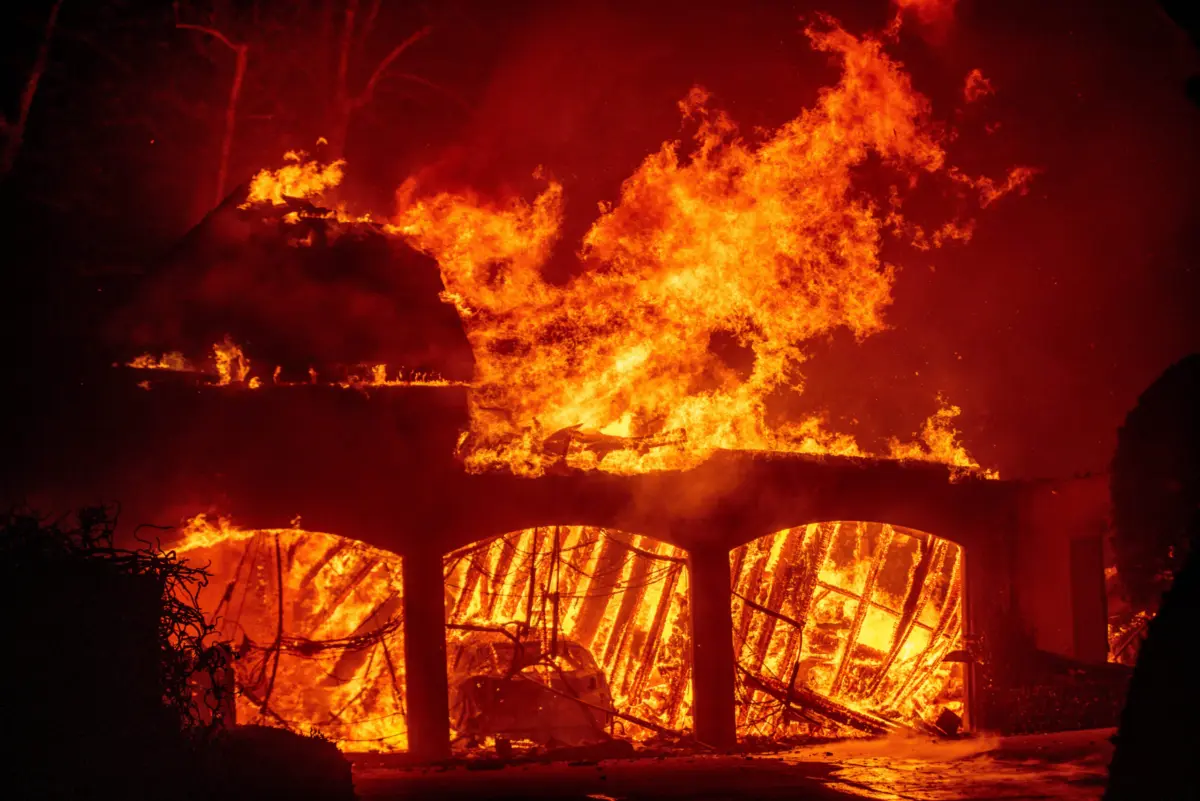
The turning point arrived in the 2020s. Consecutive years of multi-billion-dollar convective storm losses in the U.S. Midwest and Europe, combined with catastrophic urban-interface wildfires—such as the devastating fires sweeping Southern California, including the Eaton Fire—shattered the illusion of secondary insignificance. Insurers realized that these events were no longer secondary in financial impact, nor were they independent of one another. Today, the insurance landscape is permanently multi-hazard by design, forcing a wholesale structural evolution in how risk is measured and transferred.
Supporting Data & Drivers of the Shift
The obsolescence of the primary/secondary dichotomy is driven by three converging macroeconomic and environmental forces: climate variability, unchecked exposure growth, and the dangerous interplay among compounding perils.
1. Accelerated Climate Variability
Warmer atmospheric temperatures and shifting oceanic currents have fundamentally altered weather patterns. The atmosphere can hold more moisture, leading to more intense, concentrated downpours and heavier flash flooding. Meanwhile, prolonged droughts create desiccated landscapes that fuel longer, more volatile wildfire seasons. Severe convective storms are forming earlier in the year and punching deeper into regions historically unaccustomed to high-frequency hail and straight-line winds.
2. Unprecedented Exposure Growth
The physical footprint of human settlement has expanded directly into high-risk zones. More properties are located in the wildland-urban interface (WUI), low-lying floodplains, and rapidly densifying urban corridors where aging infrastructure was never engineered to cope with modern storm intensity. When a severe convective storm tracks across a densely populated suburban area packed with high-value residential roofs, the cumulative property damage easily surpasses that of a remote hurricane landfall.
3. Peril Interplay and Compound Events
Modern disasters rarely occur in isolation. Instead, they manifest as interconnected cascades. For instance, heavy atmospheric river rainfall triggers widespread flooding, which immediately destabilizes hillsides, causing devastating landslides. Alternatively, a severe drought sets the stage for a massive wildfire, which strips the soil of vegetation; when subsequent heavy rains arrive, they trigger catastrophic mudflows over the burn scars. These compound events produce complex, interrelated loss profiles that defy simple, single-peril pricing matrices.
Official Responses and Industry Perspectives
As the financial toll of non-hurricane perils mounts, leadership figures across insurance, reinsurance, and risk modeling have spoken out about the urgent need to modernize industry frameworks.
"Modeling firms are actively working to update catastrophe models to reflect this broadened risk spectrum. The core idea is to move from peril-centric modeling toward a more integrated, multi-peril framework."
— Leading Catastrophe Risk Modeler
This sentiment is echoed by financial oversight bodies and corporate governance boards, who are increasingly unwilling to accept black-box assumptions about tail risk.
"Boards and regulators increasingly demand transparency around correlations, tail risk, and the sensitivities of pricing to multi-peril dependencies."
— Insurance Regulatory Compliance Analyst
Underwriters and brokers are also adapting their operational philosophies. The historical divide between property-peril specialists is giving way to cross-disciplinary risk engineering teams. These professionals are tasked with understanding how a single portfolio can be simultaneously battered by hail in May, wildfires in September, and winter floods in December.
Implications for the Insurance Ecosystem
The transition away from the "secondary peril" mindset has far-reaching consequences across four core pillars of the insurance and reinsurance value chain: modeling, pricing, treaty architecture, and regulatory governance.
1. Modeling the New Multi-Peril Landscape
To keep pace with reality, commercial modeling firms are moving beyond isolated peril modules. The industry is rapidly adopting complex, ensemble-style modeling frameworks. Insurers and reinsurers now rely on multi-model outputs, cross-validated against proprietary portfolio-specific loss curves and comprehensive industry loss databases.
This shift elevates the importance of model governance and risk management. Stakeholders must understand not just the outputs of a single model, but the inherent uncertainties, spatial correlations, and sensitivity thresholds embedded within multi-peril dependencies.
2. Pricing and Risk-Adjusted Capital
When the risk picture broadens, pricing must evolve synchronously. Traditional ratemaking—which often relied on historical averages for a single hazard—is being replaced by risk-based pricing that accounts for real-time exposures and hazard interactions.
- Peril-agnostic underwriting: Pricing is becoming less about isolated perils and more about total portfolio vulnerability.
- Granular data integration: Actuaries utilize high-resolution geospatial data to price risks down to the individual parcel level.
- Dynamic adjustment: Premiums must adjust more rapidly to shifting environmental baselines rather than lagging behind multi-year historical loss trends.
3. Reinsurance and Treaty Architecture
Reinsurers and ceding companies are redesigning their reinsurance treaties to address the relentless accumulation of high-frequency, medium-severity losses. Traditional aggregate stop-loss structures and lower-layer working excess-of-loss treaties are facing severe pricing pressures and capacity constraints.
Reinsurers are demanding tighter terms, higher deductibles, and clearer definitions of event hours and hours clauses to prevent overlapping storms from triggering multiple reinstatements. Consequently, the dialogue between cedents, brokers, and capital markets has become critical. Shared governance over data quality, underlying assumptions, and transparent model validation is now the absolute bedrock of treaty negotiations.
4. Governance, Transparency, and Regulator Dialogue
As regulatory scrutiny intensifies worldwide—driven by bodies such as the European Insurance and Occupational Pensions Authority (EIOPA), state insurance commissioners in the U.S., and global prudential regulators—transparency is non-negotiable.
Regulators expect boards of directors to demonstrate active oversight of climate risk models. Insurers must prove they possess the capital reserves necessary to withstand simultaneous tail-risk events across multiple geographies and peril types.
Conclusion: Bridging the Divide
The market response to this broader, more volatile risk environment has been uneven but undeniably progressive. Leading-edge market participants have fully embraced integrated multi-peril frameworks, positioning themselves to thrive amid structural climate change. Meanwhile, legacy players clinging to peril-specific playbooks find themselves increasingly exposed to capital erosion and margin compression.
The gap between these two camps is rapidly closing as policyholders demand comprehensive, holistic coverage and capital partners insist on rigorous, transparent risk quantification. Ultimately, the future credibility and solvency of the global insurance industry will rest on its ability to accurately quantify joint risk, master model governance, and translate complex scientific insights into resilient financial structures that reflect how losses actually unfold when multiple natural perils collide.
Photograph reference: The Eaton Fire burns a residential structure in Altadena, California. Incidents of urban-wildfire interface destruction underscore the urgent need to reclassify and re-model modern catastrophe risk.
