

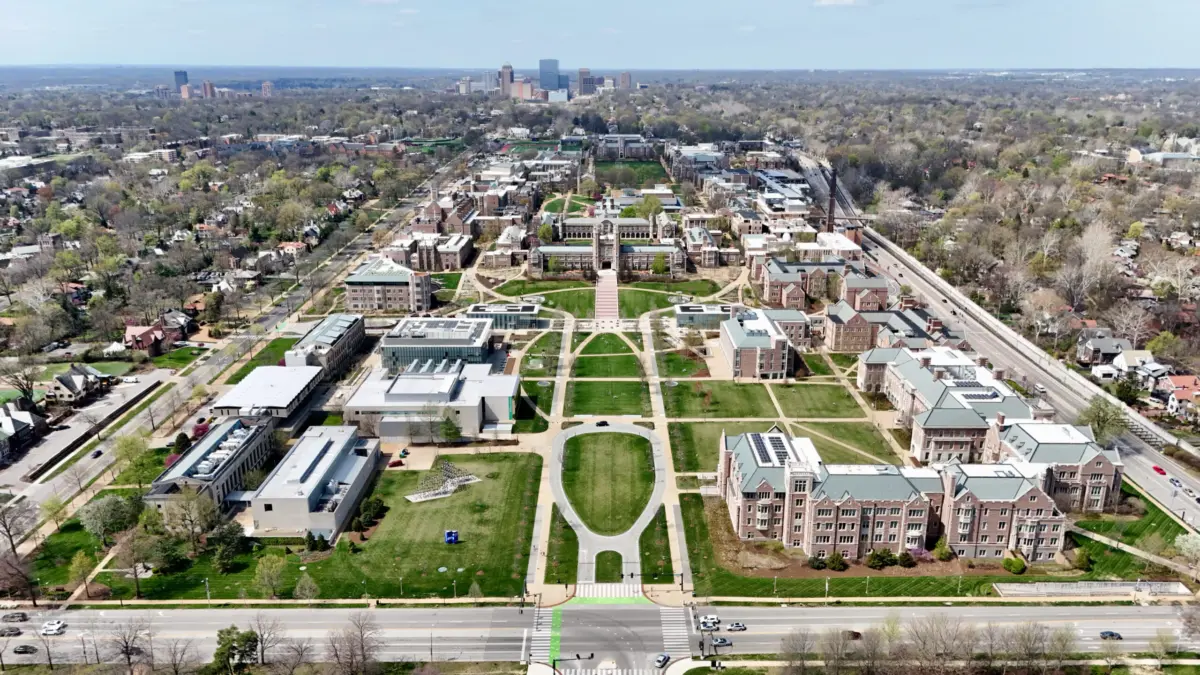
ST. LOUIS — The U.S. Equal Employment Opportunity Commission (EEOC) has filed a federal lawsuit against Washington University in St. Louis, accusing the prestigious institution of violating federal civil rights law. The legal action alleges that the university unlawfully retaliated against a senior staff member by stripping her of her duties and ultimately terminating her employment after she raised concerns about racially discriminatory practices during a mandatory institutional training session.
The lawsuit, designated as EEOC v. The Washington University, Case No. 4:26-cv-01289, was formally lodged in the U.S. District Court for the Eastern District of Missouri. The filing follows a breakdown in pre-litigation conciliation efforts between the federal agency and the university, setting the stage for what legal experts anticipate will be a closely watched courtroom battle over workplace equity practices, institutional compliance, and employee protections under Title VII of the Civil Rights Act of 1964.
Main Facts of the Case
At the center of the litigation is Amega Thaier, who formerly served as a senior program manager within the renowned Alvin J. Siteman Cancer Center, operated jointly by Washington University School of Medicine and Barnes-Jewish Hospital. According to court documents, Thaier’s professional standing and career trajectory were upended after she objected to what she perceived as segregation during a university-mandated educational event.
The core allegations center on a mandatory training session organized and administered by the university’s Office of Diversity, Equity, and Inclusion (DEI). During this session, Thaier and other participants were allegedly subjected to race-based separation, physically dividing employees along racial lines. Disturbed by the practice, Thaier formally voiced her opposition internally, arguing that the setup ran counter to principles of equality and non-discrimination.
When internal complaints failed to yield what she considered an appropriate institutional remedy, Thaier escalated the matter by filing a formal charge of discrimination with the EEOC. Federal statutes strictly prohibit employers from retaliating against workers who engage in "protected activity"—a legal term that encompasses filing complaints, participating in investigations, or opposing employment practices reasonably believed to be unlawful under Title VII.
According to the EEOC’s complaint, Washington University supervisors responded to Thaier’s protected disclosures not by addressing the underlying concerns, but by systematically dismantling her role. Responsibilities integral to her position as a senior program manager were progressively reallocated to other personnel. By late 2025, the university officially eliminated her position entirely, resulting in her termination.
The federal regulatory agency argues that this sequence of events establishes a clear, direct causal link between Thaier’s opposition to discriminatory training practices and the adverse employment actions taken against her.
Chronology of Events
A detailed timeline constructed from the court filings outlines the progression of the dispute from its origins in a campus conference room to the federal courthouse in St. Louis:
- Early January 2025: Amega Thaier participates in a mandatory training session led by Washington University’s Office of Diversity, Equity, and Inclusion. During the session, she and her colleagues are allegedly separated by race. Thaier immediately registers internal objections, asserting that the practice constitutes race discrimination.
- January through June 2025: Despite raising internal grievances with university management and human resources, Thaier encounters mounting professional friction. The EEOC complaint notes that her work environment deteriorates as supervisory staff react negatively to her opposition.
- July 2025: Having exhausted internal channels without resolution, Thaier formally files a charge of discrimination against Washington University with the EEOC, alleging discrimination and subsequent retaliation.
- August through October 2025: Following the filing of the EEOC charge, the situation intensifies. Thaier’s supervisors begin stripping her of core job responsibilities, transferring her duties to other members of the Siteman Cancer Center staff, effectively isolating her professionally.
- November 2025: Washington University officially eliminates Thaier’s position as senior program manager, terminating her employment. The university frames the move as an administrative restructuring, but the EEOC contends the layoff was a pretextual maneuver designed to purge a whistleblower.
- Late 2025 to Early 2026: The EEOC conducts an exhaustive administrative investigation into Thaier’s claims, finding reasonable cause to believe that Washington University violated Title VII of the Civil Rights Act of 1964.
- Early 2026: The agency attempts to resolve the matter through its mandatory conciliation process. When university representatives and federal officials fail to reach a voluntary settlement, the EEOC authorizes and files the federal lawsuit.
Supporting Data and Legal Framework
The legal bedrock of the EEOC’s lawsuit rests firmly on Title VII of the Civil Rights Act of 1964, a landmark piece of federal legislation that prohibits employers from discriminating against employees on the basis of sex, race, color, national origin, and religion. Crucially, Title VII contains an explicit anti-retaliation provision (Section 704(a)) designed to protect workers who assert their rights under the law.
Employment law experts emphasize that a retaliation claim under Title VII does not require the underlying discrimination claim to be legally proven in order for the plaintiff to prevail. Instead, an employee must demonstrate three fundamental elements:
- They engaged in a protected activity (such as filing an EEOC charge or opposing an employment practice they reasonably believed was discriminatory).
- They suffered an adverse employment action (such as a demotion, transfer of duties, pay cut, or termination).
- A causal connection exists between the protected activity and the adverse action.
In EEOC v. The Washington University, the temporal proximity between Thaier’s July 2025 EEOC filing and her subsequent termination in November 2025 is expected to form a cornerstone of the government’s argument. Courts frequently view a tight window between a worker’s protected complaint and an adverse personnel action as circumstantial evidence of retaliatory intent.
Furthermore, the involvement of the EEOC lends considerable weight to the litigation. As an arm of the federal government, the EEOC does not take enforcement actions lightly; the agency litigates only a small fraction of the tens of thousands of charges it receives annually, typically reserving courtroom battles for cases it deems strategically significant or where employers refuse reasonable conciliation terms.
Official Responses and Institutional Stakes
As of the initial filings, representatives for Washington University in St. Louis have faced mounting questions from academic observers, alumni, and legal commentators regarding the university’s handling of the matter.
While formal legal responses to the complaint are still being prepared for submission to the U.S. District Court, academic institutions facing EEOC litigation typically issue statements defending their internal human resources protocols and denying allegations of wrongdoing. Washington University is expected to argue that the elimination of Thaier’s position was driven by legitimate, non-discriminatory business needs, budgetary adjustments, or departmental restructuring within the Siteman Cancer Center—common defenses in employment termination suits.
However, the nature of the allegations places the university in a complex public relations and legal dilemma. As a premier academic medical and research institution, Washington University invests heavily in its institutional branding, equity initiatives, and workplace culture. The irony of a lawsuit stemming from a mandatory DEI training session—an initiative ostensibly designed to foster inclusivity—has not been lost on observers.
Legal analysts note that universities nationwide have increasingly grappled with how to design and execute effective equity training programs without inadvertently alienating staff or utilizing methodologies that could trigger legal challenges under federal, state, or constitutional standards.
Broader Implications for Higher Education and Corporate Workplaces
The lawsuit filed against Washington University arrives at a watershed moment for diversity, equity, and inclusion initiatives across American workplaces, corporate boardrooms, and higher education campuses.
In recent years, institutional training programs have faced heightened scrutiny from multiple angles. Critics on various points of the political and ideological spectrum have raised concerns about specific pedagogical techniques utilized in corporate and academic workshops—ranging from mandatory caucusing and race-based affinity groupings to exercises that critics argue run the risk of creating a hostile work environment or reinforcing racial divisions.
Employment attorneys point out that EEOC v. The Washington University serves as a cautionary tale for human resources departments and DEI practitioners alike. The case underscores several vital compliance lessons:
- The Primacy of Anti-Retaliation Protections: Employers are legally barred from punishing workers who raise good-faith concerns about workplace practices, regardless of whether those practices are conducted under the banner of training, compliance, or equity.
- Scrutiny of Training Methodologies: Institutions must carefully evaluate the design of their training programs to ensure compliance with Title VII. Practices that segregate employees by race, even if intended for educational or reflective purposes, expose organizations to substantial legal liabilities.
- The Danger of Retaliatory Pretext: When an employee files an internal grievance or an external EEOC charge, subsequent personnel actions—particularly those resulting in job restructuring or termination—are subjected to intense judicial scrutiny. Employers must maintain meticulous, objective documentation demonstrating that any adverse action is entirely divorced from an employee’s protected whistleblowing activities.
As the case proceeds through the U.S. District Court for the Eastern District of Missouri, it will be closely monitored by employment lawyers, civil rights advocates, and university administrators nationwide. A ruling or settlement in EEOC v. The Washington University could provide crucial judicial guidance on the legal boundaries of workplace training programs and reinforce the absolute imperative of safeguarding workers who speak out against perceived discrimination.
