

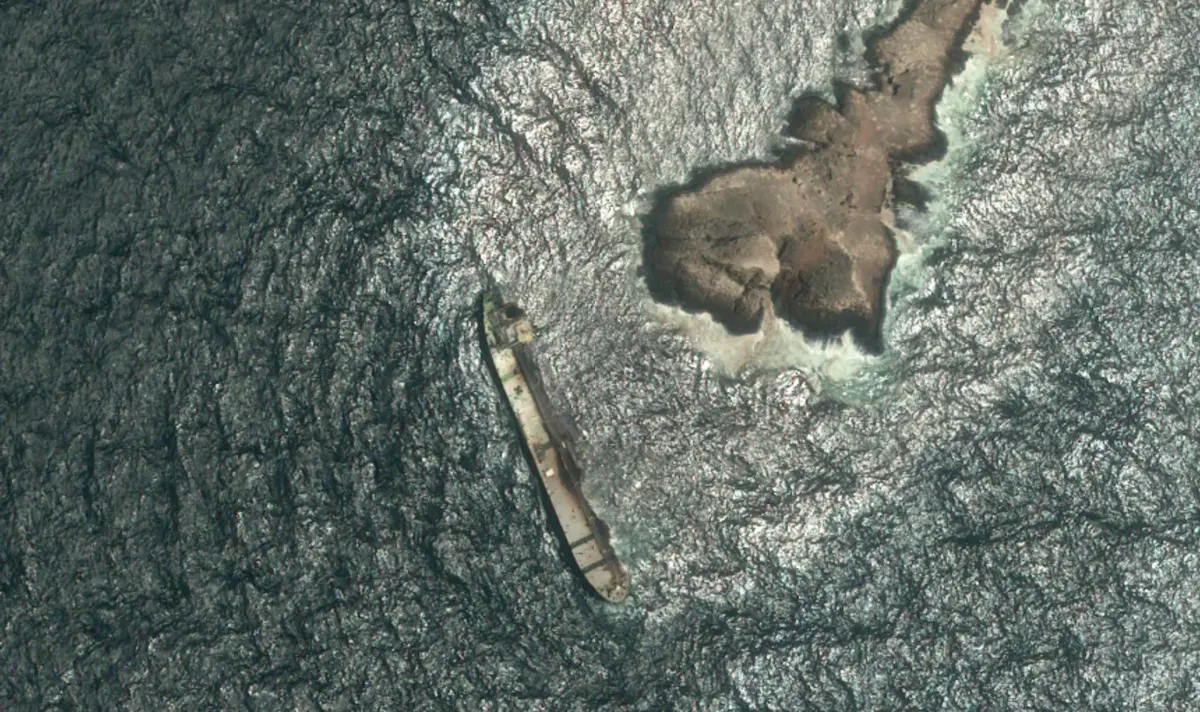
MUSCAT/LONDON — British maritime security and risk management firm Ambrey announced on Thursday that it has formally been engaged to spearhead the complex salvage operation of the stricken oil tanker Caroline Bezengi. The vessel, which has been aground off the coast of the Sultanate of Oman for nearly two months, is laden with an estimated 800,000 barrels of Russian crude oil. Operating under international sanctions as part of the clandestine "shadow fleet," the tanker’s deteriorating condition has triggered a catastrophic environmental emergency, threatening vulnerable marine ecosystems and pristine nature reserves along the Arabian Sea.
The situation has escalated from a regional maritime accident into what environmental experts fear could become one of the most severe maritime oil spill disasters in recent global history. With crude steadily leaking from the partly submerged hull, Omani authorities reported this week that the resulting slick has already expanded to cover an alarming 400 square kilometers, threatening local fisheries, coastal communities, and endangered marine wildlife.
Main Facts
The ongoing crisis surrounding the Caroline Bezengi centers on a convergence of geopolitical evasion, maritime vulnerability, and extreme environmental risk.
- The Vessel and Cargo: The Caroline Bezengi is a heavily laden oil tanker carrying approximately 800,000 barrels of crude oil sourced from Russia. Because the vessel is operating under international sanctions, it forms part of the opaque "shadow fleet"—older, often under-insured ships used to transport petroleum products while bypassing Western-imposed trade restrictions.
- The Location and Impact Zone: The ship ran aground on June 30 near an ecologically sensitive Omani marine nature reserve in the Dhofar governorate. This region is a critical habitat for rare and endangered wildlife, most notably the Arabian Sea humpback whale—a genetically distinct, resident population numbering fewer than a few hundred individuals—as well as populations of Socotra cormorants and vibrant coral reefs.
- The Environmental Scale: According to Oman’s Environment Authority, oil leaking from the fractured tanker has contaminated a massive 400-square-kilometer zone. Satellite imagery captured in early August shows the vessel listing heavily and leaking persistent plumes of dark crude into the turquoise waters of the Indian Ocean.
- The Salvage Mobilization: Ambrey confirmed on Thursday that its specialized response teams are coordinating with Omani stakeholders. Additional salvage vessels are currently steaming toward the casualty site, and Ambrey has contracted a leading international oil spill response firm to mitigate further ecological damage.
Chronology of a Disaster: From Black Sea to Arabian Grounding
The journey of the Caroline Bezengi is a testament to the high-stakes, perilous nature of maritime shadow trade operating against a backdrop of active geopolitical conflict.
June 8: The Initial Incident Off Yemen
Maritime intelligence sources indicate that the vessel first encountered critical operational difficulties while transiting waters off the coast of Yemen. Reports from the region suggested that the ship may have sustained damage from an explosion. Because the tanker was navigating waters impacted by two separate, active military conflicts while moving oil from Russian ports toward buyers in India, security analysts immediately flagged the transit as high-risk. However, in the weeks following the initial incident, no military faction or state actor claimed responsibility for any attack on the vessel, leaving the exact cause of the initial hull breach shrouded in ambiguity.
Late June: Unchecked Drift and Grounding
Following the distress call off Yemen, the crippled tanker drifted largely unchecked for weeks. Maneuvering without formal support or transparent tracking, the vessel eventually drifted northward into Omani territorial waters. On June 30, the Caroline Bezengi grounded catastrophically near the Dhofar coastline, lodging itself on a shallow shelf directly adjacent to the protected Omani marine reserve.
July – Early August: Submerged Contamination
For weeks, containment efforts were severely hampered by the vessel’s sanctioned status, logistical bottlenecks, and extreme weather. As crude continued to seep from its compromised tanks, the slick grew exponentially. By August 5, satellite imagery clearly documented the vessel partially submerged and actively discharging oil into the marine environment. On August 11, Omani authorities formally confirmed that the surface footprint of the spill had breached the 400-square-kilometer threshold, as thick bands of oil began washing ashore.
Late August: Mobilization of International Salvage
Recognizing the escalating threat of a total structural collapse and the release of all 800,000 barrels, Ambrey announced its formal engagement in the salvage effort on Thursday. Specialized heavy-lift and pollution-control vessels were dispatched to the site to begin the arduous process of securing the wreck, lightering the remaining cargo, and deploying booms and skimmers in the open ocean.
Supporting Data and Environmental Challenges
The mechanics of the salvage operation are complicated by severe logistical, meteorological, and environmental hurdles.
The Khareef Monsoon Factor
Ed Wollaston, director of global response at Ambrey, characterized the situation as "extremely challenging," noting that operations are severely compounded by adverse weather conditions. The grounding site in Oman’s Dhofar region coincides with the peak of the Khareef season—an annual meteorological phenomenon driven by Indian Ocean monsoon winds.
The Khareef blankets the southern coast of Oman in steady mist, cool drizzles, and intermittent, heavy rain. While the season is celebrated locally for transforming the arid mountains into lush green landscapes, it creates treacherous maritime conditions. High winds, heavy swells, and severely reduced visibility off the coast make deployment of booms, anchoring of salvage barges, and helicopter operations exceptionally dangerous for maritime crews.
Vulnerability of the Marine Reserve
The ecological stakes could hardly be higher. The Dhofar marine reserve where the Caroline Bezengi is grounded serves as an irreplaceable sanctuary for marine biodiversity. Biologists have expressed profound concern for the Arabian Sea humpback whale. Unlike migratory whale populations, this isolated sub-population remains in the northern Indian Ocean year-round, making them exceptionally vulnerable to localized industrial disasters such as oil spills. Ingestion of toxic hydrocarbons, fouling of baleen plates, and the destruction of local food webs could devastate the fragile recovery efforts for the species. Additionally, nesting seabirds like the Socotra cormorant and extensive coastal mangrove forests face immediate, long-term contamination.
Official Responses and Stakeholder Actions
Governments, environmental agencies, and private maritime actors are currently scrambling to mount a coordinated defense against the unfolding disaster.
- Ambrey’s Operational Statement: Ambrey emphasized its proactive posture, stating that it has mobilized top-tier global assets. "We have been engaged in the salvage of the stricken tanker Caroline Bezengi off the Omani coast, and salvage vessels are en route to support the operation," the company stated. Ambrey confirmed it is working closely with local Omani stakeholders and has retained an elite international oil spill response contractor to manage the marine cleanup.
- Oman’s Environment Authority: Muscat has taken an increasingly urgent tone. In statements released on Wednesday and Thursday, the Environment Authority confirmed that the leaking crude has begun making landfall along the Dhofar beaches. Government bodies are coordinating emergency clean-up crews, deploying heavy machinery to scrape oil-laden sands, and setting up wildlife rescue and rehabilitation stations along the coast.
- The Geopolitical Silence: Despite the vessel being damaged in waters near Yemen amid regional conflicts, no government or militant group has claimed responsibility for the initial blast that compromised the ship. The silence underscores the legal and diplomatic grey zones that plague the shadow tanker trade, where accountability is often lost when accidents occur outside officially recognized commercial shipping lanes.
Implications for Global Maritime Security and the Shadow Fleet
The grounding of the Caroline Bezengi is expected to trigger intense international scrutiny regarding the governance of global maritime trade, particularly concerning sanctioned petroleum exports.
The Risk of the "Shadow Fleet"
In the wake of sweeping Western sanctions targeting Russian energy exports following the invasion of Ukraine, a massive parallel market of aging, poorly maintained, and under-insured tankers—collectively known as the shadow fleet—has proliferated. These vessels frequently operate with opaque ownership structures, flying flags of convenience and disabling their Automatic Identification System (AIS) transponders to evade tracking.
Environmentalists and maritime regulators have long warned that this deregulated fleet is a disaster waiting to happen. The Caroline Bezengi incident serves as a worst-case scenario realized: an aging, sanction-evading tanker sustaining structural damage in a conflict zone, drifting without immediate emergency oversight, and ultimately fracturing in a pristine ecological sanctuary.
Economic and Ecological Fallout for the Region
For Oman, a nation that prides itself on pristine coastal environments and sustainable tourism initiatives centered around marine conservation, the spill represents a severe economic and reputational blow. Fisheries in the Dhofar region face potential closures, threatening local livelihoods, while the financial cost of the salvage and shoreline remediation is expected to run into the tens of millions of dollars. Because the ship is sanctioned and operates outside traditional Western insurance pools, recovering these costs through conventional legal channels will likely prove exceptionally difficult for the Omani government.
Future Regulatory Pressures
As the salvage vessels steam toward the battered hulk of the Caroline Bezengi against the backdrop of the churning Khareef monsoon, international bodies are expected to renew calls for stricter enforcement of maritime safety standards. The disaster demonstrates that the environmental externalities of sanctions evasion are not contained to geopolitical ledgers; they wash up directly onto the shores of innocent coastal states, threatening irreplaceable global ecosystems with lasting ruin.
