

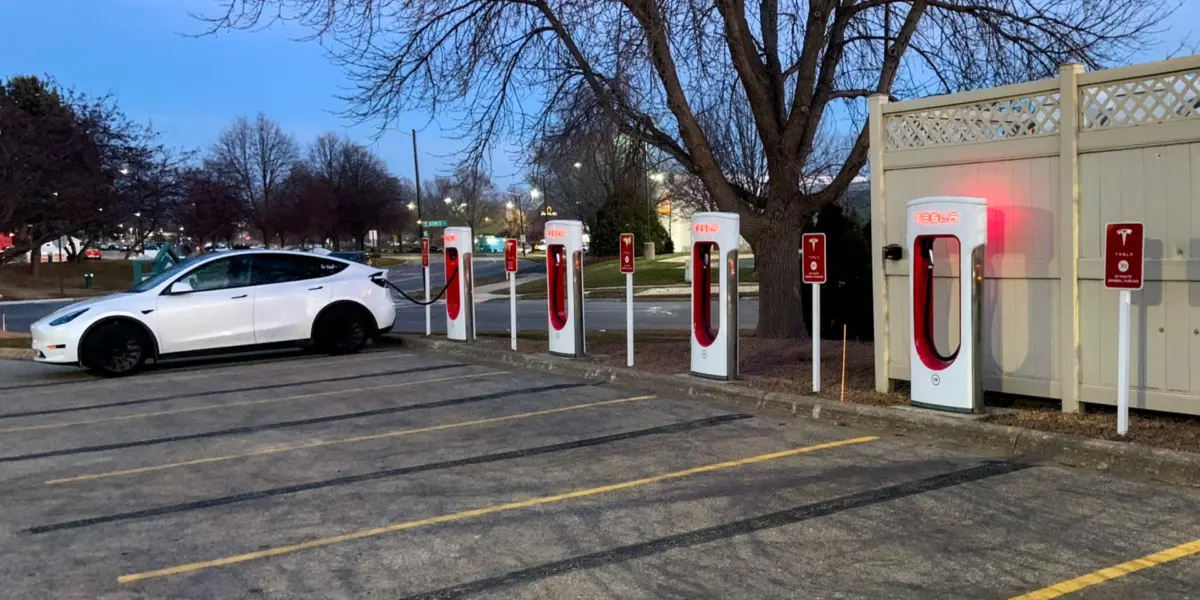
SAN FRANCISCO — In a move signaling a major shift in urban electric vehicle (EV) infrastructure strategy, Tesla has filed planning permits to construct one of its largest-ever Supercharger stations directly within the city limits of San Francisco. The proposed project would transform a former yellow-cab storage lot on the city’s south side into a massive 124-stall charging hub equipped with the company’s cutting-edge V4 hardware.
Spotted and brought to light by prominent Supercharger tracker MarcoRP via social media filings, the ambitious project highlights Tesla’s evolving approach to addressing urban EV adoption. While massive charging stations with over 100 stalls have increasingly become the norm along major rural and desert interstate corridors, deploying a facility of this magnitude in a densely populated metropolitan core represents a groundbreaking departure from traditional urban planning.
Main Facts: The Scope of the San Francisco Hub
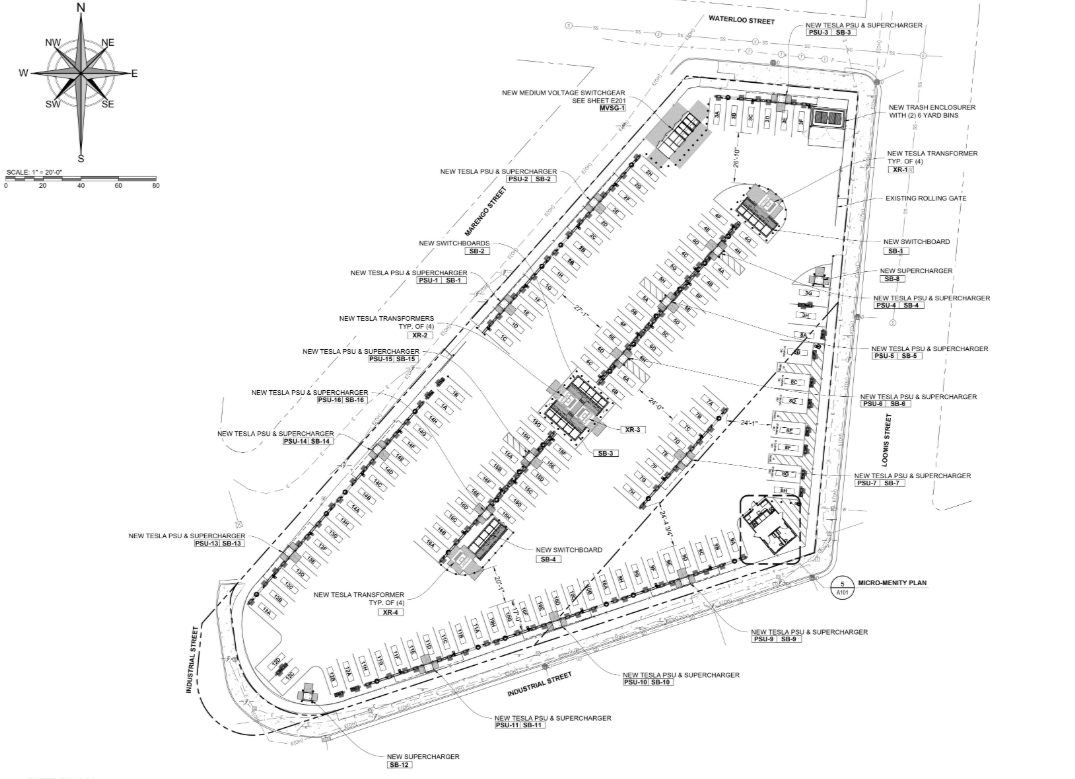
The proposed Supercharger station is slated for a triangular parcel of land located at the intersection of Alemany Boulevard and Bayshore Boulevard, wedged tightly against the US-101 freeway corridor.

According to the municipal planning documents, the project encompasses:
- 124 V4 Charging Posts: Powered by 16 centralized Tesla power units capable of utilizing the company’s high-output architecture.
- A 400-Square-Foot "Micro-Amenity" Building: Designed to house modern conveniences for drivers waiting during their charging sessions.
- Extensive Site Infrastructure: Including heavy-duty switchgear and 28 dedicated parking-lot lighting poles to ensure safety and visibility across the massive lot.
Unlike the sprawling, multi-acre highway rest stops typically associated with massive charger counts—such as the emerging 200-stall desert installations along California’s major travel corridors—this urban facility must maximize spatial efficiency while operating within the tight confines of a working neighborhood.
Chronology: How the Project Emerged
The trajectory of the Alemany and Bayshore project reflects the rapid acceleration of Tesla’s next-generation charging rollout:
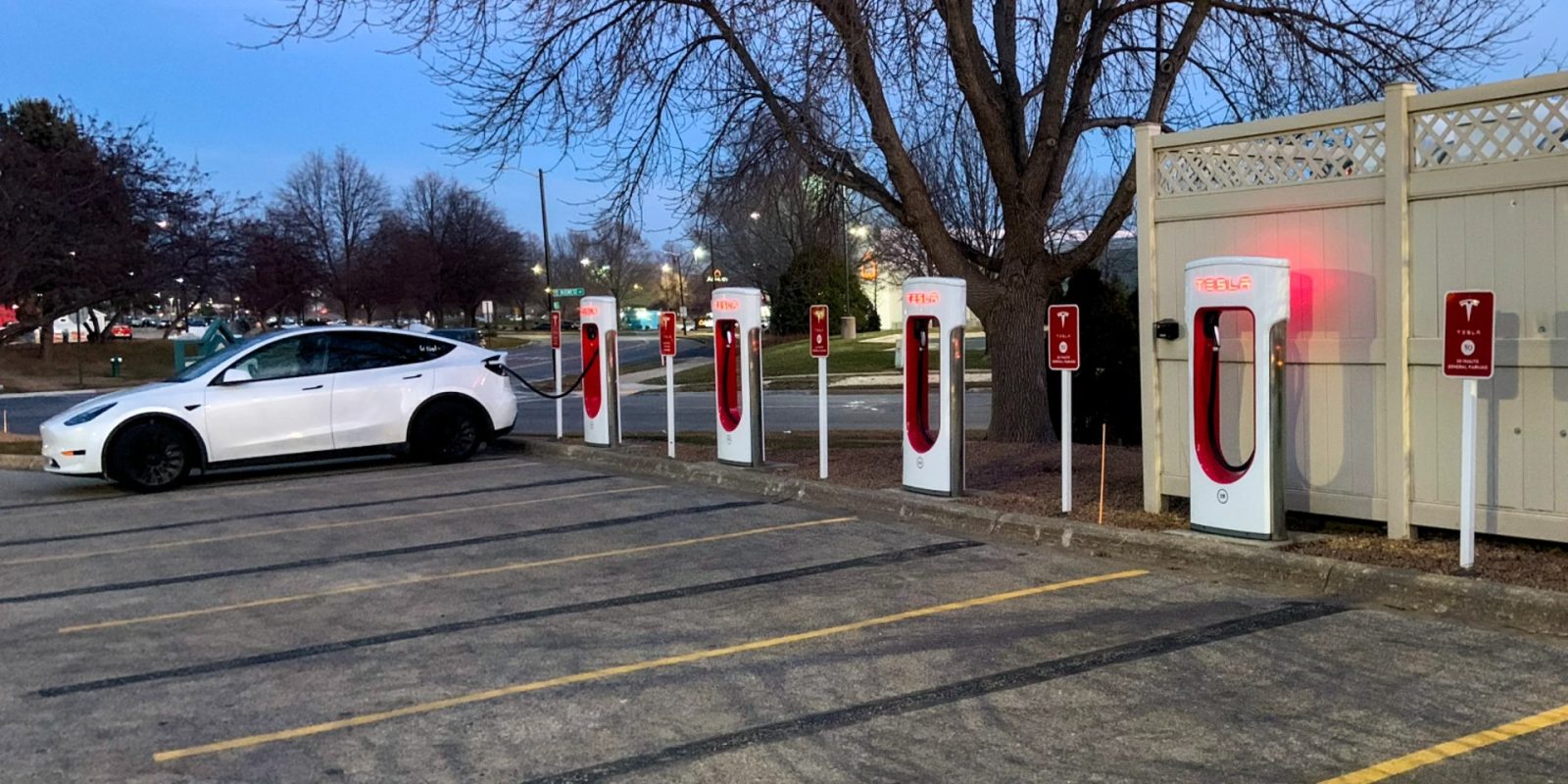
- Late 2024 to Late 2025: Tesla transitions its deployment strategy toward full V4 architecture, culminating in the activation of its first full 500 kW-capable V4 stations. Simultaneously, the company begins experimenting with ultra-large highway hubs containing over 100 stalls.
- August 2026: Municipal planning documents for the Alemany/Bayshore yellow-cab lot are officially filed with the City and County of San Francisco.
- Mid-August 2026: EV infrastructure enthusiast and tracker MarcoRP uncovers the filings in public databases, sharing the initial site plans and architectural blueprints with the public via X (formerly Twitter).
- Present Phase: The project awaits municipal review, environmental assessments, and formal zoning approvals from local San Francisco authorities before breaking ground.
Supporting Data: Urban Density Meets Next-Gen Technology
To understand why a 124-stall urban charger is unprecedented, one must look at the standard blueprint for metropolitan EV charging. Typically, city-center Superchargers are restricted by scarce real estate and exorbitant land costs, usually featuring anywhere from four to twenty stalls tucked into parking garages or tight commercial lots.
San Francisco’s existing network consists entirely of these smaller footprints. However, demographic realities in the San Francisco Bay Area make a massive urban hub economically and logistically viable:
- High EV Concentration: The Bay Area boasts one of the highest densities of Tesla and general EV ownership per capita in the United States.
- The Multi-Family Housing Dilemma: A significant percentage of urban residents live in apartments, condominiums, or historic multi-family homes lacking dedicated off-street parking or home-charging capabilities. These drivers rely entirely on public infrastructure for their daily mobility.
- Hardware Capabilities: The inclusion of V4 stalls is critical. V4 infrastructure is engineered to interface seamlessly with advanced 500 kW power cabinets. While older urban stations faced bottlenecks in charging speeds and dwell times, the high-throughput design of V4 hardware ensures that vehicles can charge rapidly, keeping the 124 stalls turning over efficiently rather than acting as overnight parking bottlenecks.
Inside the "Micro-Amenity" Building
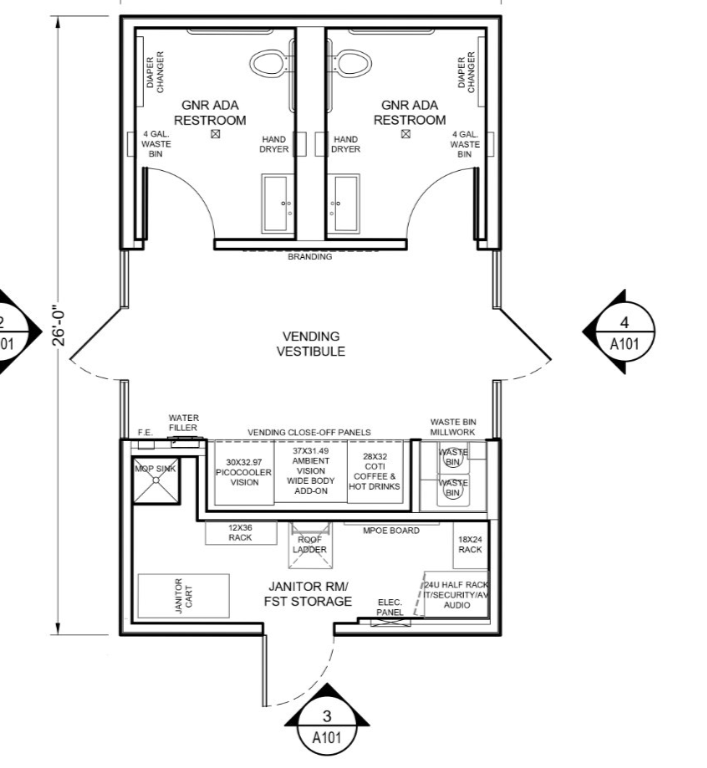
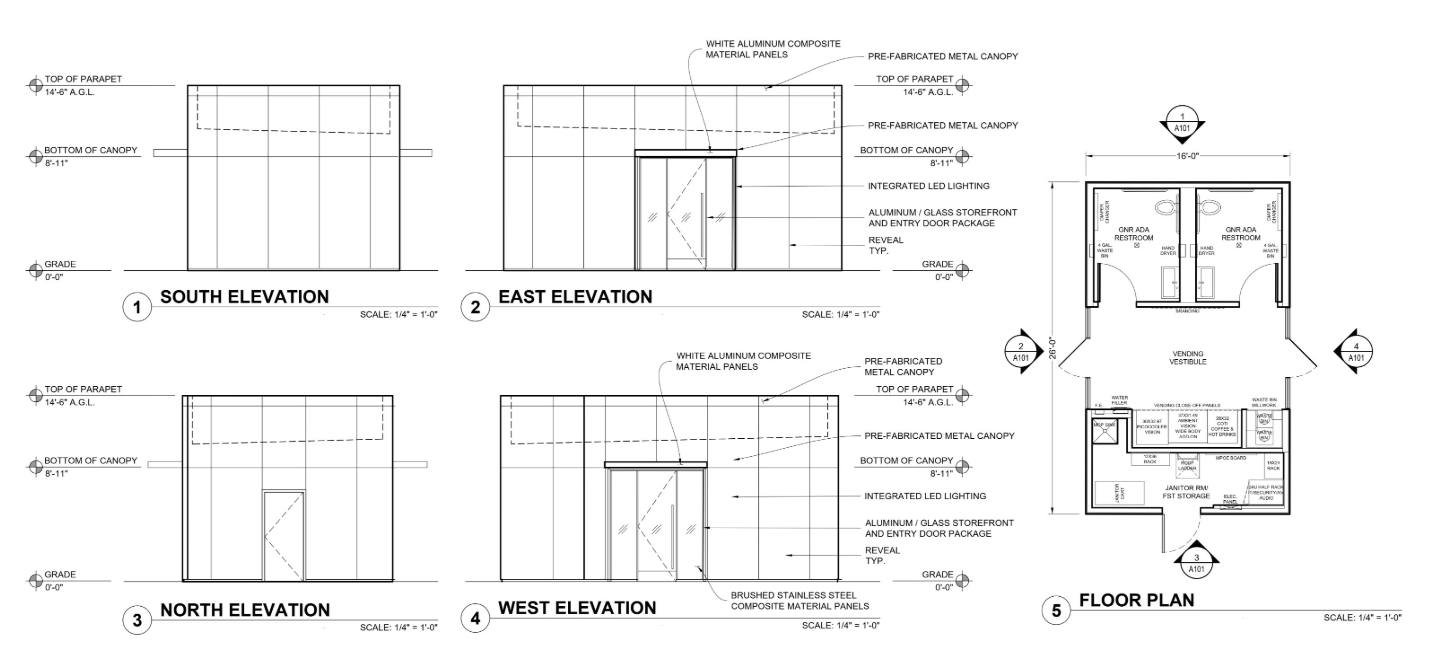
While Tesla’s sprawling Hollywood Diner project captured global headlines for offering a retro-futuristic, entertainment-heavy destination experience, urban sites require a more pragmatic approach. The San Francisco permits detail a compact, highly functional 400-square-foot "micro-amenity" structure designed to service drivers efficiently without requiring a sprawling footprint.
The interior layout features:
- Restroom Facilities: Two gender-neutral, ADA-compliant restrooms equipped with integrated diaper-changing stations.
- Vending Vestibule: A central open area featuring automated retail options, including Cotti-branded hot and cold coffee dispensers, as well as refrigerated and ambient snack vending machines.
- Back-of-House Infrastructure: A dedicated utility and IT room housing janitorial supplies, local security monitoring systems, and site network equipment.
Aesthetically, the exterior elevations blend modern industrial design with urban resilience. The building will be wrapped in white aluminum composite panels and brushed stainless steel, accented by a prefabricated metal canopy and full-glass storefront entry doors.
Implications for the Future of Urban EV Infrastructure
The filing of the Alemany and Bayshore permits carries several profound implications for the broader automotive and energy landscape:
1. Shifting Focus to Urban "Gas Station" Equivalents
For years, fast-charging infrastructure was viewed primarily as a bridge for long-distance road trips. As EV adoption permeates dense metropolitan areas where home charging is impossible, automakers and charging operators must pivot. Building 100+ stall hubs inside city boundaries proves that companies are willing to acquire large commercial footprints in urban cores to function as direct replacements for traditional petrol stations.
2. Grid Management and Energy Pressures
Powering 124 high-output V4 stalls simultaneously requires a massive electrical interconnection. The inclusion of heavy-duty switchgear in the site plans highlights the immense strain such stations place on local municipal grids. Projects of this scale will likely accelerate partnerships between energy providers and charging networks to integrate on-site battery storage or dynamic load management, mitigating peak-hour stress on the local utility.
3. The Competitive Landscape for Non-Tesla EVs
While Tesla originally built its network exclusively for its own vehicles, the ongoing opening of the Supercharger network to other major automakers via the North American Charging Standard (NACS) means that a 124-stall hub in San Francisco will serve drivers across multiple brands. This transforms the Alemany location into a critical piece of public transit infrastructure for the entire Bay Area region.
4. Economic Pressures and Consumer Adaptation
As urban charging hubs expand, the economics of EV ownership are shifting alongside fluctuating utility rates. Industry analysts note that rising residential electricity costs—which have seen steady annual increases across many major utility districts—make public fast-charging pricing models increasingly vital to consumer calculations. For apartment dwellers reliant on these public stations, the convenience and speed of next-generation hubs will heavily influence the long-term economic viability of transitioning away from internal combustion engines.
As the San Francisco planning department reviews the blueprints, the Alemany and Bayshore Supercharger stands as a litmus test for the future of urban mobility: a high-capacity, technologically advanced oasis designed to keep America’s tech capital moving forward on electrons.
