

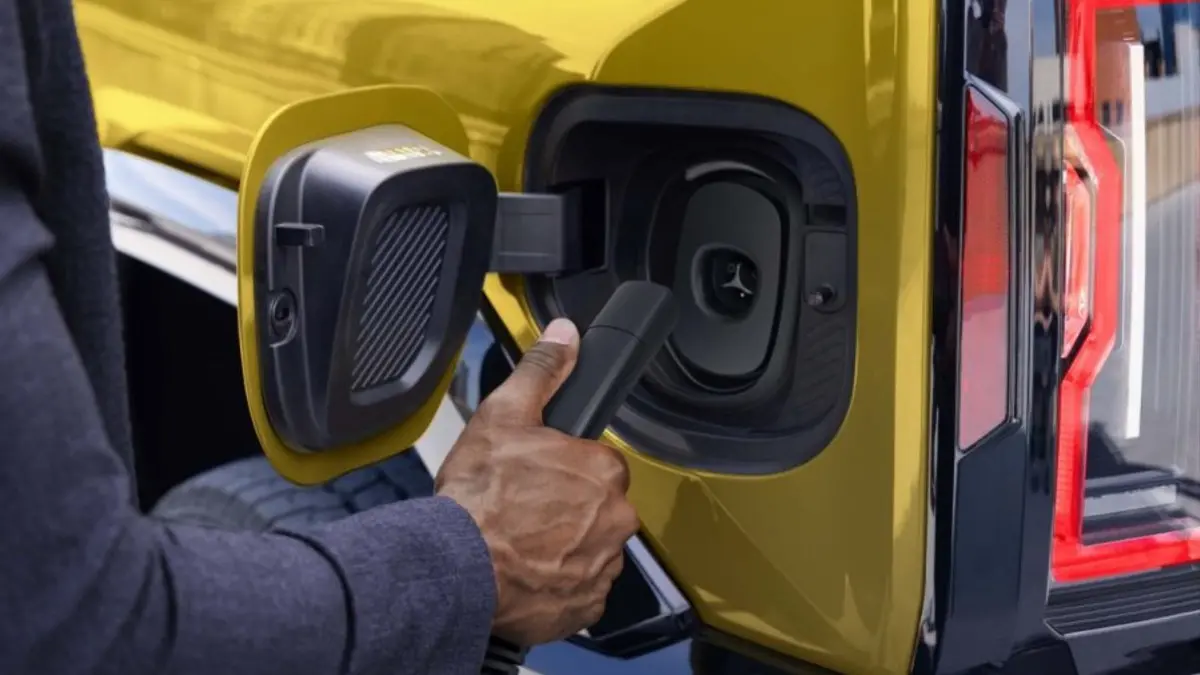
DETROIT — In a definitive shift that marks a major milestone for the North American electric vehicle landscape, General Motors has announced that its entire upcoming 2027 model-year electric vehicle lineup will feature native North American Charging Standard (NACS) DC fast-charging ports.
The move, which applies to every vehicle bearing a Chevrolet, Cadillac, or GMC badge, signals the final phase of a broader automotive industry convergence toward a single, unified charging plug. By adopting the SAE J3400 standard natively at the factory, GM is granting future drivers direct, adapter-free access to Tesla’s vast Supercharger network, alongside thousands of other compatible NACS fast-chargers across the continent.
While the engineering transition represents a massive leap forward in convenience for consumers, it also highlights the messy transitional period currently facing EV owners, who must navigate a landscape of adapters, mixed port types, and evolving software applications.
Main Facts: The 2027 NACS Mandate
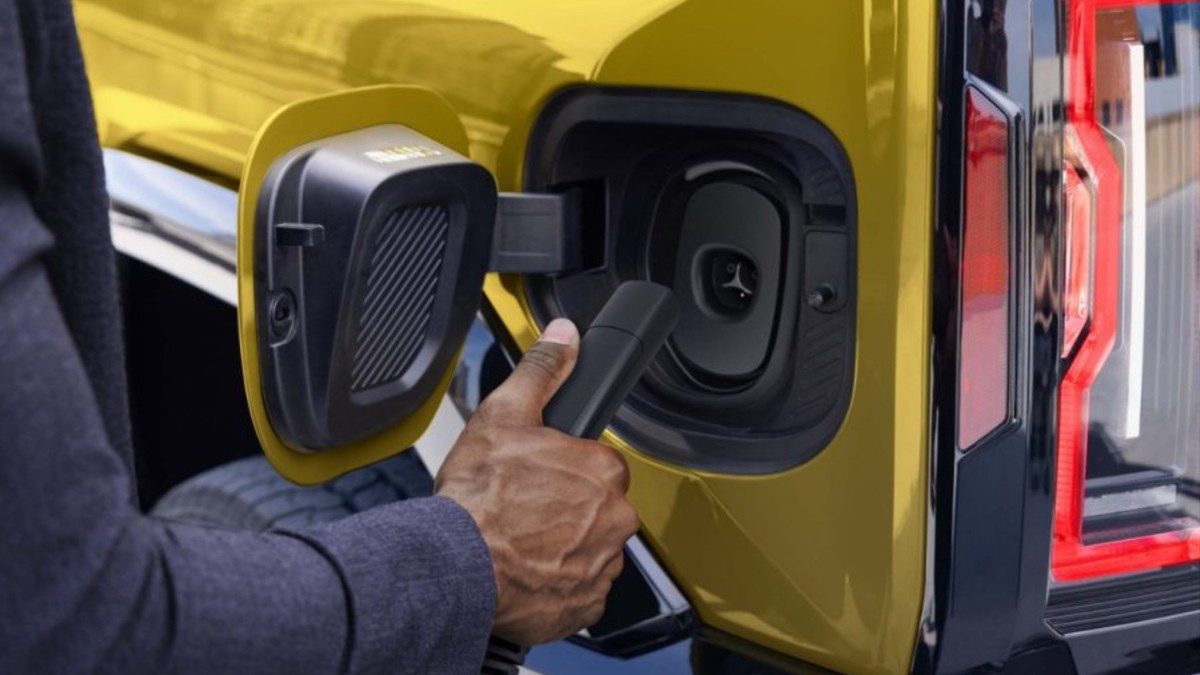
Beginning with the 2027 model year, every single battery-electric vehicle produced by GM will be equipped with a factory-installed NACS inlet rather than the older Combined Charging System (CCS1) port that has dominated the non-Tesla market for years.

This means that owners of upcoming 2027 models will no longer need to purchase or carry a specialized DC fast-charging adapter to plug into a Tesla Supercharger.
The transition is already underway. The 2026 Cadillac Optiq kicked off the hardware shift as an early adopter, and the highly anticipated, reborn Chevrolet Bolt—scheduled to arrive in 2026 as a 2027 model—will also feature a native NACS port straight off the assembly line. For the broader 2027 portfolio, the standard equipment list will universally encompass all newly minted Chevrolet, Cadillac, and GMC EVs currently sold or officially confirmed for production.
However, this clean break for the 2027 model year creates a stark dividing line between vehicle generations. Owners of current and 2026-model-year GM electric vehicles will still find themselves relying on legacy hardware.
Chronology: The Road to Universal NACS Adoption
The journey toward a unified charging standard has moved at a surprisingly rapid pace, transforming the American EV charging ecosystem in a matter of years.
- Late 2022 to Early 2023: Tesla opens its proprietary charging connector design—subsequently dubbed the North American Charging Standard (NACS)—to other automakers, attempting to establish an industry-wide baseline.
- Mid-2023: Ford stuns the automotive world by becoming the first major legacy automaker to announce it will adopt NACS. General Motors follows suit shortly thereafter, committing to transition its vehicles to the NACS plug and secure access to Tesla’s Supercharger network. Other major global automakers quickly fall in line, creating a near-universal industry consensus.
- 2024–2025: Automakers begin rolling out adapter programs. GM launches its approved NACS DC adapter, allowing existing CCS1-equipped vehicles to tap into select Tesla Superchargers for a fee, while engineering teams work behind the scenes to redesign vehicle body panels, thermal management integration, and wiring harnesses for native NACS implementation.
- 2026: The physical transition kicks off at the factory level. The 2026 Cadillac Optiq launches with a native NACS port. Meanwhile, legacy 2026 models—including the Chevrolet Blazer EV, Equinox EV, Silverado EV, Cadillac Lyriq, Vistiq, Escalade IQ, GMC Sierra EV, and Hummer EV—continue to roll off lines with CCS1 ports, requiring aftermarket or OEM adapters.
- The 2027 Horizon: GM formalizes its complete lineup transition. Every 2027 model-year EV enters production with a native NACS port, effectively closing the book on standard CCS1 implementation for new builds.
Supporting Data: Hardware Realities and Financial Costs
While the long-term future is undeniably NACS, the short- and medium-term reality for consumers is characterized by a dizzying array of adapters and pricing structures.
The 2026 Holdovers
Apart from the pioneering Optiq, the vast majority of GM’s 2026 EV fleet remains tethered to the CCS1 standard. Owners of these vehicles—spanning high-volume crossovers like the Equinox EV and heavy-duty behemoths like the GMC Hummer EV and Silverado EV—must purchase GM’s proprietary NACS DC adapter to utilize Tesla Superchargers and other high-speed NACS outlets.
GM currently prices its approved NACS DC adapter at $275. This hardware unlocks access to more than 27,500 Tesla Superchargers across North America, though certain older or congested Supercharger locations remain restricted exclusively to Tesla-branded vehicles.
The 2027 Inversion
Ironically, buyers of the new 2027 model-year EVs—while enjoying native access to Tesla Superchargers—will face the inverse problem when encountering older public infrastructure. Because legacy fast-charging stations across the country still predominantly feature CCS1 cables, 2027 owners will need to carry a CCS1-to-NACS DC adapter. Additionally, finding a destination charger or plugging into most home Level 2 charging units will require a J1772 adapter.

To soften the blow, GM offers its accessories à la carte or in bundles:
- CCS1 DC Adapter: $189
- J1772 Adapter (for Level 2 AC charging): $67
- Comprehensive Bundle Package: $256 for both adapters combined.
Industry analysts note that keeping a small kit of adapters in the trunk will remain mandatory for EV road-trippers well into the late 2020s as the broader charging infrastructure slowly retrofits its cables to match the new NACS reality.
Official Responses and Ecosystem Streamlining: The Energy Pass
Recognizing that hardware compatibility is only half the battle, General Motors is attempting to solve the administrative headache of managing half a dozen charging network apps and accounts.
Through its proprietary Energy Pass—which is deeply integrated into the native software of the MyChevrolet, MyCadillac, and MyGMC mobile applications—GM is creating a unified digital wallet. Drivers can register once, store their payment information, and seamlessly authenticate and pay across multiple disparate charging networks.

According to official data provided by GM, the Energy Pass currently supports major charging providers including:
- Tesla Superchargers
- IONNA
- Electrify America
- ChargePoint
- (EVgo integration is slated to go live in the near future)
When combined, these integrated networks cover nearly 70% of all public DC fast-chargers currently operational in the United States.
Furthermore, GM is rolling out Plug & Charge capabilities across compatible stations. This technology allows the vehicle to communicate directly with the charging stall, automatically verifying the vehicle’s identity and handling payment processing in the background without requiring the driver to swipe a credit card, open a smartphone app, or tap an RFID card. GM confirms that Plug & Charge is already fully functional at IONNA stations and is actively expanding to other partner networks, including Tesla Superchargers.
Implications: What This Means for the EV Market
GM’s definitive transition to native NACS ports for its 2027 lineup carries profound implications for consumers, infrastructure developers, and competing automakers.

1. Consumer Confidence and Range Anxiety
The primary psychological barrier to EV adoption has long been perceived range anxiety and the fractured state of public charging. By giving millions of future Chevrolet, Cadillac, and GMC owners seamless, native access to the gold standard of fast-charging networks—Tesla’s Supercharger grid—GM is dramatically improving the day-to-day usability of its electric vehicles. Road trips become vastly more predictable when drivers can pull up to a Supercharger stall and plug in without fumbling with bulky adapters or error-prone third-party payment terminals.
2. Pressure on Competing Networks
With Tesla’s hardware effectively becoming the de facto North American standard, independent charging operators (such as Electrify America, EVgo, and newer joint ventures like IONNA) are under immense pressure to upgrade their hardware. Sites that fail to incorporate native NACS cables or reliable Plug & Charge protocols risk losing market share to Tesla’s hyper-reliable network, forcing a race to improve uptime and user experience across the board.
3. The Secondary Market Challenge
As the market splits between pre-2027 CCS1 vehicles and 2027-and-newer NACS vehicles, used car buyers will need to exercise caution. Dealerships and private sellers will increasingly need to ensure that trade-ins are accompanied by the correct OEM-approved adapters. Vehicles missing their factory adapters could face depreciation friction until the legacy charging infrastructure is fully phased out or retrofitted.
Ultimately, GM’s 2027 lineup overhaul represents a maturing electric vehicle market. By moving past the "format war" era of competing plugs, the industry is finally coalescing around a unified standard that puts consumer convenience first—even if trunk-bound adapters will remain a familiar sight for a few years yet.
