

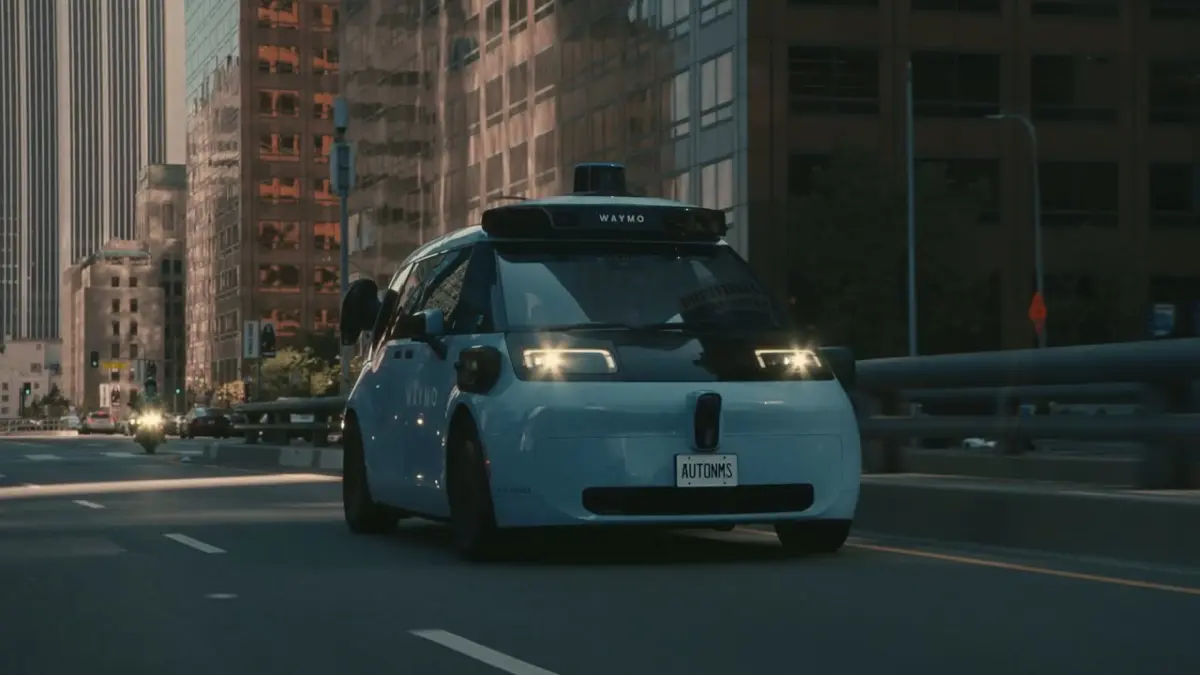
SAN FRANCISCO — In what marks a monumental tipping point for autonomous vehicle commercialization, Waymo has officially secured regulatory approval to dramatically scale its footprint across the Golden State. The Alphabet-backed robotaxi pioneer is pushing westward and inland, bringing its autonomous ride-hailing services to 18 new California counties.
This sweeping geographical expansion is not merely a milestone in mapping and permitting; it is the cornerstone of an aggressive commercial strategy. Waymo leadership has set its sights on an ambitious target: eclipsing one million paid rides by the end of the year. Backed by unrestricted operational parameters—permitting all-speed, all-zone, and all-weather service for the vast majority of California’s populace—Waymo is shifting out of its cautious, metro-centric testing phase and into high-volume mass adoption.
Main Facts
The latest regulatory green light unlocks a massive portion of California for Waymo’s fleet of autonomous Jaguar I-PACE vehicles. Unlike previous rollouts that required hyper-localized geofencing, incremental speed testing, or favorable weather conditions, this new phase grants Waymo comprehensive operational freedom across a vast swathe of the state.
- Geographic Scale: Waymo is expanding into 18 new counties across California, bridging gaps between major metropolitan hubs and secondary population centers.
- Operational Scope: The permits cover all speeds (including highway and freeway corridors), all zones (urban, suburban, and rural connecting arteries), and all weather conditions (including heavy rain and fog).
- Ridership Targets: Propelled by this massive geographical footprint, the company projects scaling past one million paid rides globally by the end of the current calendar year.
- Fleet Production: The rapid deployment is supported by an accelerated inventory influx originating from Waymo’s specialized Mesa, Arizona vehicle conversion facility, ensuring that vehicle supply scales in tandem with growing geographic demand.
Chronology of Expansion: From Testing Labs to Statewide Highways
To understand the weight of Waymo’s current expansion, it is essential to trace the deliberate, highly regulated timeline that brought the company to this juncture.
1. The Genesis: Alphabet’s Self-Driving Project (2009–2016)
Waymo began as the Google Self-Driving Car Project in 2009 under the secretive Google X lab. For years, modified Lexus SUVs and prototype "Firefly" pod cars logged millions of miles on closed tracks and select public roads in Mountain View, California, and Austin, Texas. The primary goal during this era was proving that a computer vision system could safely interpret human driving nuances.

2. Spun Out as Waymo and Early Commercialization (2016–2020)
In December 2016, the project graduated from Google X to become an independent subsidiary of Alphabet named Waymo. By 2018, the company launched "Waymo One" in suburban Phoenix, Arizona—initially as an invite-only service for trusted testers before opening it up to the general public. This marked the birth of the world’s first commercial robotaxi service.
3. Returning to California and Overcoming Regulatory Hurdles (2020–2023)
Despite its Silicon Valley roots, Waymo’s commercial deployment in California faced a labyrinth of regulatory gatekeepers, including the California Public Utilities Commission (CPUC) and the Department of Motor Vehicles (DMV). Between 2020 and 2023, Waymo slowly unlocked commercial passenger service in San Francisco and parts of Los Angeles. However, these permits were heavily restricted by geographic geofences, nighttime driving limitations, and slower speeds.
4. The Breakthrough: Unshackling the Fleet (2024–Present)
The turning point arrived when California regulators steadily dismantled operational constraints. Following successful safety demonstrations on faster-moving roads and highways, Waymo received authorization to test and operate at freeway speeds. The culmination of this regulatory evolution is the current expansion into 18 new counties, representing a shift from localized urban novelties to a ubiquitous regional transit utility.
Supporting Data: Fleet Logistics and Economic Metrics
Scaling a robotaxi network requires a delicate balance of software reliability, regulatory compliance, and physical manufacturing capacity. Behind Waymo’s software prowess lies a robust logistics and supply chain engine.
The Mesa Conversion Pipeline
Waymo does not manufacture automobiles from scratch; instead, it procures high-end electric platforms—predominantly the Jaguar I-PACE—and retrofits them with its proprietary fifth- and sixth-generation hardware suites. These suites include custom-built LiDAR arrays, 360-degree high-resolution cameras, advanced radar systems, and redundant computing units.

The company’s specialized vehicle conversion facility in Mesa, Arizona, has drastically reduced the time and cost required to turn a factory-fresh EV into an autonomous robotaxi. Recent operational updates show that the Mesa facility has ramped up output significantly, ensuring a steady stream of vehicles arrives in California and other active markets (such as Phoenix, Austin, and Atlanta) to meet escalating rider demand.
Projections Toward the One-Million Milestone
Industry analysts monitoring autonomous vehicle (AV) metrics note that Waymo’s weekly trip volume has experienced exponential compounding growth. While initial scaling added tens of thousands of rides per quarter, the addition of 18 new California counties opens up commuter corridors, airport transit routes, and densely populated suburban regions where ride-hailing demand traditionally rivals or exceeds downtown cores.
If current trajectory models hold true, crossing the one-million paid rides mark by year’s end will cement Waymo’s position as the undisputed commercial leader in western autonomous transit, vastly outpacing remaining domestic competitors.
Official Responses and Industry Reactions
The sweeping nature of Waymo’s expansion has drawn a chorus of responses from corporate leadership, municipal planners, and public safety advocates.
Waymo Leadership Perspective
Speaking on the strategic rationale behind the rollout, Waymo executives emphasized that safety data and consumer demand were the primary drivers.

"Our mission has always been to make mobility more accessible and safe," a company spokesperson noted. "By demonstrating that our autonomous driver can handle complex, high-speed, and weather-impacted environments across a wider geographic canvas, we are validating years of rigorous engineering. Reaching one million paid rides is not just an arbitrary corporate KPI; it is proof of public trust in autonomous mobility."
Municipal and Regulatory Feedback
The California Public Utilities Commission (CPUC) and local transit authorities have maintained a pragmatic approach, balancing innovation promotion with rigorous oversight. While traditional taxi unions and some municipal advocacy groups have historically pushed back against rapid automation—citing traffic congestion and emergency vehicle interaction concerns—Waymo’s updated permits include strict compliance and continuous telemetry reporting standards.
Municipalities in the newly integrated counties are adopting a hybrid posture: preparing infrastructure for digital curbside management while welcoming the potential reduction in drunk driving incidents and traffic fatalities associated with human error.
Implications: What This Means for the Future of Mobility
Waymo’s expansion into 18 new California counties carries profound implications for the automotive, tech, and urban planning sectors.
1. The Normalization of Autonomous Travel
For years, riding in a driverless vehicle was viewed as a futuristic novelty—something experienced only by tech enthusiasts in downtown San Francisco or Phoenix. By embedding autonomous options into suburban and regional transit ecosystems, Waymo is normalizing robotaxis as everyday infrastructure. Commuters who previously relied exclusively on personal cars or rideshare drivers (like Uber and Lyft) now have a viable, driverless alternative.

2. Pressure on Competitors and Traditional Rideshare Giants
The acceleration of Waymo’s hardware pipeline and regulatory approvals places immense pressure on legacy ride-hailing networks and rival AV developers. Companies like Tesla—which continues to tease its delayed "Cybercab" and unsupervised Full Self-Driving (FSD) rollout—must contend with a heavily capitalized competitor that is already legally operating millions of commercial miles without safety drivers. Meanwhile, partnerships between traditional rideshare platforms and AV providers (such as Uber’s integration of Waymo in certain markets) are likely to deepen as scaling accelerates.
3. Infrastructure and Energy Demands
Scaling a massive electric vehicle fleet places unique demands on local power grids and charging infrastructure. Initiatives like the GM Energy Pass and broader EV ecosystem integrations highlight how the automotive industry is racing to simplify charging logistics for both consumers and commercial fleets. As Waymo’s fleet grows, securing reliable, high-speed charging infrastructure will remain a critical bottleneck—and a prime opportunity for energy sector partnerships.
Conclusion
Waymo’s westward and inland push into 18 new California counties represents a watershed moment for the autonomous vehicle industry. By shedding the training wheels of restrictive geofences and speed limits, the company is proving that autonomous technology can scale reliably across diverse, complex environments. With a surging vehicle inventory out of its Mesa conversion facility and a clear runway toward one million paid rides, Waymo is no longer just testing the waters of the future of transportation—it is actively steering it.
