

Main Facts: The Critical Link Between Power and Single-Ply Performance
Despite severe global supply chain disruptions that have constrained material availability over the last several years, single-ply membrane roofing remains the undisputed dominant force in the commercial roofing sector. Thermoplastic Polyolefin (TPO), Polyvinyl Chloride (PVC), and Ethylene Propylene Diene Monomer (EPDM) continue to cover more square footage of commercial and industrial real estate than any other roofing technology.
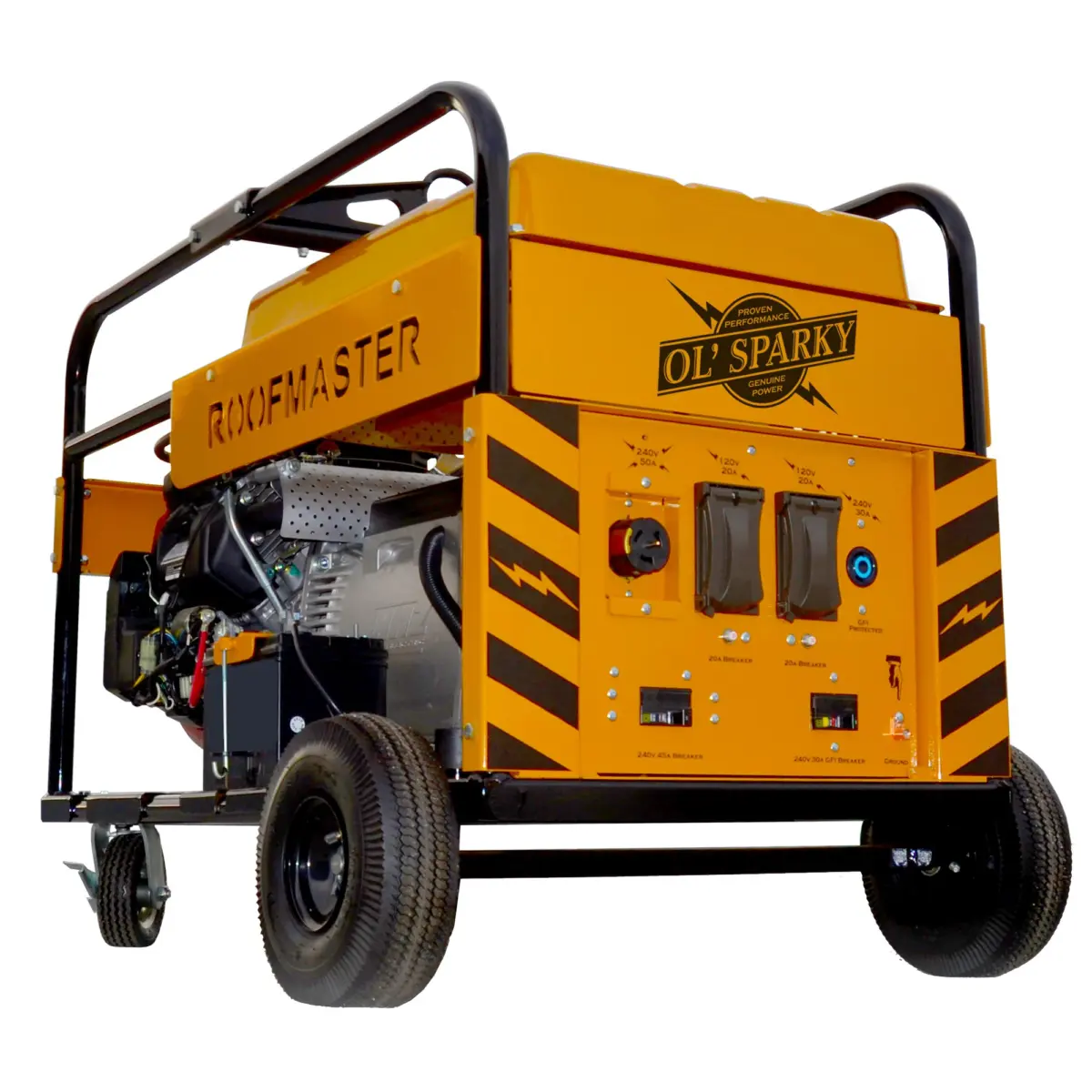
At the heart of installing these high-performance, single-ply systems is the process of hot-air welding. To achieve a watertight, monolithic barrier, roofing contractors rely on sophisticated automatic and hand-held hot-air welders—such as those manufactured by industry-standard brands like Leister. However, the operational efficacy of these advanced welding systems is entirely dependent on a frequently overlooked piece of job site equipment: the portable generator.
+-----------------------------------------------------------------+
|                    THE SINGLE-PLY POWER CHAIN                   |
|                                                                 |
|  [ Portable Generator ]  --->  [ Extension Cord ]  ---> [ Welder ] |
|  (Clean, Stable Power)         (Appropriate Gauge)       (Leister)  |
+-----------------------------------------------------------------+
In a recent industry brief, John Davis of Roofmaster® Products Company highlighted a critical operational bottleneck. While contractors often invest heavily in maintaining their high-end hot-air welding tools, they frequently neglect the generator that powers them.
Without clean, stable, and uninterrupted electrical power, even the most advanced hot-air welder will fail to reach or maintain the precise temperatures required to fuse thermoplastic membranes. This failure leads to weak seams, cold welds, and catastrophic roof leaks.
To address these vulnerabilities, specialized service networks—such as Roofmaster’s certified maintenance centers in Los Angeles, California, and Dallas-Fort Worth, Texas—are urging contractors to implement rigorous preventative maintenance protocols for their generator fleets.
Chronology: From Tar Kettles to Clean Power
To understand the modern commercial roofing landscape, one must examine the rapid technological shift that occurred over the late 20th and early 21st centuries.
  1970s - 1980s                 1990s - 2000s                2010s - Present
+----------------+            +----------------+            +------------------+
|  BUR & Asphalt |  =======>  | Single-Ply Rise|  =======>  | Digital Precision|
|  Open flames,  |            | TPO & PVC gain |            | Microprocessor-  |
|  heavy kettles |            | market share   |            | controlled welding|
+----------------+            +----------------+            +------------------+
The Era of Built-Up Roofing (1970s–1980s)
For decades, the commercial roofing industry was dominated by Built-Up Roofing (BUR) and modified bitumen systems. These applications relied on hot asphalt, open flames, and heavy tar kettles. Job sites were characterized by the smell of molten tar and the physical hazards associated with transporting superheated liquids up to the roof deck.
The Rise of Thermoplastics (1990s–2000s)
As building codes evolved and the demand for energy-efficient, reflective "cool roofs" surged, single-ply membranes (specifically TPO and PVC) rapidly gained market share. These materials offered faster installation times, lighter structural loads, and superior resistance to chemical and UV exposure.
However, this transition shifted the primary heat source from fossil-fuel-burning kettles on the ground to sophisticated electrical heating elements on the roof.
The Digital Precision Era (2010s–Present)
Modern single-ply welding equipment evolved from basic analog heating elements to highly sensitive, microprocessor-controlled machines. Today’s automatic welders constantly monitor voltage, drive speed, and air temperature to ensure a perfect weld.
This technological leap occurred just as global supply chains faltered in the early 2020s. Faced with long lead times for new equipment and materials, commercial roofing contractors were forced to extend the service life of their existing fleets, making routine generator maintenance a critical business priority rather than a secondary concern.
Supporting Data: The Technical Dos and Don’ts of Generator Maintenance
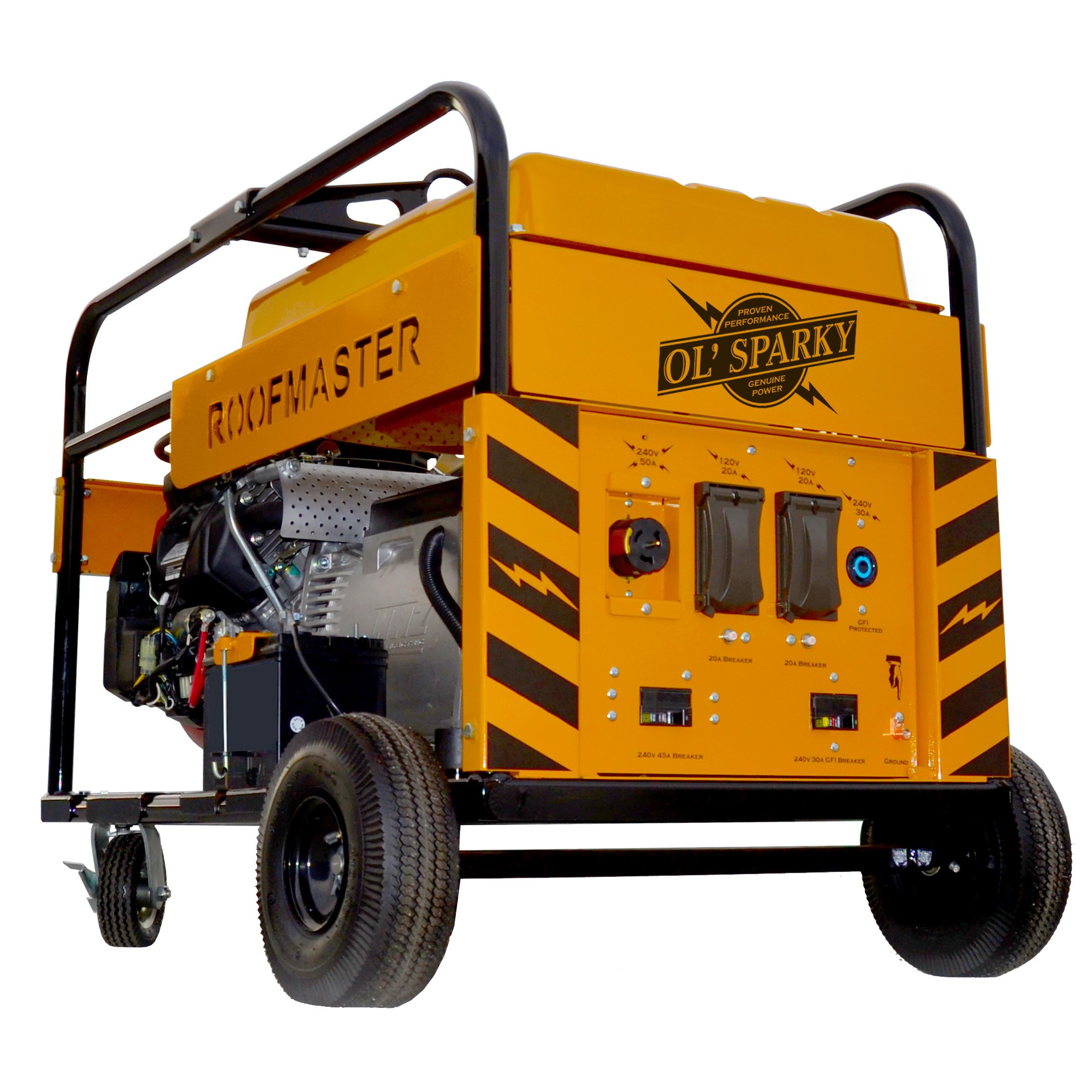
Operating a generator on a commercial roofing deck is one of the most demanding environments for any combustion engine or alternator. The equipment is subjected to intense heat, abrasive dust, asphalt fumes, and constant transportation vibration.
According to technical specifications from leading generator and welding equipment manufacturers, maintaining a stable electrical current is paramount. For example, a standard automatic hot-air welder like the Leister Varimat V2 requires a stable 230V power supply and pulls up to 4600W of power. If the generator’s voltage drops by even 10%, the welder’s heating element cannot maintain the target temperature, resulting in a "cold weld" that looks secure but will fail under wind uplift pressure.
To prevent equipment damage and costly project delays, service technicians emphasize the following comprehensive maintenance checklist:
The Generator Maintenance Checklist
| Maintenance Action | Category | Why It Matters |
|---|---|---|
| Use Clean, Fresh Fuel | DO | Stale fuel clogs carburetors and causes engine surging, which creates dangerous voltage spikes. |
| Check Air Filters Daily | DO | Roof environments are filled with dust, insulation fibers, and stone dust that choke the engine. |
| Use Heavy-Duty Extension Cords | DO | Undersized cords cause voltage drops. Use at least 10 AWG cords for runs up to 100 feet. |
| Allow Warm-up & Cool-down | DO | Running a generator at full load immediately, or shutting it down hot, damages the alternator windings. |
| Never Overload the Generator | DON’T | Running a generator near 100% capacity causes voltage sags that can fry sensitive digital welders. |
| Never Refuel a Hot Engine | DON’T | Spilled gasoline on a hot exhaust manifold is a leading cause of catastrophic job site fires. |
| Don’t Ignore Carbon Brushes | DON’T | Worn brushes cause voltage fluctuations. Inspect and replace them according to service intervals. |
Technical Analysis: Total Harmonic Distortion (THD)
A critical technical factor that contractors often overlook is Total Harmonic Distortion (THD). Standard industrial generators designed for concrete mixers or floodlights often produce electricity with a high THD (often exceeding 15%).
While crude electric motors can tolerate this "dirty" power, the digital control boards inside modern hot-air welders require clean sine-wave power with a THD of less than 5%. Running a digital welder on a high-THD generator will quickly burn out its control boards, resulting in a repair bill that can easily top several thousand dollars.
Official Responses: Industry Leaders Advocate for Proactive Servicing
In response to the growing operational challenges faced by roofing crews, manufacturers and service providers are shifting their focus toward contractor education and localized repair infrastructure.
John Davis of Roofmaster® Products Company emphasized that when generator failures occur on-site, the financial consequences accumulate rapidly. "If you do experience any of these problems, Roofmaster® Products Company has service centers with certified mechanics in multiple locations in the West, including Los Angeles, California, and Dallas-Fort Worth, Texas," Davis stated.
These dedicated regional hubs are designed to minimize downtime by providing rapid diagnostics, load-bank testing, and certified repairs for both generators and the welding equipment they power.
       [ WESTERN REGION REPAIR INFRASTRUCTURE ]

       +------------------------------------+
       |  Los Angeles Service Center        | <--- Servicing CA, NV, AZ
       |  - Certified Generator Mechanics   |
       |  - Welding Tool Diagnostics        |
       +------------------------------------+
                        |
                        v
       +------------------------------------+
       |  Dallas-Fort Worth Service Center  | <--- Servicing TX, OK, South
       |  - Emergency Fleet Inspections     |
       |  - Load-Bank Testing Facilities    |
       +------------------------------------+
Furthermore, technical representatives from the National Roofing Contractors Association (NRCA) have long advocated for daily equipment inspections. The NRCA highlights that electrical safety and equipment maintenance are intrinsically linked.
A poorly maintained generator is not only an operational liability but also a severe safety hazard. Worn insulation, ungrounded frames, and faulty circuit breakers increase the risk of electrical shock and arc flash incidents on wet roof decks.
Implications: The High Cost of Power Failures in Commercial Roofing
The implications of poor generator maintenance extend far beyond a stalled workday; they directly impact a contractor’s bottom line, reputation, and legal liability.
1. Financial Toll of Downtime
In commercial construction, labor is typically the largest variable expense. A typical eight-man single-ply installation crew can cost a contractor upwards of $500 to $1,000 per hour in wages, benefits, and overhead. If the primary generator fails at 8:00 AM, and a replacement cannot be sourced until noon, the contractor loses thousands of dollars in unproductive labor, completely erasing the profit margin of the project.
+-------------------------------------------------------------+
|               THE COST OF A GENERATOR FAILURE               |
|                                                             |
|   Idle Crew Labor (8-man crew @ $100/hr)   :  $800 / hour   |
|   Project Delay Penalties (Liquidated)     :  $500 / day    |
|   Welder Control Board Replacement         :  $1,500        |
|   Emergency Rental Generator               :  $350 / day    |
+-------------------------------------------------------------+
2. Warranty Voids and Structural Failures
Major single-ply membrane manufacturers (such as Carlisle, Firestone/Holcim, and GAF) offer comprehensive system warranties—often lasting 20 to 30 years. However, these warranties are contingent upon the roof being installed strictly according to manufacturer specifications.
If a generator’s erratic voltage output causes inconsistent seam welds, the roof is highly vulnerable to wind uplift and water infiltration. When a field inspector conducts a peel test and discovers substandard welds, the manufacturer can void the warranty, leaving the roofing contractor solely liable for any future water damage or structural repairs.
3. The Future of Job Site Power
Looking forward, the commercial roofing industry is beginning to explore alternative power solutions. The development of high-capacity lithium-ion battery power stations and hybrid generators represents the next frontier in job site utility.
These emerging technologies promise to deliver near-zero THD and whisper-quiet operation, eliminating many of the mechanical failure points associated with small internal combustion engines.
Until these advanced systems become economically viable for mainstream contractors, the humble gasoline or diesel generator remains the lifeblood of the commercial roofing site. Implementing a disciplined, proactive maintenance regimen—supported by certified regional service centers—is the most effective way for contractors to protect their equipment investments, ensure worker safety, and guarantee the structural integrity of the roofs they build.
