By Architectural Review Desk Published August 16, 2026
Main Facts
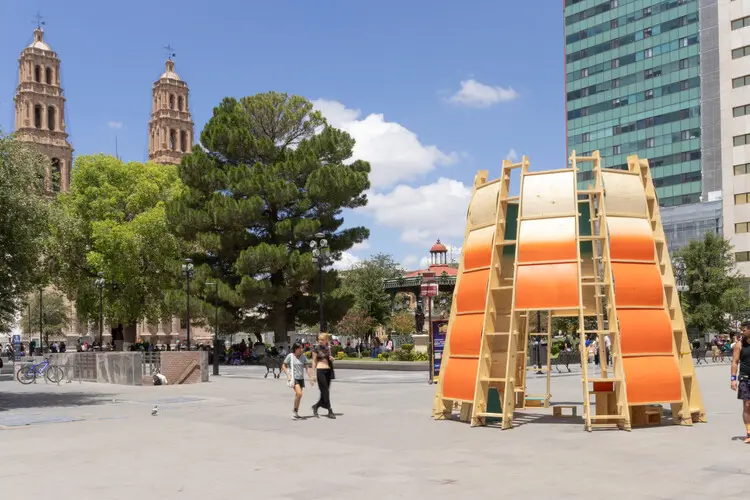
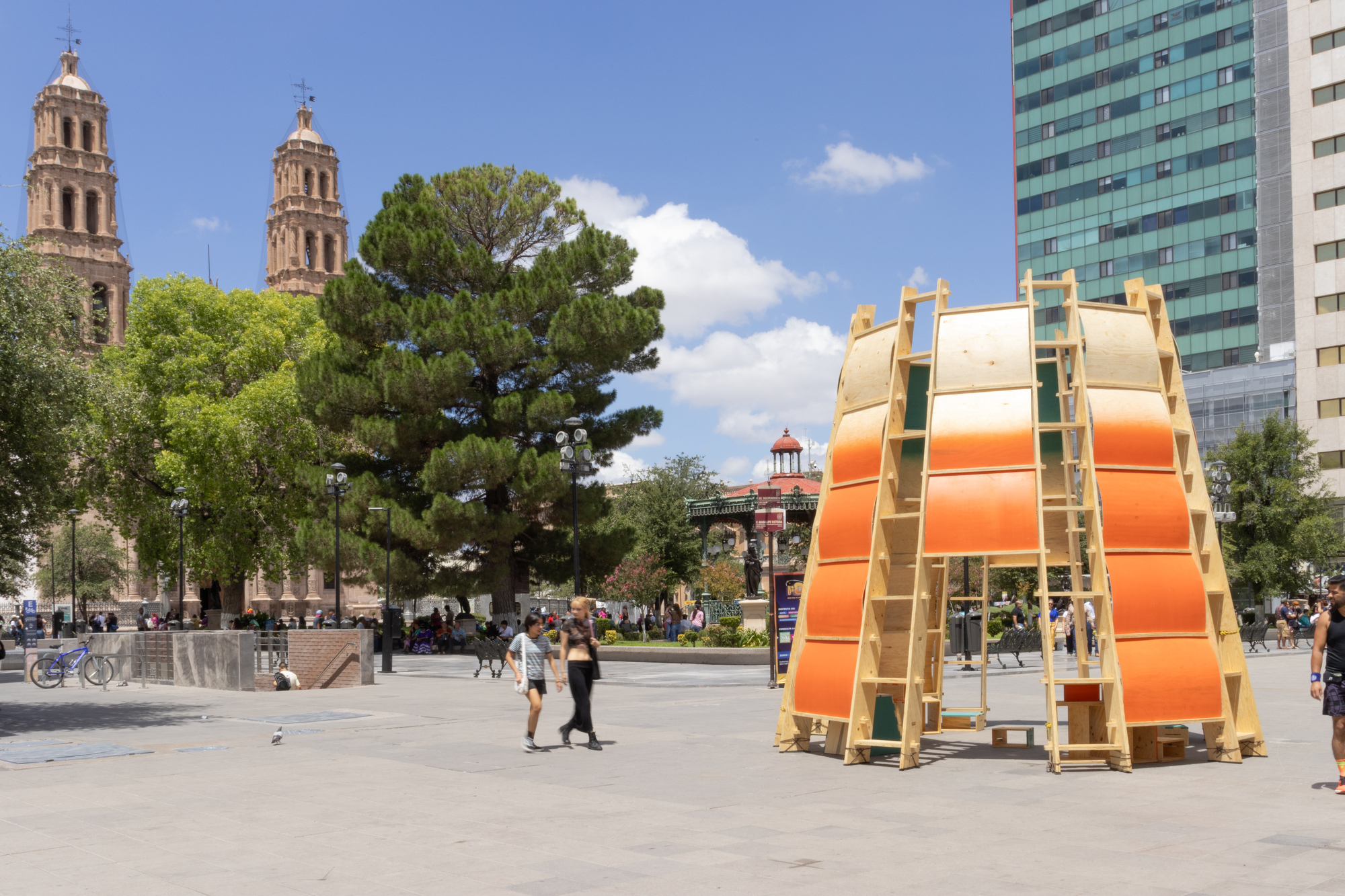
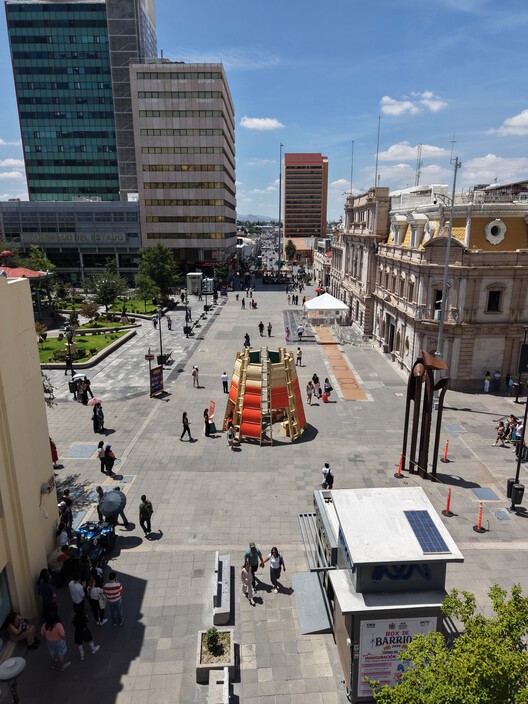
The architectural landscape of Chihuahua, Mexico, has once again been shaped by the intersection of raw academic ambition and hands-on urban intervention. During the summer of 2026, the Instituto Superior de Arquitectura y Diseño (ISAD) successfully executed the latest iteration of its flagship academic initiative: Taller del Desierto (Desert Workshop). This year’s intensive four-week program culminated in the realization of Paso Nara, a striking 1:1 scale structural intervention designed to transform and engage the local urban fabric.
For over a decade, Taller del Desierto has served as a crucible for emerging architects and designers. By breaking the boundary between traditional studio theory and physical execution, the workshop challenges students from diverse design backgrounds to transition from conceptual sketches to full-scale fabrication. Paso Nara stands as the latest physical manifestation of this pedagogy, capturing the spirit of material experimentation, contextual responsiveness, and collaborative construction unique to the Chihuahuan desert.
The project, documented extensively by architectural photographers Alexis Pereda Chánez and Santiago Ruiz Sandoval, highlights how academic institutions can actively contribute to the civic dialogue of their cities. Curated by Valentina Díaz, the project launch has drawn praise from architectural critics internationally for its rigorous material honesty and community-oriented spatial logic.
Chronology: The Evolution of Paso Nara
The journey of Paso Nara from an abstract pedagogical prompt to a built urban reality followed a rigorous, high-pressure timeline characteristic of the Taller del Desierto format.
Week 1: Research, Ideation, and Conceptualization
The workshop commenced in the early summer of 2026. Students were organized into multidisciplinary teams tasked with analyzing specific spatial deficits within Chihuahua’s urban matrix. The prompt required an intervention that could actively negotiate pedestrian flows, climatic harshness, and spatial isolation. Through rapid prototyping, scale-model testing, and site analysis, the cohort converged on the conceptual foundations of Paso Nara. The design prioritized fluid movement, structural efficiency, and an intimate dialogue with the surrounding desert environment.
Week 2: Materiality and Structural Prototyping
Moving away from digital simulations, the second week forced students to confront the physical realities of construction materials. Material experimentation took center stage. Teams tested structural load capacities, thermal performance under intense solar radiation, and fabrication techniques that could be executed with standard tools and local labor. By the end of week two, digital blueprints were translated into full-scale mock-ups, allowing the student body to iron out joinery, foundation anchoring, and ergonomic clearances.
Week 3: Fabrication and Site Preparation
With designs approved and materials secured, the focus shifted to the physical site in Chihuahua. Students transitioned from studio spaces to the construction zone. This phase demanded rigorous project management, safety compliance, and precise physical labor. Prefabricated elements were transported to the site, where foundational groundwork and structural assembly took place concurrently under the blistering summer sun.
Week 4: Assembly, Finishing, and Public Unveiling
The final week was defined by intense assembly phases, finishing touches, and structural verification. Paso Nara took its final form, integrating spatial elements that respond directly to the climatic conditions of the region. The project concluded with a formal public unveiling, inviting local residents, academic faculty, and municipal stakeholders to experience the intervention firsthand.
Supporting Data and Context
To understand the weight of Paso Nara, one must examine the institutional framework of ISAD and the unique ecological and urban constraints of Chihuahua.
The Institutional Framework of ISAD
Founded on the belief that architecture must be learned through direct engagement with material and environment, ISAD has consistently prioritized experiential learning. Taller del Desierto is not merely an elective; it is a core structural pillar of the institute’s curriculum.
Disciplines Involved: Architecture, Industrial Design, Urban Design, and Material Science.
Geographical Context: The Chihuahuan Desert—characterized by extreme thermal differentials, high solar radiation, and arid landscapes.
Materiality and Environmental Response
Paso Nara leverages specific structural properties to mitigate the harsh Chihuahuan climate.
Thermal Mass: Utilizing materials that absorb heat during peak daylight hours and slowly release it as temperatures drop, creating a microclimatic buffer.
Shadow and Porosity: The geometric configuration of Paso Nara is calibrated to maximize shadow cast during peak sun exposure while allowing prevailing desert breezes to filter through, achieving passive cooling.
Local Sourcing: In keeping with the philosophy of Taller del Desierto, materials were selected based on local availability, minimizing the carbon footprint associated with transportation and supporting regional supply chains.
Official Responses and Stakeholder Perspectives
The realization of Paso Nara has generated significant dialogue among faculty, academic leaders, and the student body, highlighting the broader implications of academic interventions in real-world settings.
Academic Leadership
Speaking on the completion of the 2026 workshop, ISAD faculty emphasized the psychological and professional shift that occurs when students build what they draw.
"When a student watches people interact with a structure they conceptualized, engineered, and physically built with their own hands, the nature of their architectural education changes permanently," noted a representative from the ISAD organizing committee. "Paso Nara is not just a pavilion; it is a testament to the resilience and capability of our students when challenged by the uncompromising realities of the desert."
Student and Curatorial Insights
Curator Valentina Díaz underscored the collaborative nature of the project. In framing Paso Nara for an international audience via platforms like ArchDaily, Díaz emphasized that the project succeeds because it refuses to treat the site as a blank slate. Instead, it listens to the site’s historical, climatic, and social cues.
Student participants echoed these sentiments, noting that the physical labor required to construct Paso Nara bridged the gap between intellectual design theories and tectonic reality. Issues of structural integrity, joint failure, and material waste—often glossed over in standard digital renderings—became immediate, high-stakes lessons on the construction site.
Implications: The Future of Urban Interventions in Chihuahua
Paso Nara and the broader legacy of ISAD’s Taller del Desierto carry profound implications for how mid-sized cities in arid climates approach public space, architectural education, and urban regeneration.
1. Democratizing Public Space
In many growing Latin American cities, public space is often an afterthought sacrificed to vehicular infrastructure or speculative real estate. Interventions like Paso Nara demonstrate that low-cost, high-design tactical urbanism can successfully reclaim neglected pockets of the city. By creating activated, shaded, and aesthetically compelling zones, these projects invite citizens to reimagine the potential of their everyday urban surroundings.
2. Pedagogy of the Hand
As architectural education becomes increasingly reliant on digital fabrication, parametric software, and virtual reality, initiatives like Taller del Desierto serve as a vital counterweight. They reassert the importance of tactile knowledge—understanding how wood splinters, how concrete cures, and how steel resists torsion under stress. This hands-on literacy produces architects who are not only visionary designers but also pragmatic builders capable of navigating site constraints with confidence.
3. Regionalist Architecture in a Globalized Era
Paso Nara reinforces the relevance of critical regionalism. Rather than importing generic international styles ill-suited to the Chihuahuan environment, the project draws its form and function directly from the exigencies of the desert. This approach offers a sustainable template for architectural development in other extreme climate zones worldwide.
Conclusion
Paso Nara stands as a milestone for the Instituto Superior de Arquitectura y Diseño. By turning the classroom inside out and placing students directly into the dust and heat of Chihuahua, ISAD has once again proven the transformative power of experiential education. As Paso Nara continues to host citizens, provoke thought, and weather the elements of the Chihuahuan Desert, it leaves an indelible mark on both its creators and the urban fabric it so thoughtfully engages.