

By Flávia Nunes
As a sweeping wave of mergers and acquisitions (M&A) reshapes the broader mortgage landscape, deal activity within the reverse mortgage sector tells a distinctly different story. Rather than making splashy front-page headlines, M&A in the reverse mortgage space is driven by underlying structural pressures, a stagnant product market, and a growing imperative to manage balance-sheet exposure.
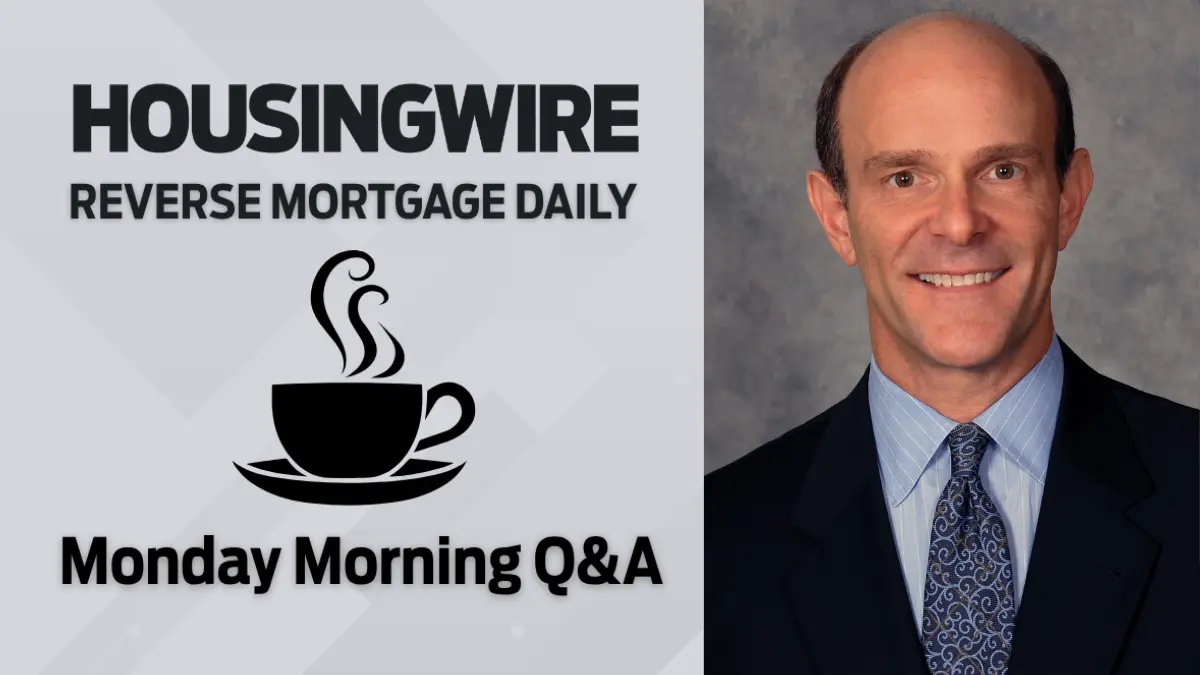
According to Michael K. McCully, a partner at New View Advisors and a veteran investment banker with more than 25 years of transaction, investment, and operational experience, the industry is undergoing a quiet but inevitable consolidation. In an in-depth interview with HousingWire’s Reverse Mortgage Daily, McCully unpacked the forces reshaping the sector, the fate of smaller independent lenders, the status of the secondary market, and why regulatory changes could make or break the Home Equity Conversion Mortgage (HECM) program.
Main Facts: The Consolidation Wave and Industry Realities
The reverse mortgage industry is currently contracting around a shrinking pool of major participants. While the forward mortgage market grapples with interest rate fluctuations and housing inventory bottlenecks, the reverse mortgage sector faces a unique set of macroeconomic and structural hurdles.
- The Two Pillars of M&A: According to McCully, M&A activity is fundamentally driven by two forces: accretion (where two companies combine to generate higher profits and operational efficiencies) and a lack of risk tolerance or excessive industry exposure. The reverse mortgage sector currently embodies both.
- Stagnant HECM Volumes: The flagship HECM product has experienced years of volume stagnation, resulting in persistent excess capacity across the origination space.
- The Rise of an Oligopoly: Issuer concentration is accelerating rapidly. Major market exits—such as Onity selling the majority of its reverse mortgage servicing rights and business lines to Finance of America (FOA)—have left just three dominant HMBS (Home Equity Mortgage-Backed Securities) issuers standing: Finance of America, Mutual of Omaha, and Longbridge.
- High Infrastructure Costs: Maintaining a viable HMBS business requires complex servicing oversight, risk management, and administrative infrastructure. For smaller players, carrying these fixed costs in a stagnant market has rendered operations economically unviable.
Chronology and Evolution: From Regulatory Hopes to Market Realities
The current state of the reverse mortgage ecosystem is the culmination of a decade of regulatory shifts, risk-mitigation measures, and unfulfilled policy promises.
The Post-2015 Risk-Mitigation Era
Following sweeping reforms implemented by the Department of Housing and Urban Development (HUD) in 2015—most notably the introduction of rigorous financial assessments for borrowers—the HECM product underwent a dramatic transformation. It evolved into a significantly safer, "belt-and-suspenders" financial instrument. While these safeguards successfully insulated the insurance fund from catastrophic losses, they simultaneously introduced friction that dampened origination volumes.
The Rise and Stall of HMBS 2.0
Hopes for a revitalized secondary market peaked when Ginnie Mae issued a Request for Information (RFI) regarding "HMBS 2.0," a structural overhaul designed to improve liquidity and market efficiency for seasoned pools. Originally slated for action, the initiative ultimately stalled.
The transition to a new presidential administration following the 2024 election further sidelined the proposal. Because HMBS 2.0 was a signature product of the Biden era, market observers like McCully note a distinct lack of political appetite within the new administration to champion an initiative inherited from its predecessor. Consequently, expectations for the program’s implementation have plummeted.
Supporting Data and Market Mechanics
Despite stagnation in HECM endorsement volumes—which have largely hovered around a modest 2,000 units per month—the secondary capital markets supporting the asset class are functioning with remarkable stability.
A Functioning Secondary Market
Contrary to fears of systemic distress, the secondary market for reverse mortgages is performing exceptionally well. McCully highlights that investor appetite for new issues remains robust. In fact, the market could comfortably absorb five to ten times current origination volumes without exhausting investor demand.
Furthermore:
- Tightening Spreads: Over the past several years, secondary market spreads have steadily tightened, reflecting growing institutional familiarity and comfort with the asset class.
- Clean Performance History: Unlike past financial cycles, there have been no notable securitization failures, dramatic valuation shocks, or unexpected losses stemming from interest rate volatility or home price appreciation trends.
- Securitization of Buyouts: Industry participants have successfully continued to securitize loan buyouts, maintaining steady liquidity channels despite the absence of HMBS 2.0.
The Burden of Upfront Premiums
The primary bottleneck keeping volume suppressed is not investor appetite, but borrower-facing friction. McCully points directly to the Initial Mortgage Insurance Premium (IMIP) as the single greatest deterrent to market growth.
"If they did one thing, one thing only, it would be to drop the initial mortgage insurance premium or make it very small," McCully asserts.
Writing a check for tens of thousands of dollars at closing for upfront mortgage insurance serves as an effective showstopper for senior homeowners evaluating the product. Given that financial assessments already ensure high underwriting standards, McCully argues that the excess insurance layer is no longer necessary and actively strangles program volume.
Official Responses and Strategic Pivots
As traditional HECM volumes plateau, market participants are actively pivoting toward alternative product lines and strategic partnerships to ensure survival.
The Growth of Proprietary Products
Non-agency and proprietary reverse mortgage products are steadily carving into HECM market share. Lenders are lowering minimum property value and borrowing thresholds, making proprietary offerings increasingly accessible.
For major lenders, maintaining a diversified product mix that includes both HECMs and proprietary offerings has acted as a critical financial lifeline. Without non-agency expansion, many firms would struggle to survive on HECM volume alone.
The Competitive Threat of Home Equity Alternatives
Reverse mortgages do not operate in a vacuum. They face fierce competition from a broad array of home equity products designed to tap into record levels of senior housing wealth:
- Home Equity Investments (HEIs): While HEIs have gained traction, they face significant regulatory hurdles. The Consumer Financial Protection Bureau (CFPB) has signaled potential moves to reclassify HEIs from equity instruments to formal debt products. Furthermore, industry veterans note structural similarities between modern HEIs and the appreciation-share products of the 1990s, which sparked costly class-action lawsuits and left a lingering negative perception among consumers.
- HELOCs and Closed-End Seconds: For homeowners determined to protect ultra-low interest rates secured during prior economic cycles, home equity lines of credit and second liens remain attractive, highly viable alternatives. Innovation within the second-lien space is expected to drive continued growth.
Implications: What Lies Ahead for Lenders and Borrowers
The structural realignment of the reverse mortgage industry carries profound implications for stakeholders across the financial ecosystem.
1. Extinction or Acquisition for Smaller Lenders
Independent originators lacking the balance-sheet depth or capital reserves to weather a flat market face a stark choice: sell out to one of the three remaining mega-issuers (Finance of America, Mutual of Omaha, or Longbridge) or wind down operations. Expect M&A activity to persist quietly behind the scenes as smaller market participants prune their balance sheets.
2. The Servicing Landscape Remains Steady
Because servicing is fundamentally a scale business, McCully does not foresee a massive rush by independent lenders to bring servicing operations in-house unless they are dissatisfied with current subservicer performance. Subservicers are expected to continue managing the space efficiently.
3. Regulatory Reform is Critical for Survival
Unless HUD and federal regulators take decisive action—specifically regarding the reduction or elimination of upfront mortgage insurance premiums—the HECM program is likely to remain locked at its current baseline of roughly 2,000 units per month. Without policy intervention, the natural attrition of market participants will accelerate, leaving an increasingly consolidated industry dependent on a narrower, more specialized infrastructure.
Conclusion
The reverse mortgage industry is transitioning from an era of fragmented competition to a highly concentrated, streamlined oligopoly. While secondary market investors show unwavering confidence in the safety and execution of reverse mortgage securities, operational viability at the origination level demands scale, capital efficiency, and product diversification. For the industry to break out of its multi-year stagnation, regulatory reform must catch up with the modern, risk-mitigated reality of senior lending.
