

BERLIN/PULA — German federal prosecutors announced Wednesday that a second suspect allegedly involved in the high-profile 2022 sabotage of the Nord Stream natural gas pipelines has been arrested in Croatia and faces imminent extradition to Germany.
The arrest marks a significant breakthrough in one of the most geopolitically sensitive criminal investigations in modern European history. The underwater blasts, which shattered critical energy infrastructure running from Russia to Germany beneath the Baltic Sea, upended European energy markets, triggered intense diplomatic fallout, and left intelligence agencies across the globe grappling for answers.
According to a statement released by the German Federal Prosecutor’s Office (Generalbundesanwalt), the suspect—identified under German privacy laws only as Vladimir Z., a Ukrainian national—was apprehended in the historic seafront Croatian city of Pula. Local Croatian police forces executed the arrest on the basis of a European Arrest Warrant issued by German authorities.
The development follows months of escalating investigative actions by German law enforcement, who are methodically piecing together the clandestine maritime operation that targeted the Nord Stream 1 and Nord Stream 2 pipelines in September 2022.
Main Facts of the Case
The core of the German prosecution’s case centers on a coordinated sabotage mission executed near the Danish island of Bornholm. Investigators allege that Vladimir Z., a trained scuba diver, played a direct operational role in placing explosive charges directly onto the underwater pipelines.
Federal prosecutors state that Vladimir Z. was operating as part of a specialized cell led by another Ukrainian national, identified as Serhii K., a former army officer. Criminal charges were officially brought against Serhii K. in July under allegations that he and his team acted on behalf of Ukrainian state entities to cripple the energy conduits.
The explosive devices detonated on September 26 and 27, 2022, rupturing both the active Nord Stream 1 pipeline—historically a vital artery for Russian natural gas exports to Western Europe—and the newly completed Nord Stream 2 pipeline, which had not yet entered commercial service due to regulatory hurdles and the outbreak of the war in Ukraine.
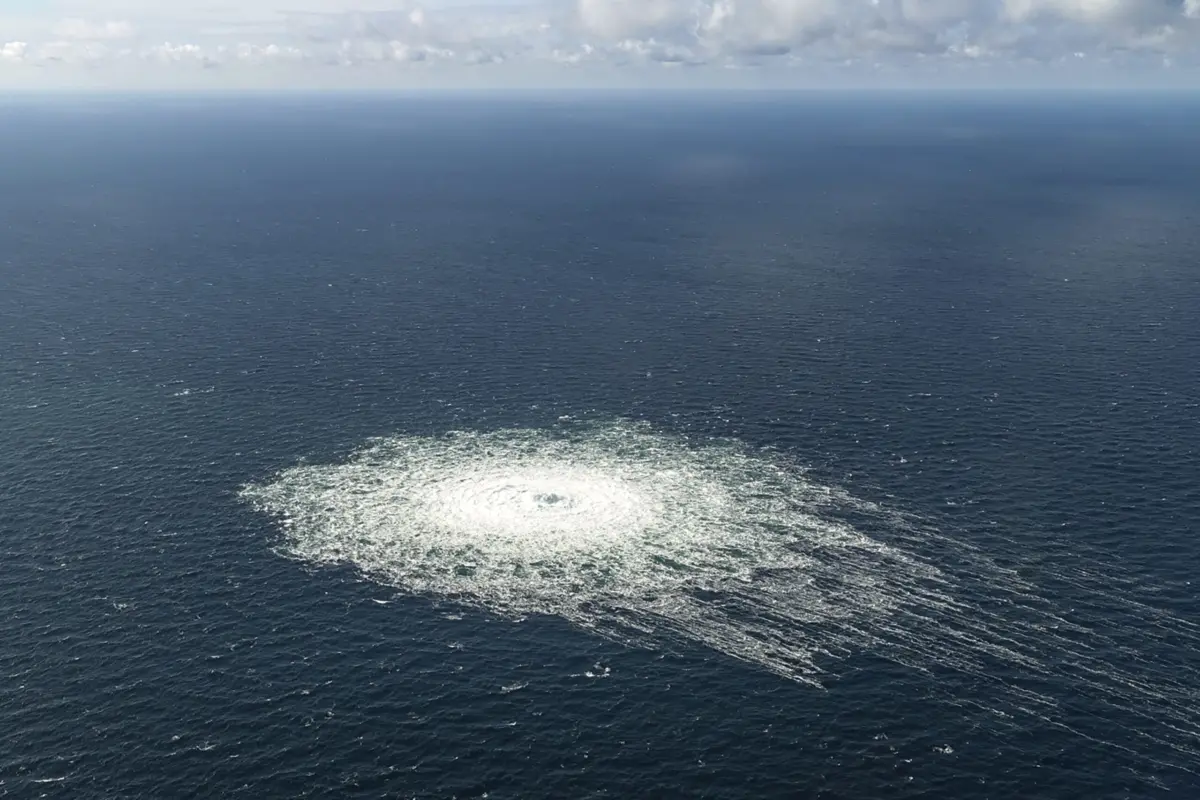
The blasts resulted in massive methane leaks that boiled up to the surface of the Baltic Sea, creating huge maritime disturbances visible from the air and prompting immediate international alarm. While no injuries were reported, the physical destruction of the pipelines effectively severed a major pillar of European energy infrastructure, sending shockwaves through global financial, insurance, and political circles.
Chronology of the Nord Stream Sabotage and Investigation
To understand the weight of Wednesday’s arrest in Pula, it is essential to trace the timeline of events from the geopolitical flashpoints of 2022 to the current legal proceedings:
- February 2022: Russia launches its full-scale invasion of Ukraine, instantly transforming European energy security into a critical theater of economic and geopolitical warfare.
- August–September 2022: Moscow progressively curtails, and eventually halts, natural gas deliveries through Nord Stream 1, citing Western sanctions and alleged technical maintenance issues. European leaders accuse the Kremlin of weaponizing energy supplies.
- September 26–27, 2022: Seismologists in Sweden and Denmark register powerful underwater explosions. Subsequent inspections reveal catastrophic structural damage and massive gas leaks at multiple points along the Nord Stream 1 and Nord Stream 2 pipelines near Bornholm Island.
- Late 2022: Preliminary maritime investigations by Sweden, Denmark, and Germany confirm that the damage was caused by deliberate, high-explosive sabotage. Sweden and Denmark later close their preliminary national probes due to jurisdictional limitations, leaving Germany as the primary driver of criminal accountability.
- July 2024: German federal prosecutors file formal charges against Serhii K., a former Ukrainian army officer, identifying him as the leader of the sabotage team.
- July 2026: Legal and financial fallout continues to mount as international insurers successfully navigate high-stakes litigation, avoiding massive multi-million-euro payouts tied to the infrastructure damage.
- Present (Wednesday): Croatian police, acting on a European Arrest Warrant, arrest the second key suspect, Vladimir Z., in Pula. German prosecutors initiate extradition proceedings to bring him to trial.
Supporting Data and Financial Fallout
The physical destruction of the Nord Stream pipelines was accompanied by unprecedented financial and economic aftershocks. At the time of the blasts, European natural gas prices had already skyrocketed in the wake of the Ukraine invasion, and the permanent loss of the pipeline capacity forced European nations to scramble for liquefied natural gas (LNG) alternatives from the United States, Qatar, and elsewhere.
Beyond the macroeconomic impacts on industrial manufacturing and consumer utility bills, the attack triggered massive commercial insurance disputes. Insurers and reinsurers faced potential liabilities running into the hundreds of millions of dollars over the pipeline destruction. However, legal resolutions—such as those avoiding an estimated €580 million hit to insurers—have gradually cleared parts of the corporate landscape, even as criminal investigations pressed forward.
Forensic investigations spearheaded by German maritime authorities relied heavily on underwater robotics, sonar mapping, and trace chemical analysis of explosive residues recovered from the seabed. Investigators managed to trace the chartering of a recreational sailing yacht, the Andromeda, which was allegedly used by the sabotage team as a surface platform to deploy divers into the Baltic depths. The identification of diving equipment rentals, false identities, and financial transactions ultimately led authorities to the doorstep of Serhii K. and, subsequently, Vladimir Z.
Official Responses and Geopolitical Sensitivities
The investigation into the Nord Stream blasts has consistently walked a diplomatic tightrope, given the high-stakes nature of the war in Ukraine and the web of accusations spanning Moscow, Kyiv, and Western capitals.
- The German Perspective: Berlin has maintained a strictly judicial approach, emphasizing that the investigation is a criminal matter being handled independently by the Federal Prosecutor’s Office and federal police (Bundeskriminalamt). German officials have underscored that regardless of the geopolitical context, the destruction of critical transnational infrastructure constitutes a grave criminal offense that must be prosecuted under the rule of law.
- The Ukrainian Stance: The Ukrainian government has consistently denied any state-level involvement in the Nord Stream sabotage. Kiev has repeatedly pushed back against suggestions that its military or intelligence apparatus authorized or executed the attack, occasionally pointing instead toward Russian false-flag operations or independent actors.
- The Russian Reaction: Moscow has seized upon Western media reports and judicial developments implicating Ukrainian nationals to demand transparency, accusing Western intelligence agencies of attempting to cover up state-sponsored terrorism. Russian officials have frequently criticized what they term a slow-walking of investigations by European nations.
Implications of the Arrest
The apprehension of Vladimir Z. in Croatia carries profound implications for the ongoing judicial process in Germany and the broader geopolitical landscape:
- Judicial Validation: The arrest validates the German prosecution’s theory that a multi-person cell carried out the attack. Securing a second suspect in physical custody allows prosecutors to test their evidence in an adversarial court setting and potentially extract further cooperation or testimony regarding the wider network.
- Extradition Challenges: While Croatia is bound by European Union law and extradition frameworks, defense attorneys for Vladimir Z. are expected to contest the transfer to Germany, raising questions regarding political motivations or the fairness of the judicial proceedings.
- Bilateral Tensions: The confirmation that suspects are Ukrainian nationals operating on behalf of state entities—as alleged by prosecutors—complicates diplomatic relations between Berlin and Kyiv. While Germany remains one of Ukraine’s staunchest military and financial backers in its war against Russia, the legal accountability for the Nord Stream blasts remains an unyielding point of friction.
- Future Security of Critical Infrastructure: The incident has permanently altered how European governments view the vulnerability of undersea fiber-optic cables, power interconnectors, and gas pipelines. NATO and the European Union have significantly ramped up naval patrols, intelligence sharing, and surveillance across the Baltic and North Seas to deter similar sabotage operations.
As extradition proceedings in Pula move forward, all eyes will turn to German courtrooms, where the trial of Vladimir Z. is expected to shed unprecedented light on the covert underwater operation that reshaped Europe’s energy architecture.
