

Main Facts
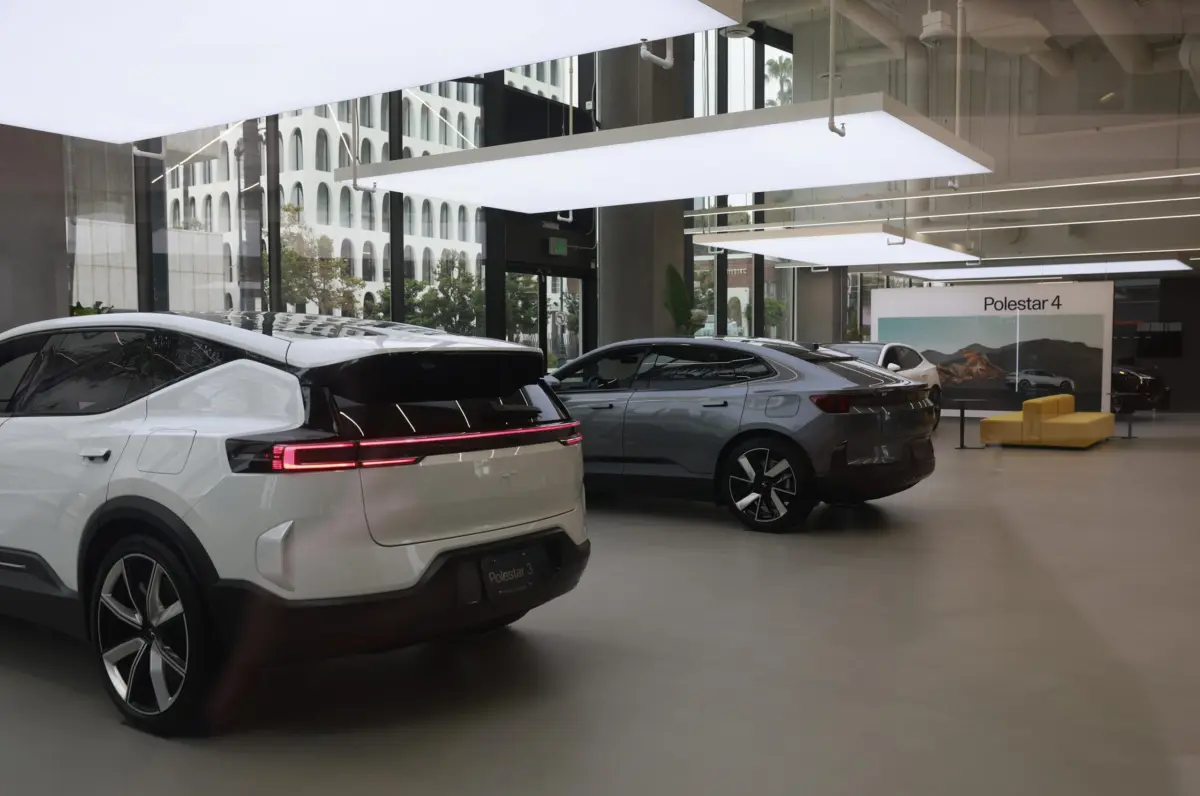
Electric vehicle manufacturer Polestar is officially retreating from the United States market, bowing out under the weight of a sweeping regulatory crackdown on connected car technology originating from China. The unfolding corporate drama—characterized by months of delayed decisions, contradictory regulatory signals, and mounting legal battles with its own dealer network—highlights the precarious intersection of national security, global automotive supply chains, and shifting geopolitical winds.
At the heart of the crisis is a federal ban targeting vehicles integrated with connected software and hardware linked to foreign adversaries, primarily China. Originally set into motion during the Biden administration, the policy materialized as a stringent regulation aimed at mitigating potential surveillance and cybersecurity risks associated with connected automotive systems. While the rule was designed to capture a broad swath of imported technology, it left room for individual exemptions and corporate applications through the Department of Commerce’s Bureau of Industry and Security (BIS).
For Polestar, the rejection felt deeply arbitrary. The brand—tied structurally and technologically to Swedish automaker Volvo Cars, which shares a majority Chinese parent company, Geely—applied for an exemption under the assumption that its software architecture and corporate governance would pass muster. After all, Volvo secured its federal greenlight in May 2026, granting the sister brand the legal authority to continue importing and selling vehicles in the United States despite its Geely backing.
Just one month later, however, the Department of Commerce slammed the door on Polestar, rejecting its application without a clear rationale. The decision forced Polestar executives to announce that the brand will completely cease selling its vehicles in the United States starting with the 2027 model year. The sudden reversal has left its American dealership network reeling, customers stranded with rapidly depreciating assets, and the company facing retaliatory litigation from disgruntled business partners who claim the automaker failed to fight aggressively enough for its survival in the world’s most lucrative automotive market.
Chronology of a Collapse
The timeline of Polestar’s exclusion from the American market is a masterclass in regulatory friction, characterized by misplaced optimism, prolonged bureaucratic evaluation, and an abrupt, unceremonious rejection.
The Application Phase (May 2025)
The saga began on May 29, 2025, when Polestar formally submitted its application to the Bureau of Industry and Security (BIS) under the Department of Commerce. Leadership at the electric vehicle maker believed the paperwork was a formality. Because Polestar models—such as the Polestar 3—share core hardware, software platforms, and supply chain origins with Volvo vehicles (specifically the Volvo EX90), executives operated under the assumption that their compliance framework would mirror Volvo’s.
The False Hope (Late 2025 – Early 2026)
Throughout the ensuing months of dialogue with federal officials, Polestar executives felt strung along. According to an August 18th letter sent to dealers by Polestar’s head of product, Peter Wexler, and subsequently obtained by The Verge and The Wall Street Journal, high-ranking Commerce Department officials provided verbal assurances that kept the company’s hopes alive.
Wexler specifically highlighted a pivotal in-person meeting with Jeffrey Kessler, Under Secretary of Commerce for Industry and Security. During their discussions, Kessler reportedly indicated that it would be entirely reasonable for Polestar to expect an approval of its applications. After all, Volvo Cars had been cleared to sell its cars under effectively the same shareholding and ownership structure, utilizing the exact same underlying hardware and software platforms found in the Polestar 3 and Volvo EX90. Emboldened by these assurances, Polestar leadership believed a favorable resolution was only a matter of time.
The Volvo Approval (May 2026)
The baseline for Polestar’s optimism materialized on May 26, 2026, when the Department of Commerce officially approved Volvo Cars to keep importing and selling its vehicles in the United States. Despite restrictions tied to its majority Chinese owner, Geely, Volvo’s regulatory clearance signaled that the administration was willing to accommodate complex international corporate structures provided certain internal safeguards were met. Polestar expected its parallel approval to follow swiftly.
The Rejection and Dealer Notification (June – August 2026)
Instead of an approval, the hammer dropped in June 2026, when the Commerce Department formally rejected Polestar’s application. The denial came without an explicit explanation for why Polestar was treated differently than its corporate sister. Realizing the US market was legally closed to its upcoming model lineups, Polestar announced it would shutter its US sales operations beginning with the 2027 model year.
By August 18, 2026, Polestar felt compelled to explain the unfolding disaster to its distribution network. The letter from Peter Wexler laid bare the administrative back-and-forth, detailing how the company had been led down a garden path before facing an immovable bureaucratic wall.
Supporting Data and Technical Realities
The conflict between Polestar and the federal government is underpinned by complex engineering realities. Modern electric vehicles are essentially computers on wheels, reliant on continuous data streams, cloud connectivity, and sophisticated software stacks to manage everything from battery efficiency to over-the-air (OTA) updates and advanced driver-assistance systems (ADAS).
The US government’s restrictions are designed around the premise that connected software originating from geopolitical rivals—specifically China—could pose a national security threat through remote access, data harvesting, or potential infrastructure disruption.
Polestar’s technological DNA is deeply intertwined with both Western and Eastern engineering pools:
- Corporate Lineage: Polestar originated as a motorsport partner to Volvo, was later acquired by Volvo, and subsequently became an independent publicly traded entity while remaining tethered to Volvo and its ultimate parent, Zhejiang Geely Holding Group.
- Platform Sharing: The Polestar 3 SUV and the Volvo EX90 are built on the same underlying vehicle architecture. They utilize remarkably similar, if not identical, electronic control units (ECUs), sensor suites, and operating software frameworks.
- The Mitigation Offer: Recognizing the sensitivity surrounding software origins, Polestar went to extraordinary lengths to propose comprehensive remediation plans. According to Wexler’s dealer letter, the company offered a multi-layered suite of mitigation measures to satisfy US regulators. These included:
- Implementing regular, independent third-party software and cybersecurity audits.
- Enforcing strict geographic restrictions on where vehicle data is stored, processed, and managed.
- Placing rigorous operational limitations on digital keys, remote-start capabilities, and cloud-based diagnostic access.
Despite these proposals, the BIS refused to negotiate. Wexler noted that the agency never engaged in substantive discussions regarding these safeguards, abruptly communicating instead that it possessed all the information required to render a final, unalterable decision.
Official Responses and Legal Fallout
The sudden termination of a major automotive brand’s US sales operations has triggered a cascade of legal friction and public relations fallout.
Polestar leadership has expressed sheer bewilderment over the disparate treatment compared to Volvo. In official statements and internal memos, the company maintains that it exhausted every reasonable avenue to demonstrate compliance, transparency, and operational security. Executives continue to press the Commerce Department for a substantive legal rationale explaining why two sister companies with identical ownership and comparable software stacks received diametrically opposed rulings.
Meanwhile, the shockwaves have slammed directly into Polestar’s retail partners. Dealerships that invested millions of dollars in exclusive showrooms, specialized EV service equipment, and local marketing are now facing an existential crisis.
The boiling point was reached when Prestige Imports, a prominent New Jersey-based Polestar dealer, filed a $25 million lawsuit against the automaker. The legal complaint alleges that Polestar engineered its own calculated exit from the United States market, accusing the company of failing to mount a sufficiently aggressive defense before regulators at the Department of Commerce and abandoning its dealer network to shoulder the financial wreckage.
The lawsuit highlights the acute vulnerability of retail partners in an era where sudden geopolitical shifts and protectionist trade policies can invalidate long-term franchise agreements overnight. As court battles loom and consumer confidence in the brand’s long-term US support wanes, Polestar’s American footprint is rapidly evaporating.
Broader Implications for the EV Industry
Polestar’s forced exit from the United States is not an isolated corporate tragedy; it serves as a watershed moment with profound implications for the global electric vehicle market and international trade dynamics.
1. The Weaponization of Supply Chain and Software Regulations
The incident signals that national security frameworks governing connected technology will be enforced with uncompromising rigidity. For automotive brands with complicated international ownership structures—particularly those with Chinese capital, manufacturing partnerships, or software development hubs—the writing is on the wall. Operating in the US market will require absolute decoupling from adversarial software ecosystems, a feat that is exceptionally difficult and expensive to achieve given the globalized nature of modern code development.
2. The Illusion of Regulatory Predictability
Polestar’s experience exposes the perils of relying on informal bureaucratic assurances. The fact that high-ranking officials reportedly signaled approval during face-to-face meetings, only for the agency to issue a flat denial without explanation, underscores a volatile regulatory environment. Automakers can no longer rely on precedent or perceived corporate parity (such as Volvo’s approval) to safeguard their investments.
3. Fallout for Consumers and Dealers
The precedent set by the Polestar ban leaves lingering questions about the long-term viability of imported vehicles caught in the crossfire of trade wars. Consumers who purchased connected EVs now face lingering concerns regarding resale values, warranty support, software updates, and parts availability. For dealerships, the case serves as a stark warning about the risks of franchise models tied to foreign-backed manufacturing entities operating in a rapidly hardening geopolitical landscape.
Ultimately, Polestar’s US collapse stands as a cautionary tale for the modern automotive industry. As governments increasingly view connected vehicles through the lens of national defense, technical compliance and corporate pedigree are no longer enough to guarantee market access—leaving brands caught between global supply chains and sovereign borders with nowhere to turn.
