

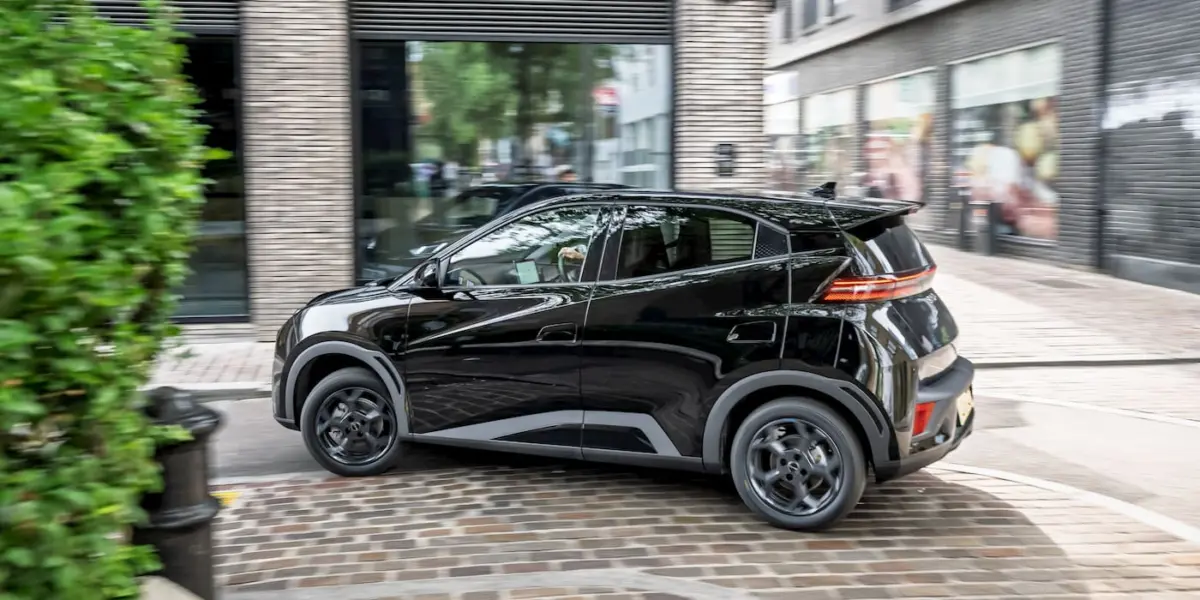
SHENZHEN, China — As the global automotive landscape rapidly pivots toward electrification, few automakers have executed a market-domination strategy quite like Build Your Dreams (BYD). Known for shaking up traditional pricing structures, the Chinese manufacturing titan is once again making headlines. Following the resounding global success of its ultra-affordable hatchback—sold internationally as the Dolphin Surf, Dolphin Mini, and simply the Seagull in its domestic market—BYD is preparing to launch a larger, more powerful, and technologically advanced sibling: the Great Seagull.
Positioned strategically between the existing Seagull and the slightly larger Dolphin within BYD’s popular Ocean series, the Great Seagull aims to bridge a critical gap in the affordable EV segment. With a scheduled market launch slated for the end of 2026, this new vehicle represents more than just a simple size upgrade; it is a calculated move to capture an even larger share of the global electric vehicle market.
Main Facts
The upcoming BYD Great Seagull is shaping up to be a formidable player in the entry-level to mid-tier electric vehicle space. Based on official regulatory filings, public teasers, and announcements made at the recent Chengdu Auto Show, here are the core facts regarding the new model:
- Strategic Positioning: The vehicle slots directly between the compact BYD Seagull and the mid-sized BYD Dolphin, adopting the newly introduced "Great" moniker (following the flagship Great Tang SUV and Great Han sedan).
- Dimensions: According to filings from China’s Ministry of Industry and Information Technology (MIIT), the Great Seagull measures 4,205 mm in length, 1,810 mm in width, and 1,570 mm in height, with a generous 2,650 mm wheelbase. This makes it substantially larger than the standard Seagull, which measures 3,780 mm long.
- Performance Upgrades: Powering the Great Seagull is a 95 kW (127 hp) electric motor, marking a massive leap forward from the 55 kW (75 hp) motor found in the standard variant.
- Advanced Technology: Spy shots and official previews confirm the integration of roof-mounted LiDAR technology, hinting at advanced driver-assistance systems (ADAS) rarely seen in this price category. It is also expected to feature BYD’s next-generation Blade Battery 2.0 and Flash Charging capabilities.
- Launch Timeline: Officially announced by Zhang Zhuo, sales boss for BYD’s Ocean series, at the Chengdu Auto Show, the Great Seagull is scheduled to officially go on sale by the end of 2026.
Chronology: The Evolution of BYD’s Global EV Phenomenon
To understand the significance of the Great Seagull, it is crucial to trace the trajectory of the vehicle it builds upon. The journey of BYD’s smallest EV platform highlights the blistering speed at which the company innovates and adapts to global demands.
Early 2024–2025: The Rise of the $10,000 Seagull
The original BYD Seagull disrupted the global automotive industry by offering a modern, functional battery-electric vehicle in China starting at a jaw-dropping 69,900 yuan (approximately $10,000 USD). Exported to various international markets under names like the Dolphin Mini and Dolphin Surf, the vehicle quickly captured the imagination of cost-conscious consumers worldwide.
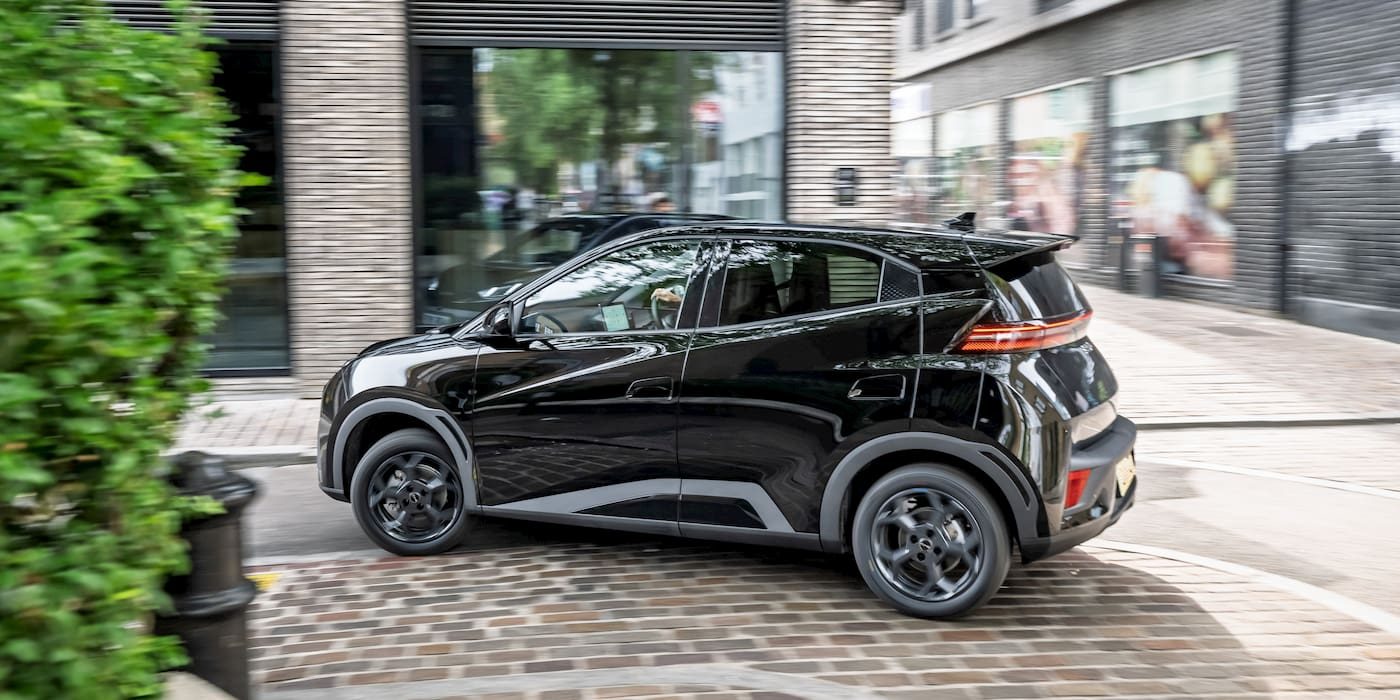
By the first half of 2026, the Seagull had cemented its status as a global powerhouse, earning the title of the sixth-best-selling electric vehicle in the world.
July 2026: The First Teaser
Rumors of an expanded lineup began swirling in July 2026 when Zhang Zhuo, the sales boss for BYD’s Ocean series, officially previewed an updated and enlarged version of the hatchback. Accompanied by a shadowy teaser image, the official caption read:
"As its silhouette gradually emerges in the shadows, the promise of growing up is about to be fulfilled. #BYDSeagull#."
While initial details were scarce, the automotive community immediately began speculating on what an "adult" version of the budget EV would entail.
August 2026: MIIT Filings and Chengdu Auto Show Reveal
The mystery deepened—and cleared up—in August 2026. First, a batch of new energy vehicles approved for sale by China’s Ministry of Industry and Information Technology (MIIT) revealed the physical dimensions and powertrain specifications of the upcoming variant.
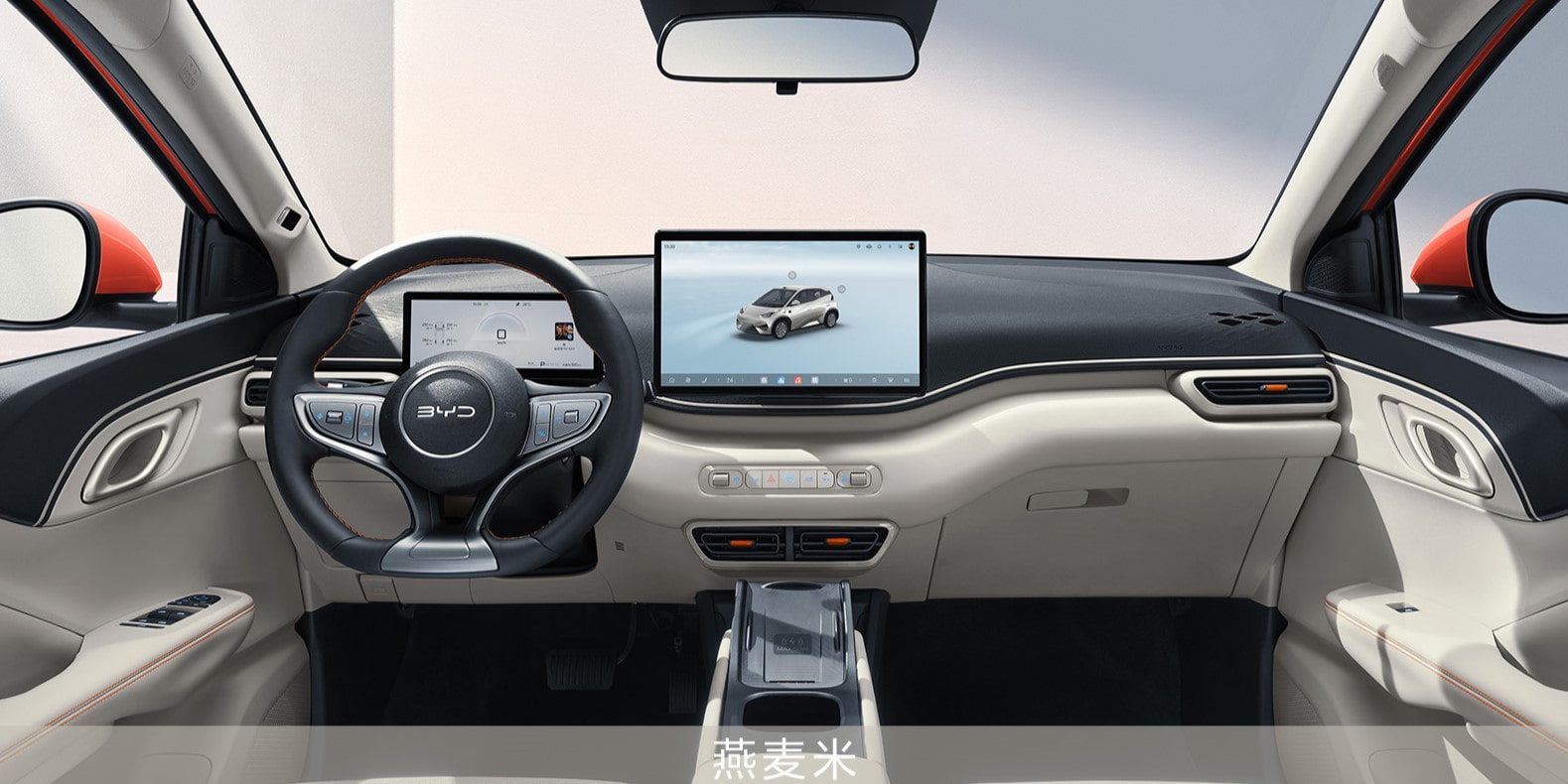
Shortly thereafter, at the high-profile Chengdu Auto Show, BYD leadership officially pulled back the curtain on the naming convention, confirming that the vehicle would bear the moniker "Great Seagull." Later that same month, leaks and spy shots gave prospective buyers their first glimpse of the vehicle’s overhauled interior, showcasing a minimalist yet futuristic cabin equipped with a floating center infotainment screen and a redesigned center console.
Supporting Data & Technical Breakdown
When comparing the upcoming Great Seagull to its smaller predecessor, the scale of the upgrade becomes immediately apparent. BYD is not merely stretching the body panels; they are elevating the entire engineering platform to compete with higher-tier segments.
| Specification | Standard BYD Seagull (2026) | Upcoming BYD Great Seagull |
|---|---|---|
| Vehicle Length | 3,780 mm | 4,205 mm (+425 mm) |
| Vehicle Width | Standard compact width | 1,810 mm |
| Vehicle Height | Standard compact height | 1,570 mm |
| Wheelbase | Compact wheelbase | 2,650 mm |
| Electric Motor Output | 55 kW (75 hp) | 95 kW (127 hp) |
| Battery Options | 30.08 kWh / 38.88 kWh | Expected Blade Battery 2.0 |
| Range (CLTC) | 305 km – 405 km | Expected extended range |
| Advanced Tech | Basic infotainment/safety | LiDAR-equipped, Flash Charging |
Dimension and Interior Space
With a length of 4,205 mm and a wheelbase stretching to 2,650 mm, the Great Seagull moves out of the micro-car category and squarely into the traditional subcompact hatchback territory. This footprint translates to significantly enhanced legroom for rear passengers and expanded cargo capacity—addressing two of the primary criticisms leveled against the smaller original model during long-distance or family use.
Powertrain and Performance
The leap from a 55 kW motor to a 95 kW (127 hp) motor is substantial. While the standard Seagull is optimized primarily for urban stop-and-go commuting, the Great Seagull’s power output suggests a vehicle fully capable of handling highway speeds with ease, offering confident passing power and a more dynamic driving experience.
Battery Technology and Charging
Though exact battery capacities have not yet been formally published, industry insiders expect the Great Seagull to debut BYD’s cutting-edge Blade Battery 2.0. Combined with the company’s anticipated Flash Charging technology, the vehicle is expected to drastically reduce replenishment times, pushing the boundaries of what consumers can expect from an affordable EV platform.

Official Responses and Industry Reactions
The announcement of the Great Seagull has sent ripples through the global automotive sector, prompting evaluations from industry analysts, competitors, and BYD executives alike.
BYD Leadership’s Vision
Speaking at the Chengdu Auto Show, Zhang Zhuo emphasized that the introduction of the "Great" naming tier—previously reserved for premium offerings like the Great Tang SUV and Great Han sedan—signals BYD’s commitment to scaling quality alongside affordability. By applying luxury-tier naming conventions to an entry-level vehicle lineage, BYD is signaling to consumers that affordability no longer equates to a compromise in build quality or technological sophistication.
Market and Analyst Perspectives
Automotive supply chain analysts have noted that the inclusion of LiDAR on a vehicle expected to retail at a highly competitive price point is a game-changer. For years, advanced perception hardware like LiDAR was restricted to luxury vehicles priced north of $40,000. BYD’s ability to integrate this technology into a subcompact hatchback highlights the aggressive cost-reduction strategies and vertical integration models that western automakers currently struggle to match.
Competitors in both domestic and international markets are reportedly rushing back to their drawing boards. European and American legacy automakers, many of which have delayed their affordable EV rollouts due to high production costs, now face a formidable challenge: a competitor that not only undercuts them on price but is actively leapfrogging them in onboard sensor technology and battery safety.
Implications for the Global EV Market
The impending arrival of the BYD Great Seagull by the end of 2026 carries profound implications for the future of mass-market electric mobility.

- Redefining Consumer Expectations: For decades, budget-friendly cars were viewed as "punishment boxes"—vehicles stripped of comfort, safety features, and aesthetic appeal. By packing the Great Seagull with LiDAR, a 95 kW motor, and a sleek, modern interior, BYD is establishing a new baseline where low cost does not mean low tech.
- Pressure on Legacy Automakers: Traditional automotive giants in Europe, the US, Japan, and South Korea are under immense pressure. As BYD continues to refine its vehicle lineup and expand its global footprint, the window for Western manufacturers to produce a profitable sub-20,000-dollar EV is rapidly closing.
- The Infrastructure and Charging Shift: With the integration of Flash Charging and advanced battery architectures, vehicles like the Great Seagull will alleviate range anxiety for urban and suburban dwellers who may not have access to dedicated home chargers. This democratization of fast-charging technology is a critical stepping stone toward total EV adoption.
What Lies Ahead?
As BYD prepares for the official commercial rollout of the Great Seagull by the end of 2026, prospective buyers and industry watchers alike will be keeping a close eye on final pricing announcements and international export strategies. If the standard Seagull’s trajectory is any indicator, the Great Seagull is poised to become an international sensation, further cementing BYD’s dominance in the global race toward an electric future.
Stay tuned for continuous updates as more official specifications, battery metrics, and global pricing details emerge.
