


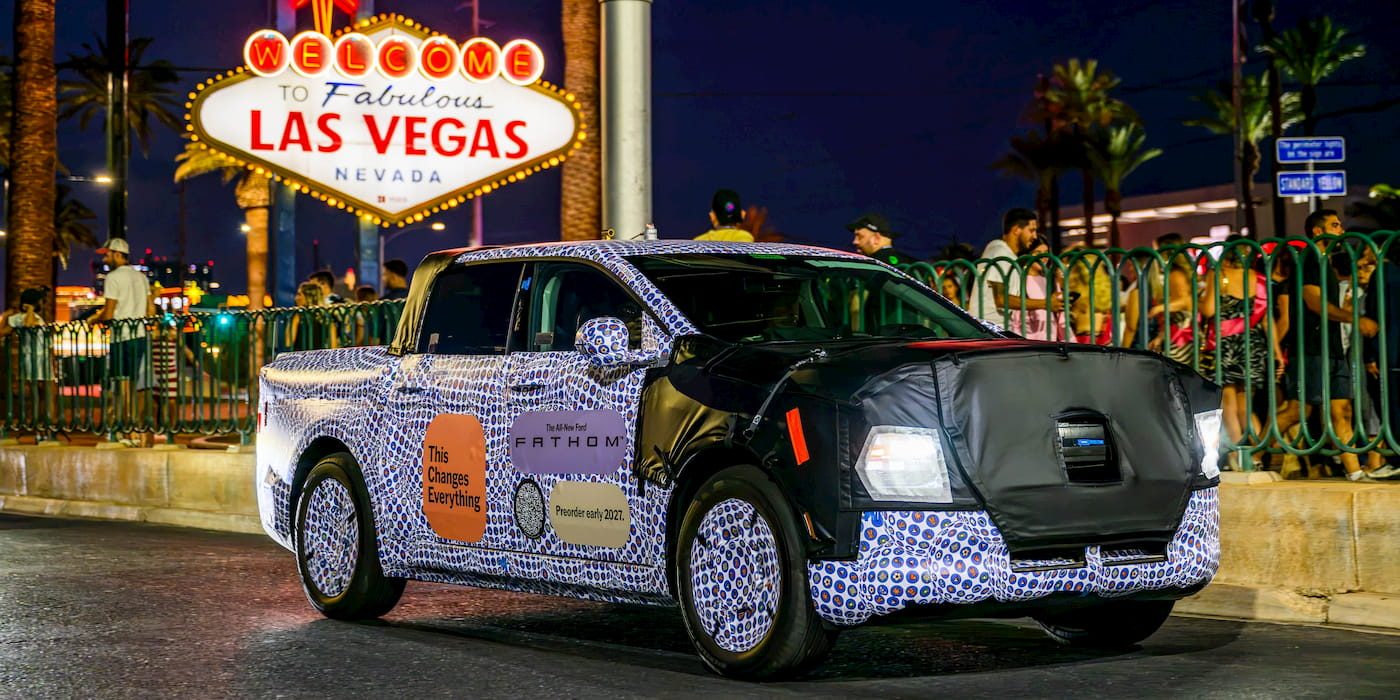
DETROIT — Ford Motor Company is officially laying the groundwork for its most ambitious electric vehicle rollout to date. While actual preorders will not go live until early 2027, the Blue Oval has officially opened an exclusive preorder invite list for the upcoming Ford Fathom—an all-electric compact-to-midsize pickup truck designed to disrupt the budget EV market with a starting price under $30,000.
Positioned as a fundamental shift from Ford’s first-generation electric architectures, the Fathom represents the debut product of the company’s new Universal Electric Vehicle (UEV) platform. With an aggressive base MSRP of $28,350 (excluding a $1,595 destination fee), the Fathom aims to cut the entry cost of an electric truck roughly in half compared to the larger F-150 Lightning.
As traditional automakers race to deliver affordable, profitable electric vehicles in the face of shifting market dynamics, the Fathom is shaping up to be a critical litmus test for mass-market EV adoption.

Main Facts: What We Know About the Ford Fathom
The Ford Fathom is engineered from the ground up to address the primary barriers to EV adoption: high purchase costs, bulky designs, and complex software integrations.
- Pricing and Availability: The standard range battery model starts at $28,350, keeping the total entry price under the coveted $30,000 threshold even after destination charges. Preorder invites are live now via Ford’s official website, with official preorders slated to open in early 2027 and customer deliveries expected later that year.
- Platform and Battery Technology: The Fathom is built on Ford’s proprietary Universal Electric Vehicle (UEV) platform. It utilizes cobalt-free and nickel-free Lithium Iron Phosphate (LFP) battery packs configured directly into the vehicle’s floor structure. This design decision reduces manufacturing costs, drops vehicle weight, lowers the center of gravity, and expands cabin room.
- Interior and Technology: Ford promises a cabin with more passenger space than a Toyota RAV4 (excluding the frunk and truck bed). It features a large central touchscreen, standard Apple CarPlay and Android Auto, a Digital Key, and Ford app remote controls. Notably, the Fathom will be the first vehicle to feature native Apple Maps EV routing integration.
- Capabilities and Performance: All Fathom variants will support BlueCruise for hands-free highway driving and feature bidirectional charging capabilities. While exact range and towing figures remain under wraps, Ford boasts that obsessive chassis engineering and instant torque will yield a 0–60 mph acceleration time matching a Mustang EcoBoost, paired with sharp handling due to its low center of gravity. Furthermore, test mules spotted at Tesla Superchargers confirm the truck will feature a native NACS (North American Charging Standard) port.
Chronology: The Road to the Fathom
The journey toward Ford’s sub-$30,000 EV truck has been marked by stealth development, prototype sightings, and strategic corporate pivots.
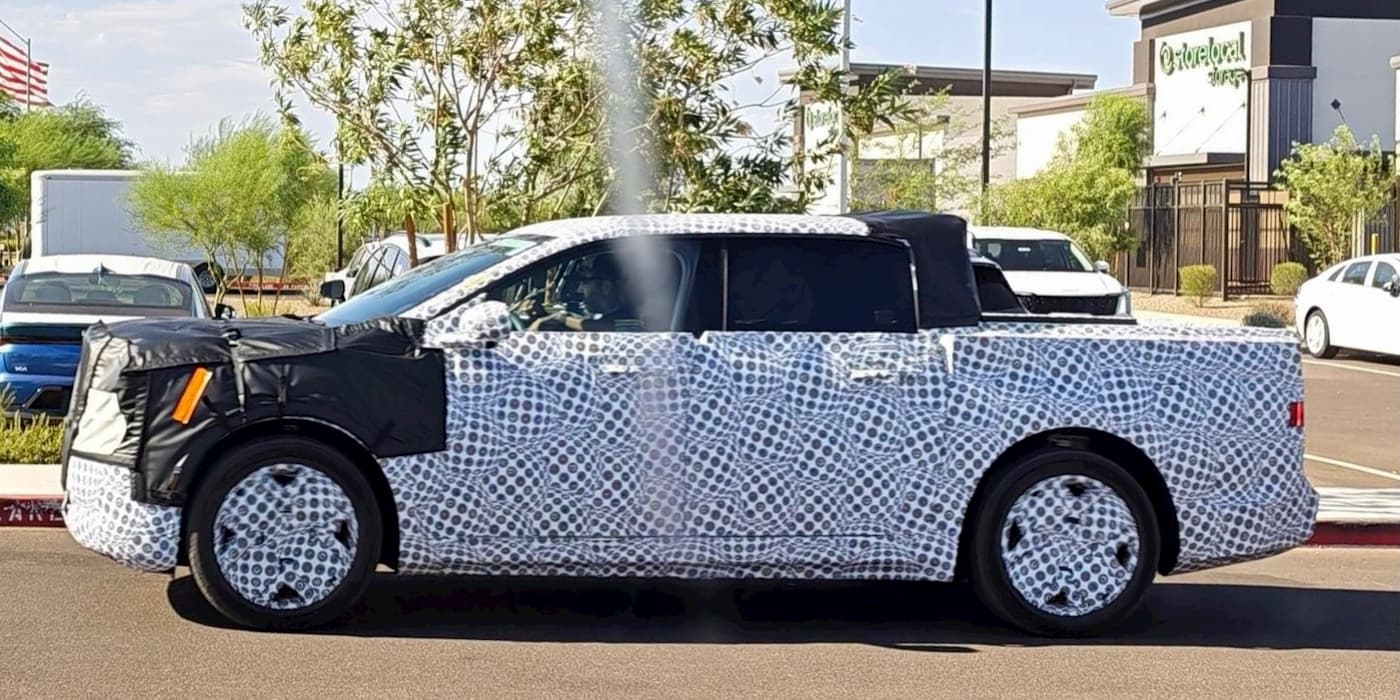
- Mid-2026 (Testing Phase): Camouflaged test mules of Ford’s mysterious midsize electric truck were spotted undergoing rigorous hot-weather testing in Arizona (captured notably by automotive channels like KindelAuto).
- July 2026: Observers caught Ford’s new EV pickup charging at a Tesla Supercharger, providing the first major clues regarding its adoption of the NACS plug standard. Shortly after, reports surfaced confirming that the vehicle would debut built-in Apple Maps EV routing.
- August – September 2026: Ford began teasing the vehicle’s silhouette and sharing broader architectural philosophies, culminating in CEO Jim Farley addressing the vehicle’s production complexities at the 2026 Automotive News Congress.
- October 2026: Ford officially opened its digital preorder invite list to the public, building a reservation funnel ahead of the official 2027 launch window.
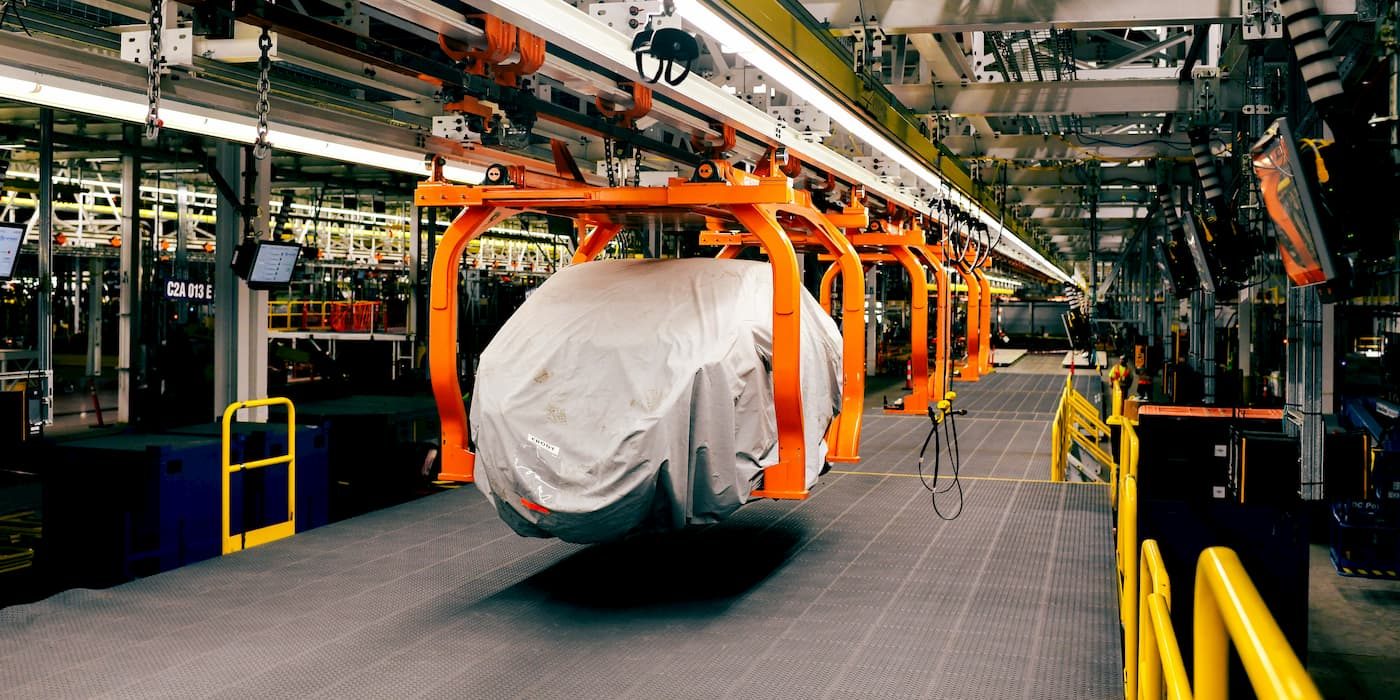
- 2027 (Upcoming): Official preorders are scheduled to open in early 2027. The first production-intent prototypes are slated to roll off the lines at Ford’s sprawling 3-million-square-foot Louisville Assembly Plant (LAP), with initial customer deliveries projected for later in the year.
Supporting Data: Economic Value and Comparative Metrics
Ford is marketing the Fathom not just on its low sticker price, but on its total cost of ownership (TCO) over time.

According to internal projections shared by the automaker, the Fathom will cost less to own over a five-year period than a three-year-old used Tesla Model Y. This aggressive financial projection relies heavily on the cost-efficiency of LFP chemistry, simplified manufacturing through the UEV platform, and reduced maintenance overhead inherent to electric drivetrains.
| Metric / Feature | Ford Fathom (Standard Range) | Ford F-150 Lightning |
|---|---|---|
| Starting MSRP | ~$28,350 (Excl. $1,595 destination) | Roughly double the Fathom |
| Platform | Universal Electric Vehicle (UEV) | Modified ICE-derived Frame |
| Battery Chemistry | Lithium Iron Phosphate (LFP) | Nickel Cobalt Manganese (NCM) / LFP |
| Charging Standard | Native NACS | CCS (via adapter/transitioning) |
| Autonomous Tech | BlueCruise-Capable | BlueCruise-Capable |
| Segment | Compact / Midsize Four-Door | Full-Size |
While Ford categorizes the Fathom as a "midsize, four-door electric pickup," automotive analysts tracking the prototypes note its physical footprint resembles a compact footprint closer to the gas-powered Ford Maverick. Final dimensions will be clarified closer to the start of production.
Official Responses: Navigating Production Realities
Developing a profitable, sub-$30,000 electric vehicle is widely considered the holy grail of the modern automotive industry—and executing it at scale carries immense risk.
During the 2026 Automotive News Congress, Ford CEO Jim Farley offered a candid assessment of the road ahead, admitting:
"It’s going to be a heck of an effort to launch this at scale, at cost, on time."
Farley’s remarks highlighted the margin pressures automakers face when trying to democratize EV technology without sacrificing financial health. However, amidst industry speculation regarding potential timeline shifts, a Ford spokesperson moved quickly to steady expectations, confirming to Electrek:
"We’ve said previously, ‘Fathom will launch in 2027’ — and there is no change to that."
The unwavering commitment to the 2027 launch timeline underscores the vital role the Louisville Assembly Plant will play in transforming Ford’s manufacturing cadence.
Implications: What the Fathom Means for the EV Market
The introduction of the Ford Fathom carries profound implications for the broader automotive landscape:
- Pressure on Competitors: For years, legacy automakers have struggled to release profitable EVs priced under $35,000. If Ford successfully delivers the Fathom at a sub-$30,000 price point with modern software integration and competitive operating costs, it will put intense pressure on rival domestic and international automakers to accelerate their own low-cost EV architectures.
- Shifting Demographics for Trucks: By offering a smaller, highly efficient, and affordable utility vehicle, Ford is targeting urban and suburban buyers who find full-size trucks like the F-150 Lightning too large or expensive, yet still require the open-bed versatility of a pickup.
- The LFP Dominance: The widespread implementation of cobalt-free LFP floor-mounted packs highlights a definitive industry pivot toward safer, more affordable, and ethically sourced battery chemistries that decouple EV pricing from volatile global mineral markets.
- Software and Charging Ecosystem Integration: By prioritizing native Apple Maps EV routing and standardizing around the NACS port, Ford is signaling that user experience and charging interoperability are no longer luxury add-ons, but baseline consumer expectations for entry-level electric vehicles.
As prospective buyers line up to secure their spots on the preorder invite list at Ford’s official portal, the automotive world will be watching Louisville closely. The Fathom is more than just a new truck; it is a blueprint for the future viability of affordable, mass-market electric transportation.
