

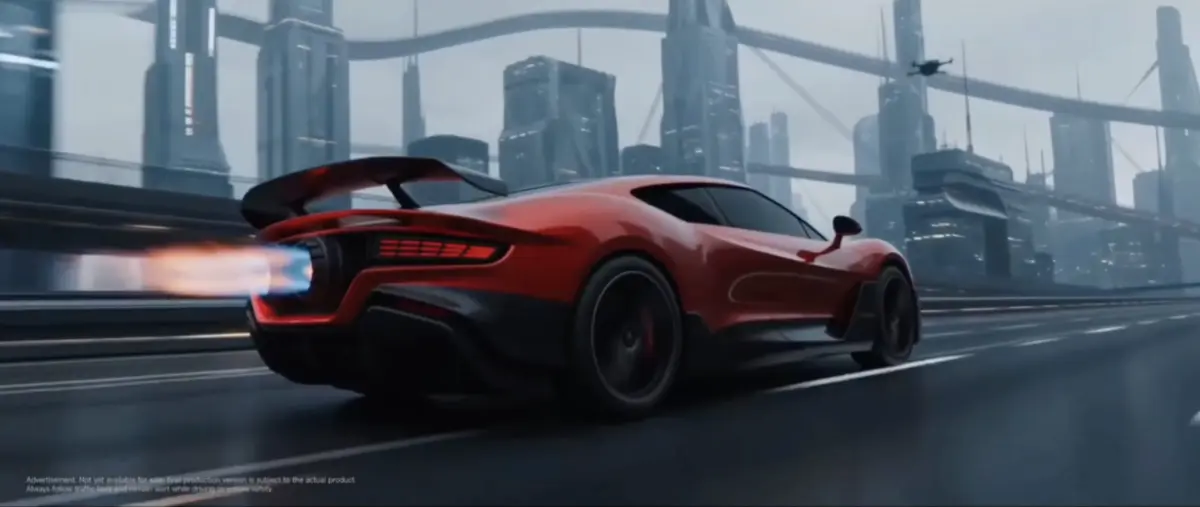
SAN FRANCISCO — In the modern automotive landscape, the announcement that a household appliance manufacturer is pivoting to the electric vehicle (EV) sector has become almost commonplace. Yet, few market entrants managed to capture headlines quite as aggressively as Dreame. Known globally for its advanced robot vacuums and high-end smart home cleaning technology, the Chinese brand shocked the industry earlier this year by promising an ultra-exclusive electric hypercar outfitted with actual solid rocket boosters, engineered to achieve a blistering 0-60 mph sprint in a scarcely believable 0.9 seconds.
That dream, however, has officially evaporated.
In a rapid pivot that caught industry analysts off guard, Dreame has officially canceled all of its automotive programs, shuttering its vehicle division just roughly a year after its high-profile entry into the market. The abrupt U-turn terminates not only the physics-defying rocket car concept but also broader plans to manufacture a traditional 1,876-horsepower electric hypercar and a luxury SUV designed to challenge the venerable Rolls-Royce Cullinan.
Main Facts: The Rise and Fall of Dreame Motors
The collapse of Dreame’s automotive division marks one of the fastest concept-to-cancellation cycles in modern industrial history.
- The Core Cancellation: Dreame has officially terminated all automotive R&D, development pipelines, and manufacturing strategies, walking away from a sector it entered aggressively in late 2025.
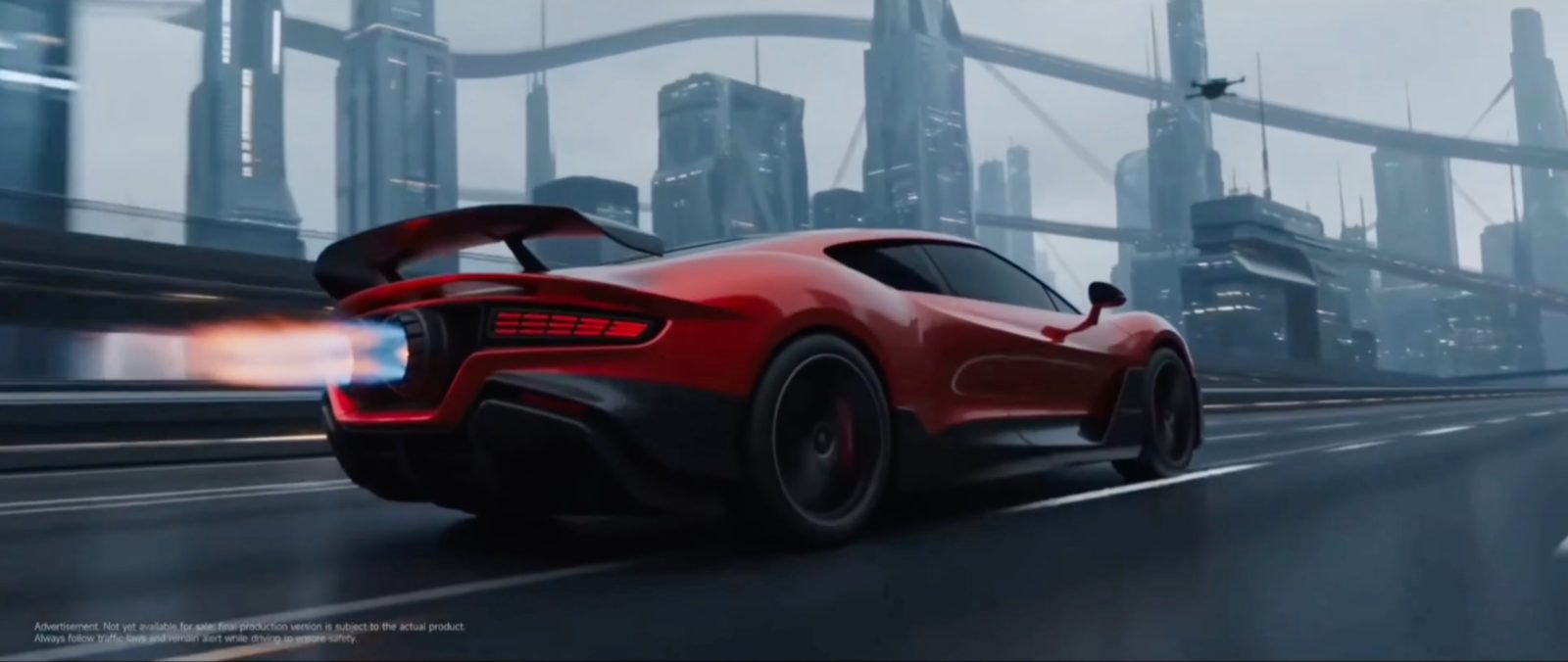
- The Rocket Car Concept: At the center of the cancellation is Dreame’s most outlandish proposal: an electric hypercar utilizing single-use solid rocket boosters to circumvent traditional tire-traction limitations, allegedly targeting a 0-60 mph time of 0.9 seconds.
- The Scale of the Cut: At its peak, the company’s automotive division employed nearly 1,000 personnel. However, the department has faced months of rolling layoffs leading up to the final announcement.
- The Broader Portfolio Scrapped: Alongside the rocket car, Dreame has scrapped plans for its 1,876-hp traditional electric hypercar and a high-end luxury SUV intended to compete in the ultra-lucrative ultra-luxury utility segment.
Chronology of an Implosion: From Robot Vacuums to Rocket Boosters
To understand how a domestic appliance brand reached the point of developing a rocket-powered passenger vehicle, one must examine the compressed timeline of Dreame’s automotive foray.
Phase 1: Entering the Luxury EV Space (August 2025 – January 2026)
Following a well-trodden path blazed by other consumer electronics giants, Dreame announced in August 2025 that it intended to diversify its portfolio by building luxury electric hypercars. The company hoped to leverage its existing expertise in high-speed electric motors—honed through years of building cordless vacuums and hair dryers—to compete against established exotic names like Bugatti.
By January 2026, the company made good on early promises by formally unveiling its debut hypercar concept at the Consumer Electronics Show (CES) in Las Vegas. At the time, company executives doubled down on their ambitions, casually noting plans to expand into adjacent high-margin luxury segments, including a heavy-hitting luxury SUV.
Phase 2: The San Francisco Apex and the Rocket Announcement (April 2026)
Dreame’s strategy shifted from ambitious to sensational in April 2026. During a major brand and product showcase event in San Francisco, the company unveiled its most audacious concept yet: a rocket-powered variant of its hypercar.
The rationale presented by Dreame targeted a fundamental engineering barrier in modern high-performance vehicles known as "traction limitation." Traditional tires can only transfer a finite amount of longitudinal force to the asphalt before breaking grip, regardless of how much electric horsepower an automaker pours into the drivetrain. By supplementing electric motors with alternative thrust vectors—specifically, solid rocket boosters—Dreame claimed it could bypass mechanical grip limits entirely, achieving a 0-60 mph acceleration time of 0.9 seconds.
Phase 3: Internal Strain, Regulatory Scrutiny, and Layoffs (May – August 2026)
While the theory behind rocket-assisted thrust has historical precedents in aerospace and experimental land-speed record cars, applying it to a street-legal consumer vehicle presented insurmountable practical challenges—not least of which being that solid rocket boosters are single-use items requiring complex refueling or replacement after a single burst of acceleration.

Behind closed doors, the division was facing severe systemic pressures. According to investigative reports from CarNewsChina and financial reporting from China Economy, the automotive wing was increasingly managed less as a dedicated long-term manufacturing enterprise and more as a high-stakes corporate marketing and fundraising exercise.
As internal capital allocation strategies faltered and potential regulatory hurdles loomed over the feasibility of the rocket car, Dreame began quietly trimming headcount. By August 2026, the layoffs turned terminal, culminating in the complete dissolution of the car project.
Supporting Data and Technical Realities
The technical feasibility of Dreame’s vehicle lineup has been a subject of intense debate among automotive engineers since the concept’s inception.
| Vehicle/Concept | Targeted Specs | Intended Market Competitor | Current Status |
|---|---|---|---|
| Dreame Rocket Hypercar | 0-60 mph in 0.9s via solid rocket boosters | Experimental / Hypercar class | Canceled (August 2026) |
| Dreame Standard Hypercar | 1,876 horsepower, BEV powertrain | Bugatti / Rimac | Canceled (August 2026) |
| Dreame Luxury SUV | Ultra-luxury utility platform | Rolls-Royce Cullinan | Canceled (August 2026) |
While electric drivetrains are inherently modular and structurally simpler to package than internal combustion engine (ICE) architectures—a factor that has famously enabled tech startups to enter the automotive arena—the financial and logistical demands of scaling an exotic vehicle program remain astronomical.
Dreame’s planned 1,876-horsepower hypercar would have required cutting-edge battery chemistries, such as the rumored 450 Wh/kg solid-state battery cells cited in domestic Chinese reports. Transitioning such high-density energy storage from laboratory benches to a certified, crash-tested production vehicle requires billions of dollars in sustained capital expenditure and years of rigorous testing—resources that ultimately outstripped Dreame’s appetite or capacity.

Official Responses and Industry Context
Neither Dreame’s executive board nor its primary public relations representatives have issued a detailed operational post-mortem regarding the specific financial metrics that triggered the shutdown. However, domestic financial publications in China have pointed to structural inefficiencies within the R&D department as the primary catalyst.
According to sources cited by China Economy, the division’s leadership structure prioritized rapid, attention-grabbing milestones over foundational engineering validation, leading to an unsustainable burn rate.
The Consumer Tech-to-EV Pivot: A Mixed Track Record
Dreame’s failure is far from an isolated incident. The broader consumer electronics and appliance industries have experienced a turbulent relationship with the automotive sector:
- The Success Stories: Not every non-traditional entrant has failed. Xiaomi, a Chinese consumer electronics giant famous for its smartphones, successfully transitioned into the automotive space with the launch of its SU7 sedan, proving that well-capitalized tech firms with robust software ecosystems can carve out meaningful market share.
- The High-Profile Casualties: Conversely, the graveyard of cross-industry EV attempts is expanding. Apple notoriously scrapped its decade-long, multi-billion-dollar autonomous vehicle initiative, "Project Titan," in early 2024. Similarly, the Sony-Honda joint venture—which promised an interactive electric vehicle where occupants could play PlayStation 5 games—was officially terminated by Honda earlier this year. Home appliance pioneer Dyson also famously poured hundreds of millions into a bespoke electric SUV before pulling the plug in 2020.
Implications: A Reality Check for Tech-Driven Hyper-Hype
The swift demise of Dreame’s automotive division carries several clear implications for the broader electric vehicle market:
- Marketing Stunts vs. Manufacturing Execution: The episode highlights an increasing industry fatigue surrounding vaporware. As startups and legacy tech brands lean into increasingly wild performance claims—such as Tesla’s recurring narrative surrounding the upcoming next-generation Roadster and its speculative propulsion technologies—consumers and investors are demonstrating diminished patience for concepts that rely on physics-defying marketing rather than viable industrial roadmaps.
- Capital Discipline in the EV Space: With venture capital and corporate boardrooms exercising tighter fiscal discipline in the wake of slowing global EV adoption rates, vanity projects outside a company’s core competencies are the first to be jettisoned. Dreame’s return to its roots—focusing on core household cleaning appliances—suggests a strategic retreat to profitability and operational focus.
- The High Cost of Hypercars: Building a mainstream EV is extraordinarily difficult; building a hypercar that pushes the boundaries of thermal management, aerodynamics, and structural integrity is exponentially harder. Dreame’s experience serves as a cautionary tale for any consumer goods manufacturer attempting to leapfrog the foundational phases of automotive engineering in pursuit of viral media attention.
Ultimately, Dreame’s high-speed venture into the electric vehicle market has come to an end, proving that while building a great robot vacuum requires technological ingenuity, building a rocket-powered hypercar takes much more than just a dream.
