

Main Facts
The electric mountain bike (e-MTB) landscape is undergoing a seismic shift, thanks to a relentless pursuit of raw power, torque, and sophisticated software integration. Bafang, a global titan in e-bike propulsion systems known for pushing technical boundaries, has officially taken the wraps off its most extreme high-performance e-MTB drives to date: the M510RS and the M560RS.
These production-ready mid-drive motors discard conventional limitations, boasting up to 1,700 watts of peak power, a staggering 150 Nm of torque, and an almost mind-bending 800% pedal assistance level. Far exceeding the traditional definitions of "pedal assist," these systems blur the line between human-powered mountain bikes and lightweight, high-mobility off-road motorcycles.
Rather than relying purely on brute force, Bafang has paired these massive figures with a state-of-the-art sensor suite. Utilizing a six-axis Inertial Measurement Unit (IMU), alongside high-precision torque, cadence, and wheel-speed sensors, the M510RS and M560RS deliver lightning-fast response times and nuanced power delivery.
The headline specifications of the new RS series include:
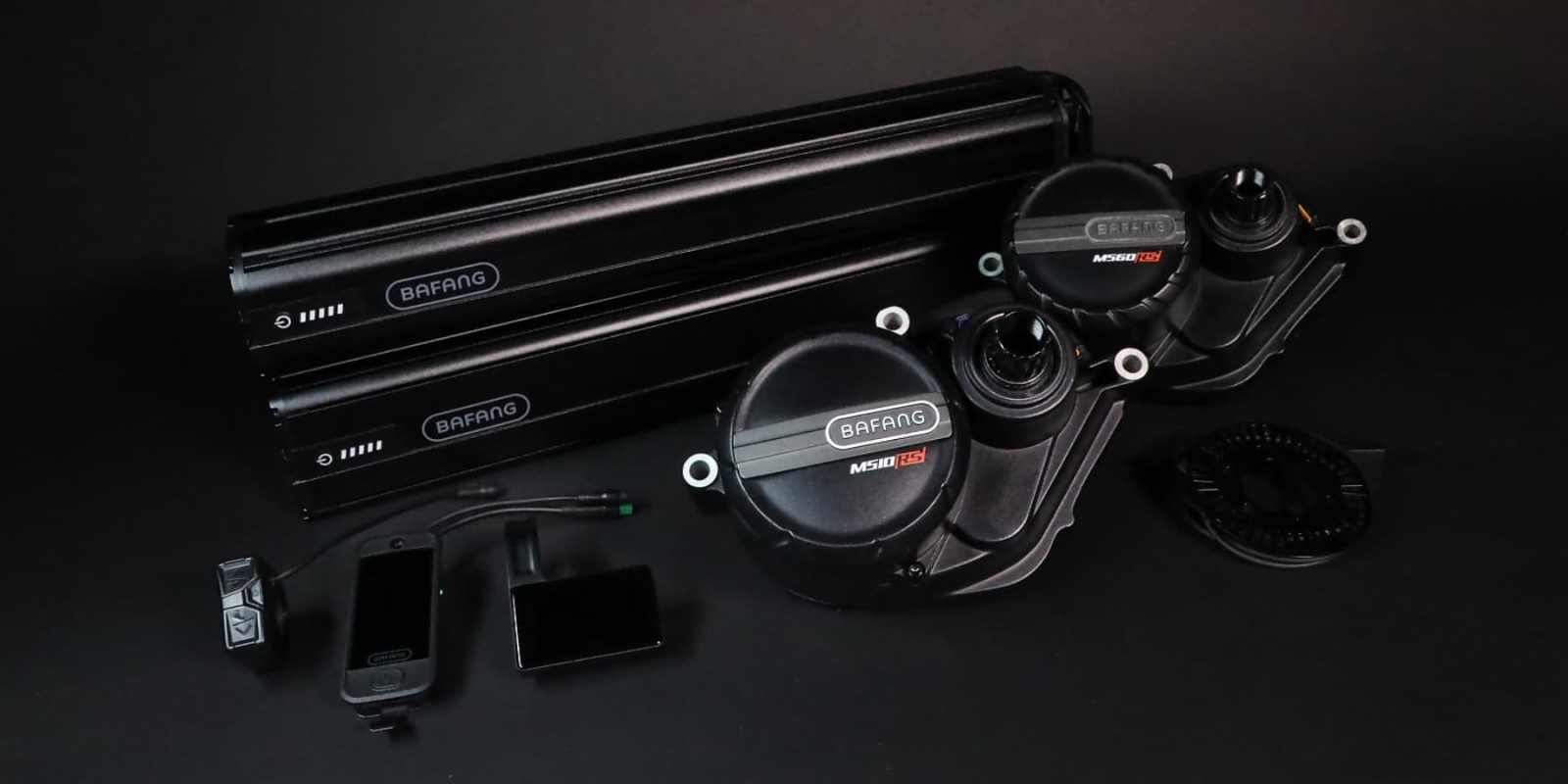
- Bafang M510RS: 110 Nm baseline torque (scaling up to 120–130 Nm via Boost-to-Limit); peak power of 1,100W on 36V systems or 1,300W on 48V setups.
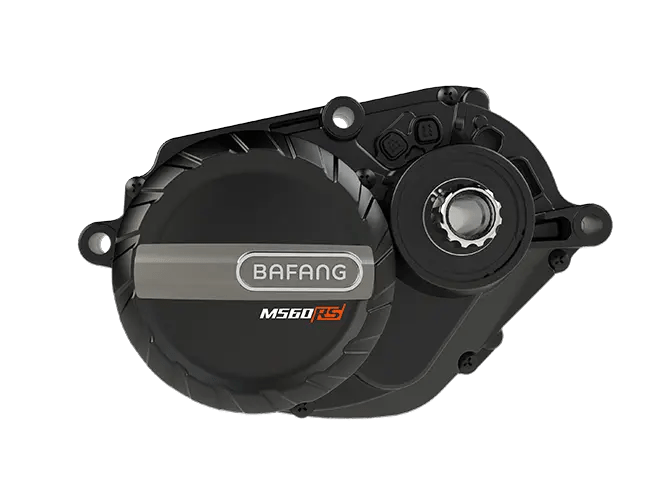
- Bafang M560RS: 120 Nm baseline torque (scaling up to a monstrous 150 Nm via Boost-to-Limit); peak power of 1,400W on 36V systems or a class-leading 1,700W on 48V setups.
- Weight: An impressively contained 3.3 kg (7.3 lb) for the M560RS.
- Assistance Modes: Up to 800% assistance in short-duration "Boost-to-Limit" overdrive and up to 500% adaptive assistance in "Sport+."
Designed strictly for aggressive off-road climbing and elite trail-blazing, these motors represent a massive leap forward in how e-MTBs conquer punishing, technical terrain.
Chronology: From Concept to Production Reality
The journey of the M510RS and M560RS from experimental engineering exercises to commercial reality has been rigorous, spanning years of development, concept staging, and competitive real-world testing.
The 2024–2025 Eurobike Concept Phase
Last year, Bafang stunned attendees at the Eurobike trade show by showcasing early concepts of high-powered, race-bred motors. At the time, industry analysts viewed the prototypes as technological showpieces—demonstrations of what could be achieved if regulatory limits and thermal constraints were temporarily set aside. Few anticipated that Bafang would move so swiftly to commercialize these ultra-high-output platforms for standard production bicycles.
The Race-Proven Development Cycle
To ensure these high-output drives could survive the absolute worst abuses dished out by professional riders, Bafang subjected the RS architecture to more than 4,000 hours of fine-tuning under extreme racing conditions. A cornerstone of this development phase involved the WES UCI E-MTB World Cup series, where engineers gathered telemetry, stress-tested thermal management systems, and refined software algorithms against the most punishing climbs and descents in professional mountain biking.
The Italian Bike Festival Debut and Production Rollout
The official public debut of the M510RS and M560RS is slated for the Italian Bike Festival in Misano, Italy, running from September 4–6. Following their showcase on the Adriatic coast, the motors will enter full series production later this year, with bicycle manufacturers integrating the systems into upcoming model-year lineups. Furthermore, the M560RS will be manufactured in variants tailored to regional regulatory frameworks, supporting European 25 km/h (15.5 mph) standards alongside US 45 km/h (28 mph) configurations.
Supporting Data: Breaking Down the Numbers
To truly appreciate the engineering achievement behind the M510RS and M560RS, one must examine the metrics relative to the broader e-mobility market.
+------------------+-----------------------+-----------------------+-----------------------+
| Motor Model      | Normal Torque         | Boost-to-Limit Torque | Max Peak Power (48V)  |
+------------------+-----------------------+-----------------------+-----------------------+
| Standard M560    | ~90–100 Nm            | N/A                   | ~750W–1,000W          |
| Bafang M510RS    | 110 Nm                | 120–130 Nm            | 1,300W                |
| Bafang M560RS    | 120 Nm                | 150 Nm                | 1,700W                |
+------------------+-----------------------+-----------------------+-----------------------+
Power-to-Weight Ratio
For a motor capable of delivering 1,700 watts of peak power, maintaining a total dry weight of just 3.3 kg (7.3 lb) is a remarkable feat of thermal and mechanical engineering. Historically, achieving four-digit wattage outputs required bulky, heavy hub motors or bespoke industrial drives. Bafang has packaged this immense kinetic energy into a compact mid-drive shell that integrates seamlessly into standard e-MTB bottom bracket areas.
Smart Sensor Architecture and Response Times
Raw power is useless if it cannot be controlled on loose gravel, slick roots, or steep, rocky ledges. The RS series addresses this through a multi-layered sensor array:
- Six-Axis IMU: Continuously monitors the bike’s pitch, roll, and acceleration vector.
- Tri-Sensor Integration: Combines torque, cadence, and wheel-speed inputs to map rider effort instantly.
- Enhanced Response Curves: Bafang claims the RS systems react 50% faster than the baseline M510 and M560 motors.
- Precision Cut-off: The system cuts motor power 33% more sensitively, preventing unexpected wheel-spin or bucking when the rider eases off the pedals in technical sections.
Convenience and Safety Features
Beyond raw performance, the drives incorporate practical trail features:
- Hill Hold: Prevents the e-bike from rolling backward during tricky, stalled starts on severe inclines.
- Updated Walk Assist: Simplifies pushing a heavy e-bike up unrideable scree or steep hiking paths.
- Backward-Compatible Mounts: Crucially for bike brands, the M510RS and M560RS utilize the same mounting interfaces as their non-RS predecessors, meaning manufacturers can adopt the new motors without redesigning entire frame geometries.
Official Responses and Industry Context
While Bafang has positioned the RS series as the ultimate tool for conquering vertical wilderness, industry reactions highlight a mixture of awe and regulatory scrutiny.
Company representatives emphasize that these drives were designed from the ground up to solve a very specific problem: the extreme demands of aggressive mountain climbing where traditional e-bikes stall out. By gathering data from elite racers in the UCI E-MTB World Cup, Bafang engineers focused heavily on making extreme power manageable rather than overwhelming.
However, industry observers are quick to contextualize the launch within the shadow of competing high-performance systems. The market has recently seen wild innovations like the DJI-backed Avinox drive systems, which have forced a race to redefine what mid-drive motors can achieve. Bafang’s leap to 1,700W decisively steals the headline power crown, pushing the entire sector into uncharted territory.

At the same time, safety advocates and municipal planners point out the growing chasm between street-legal e-bikes and off-road powerhouses. While the M560RS complies with regional speed caps when configured for local markets, its peak wattage far exceeds the 250W (EU) or 750W (US federal) continuous rating guidelines typical of general bicycle infrastructure. Bafang and its manufacturing partners are careful to market these motors strictly for dedicated off-road mountain biking, where trail access rules and rider skill sets align with extreme-performance machinery.
Implications: Do We Need 1,700 Watts on a Bicycle?
The arrival of the Bafang M510RS and M560RS forces both the cycling industry and riders to confront a philosophical question: Where is the boundary between a bicycle and a light motorcycle?
The Evolution of Trail Riding
For hardcore gravity and enduro enthusiasts, motors like the M560RS open up terrain that was previously considered unrideable or required a dirt bike to access. Steep, loose, unpaved fire roads and gnarly technical rock gardens become effortless playgrounds. The ability to pull an 800% assistance factor for short, explosive bursts transforms how riders approach punishing climbs, effectively eliminating the exhaustion barrier that keeps many riders from exploring deeper into the backcountry.
The Regulatory and Cultural Tightrope
As e-MTBs push past 1,000W and 150 Nm of torque, public land managers and hiking advocacy groups are watching closely. The distinction between a traditional mountain bike, a modest pedal-assist e-bike, and a high-powered machine capable of rivaling off-road motorcycles is narrowing rapidly in terms of performance.

If riders abuse these high-output modes on shared-use multi-use paths, political backlash could threaten access for all e-mountain bikes. Consequently, the responsibility will fall heavily on riders to use features like Boost-to-Limit respectfully and exclusively where trail conditions and regulations permit.
The Future of E-Mobility Engineering
Ultimately, Bafang’s new motors prove that the physical limits of mid-drive technology are far higher than previously assumed. The ability to squeeze 1,700W into a 3.3 kg housing while maintaining sub-millisecond sensor feedback loops sets a new engineering benchmark. Whether the average consumer needs that much power is secondary; the technology demonstrates how far electric propulsion has advanced, ensuring that the future of off-road cycling will be faster, steeper, and more exhilarating than ever before.
