

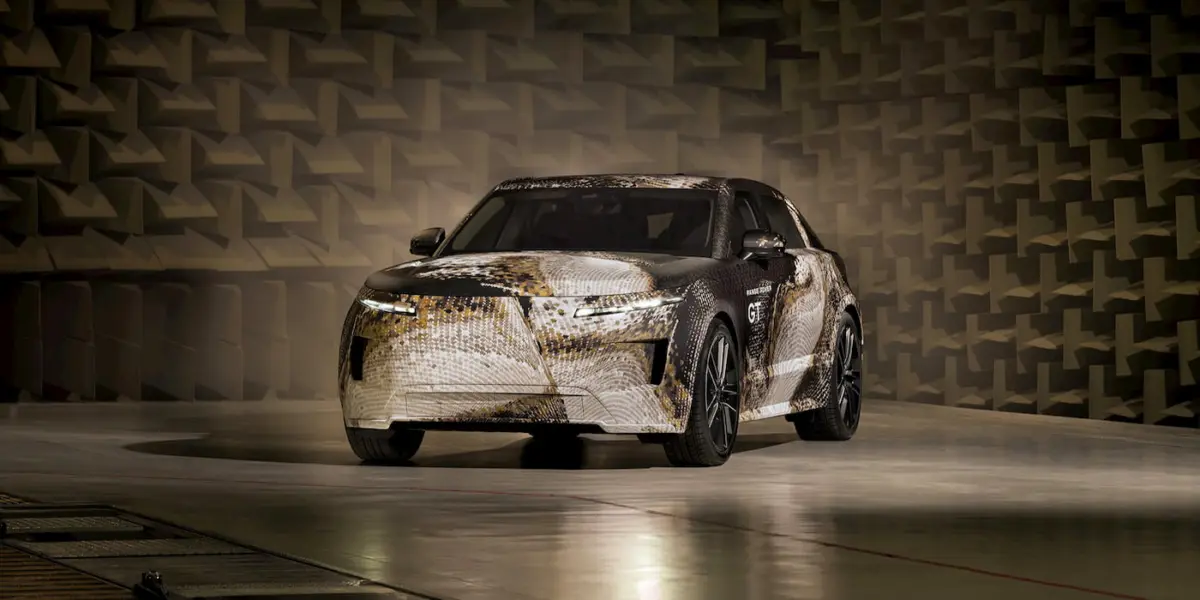
MUNICH/LONDON — Range Rover is officially expanding its illustrious family tree. Known globally for pioneering the luxury SUV segment with commanding road presence, rugged capability, and opulent interiors, the legendary British marque is taking a sharp, unexpected turn. Entering as the fifth member of the brand’s evolving portfolio, the new Range Rover GT strips away the traditional tall-riding stance of its siblings in favor of a sleek, low-slung, fastback grand tourer silhouette.
Following its initial digital unveiling last month, fresh spy shots captured by automotive insider Carchive / @Wilcoblok show heavily camouflaged prototypes pounding the pavement near Germany’s legendary Nürburgring. These real-world sightings offer a tantalizing glimpse into how Range Rover’s design philosophy translates to an aerodynamic, car-like luxury cruiser.
Beneath its striking exterior lies a monumental shift in engineering. The GT is the very first vehicle built upon JLR’s (Jaguar Land Rover) advanced Electric Modular Architecture (EMA) platform. Initially launching as a pure battery-electric vehicle (BEV), the grand tourer will also accommodate a full-hybrid (HEV) powertrain later in its lifecycle to cater to diverse global infrastructure needs. With production slated for the first half of 2027 at JLR’s Halewood facility in the UK, the Range Rover GT represents a pivotal milestone in the brand’s aggressive electrification strategy.
Main Facts: What We Know About the Range Rover GT
The arrival of the Range Rover GT is more than just a new body style; it represents an entirely new product category for a brand historically synonymous with boxy, commanding off-roaders.
- Body Style & Design: The GT breaks the mold with a dramatic fastback roofline, a lower center of gravity, and a heavily sculpted profile engineered for maximum aerodynamic efficiency. Despite its car-like proportions, executives insist it retains unmistakable Range Rover capability.
- Platform Architecture: It is the pioneer vehicle for JLR’s next-generation EMA platform, specifically engineered for zero-emission powertrains while maintaining flexibility for hybrid configurations.
- Powertrain Strategy: The vehicle will launch exclusively as a pure electric vehicle (BEV). A full-hybrid (HEV) variant will follow later in the vehicle’s production lifecycle.
- Battery & Range: While the larger flagship Range Rover Electric SUV utilizes an MLA platform with a massive 118 kWh battery (delivering up to 373 miles/600 km), the GT is expected to house a compact yet potent 100 kWh battery pack. Thanks to its aerodynamic fastback shape, engineers anticipate an astonishing driving range approaching 500 miles (800 km) globally, or roughly 300+ miles under strict US EPA testing standards.
- Pricing & Positioning: Positioned beneath the Velar in terms of vehicle packaging but commanding a premium luxury price point, the GT is expected to start above £75,000 in the UK and approximately $90,000 to $100,000 in the United States.
- Manufacturing Hub: Production will take place at JLR’s historic Halewood plant in the United Kingdom, following the rollout of the flagship electric SUV and the smaller Range Rover Sport Electric.
Chronology: The Journey to the Electric Grand Tourer
To understand how Range Rover arrived at a low-slung fastback grand tourer, it is necessary to look at the accelerated timeline of JLR’s "Reimagine" transformation strategy.
![Range Rover’s next EV breaks cover, and it’s not an SUV [Images]](https://electrek.co/wp-content/uploads/sites/3/2026/08/Range-Rover-GT-EV-spotted.jpeg?quality=82&strip=all&w=1400)
The Foundation Years (2021–2024)
JLR officially announced its sweeping "Reimagine" strategy, pledging to transition its core iconic brands—Range Rover, Defender, Discovery, and Jaguar—into modern electric luxury powerhouses. While development kicked off on the flagship MLA-based Range Rover Electric (designed to rival the heavyweights of zero-emission luxury), engineers and designers quietly began exploring the boundaries of what a Range Rover could be if weight, height, and aerodynamics were radically re-imagined.
The Digital Reveal (July 2026)
Range Rover shocked the automotive establishment by pulling the digital covers off the Range Rover GT. Billed as the fifth member of the family, the concept images showcased a sharp departure from traditional SUV geometry, blending classic British coachbuilding elegance with modern EV packaging. Industry analysts immediately dubbed it a direct challenger to ultra-luxury electric fastbacks and grand tourers.
Real-World Testing and Nürburgring Sightings (August 2026)
Barely a month after its digital debut, automotive spy photographers—most notably Wilcoblok—spotted pre-production prototypes undergoing aggressive high-speed validation testing near Germany’s gruelling Nürburgring circuit. Although swathed in disorienting geometric camouflage, the prototypes confirmed the production model’s sweeping roofline, flush door handles, and aggressive stance.
Production Roadmap (2027 and Beyond)
Following final validation tests throughout late 2026 and early 2027, the Range Rover GT is scheduled to enter serial production in the first half of 2027. It will roll off the assembly lines at JLR’s modernized Halewood, UK plant, following the commercial launches of the flagship Range Rover Electric and the upcoming Range Rover Sport Electric.
Supporting Data & Technical Specifications
When comparing the Range Rover GT to its stablemates, the architectural differences highlight how JLR is diversifying its portfolio to capture different luxury consumer segments.
![Range Rover’s next EV breaks cover, and it’s not an SUV [Images]](https://electrek.co/wp-content/themes/ninetofive/dist/images/google-preferred-source-badge-dark.png)
| Feature / Metric | Range Rover Flagship Electric SUV | Range Rover Sport Electric | Range Rover GT (Fastback) |
|---|---|---|---|
| Platform | MLA (Modular Longitudinal Architecture) | MLA-Derived / Electrified | EMA (Electric Modular Architecture) |
| Primary Powertrain | Pure Battery Electric (BEV) | Pure Battery Electric (BEV) | BEV at launch; HEV option later |
| Estimated Battery Capacity | 118 kWh | ~100–110 kWh | ~100 kWh |
| Projected Range (WLTP/Global) | Up to 373 miles (600 km) | ~350 miles (560 km) | Up to ~500 miles (800 km) |
| Estimated US Starting Price | ~$200,000+ | ~$100,000–$120,000 | ~$90,000–$100,000 |
| Manufacturing Plant | Solihull, UK | Solihull, UK | Halewood, UK |
| Market Launch Window | 2024–2026 rollout | 2026 | First half of 2027 |
The integration of the EMA platform is particularly vital. Unlike the heavier MLA platform designed for massive, ultra-luxury full-sized utility vehicles, the EMA platform is optimized from the ground up for medium-to-large electric vehicles, offering superior packaging efficiency, lower center-of-gravity placement, and exceptional structural rigidity suited for a high-performance grand tourer.
Official Responses and Interior Design Philosophy
Speaking on the design ethos of the brand’s newest offspring, Martin Limbert, Managing Director of Range Rover, emphasized that the vehicle is the culmination of years of studying the fundamental physics and emotional appeal of traditional grand tourers.
"The result is the most car-like, yet unmistakably capable, Range Rover ever created," Limbert stated during the vehicle’s initial rollout. He described the GT as "a captivating new expression" of the brand and proudly noted it is "the most technologically sophisticated model it’s ever created."
Interior: Purity, Precision, and Quiet Modernity
This obsession with sophistication heavily influences the cabin layout. Moving away from button-heavy dashboards or overwhelming digital clutter, the interior philosophy of the Range Rover GT centers entirely on tranquility and minimalism.
- The Driver’s Environment: A streamlined, minimalist driver display replaces the traditional, bulky instrument cluster, working in tandem with a sweeping, high-definition central touchscreen infotainment system that handles core vehicle controls.
- Acoustic and Visual Calm: To eliminate cabin fatigue, designers implemented invisible technology. Discreet, concealed air vents span the entire width of the dashboard, distributing climate control uniformly without intrusive plastic registers.
- Tactile Materials: Rich, sustainable woven textiles wrap around dashboard surfaces, cleverly concealing integrated premium audio speakers behind acoustic fabric to maintain an unbroken, serene aesthetic.
Implications: What the GT Means for the Luxury Automotive Market
The introduction of the Range Rover GT carries profound strategic implications for both JLR and the broader luxury automotive ecosystem.
![Range Rover’s next EV breaks cover, and it’s not an SUV [Images]](https://electrek.co/wp-content/themes/ninetofive/dist/images/google-preferred-source-badge-light.png)
1. Diversification Beyond the SUV Monopoly
For decades, Range Rover has been almost exclusively defined by high-riding utility vehicles. By introducing a low-slung, highly aerodynamic grand tourer, the brand is proving that its prestige does not rely solely on ride height. It opens the door to affluent buyers who appreciate Range Rover’s peerless craftsmanship, leatherwork, and prestige, but prefer the dynamic handling, lower profile, and effortless cruising capability of a traditional sports-luxury sedan or fastback.
2. Validation of the EMA Platform
As JLR’s first vehicle utilizing the new Electric Modular Architecture (EMA), the GT serves as a literal and figurative proving ground. If the EMA platform can successfully deliver a 500-mile range capability paired with sports-car driving dynamics, it will validate JLR’s multi-platform EV strategy and provide a competitive blueprint for future electrified models across the wider corporate umbrella.
3. Redefining Electric Efficiency
While early electric vehicles focused heavily on raw horsepower and massive, heavy battery packs to secure impressive ranges, the Range Rover GT highlights a smarter design philosophy: aerodynamic efficiency. By marrying a sleek fastback silhouette with an optimized 100 kWh battery, Range Rover is demonstrating that lightweight design, wind-cheating profiles, and intelligent thermal management are the true keys to sustainable luxury touring.
As development wraps up and the official global debut approaches later this year, the automotive world will be watching closely to see how this radical British grand tourer performs when it finally hits showroom floors in 2027.
