

Main Facts
Every seasoned tradesman reaches a crossroads in their professional journey where investing in top-tier hand tools transcends a simple luxury and becomes a calculated decision to maximize productivity, reduce bodily wear-and-tear, and elevate craftsmanship. When the conversation turns to elite framing hammers, two American-made titans inevitably dominate the jobsite debate: Stiletto and Martinez.
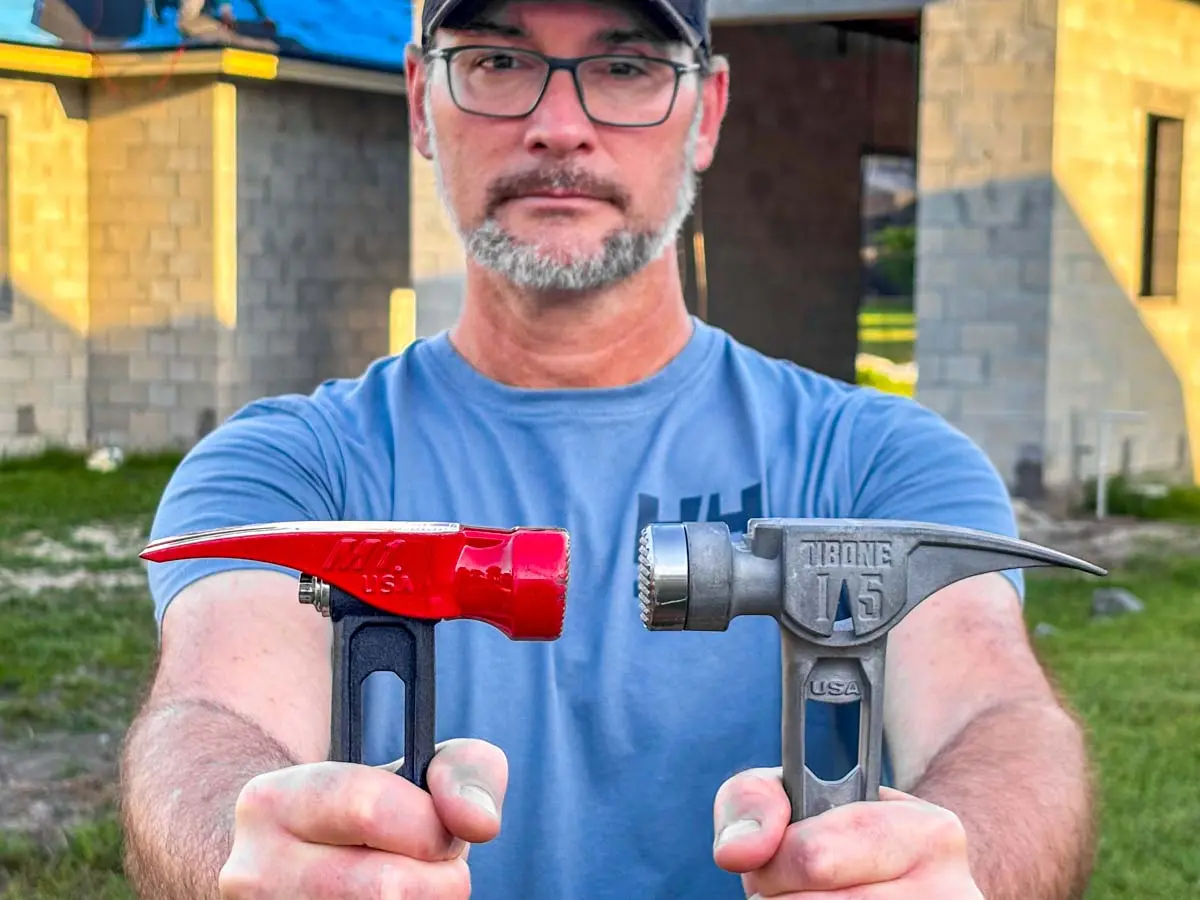
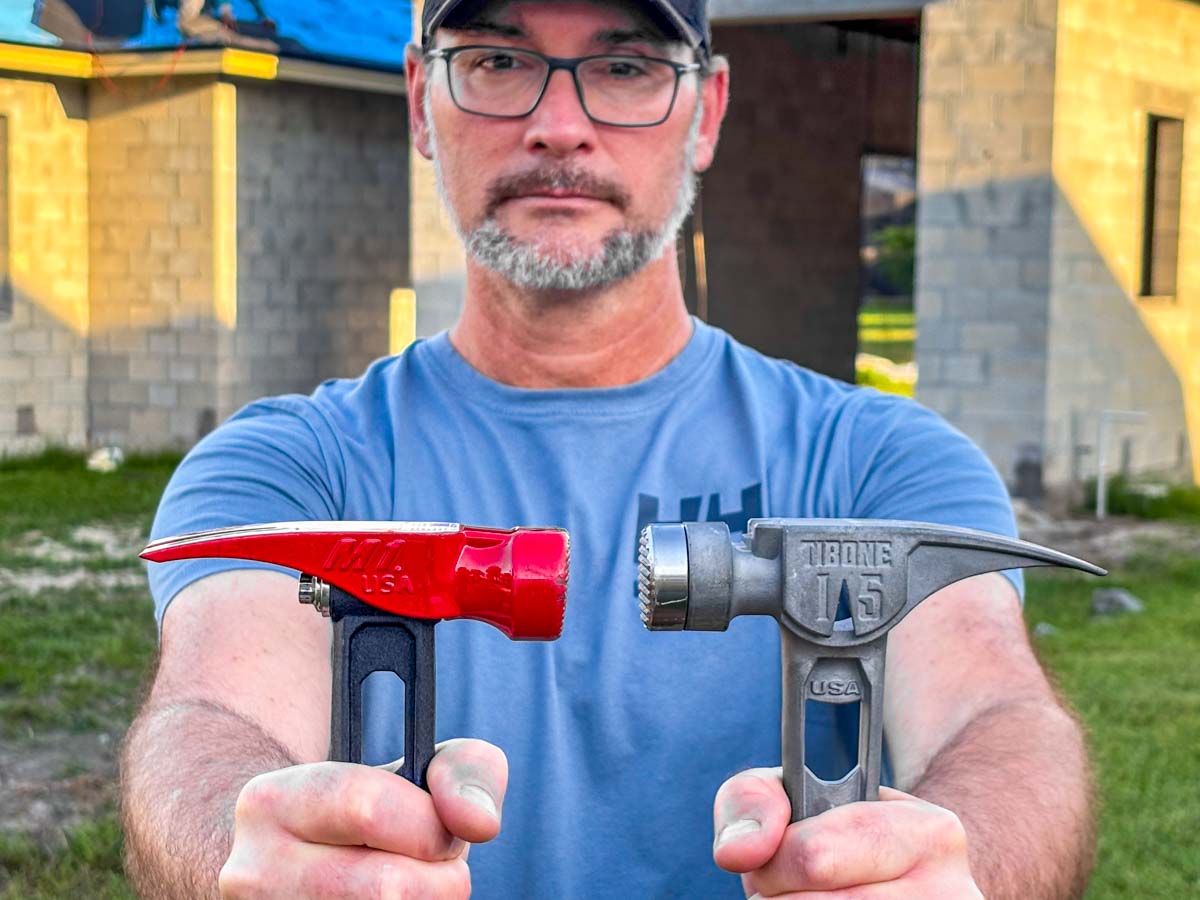
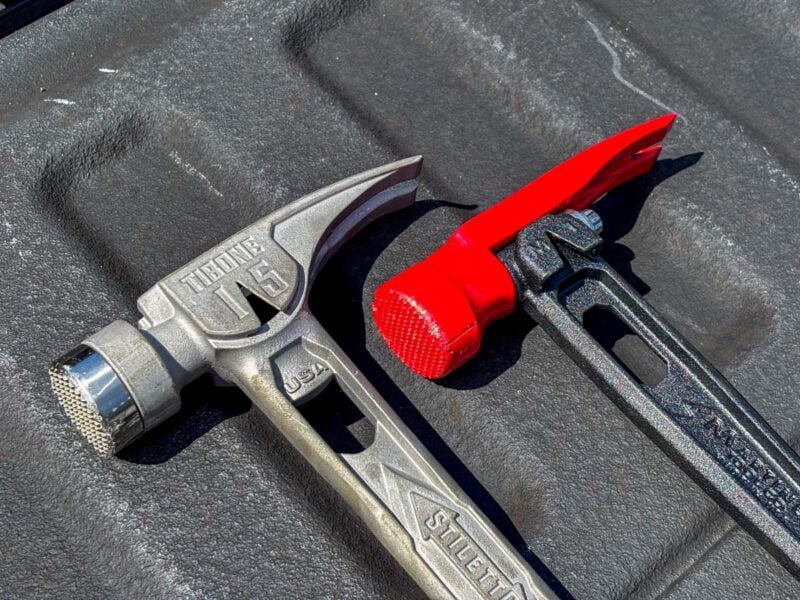
To settle the score, testers spent hours pounding hundreds of framing nails under grueling, high-fatigue conditions. The showdown features two flagship 15-ounce milled-face framing tools: the Stiletto TiBone (Model TIB15MC) and the Martinez M1 "Red Headed Stepchild" (Model M1).
Both tools proudly bear the "Made in the USA" stamp of approval, commanding steep price tags that reflect premium domestic manufacturing, high-grade materials, and targeted engineering. However, their structural philosophies diverge significantly.
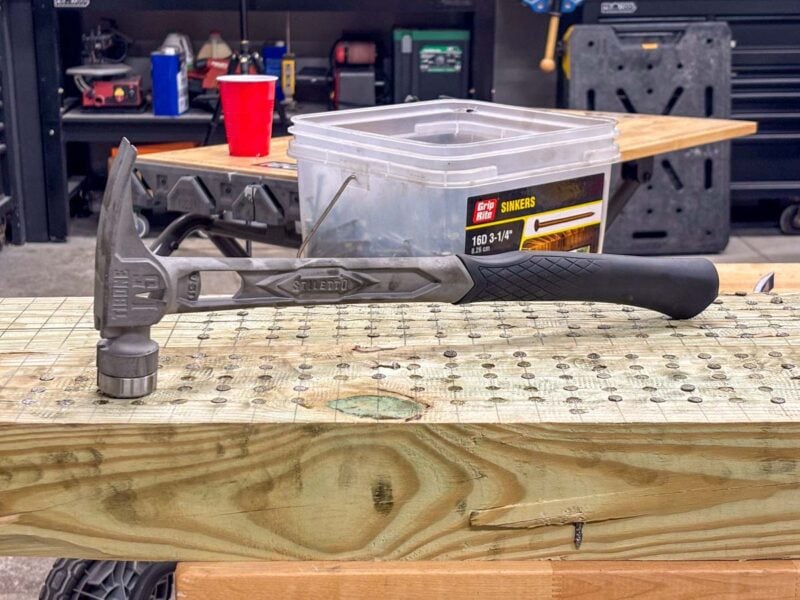
- The Stiletto TiBone ($319.99) is an all-titanium build featuring a titanium handle and head paired with a replaceable steel striking face and a changeable grip.
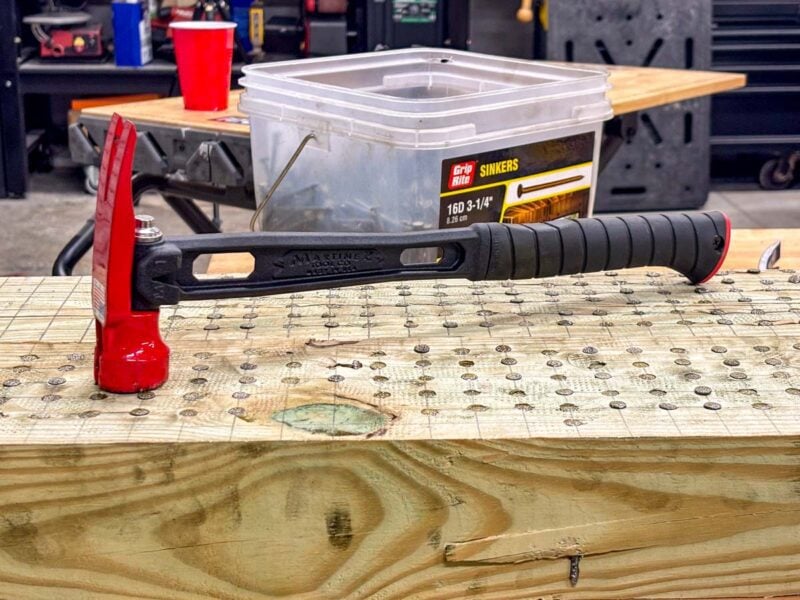
- The Martinez M1 ($384.84) combines a titanium handle with a fully replaceable steel head and a wrapped-texture rubberized grip.
While both hammers boast modern amenities like side nail pullers and magnetic nail starters, their design variations translate into distinct real-world performance differences. Ultimately, Martinez secured a slightly higher overall composite score in head-to-head testing (95 points versus Stiletto’s 90 points), but the practical choice for a daily driver depends heavily on personal biomechanics, grip preferences, and how your muscles handle fatigue over a grueling shift.
Chronology
The path to understanding how these two market leaders compare requires examining the developmental timeline of high-end framing hammers and the testing methodology deployed by industry reviewers.
Evolution of the Titanium Revolution
For decades, traditional steel hammers and classic hickory-handled tools ruled the jobsite. While reliable, they forced framers to absorb massive amounts of shock vibration, frequently leading to carpal tunnel syndrome, elbow tendonitis, and debilitating forearm fatigue.
The introduction of titanium framing tools revolutionized the industry by offering a metal that delivers roughly half the shock vibration of steel while maintaining exceptional strength-to-weight ratios. Stiletto pioneered much of this space with its TiBone series. Later, tool designer Mark Martinez entered the market with Martinez Tools, introducing modular designs featuring replaceable steel heads on titanium handles to bridge the gap between titanium’s shock absorption and steel’s driving mass.
The Head-to-Head Testing Protocol
To provide empirical data rather than mere anecdotal impressions, a rigorous testing phase was executed by reviewers—designated as the author and co-tester Josh.
- Initial Break-In and Familiarization: Both testers spent preliminary hours driving nails in standard framing environments to get accustomed to the balance points, handle geometries, and claw actions.
- High-Fatigue Endurance Testing: The core evaluation involved driving hundreds of nails continuously over several hours. This design was intentional: testing tools when a tradesman is fresh yields little useful data regarding ergonomic superiority. The true test of a premium framing hammer occurs when muscles are strained, hands are threatening to cramp, and forearms are begging for a break.
- Metric Evaluation: Testers scored each hammer across key categories: Driving Power, Toenailing efficiency, Nail Pulling capability, Swing Effort, Vibration reduction, and performance during Fatigued Use.
Supporting Data and Technical Specifications
A side-by-side technical evaluation reveals critical design variations that influence how each hammer feels in the hand and performs on the framing line.
Quick Comparison Matrix
| Feature | Stiletto TiBone (TIB15MC) | Martinez M1 ("Red Headed Stepchild") |
|---|---|---|
| Made in the USA | Yes | Yes |
| Head Material | Titanium with steel face | Steel |
| Handle Material | Titanium | Titanium |
| Total Weight | 31.7 oz / 900 g | 32.9 oz / 934 g |
| Total Length | 17.3 in | 16.4 in |
| Head Diameter | 1.4 in | 1.5 in |
| Side Nail Puller | Yes | Yes |
| Magnetic Nail Starter | Yes | Yes |
| Replaceable Components | Face, Grip | Head, Grip |
| Price | $319.99 | $384.84 |
Construction & Material Nuances
While both hammers lean heavily on lightweight titanium for their structural backbones, their modular strategies differ. Stiletto maintains a full titanium profile running continuously through both the handle and the primary body of the head, inserting a hardened steel striking face only where the kinetic energy meets the nail.
Martinez utilizes a titanium shaft mated to a heavy-duty, entirely replaceable forged steel head. From a maintenance perspective, replacing a worn-out Stiletto face is significantly more affordable than swapping out an entire Martinez head assembly.
Weight, Balance, and Geometry
By the numbers, the Stiletto TiBone measures 17.3 inches long with a total weight of 31.7 ounces (900 grams). The Martinez M1 is slightly shorter at 16.4 inches and marginally heavier at 32.9 ounces (934 grams).
Note on Tool Specs: Manufacturers typically list hammer weight based solely on the head weight rather than the total operational weight. While the 1.2-ounce difference between the two tools is barely perceptible when picked up individually, the length differential initially suggests a physics advantage. A longer handle (Stiletto) theoretically allows the head to travel at a higher velocity during a swing.
However, ergonomic design mitigates this: when gripping either handle with the thumb resting comfortably in the built-in contour, the actual distance from the user’s hand to the striking face is virtually identical down to the millimeter.
Comprehensive Testing Scores
To account for physiological differences in human biomechanics, testers recorded individual scores rather than relying solely on a blended average.
Tester A (Author) Scores
- Driving Power: Stiletto (2.8 strikes/nail) vs. Martinez (2.4 strikes/nail)
- Toenailing: Stiletto (8/10) vs. Martinez (9/10)
- Nail Pulling: Stiletto (10/10) vs. Martinez (10/10)
- Swing Effort: Stiletto (9/10) vs. Martinez (9/10)
- Vibration: Stiletto (9/10) vs. Martinez (10/10)
- Fatigued Use: Stiletto (10/10) vs. Martinez (10/10)
Tester Josh’s Scores
- Driving Power: Stiletto (2.1 strikes/nail) vs. Martinez (2.6 strikes/nail)
- Toenailing: Stiletto (8/10) vs. Martinez (9/10)
- Nail Pulling: Stiletto (10/10) vs. Martinez (10/10)
- Swing Effort: Stiletto (10/10) vs. Martinez (9/10)
- Vibration: Stiletto (9/10) vs. Martinez (10/10)
- Fatigued Use: Stiletto (7/10) vs. Martinez (10/10)
Final Composite Scores (Head-to-Head Totals)
- Stiletto TiBone: 90 Points (Final Rating)
- Martinez M1: 95 Points (Final Rating)
Official Responses and Empirical Analysis
The subjective nature of hand tool evaluation means that numerical scores only tell part of the story. The contrasting feedback from the two testers highlights why a single "best" tool does not fit every carpenter.
The Driving Power vs. Fatigue Paradox
A fascinating divergence occurred during the performance analysis. Tester A drove nails more efficiently with the Stiletto but experienced significantly lower cumulative fatigue by the end of the test. Conversely, Josh achieved greater driving force with the Stiletto initially, yet found it vastly more fatiguing by the end of the trial, ultimately giving the Martinez M1 top marks for endurance and comfort under stress.
The analysis points directly to user conditioning, swing dynamics, and grip geometry:
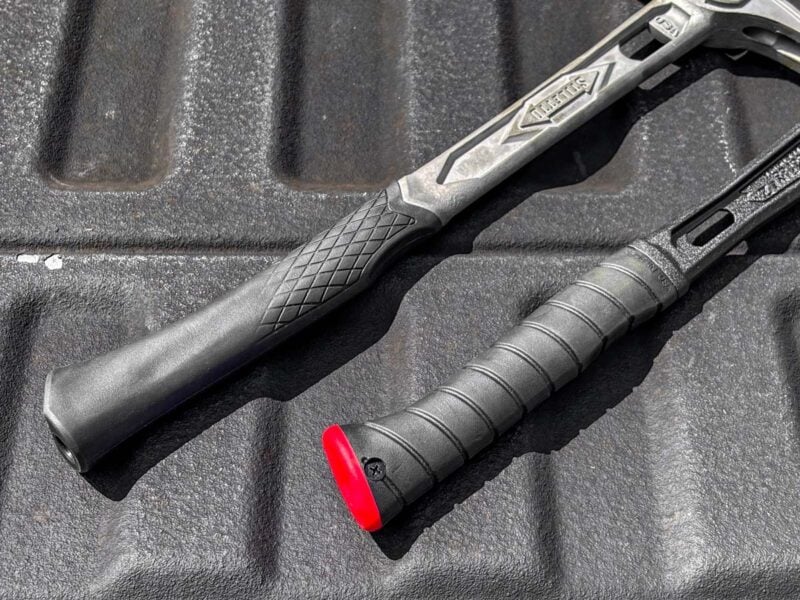
- The Grip Factor: Stiletto features a lightly textured upper grip area paired with a smooth lower section. Martinez employs a deeply channeled, spiral-wrapped texture pattern. While Martinez’s deep channels provide exceptional traction in wet, sweaty, or greasy conditions, prolonged use can cause the aggressive texture to dig uncomfortably into the palm over hours of non-stop pounding.
- Endurance Dynamics: Tester A found that the Stiletto allowed for a more consistent, repeatable effort level from the first nail to the last. Josh, dealing with varying muscle fatigue curves, preferred the structural feedback and balance of the Martinez M1 when his grip strength began to wane.
Implications for Professionals and Buyers
Deciding whether to drop over $300 on a framing hammer comes down to matching the tool’s specific strengths to your physical framing style, budget, and daily work routine.
Which One Should You Buy?
- Choose the Stiletto TiBone if: You maintain a steady, consistent hammering rhythm throughout the day, prefer a slightly smoother handle texture that won’t cause hot spots during marathon shifts, and want the cost-saving advantage of replacing just a titanium-mounted steel face rather than an entire head assembly. It is also roughly $65 cheaper than its rival.
- Choose the Martinez M1 if: Your grip strength tends to fade as the afternoon wears on, you frequently work in slick or sweaty environments where a high-traction wrapped handle is mandatory, and you prefer the modular versatility of a heavy-duty replaceable steel head.
Are Premium Framing Hammers Worth the Investment?
For professional framers and serious residential contractors who log thousands of hours on the jobsite, the answer is a definitive yes.
Compared to traditional solid-steel hammers, titanium-based premium options drastically cut down on vibration shock, preserving elbow joints and wrist tendons over a multi-decade career. Compared to traditional wood-handled alternatives, titanium models offer exponentially higher durability with zero risk of a broken hickory handle mid-swing.
For tradesmen whose budgets cannot stretch to accommodate a $320+ tool, compromise options exist. For instance, opting for Stiletto’s hickory-handled 16-ounce models delivers the vibration-dampening benefits of a titanium head paired with the classic feel of wood at a significantly lower price point.
Ultimately, whether you side with Stiletto’s refined ergonomics or Martinez’s robust modular power, investing in a high-end framing hammer is an investment in your physical longevity and daily jobsite efficiency.
