

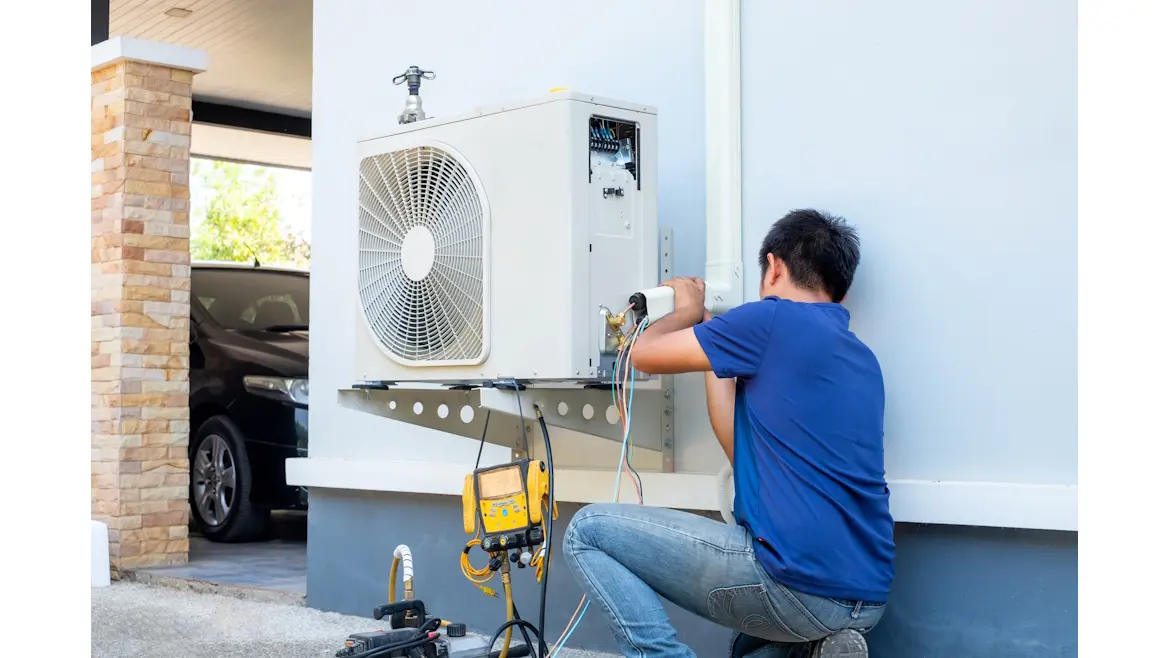
WASHINGTON — With a fast-approaching September 1 deadline threatening to reshape residential outdoor electrical installations, the heating, ventilation, and air conditioning (HVAC) industry has launched a concerted final effort to delay a contentious National Electrical Code (NEC) mandate. The rule in question would enforce strict Ground Fault Circuit Interrupter (GFCI) protection for residential outdoor HVAC equipment, a requirement that industry leaders argue is technologically premature and introduces severe, potentially life-threatening risks to vulnerable homeowners.
Following the National Fire Protection Association (NFPA) Standards Council’s rejection of an earlier appeal by the Air Conditioning Contractors of America (ACCA), major industry stakeholders are rallying behind a new regulatory maneuver. The Air-Conditioning, Heating, and Refrigeration Institute (AHRI) has officially submitted Tentative Interim Amendment (TIA) 1924 to the NFPA, requesting that the current exemption outlined in NEC Section 210.8(F) be extended from September 1, 2026, to September 1, 2028.
The NFPA opened the proposal for public commentary, giving manufacturers, contractors, builders, and safety advocates a narrow window to weigh in on an issue that has pitted electrical safety advocates against HVAC operational reliability experts for years.
Main Facts: The Core of the Controversy
At the center of the dispute is a persistent technological incompatibility between modern HVAC equipment and standard GFCI devices. Even when systems are flawlessly installed and functioning within normal operational parameters, the electrical interaction between the machinery and the safety devices frequently results in "nuisance tripping."
Nuisance trips occur when a GFCI shuts off power to a unit unnecessarily, mistaking normal operating currents for dangerous electrical faults. For HVAC contractors and equipment manufacturers, this triggers a cascade of costly callbacks, frustrated customers, and reputational damage. More critically, however, industry groups emphasize that the problem extends far beyond mere convenience; it strikes directly at consumer safety, particularly during periods of extreme environmental heat.
- The Mandate: NEC 210.8(F) requires GFCI protection for outdoor residential outlets supplying HVAC equipment.
- The Current Status: An existing exemption shielding certain HVAC equipment is slated to expire, setting up a September 1 enforcement milestone.
- The Proposed Solution: AHRI’s TIA 1924 seeks a two-year extension of the exemption, pushing the deadline to September 1, 2028.
- The Public Comment Window: NFPA is accepting public comments on the proposed amendment, serving as what stakeholders term the last viable model-code-level opportunity to resolve the issue.
Chronology of a Regulatory Battle: How the Issue Unfolded
The friction surrounding NEC 210.8(F) is not a sudden development; it represents the culmination of years of escalating debate between electrical code-makers and mechanical contractors.
- 2022 Implementation and Task Group Formation: Recognizing potential conflicts as the NEC expanded GFCI requirements, the NFPA Standards Council established a dedicated task group in 2022 to examine the compatibility between GFCI protection and listed HVAC systems. Internal documentation later revealed that the potential for incompatibility was recognized even when the underlying requirement was approved by NEC Code-Making Panel 2 (CMP-2), with three out of four negative ballots specifically citing unresolved compatibility concerns.
- The 2024 Heat Wave Data: As discussions stagnated, real-world consequences materialized. During the fierce 2024 summer, Maricopa County, Arizona, recorded 138 indoor heat-related deaths. Air conditioning units were present in 88% of those cases, but in 70% of those dwellings, the equipment was non-functional, while another 18% were simply not in use. Industry advocates flagged these statistics as proof that unexpected losses in cooling capacity carry fatal consequences.
- July 2025 (AHRI Phase II Report): AHRI published its comprehensive 112-page AHRI 8029 Phase II Report, providing extensive empirical data documenting continued, widespread nuisance-tripping events when GFCIs and HVAC products are combined.
- Recent ACCA Appeals: Prior to the current push, the ACCA formally appealed to the NFPA Standards Council to protect contractors and consumers, but that appeal was denied.
- Present Day: With the September 1 deadline looming, AHRI submitted TIA 1924, representing the industry’s final administrative recourse at the model-code level.
Supporting Data: Technical Findings and Field Evidence
Proponents of the delay argue that the regulatory push is backed by robust, empirical data rather than speculation. Technical evaluations demonstrate a complex electrical reality that code-makers initially underestimated.
Leakage Current vs. Trip Current
Data reviewed by the 2022 Task Group highlighted a critical technical distinction: HVAC equipment can frequently exhibit leakage current that exceeds the trip threshold of a Class A GFCI, while the actual measured touch current remains safely below levels capable of injuring a human being. The task group was forced to confront the nuance between GFCI trip currents, equipment leakage currents, and real-world personnel exposure—a dynamic requiring specialized HVAC engineering analysis that was never fully completed.
Beyond Inverter-Driven Systems
Initial discussions often blamed nuisance tripping strictly on variable-speed or inverter-driven HVAC systems. However, contractor survey data compiled by the Texas Air Conditioning Contractors Association (TACCA) and echoed by the ACCA shattered that assumption. The surveys revealed widespread, systemic nuisance tripping across conventional, single-stage equipment operating on standard 60 Hz power.
Furthermore, recent AHRI laboratory testing demonstrated that five out of twelve tested high-frequency (HF) GFCIs tripped below the required must-hold current thresholds above 60 Hz. This indicates that even with specialized high-frequency GFCIs, normal HVAC leakage currents can trigger unwanted shutdowns. The technical record, according to industry analysts, simply does not substantiate the claim that current GFCI technology can be applied reliably across the entire spectrum of listed residential HVAC equipment.
Official Responses and Industry Perspectives
Key figures and organizations within the mechanical and electrical sectors have pulled no punches in voicing their concerns over the impending deadline.
Tom Deary, AHRI Senior Director of Codes and the official submitter of TIA 1924, expressed deep frustration with the timeline imposed by the technical committees.
“AHRI has consistently advised the technical committee that revises the National Electrical Code that a deadline of September 1, 2026, would not allow sufficient time to resolve the ongoing compatibility issues that continue to exist between GFCI products and HVAC products,” Deary stated. “Now, with the deadline upon us, this Tentative Interim Amendment (TIA) is the last opportunity for us to correct this issue at the model code level.”
The ACCA has forcefully backed AHRI’s initiative, pointing out that the historical record of the NEC’s own task groups indicates a lack of foundational evidence for the mandate.
“That history is highly relevant to the proposed TIA because the evidence to substantiate the requirement is nonexistent,” ACCA noted in an official statement. “In short, the technical record does not yet demonstrate that GFCI protection can be applied reliably across the full range of listed HVAC equipment covered by NEC 210.8(F).”
ACCA emphasized that a two-year extension does not mean abandoning electrical safety goals. Rather, it offers a necessary pause for manufacturers, testing laboratories, standard developers, and contractors to finish evaluating both single-stage and inverter-driven systems.
Broader Implications: Market Readiness and Consumer Safety
The fallout from an unyielding September 1 enforcement date threatens to ripple across the entire housing and construction ecosystem, bringing two major areas of concern to the forefront: consumer health and market supply chain readiness.
The Life-Safety Hazard of Extreme Heat
While electrical safety devices are designed to protect human life from shock hazards, paradoxically, the unintended shutdown of climate control systems during extreme weather events introduces an immediate, severe life-safety threat.
The ACCA points out that vulnerable populations—such as the elderly aging in place, convalescing patients, and those with physical or cognitive impairments—may not immediately recognize that their air conditioning has failed. If a nuisance trip occurs during a heatwave, these occupants may lack the ability to diagnose the issue, locate a tripped outdoor GFCI, reset it, or quickly arrange for professional service. The Maricopa County mortality data from 2024 serves as a grim reminder that non-functioning cooling systems in residential dwellings are directly correlated with preventable heat-related fatalities.
Supply Chain and Distribution Realities
Beyond safety and reliability, practical market readiness remains a massive hurdle. Filings from organizations like the Leading Builders of America indicate that the transition among GFCI manufacturers has been highly uneven.
- Limited Stock: Certain specialized high-frequency GFCI products face production bottlenecks and are not projected to achieve stable volume availability until after the September 1 deadline.
- Fragmented Availability: Product accessibility varies wildly depending on panel families, amperage ratings, and required quantities.
- Contractor Vulnerability: Contractors frequently find themselves unable to source appropriate, compatible GFCI devices through normal supply chain channels. ACCA argues that merely stocking a GFCI does not guarantee it will operate harmoniously with a specific HVAC system.
What Lies Ahead
If TIA 1924 fails and the exemption lapses, AHRI and ACCA warn that homeowners and tenants will bear the brunt of continuous, unpredictable equipment shutdowns.
AHRI is urging all affected contractors, manufacturers, and homeowners to submit public comments to the NFPA before the window closes on September 9. Should the TIA pass, AHRI plans to coordinate closely with state and local code jurisdictions to ensure rapid adoption and implementation, sparing the industry from what it views as an unworkable and hazardous regulatory mandate.
