

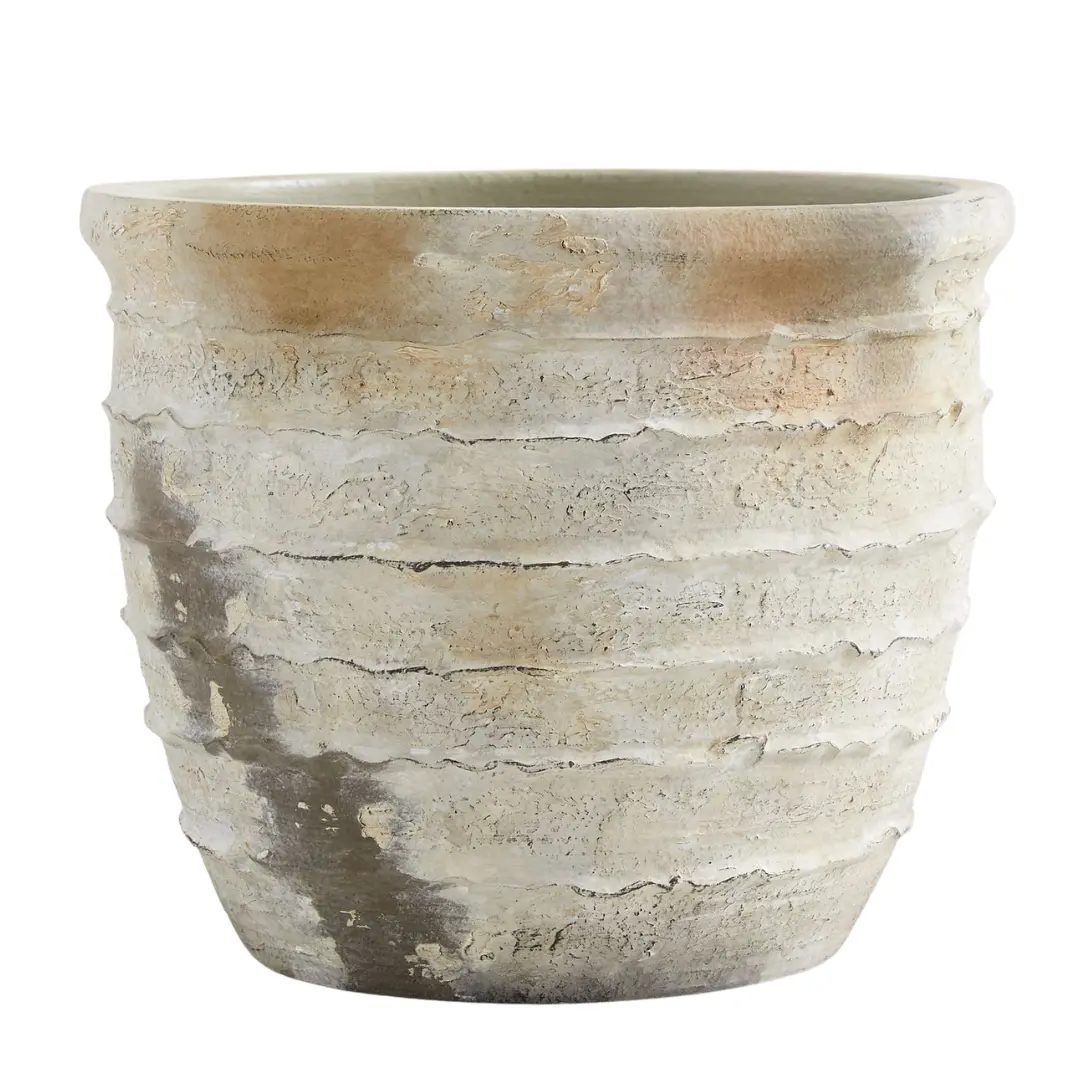
As the calendar turns and the crisp air of autumn begins to edge out the lingering warmth of late summer, the instinct for many homeowners is to retreat indoors, abandoning the patio until next year. Yet, outdoor spaces do not need to lie dormant. A masterclass in transitional landscaping can be found in the Montecito estate of lifestyle entrepreneur and actress Gwyneth Paltrow, whose meticulously curated outdoor sanctuary proves that Mediterranean-inspired minimalist design is a year-round lifestyle, not merely a seasonal aesthetic.
Paltrow’s outdoor architecture is a masterclass in organic restraint. Anchored by crisp limestone paving, soaring cypress trees, delicate olive branches, and—most crucially—an array of weathered terracotta urns, her terrace bridges the gap between clean, contemporary lines and the rugged, sun-drenched topography of Southern California. As the seasons shift, the warm, earthy clay of the pottery softens the architectural austerity, offering a natural visual bridge from the vibrant greens of August into the muted, reflective tones of autumn.
Main Facts: The Anatomy of a Mediterranean Minimalist Garden
At its core, Gwyneth Paltrow’s outdoor design relies on a carefully selected palette of natural materials and structural flora that evoke the timeless elegance of the Mediterranean basin.
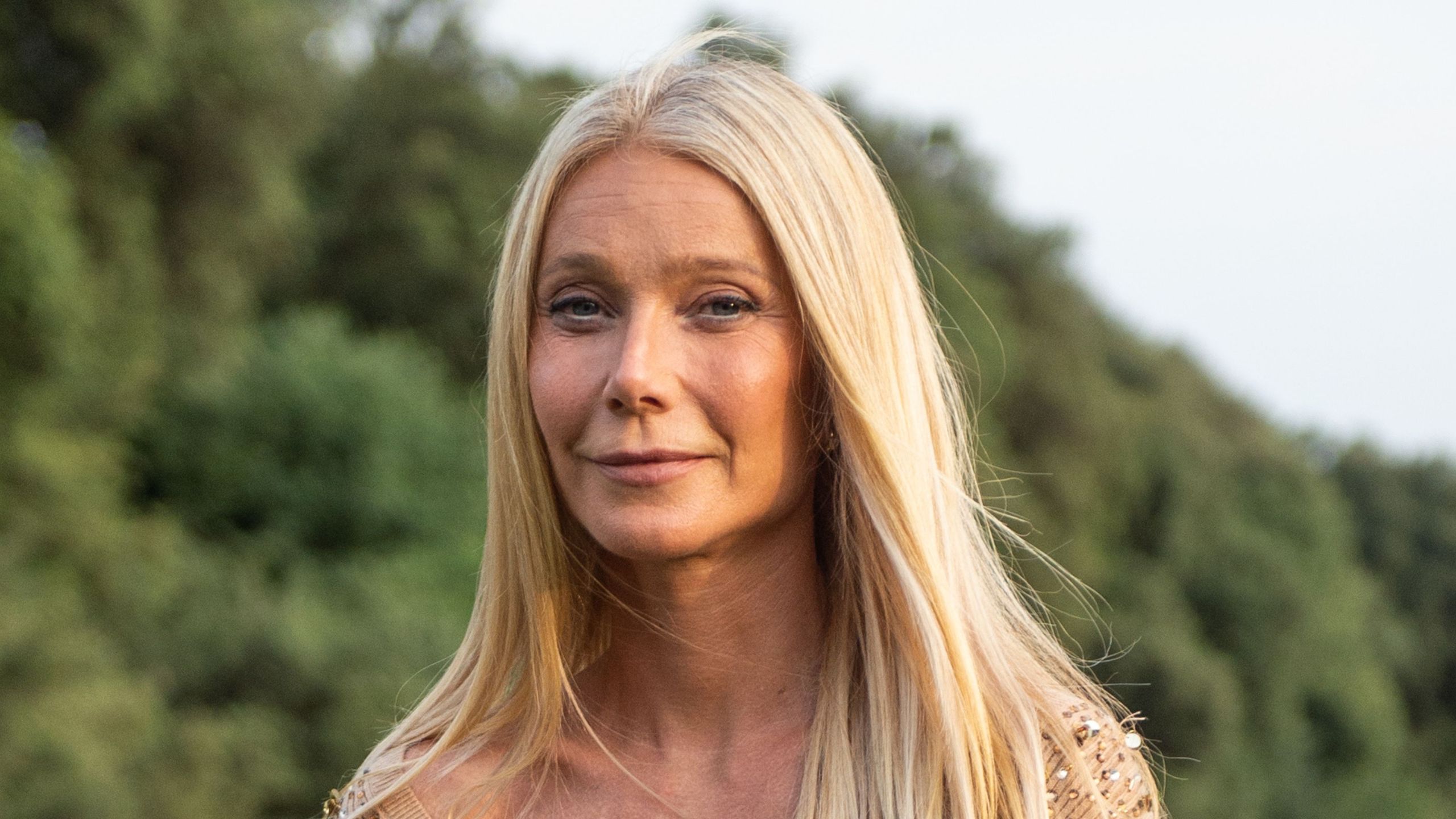
- Architectural Hardscaping: Clean-cut limestone paving provides a neutral, luminous foundation that reflects sunlight and anchors the surrounding vegetation.
- Structural Flora: Upright cypress trees offer vertical drama, while olive branches and Mediterranean shrubs bring tactile softness and coastal character.
- The Terracotta Element: Far from being used as mere temporary decorative vessels, oversized clay pots and urns serve as permanent structural anchors. Their porous nature and earthy orange-brown hues complement stone, wood, and water features seamlessly.
- Seasonal Versatility: The palette naturally transitions into autumn, proving that Mediterranean aesthetics can thrive in cooler weather when paired with the right plantings and materials.
Landscape and wellness design experts point out that integrating terracotta into a garden instantly shifts the psychological perception of the space. "Terracotta is made from baked clay, possessing a warm, earthy color that looks inherently natural alongside plants, stone, wood, and water," explains landscaping expert Loren Taylor. "This combination can instantly make any outdoor area feel like a sunny Mediterranean sanctuary."
Chronology: The Evolution of Terracotta in Landscape Design
To understand why Paltrow’s use of terracotta feels so striking today, it is helpful to look at the historical trajectory of clay pottery in garden architecture:
- Ancient Beginnings: Dating back thousands of years to ancient civilizations across Mesopotamia, Greece, and Rome, terracotta was initially valued for its utilitarian properties. Amphorae and large pithoi were used to store water, oil, and grains, as well as to transport citrus trees across European estates during colder months.
- The Renaissance Revival: During the Italian Renaissance, ornamental terracotta urns became a status symbol in formal gardens, often placed along balustrades and pathways to frame views and introduce sculptural symmetry.
- The Mid-Century Modern Shift: In the 20th century, architectural landscaping favored minimalist concrete and sleek fiberglass. However, the rustic charm of unglazed clay never truly vanished, frequently appearing in Spanish Revival and Southwestern American architecture.
- The Modern Celebrity Integration: Today, tastemakers like Gwyneth Paltrow have revived the material, moving away from mass-produced plastic containers in favor of artisanal, weathered, and whitewashed terracotta that carries a sense of history and permanence.
Supporting Data & Horticultural Insights: The Science of Clay
While the aesthetic appeal of terracotta is undeniable, horticulturalists emphasize that baked clay offers profound practical benefits for plant health—provided gardeners understand its unique physical properties.
Root Health and Aeration
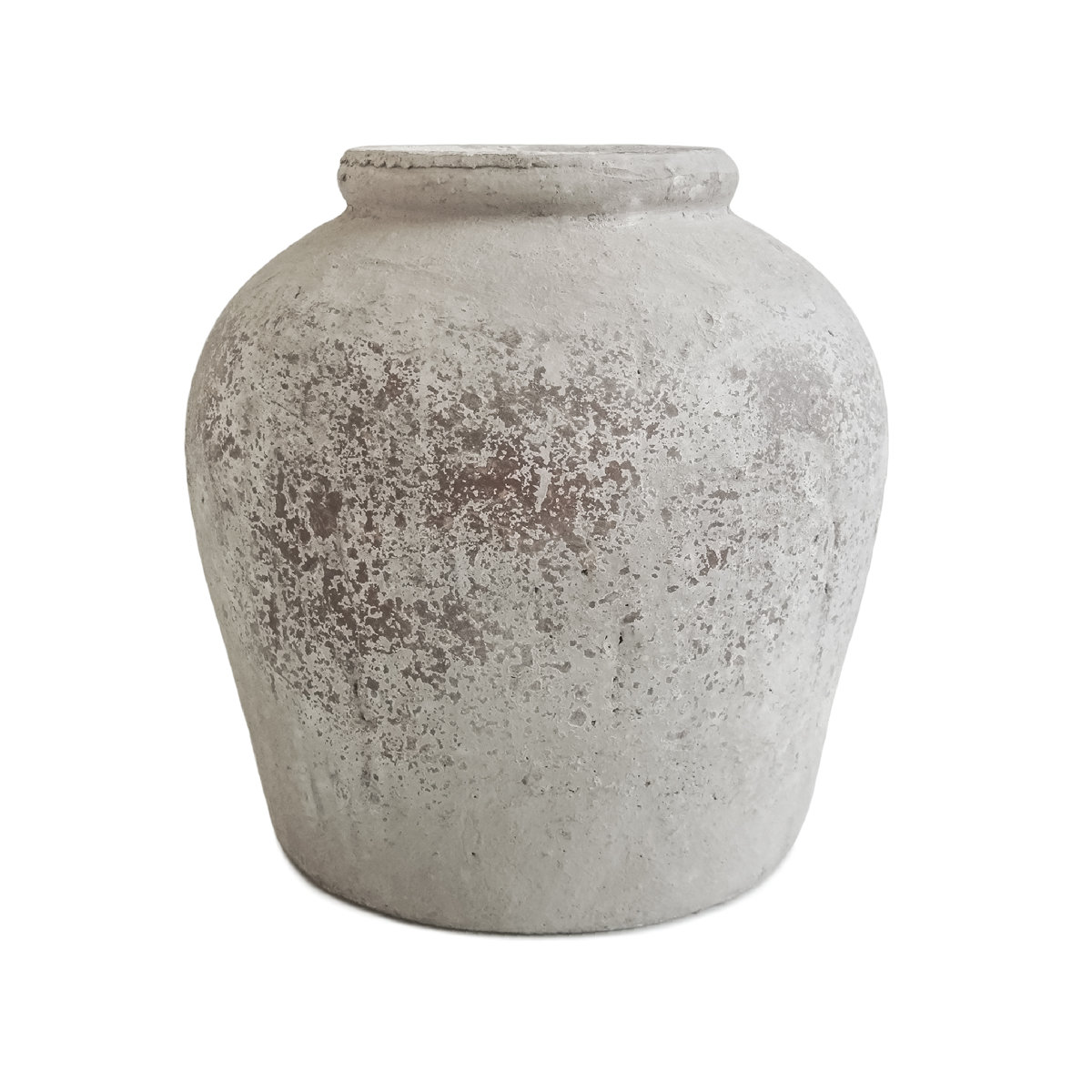
Unlike non-porous plastic or fiberglass containers, terracotta is permeable. The clay features microscopic pores that allow air and water vapor to pass freely through its walls.
"It is not only beautiful," notes Taylor. "The clay has tiny holes that allow air and water to move through it, which helps plant roots breathe."
This natural aeration prevents root rot—a common issue in over-watered container gardens—by encouraging a dense, healthy root system.
Moisture Management
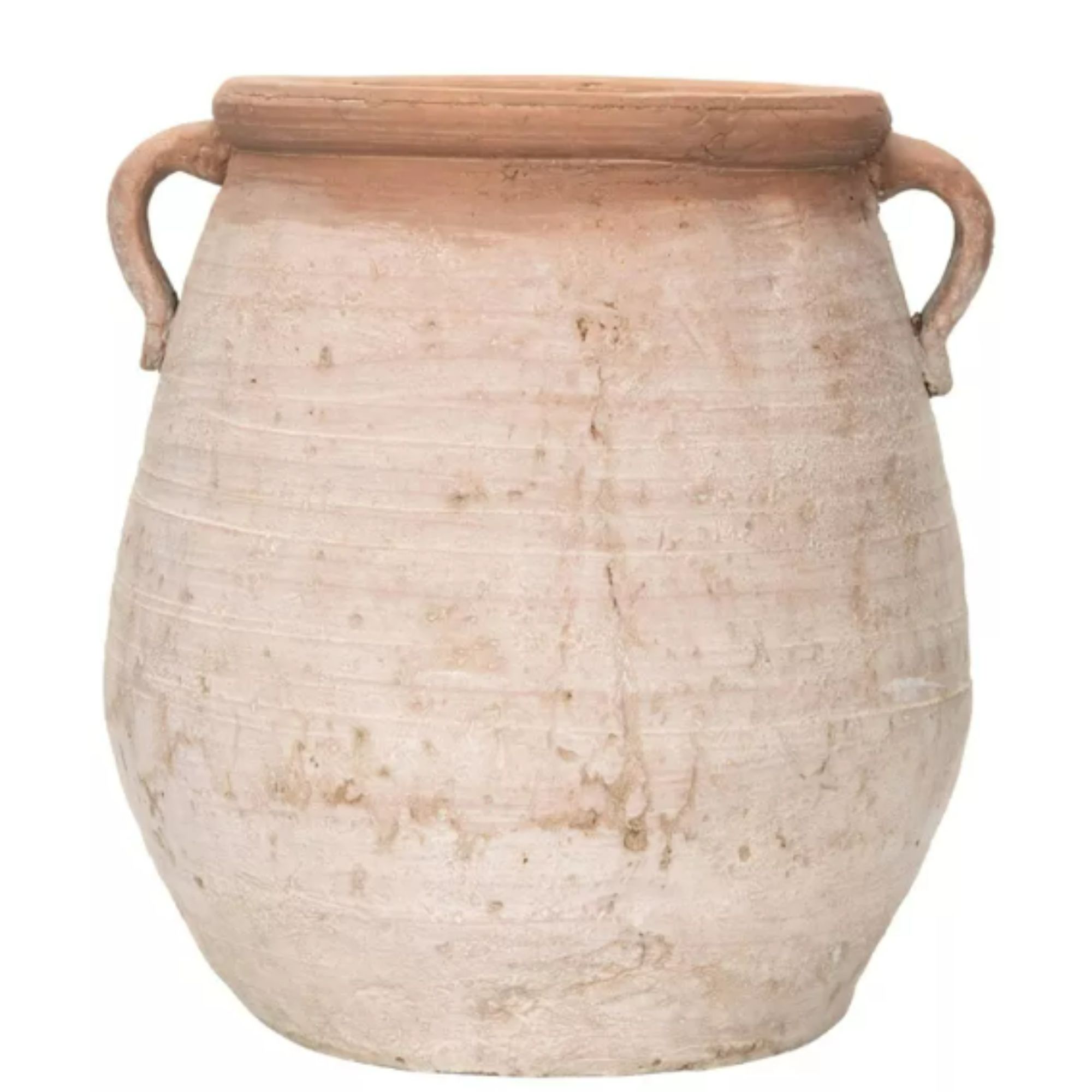
The trade-off for superior aeration is evaporation. Because moisture can escape through the porous walls of the pot, terracotta dries out significantly faster than plastic or glazed ceramic containers. This makes plant selection paramount, particularly in arid climates or during dry spells.
- Recommended Flora for Terracotta Pots:
- Mediterranean Staples: Lavender, rosemary, and olive trees naturally thrive in well-draining, dry soil.
- Architectural Accents: Agave and ornamental grasses add striking silhouettes while requiring minimal irrigation.
- Culinary Herbs: Thyme, basil, and mint offer visual texture, lovely aromas when warmed by the sun, and practical use in autumn kitchen creations.
Official Expert Recommendations & Design Principles
Transforming a standard terrace into a Montecito-style retreat requires adherence to specific design principles regarding scale, composition, and maintenance.
1. Embrace Oversized Scale
Small pots can easily look cluttered or get lost on a sprawling patio. By contrast, oversized urns provide architectural weight and structure.
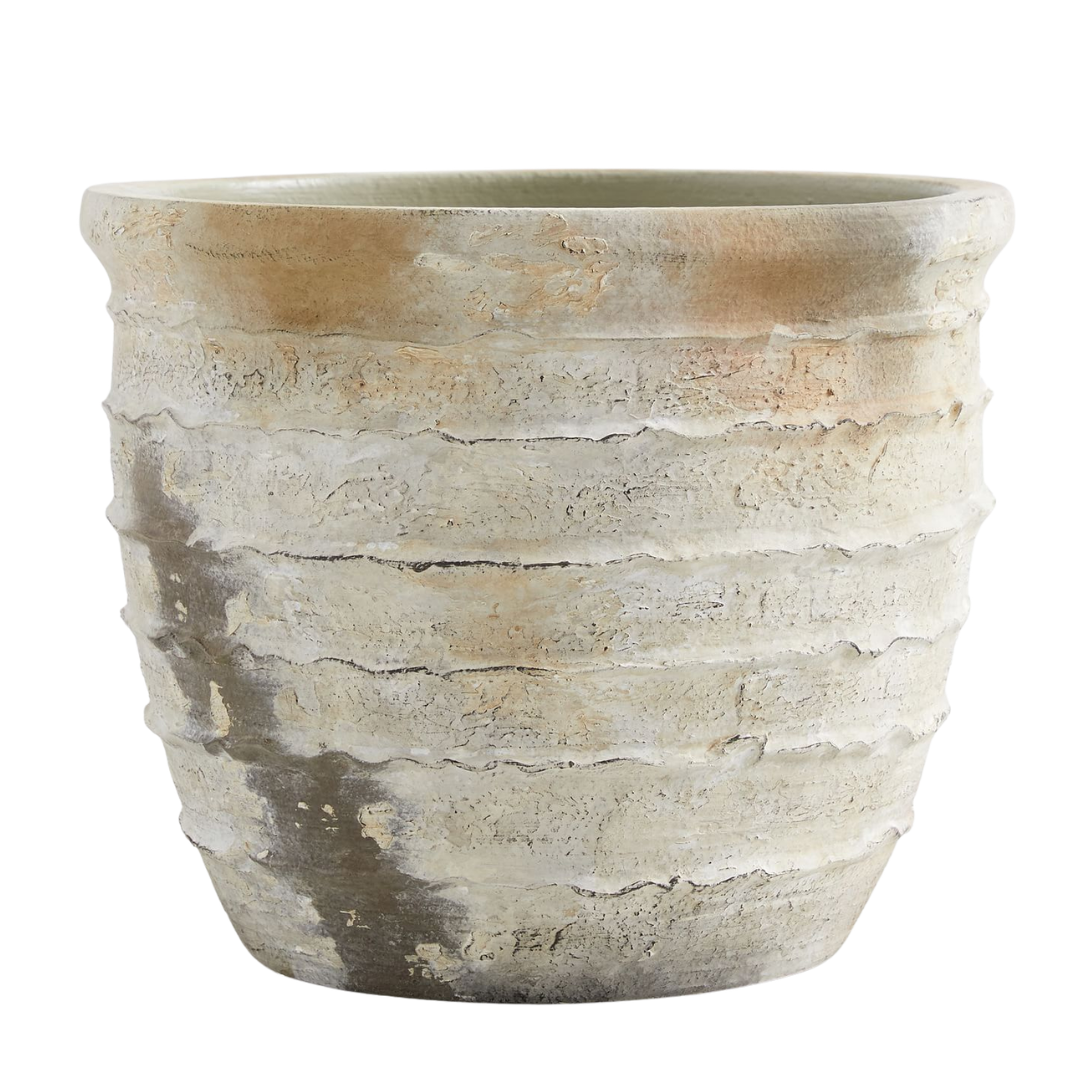
"I like using large planters because they give roots more room to grow, and their soil stays wet longer," Taylor advises. Furthermore, large vessels allow for layered planting strategies. Gardeners can plant a striking vertical specimen in the center, surround it with medium-height fillers, and finish with trailing varieties cascading over the rim, effectively creating a miniature ecosystem within a single pot.
2. Savor the Patina of Age
Brand-new terracotta often arrives in a bright, uniform orange hue. However, the true beauty of the material lies in how it ages. Over time, exposure to moisture, minerals, and weathering creates a chalky white efflorescence and a rustic patina. For those who wish to bypass the waiting period, designers recommend sourcing pre-weathered, distressed, or whitewashed pieces from collections such as Wayfair’s Gracie Oaks line, Target’s Storied Home collection, or artisan hand-painted selections from Pottery Barn and West Elm.
3. Winterization Protocols
While terracotta is remarkably durable, it possesses one notable vulnerability: frost. Because the clay absorbs moisture, water trapped within the pores can freeze and expand when temperatures drop below freezing, causing the vessel to crack.
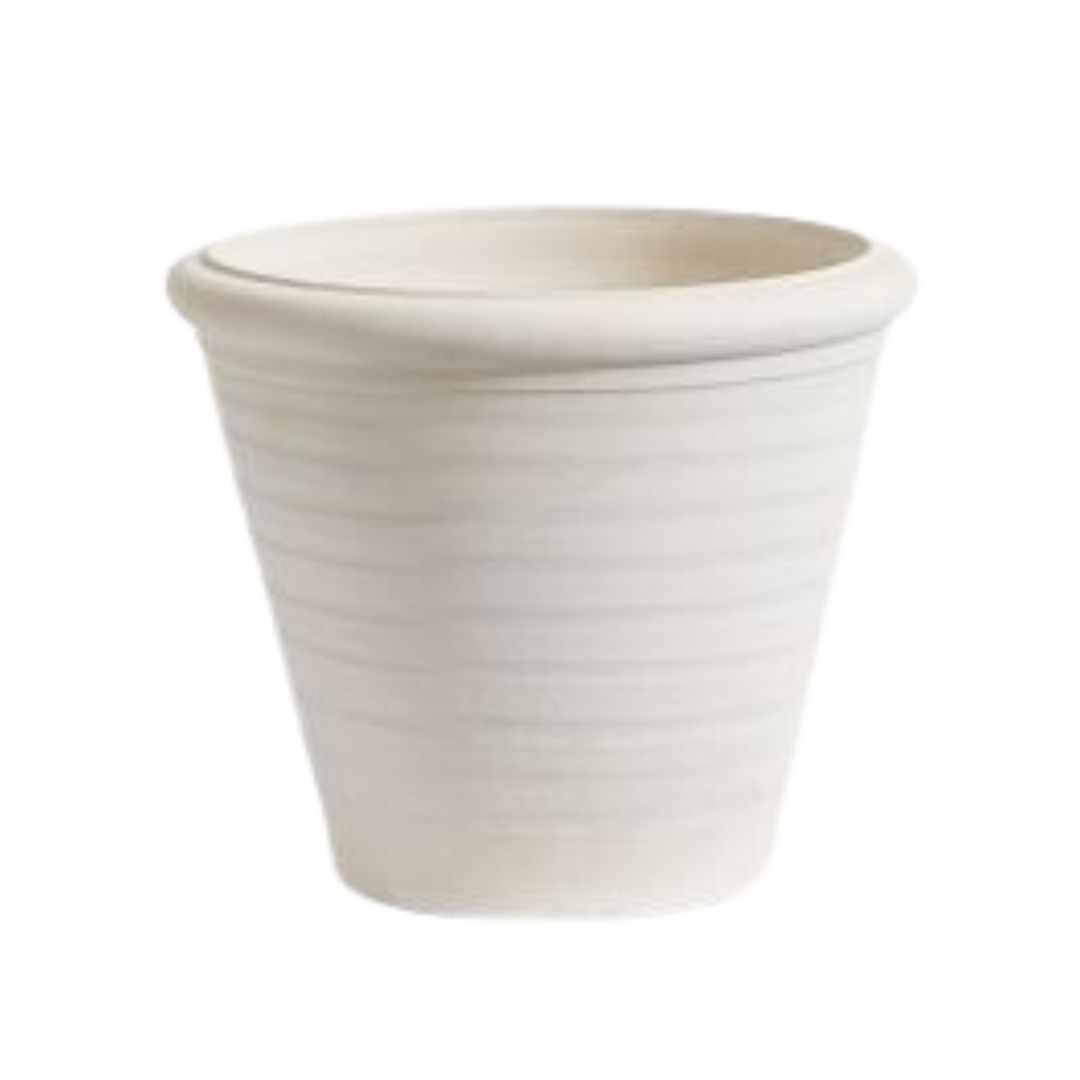
"In cold areas, the planters may need to be covered, lifted from the ground on pot feet, or moved to a safer place like a garage or shed," warns Taylor.
Implications: Redefining Outdoor Living Beyond Summer
The trend toward Mediterranean minimalism in celebrity estates highlights a broader cultural shift in how we view domestic spaces. The patio is no longer treated as a seasonal afterthought reserved exclusively for sunbathing and barbecues. Instead, it is being integrated into the holistic architectural envelope of the home.
By investing in timeless, durable materials like natural clay and limestone, homeowners can create spaces that evolve gracefully across all four seasons. As the autumn breezes set in and our attention naturally drifts back toward interior design, the enduring elegance of a weathered terracotta urn serves as a powerful reminder: great design is timeless, tactile, and connected to the earth—all year round.
