Main Facts: The Subterranean Shift to Electric Heavy Haulers
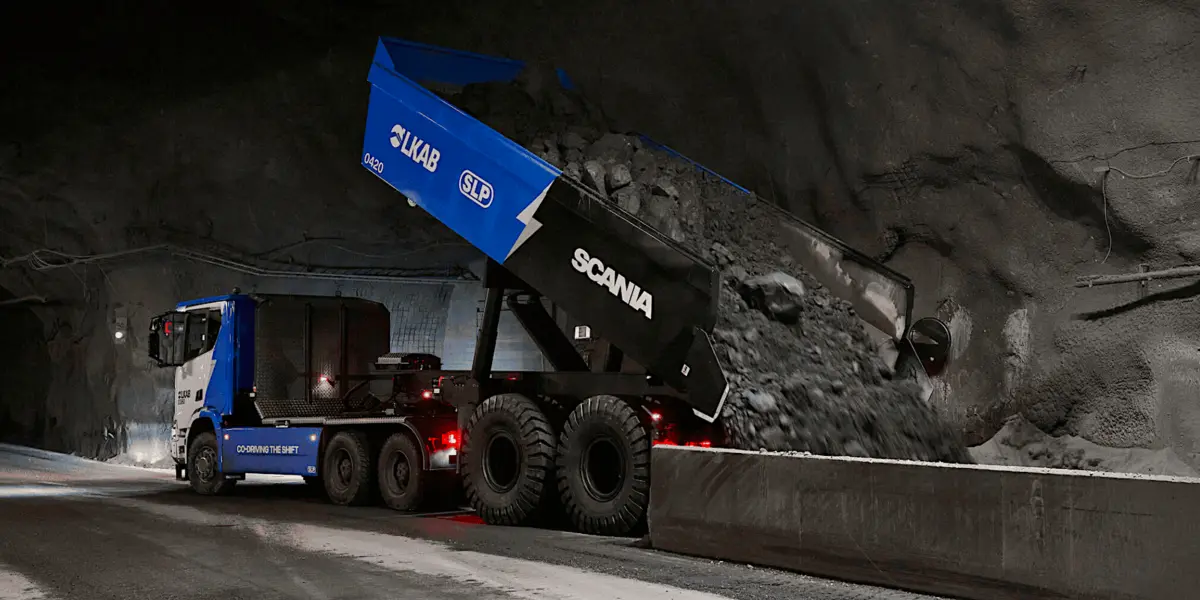
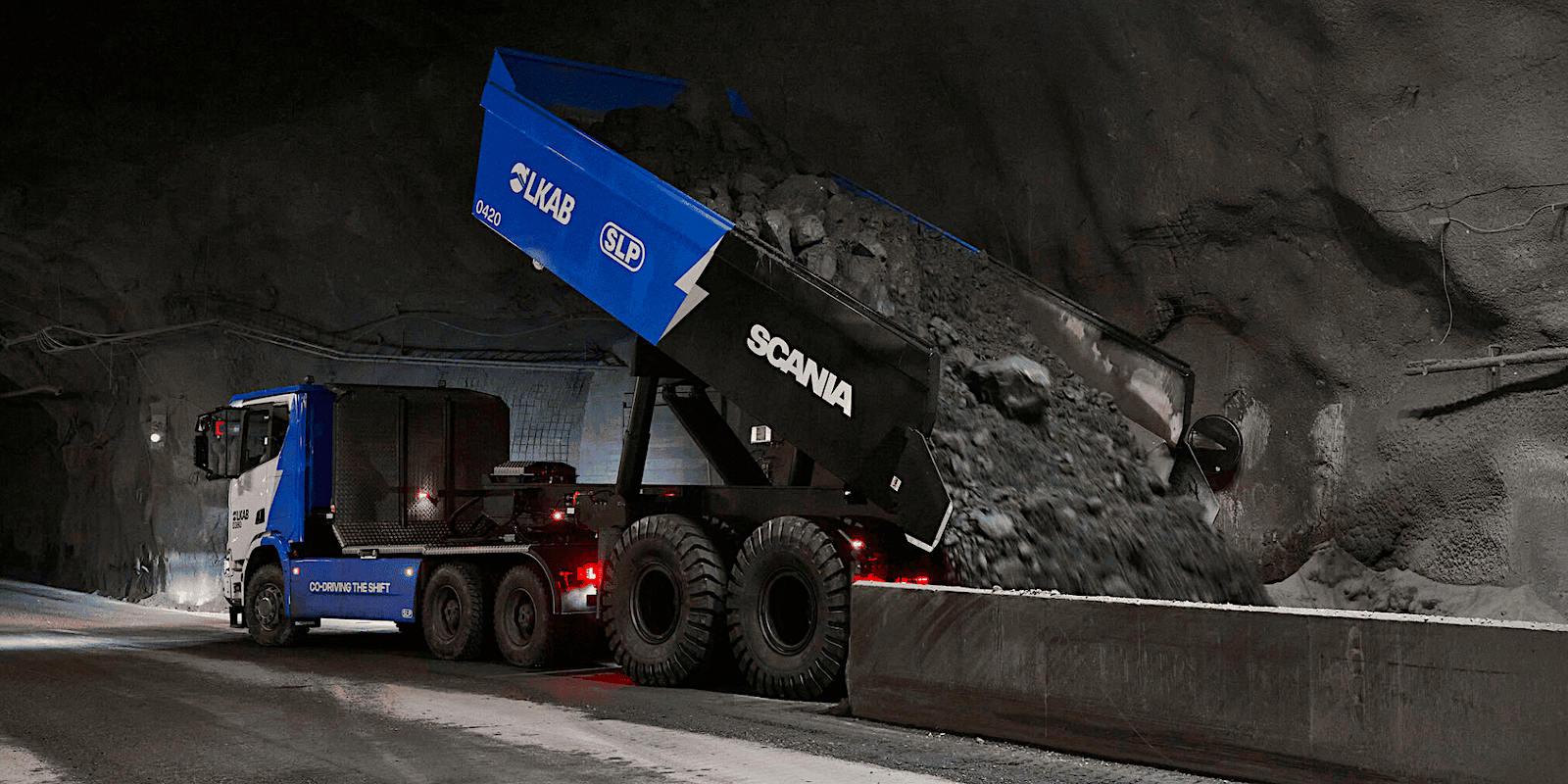
Deep beneath the historic mining community of Malmberget in northern Sweden, a quiet, zero-emission transformation is redefining the boundaries of heavy industry. Swedish mining giant Luossavaara-Kiirunavaara AB (LKAB) has deployed a pair of massive, 130-ton gross vehicle weight (GVW) battery-electric haul trucks supplied by commercial vehicle manufacturer Scania.
Operating roughly 4,000 feet (1,250 meters) beneath the surface, these ultra-heavy-duty 6×4 prime movers are proving that heavy electrification is not only viable in extreme industrial settings, but uniquely well-suited to them. Packing robust 624 kWh lithium-ion battery packs, each vehicle is engineered to handle grueling shifts in the dark, cavernous tunnels of the iron ore deposit. Together, the duo has already transported more than 100,000 tonnes of iron ore since entering service, demonstrating the immense potential of commercial electric vehicles (EVs) in environments historically dominated by roaring diesel engines, toxic exhaust fumes, and massive ventilation overheads.
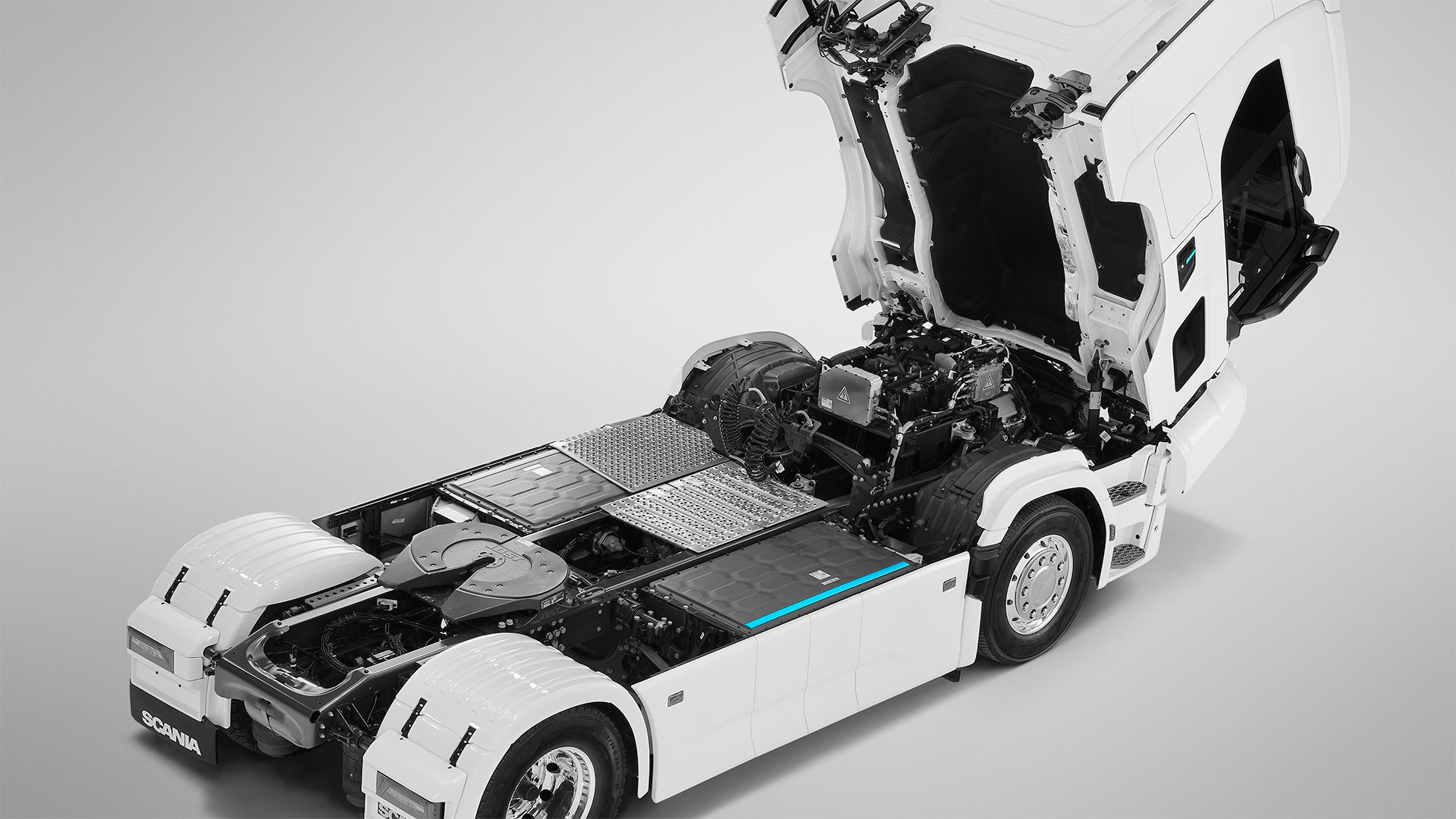
Unlike highway-bound electric semi-trucks built for long-haul logistics—which typically rely on lightweight, decentralized e-axle architectures—these subterranean behemoths use a heavy vocational architecture. A central electric motor paired with an automated gearbox and conventional driven axles yields immense torque, outperforming even the robust figures found on Scania’s road-going commercial platforms.
LKAB’s bold deployment forms a cornerstone of the company’s broader decarbonization strategy, as the firm races toward a target of electrifying 30% of its total mining fleet by 2027.
Chronology: From Concept to Subterranean Deployment
The integration of heavy-duty electric trucks into LKAB’s Malmberget operations is the culmination of years of collaborative engineering, rigorous testing, and strategic planning between two Swedish industrial stalwarts.
The Partnership Takes Shape
The journey began as LKAB faced an existential industry challenge: how to extract billions of tons of iron ore deeper underground while drastically reducing carbon emissions, lowering operational heat outputs, and improving workplace safety. Diesel machinery operating miles below the surface requires immense, energy-intensive ventilation systems to clear toxic particulate matter and exhaust gases. Recognizing that electrification could eliminate these hurdles, LKAB partnered with Scania to co-develop customized electric heavy haulers capable of withstanding the punishing realities of underground mining.
Prototyping and Customization
Unlike standard commercial trucks, underground mining vehicles face unique physical constraints, including tight turning radiuses, steep inclines, abrasive dust, and continuous, heavy shock-loading. Scania’s engineering teams worked hand-in-hand with LKAB specialists to adapt their heavy vocational BEV architecture. Rather than relying off-the-shelf components, the partners designed a specialized drivetrain capable of navigating the subterranean topography while managing the immense thermal and mechanical loads of hauling 150,000-plus-pound payloads.
Entering Service and Hitting Milestones
The trucks officially entered active service at the Malmberget mine, descending nearly a mile underground to begin their daily cycles. Within a relatively short operational window, the pair successfully crossed a major milestone, moving a cumulative total of over 100,000 tonnes of iron ore. Today, the trucks routinely cycle through the subterranean network, seamlessly integrating into LKAB’s active extraction workflows and proving their mettle under continuous, real-world industrial pressure.
Supporting Data: Engineering Specifications and Performance Metrics
The sheer scale of LKAB’s electric haulers highlights the remarkable maturation of heavy-duty battery-electric technology. The following metrics outline the operational capacity and technical specifications of the Scania-built underground trucks:
Payload Capacity: Over 150,000 lbs (75+ tons) per run, enabling the pair to move upwards of 3,200 tons of iron ore over the course of a full working day.
Battery Capacity: 624 kWh lithium-ion energy storage system, engineered to deliver approximately seven hours of fully loaded run time per single charge under ideal conditions.
Charging Infrastructure: High-power CCS charging capabilities supporting speeds up to 375 kW. A full shift’s worth of energy can be replenished in roughly 80 minutes.
Drivetrain Architecture: Heavy vocational 6×4 configuration featuring a central electric motor, an automated multi-speed gearbox, and heavy-duty conventional driven axles geared specifically for maximized low-end torque.
Operating Depth: Deployed at depths ranging up to 1,250 meters (over 4,000 feet) underground.
Subterranean Climate: Benefiting from a stable underground ambient temperature of 12° to 15°C (53° to 59°F), which provides near-ideal thermal management conditions for the massive lithium-ion battery packs.
Official Responses: What the Experts and Engineers Are Saying
The transition to underground electric heavy transport has drawn high praise from the engineers and project managers spearheading the initiative at both LKAB and Scania.
Pär Sundqvist, an engineer specializing in electrification at LKAB, emphasized how naturally the subterranean environment accommodates battery-powered fleets, counter to initial assumptions about harsh mining conditions.
"The environment is dark, but it’s ideal for electric vehicles," explains Sundqvist. "We have good roads and a constant temperature of around 12 to 15 degrees Celsius, which is perfect for batteries."
Peter Gustavsson, Project Manager for the Electrification of Mobile Machines at LKAB, highlighted the value of close industrial collaboration in tailoring the vehicles to unique subterranean parameters.
"These trucks are customized for our specific needs," says Gustavsson. "We’ve worked closely with Scania to adapt them for underground use. It’s been a great partnership."
Industry observers note that while these customized haul trucks currently operate without flashy commercial monikers—functioning primarily as LKAB’s bespoke underground battery-electric workhorses—they pave the way for even larger innovations. Scania is already developing broader heavy-duty platforms, including an enormous 80-ton 8×4 electric haul truck nicknamed "Sleipner," signaling that the commercial vehicle manufacturer views heavy mining as a primary frontier for its zero-emission technology.
Implications: Transforming the Future of Global Mining
The successful deployment of 130-ton electric haul trucks at Malmberget carries profound implications for the global mining sector, heavy logistics, and industrial decarbonization at large.
1. Radical Improvements in Underground Air Quality and Safety
For generations, underground mining has been synonymous with thick diesel soot, roaring engine noise, and stifling heat. By replacing diesel combustion engines with battery-electric powertrains, operations like LKAB’s drastically reduce hazardous particulate emissions underground. This shift dramatically improves working conditions for miners and reduces the risk of respiratory health issues. Furthermore, electric vehicles emit significantly less ambient noise and vibration, making communication clearer and safer in tight subterranean corridors.
2. Massive Energy and Infrastructure Savings
Ventilation is one of the single largest energy expenditures for underground mines, often accounting for a massive share of total facility electricity consumption as operators constantly pump fresh air down to dilute diesel exhaust. Removing diesel trucks from the equation allows mining companies to scale back their massive ventilation requirements, yielding secondary energy savings that compound the sustainability benefits of fleet electrification.
Furthermore, as Sundqvist noted, the stable geothermic temperatures found deep underground eliminate the extreme thermal swings that stress batteries in above-ground applications—such as freezing winter conditions or scorching summer heatwaves. This natural climate control helps preserve battery health and optimize charging efficiency.
3. Proof of Concept for the 2027 Sustainability Goals
LKAB’s objective to electrify 30% of its entire mining fleet by 2027 is an ambitious benchmark, but the performance of the Scania haul trucks proves the company is firmly on track. By validating heavy-duty electrification under real industrial workloads today, LKAB is establishing a blueprint that other mining conglomerates worldwide will inevitably follow.
As technology providers like Scania continue to scale up production of ultra-heavy electric platforms—ranging from bespoke subterranean trucks to massive surface monsters like "Sleipner"—the era of the fossil-fuel-powered mining Goliath is rapidly drawing to a close. The revolution beneath the earth’s crust has arrived, and it is entirely electric.