The Port of Los Angeles has locked in a transformative long-term agreement that cements its trajectory toward a sustainable, zero-emission future. Marine terminal operator Yusen Terminals has officially signed a monumental 30-year lease extension, guaranteeing its operations at the nation’s busiest container port through 2056.
Far more than a simple real estate transaction, this multi-decade commitment paves the way for a fresh, $200 million capital investment dedicated entirely to zero-emission cargo-handling equipment. As major ports across North America face mounting pressure to curb local air pollution and dramatically reduce their carbon footprints, the deal represents a massive win for environmental advocates, the surrounding harbor communities, and the logistics sector at large.
Main Facts: The 2056 Vision and Capital Outlay
At the core of the newly minted agreement is a fusion of longevity and environmental stewardship. Yusen Terminals, which has operated within the Port of Los Angeles for decades, is doubling down on its infrastructure footprint.
The Timeline: A 30-year lease extension securing operations through 2056.
The Financial Commitment: Over $200 million earmarked specifically for zero-emission cargo-handling equipment.
The Operational Footprint: A sprawling 232-acre container facility occupying berths 212–224.
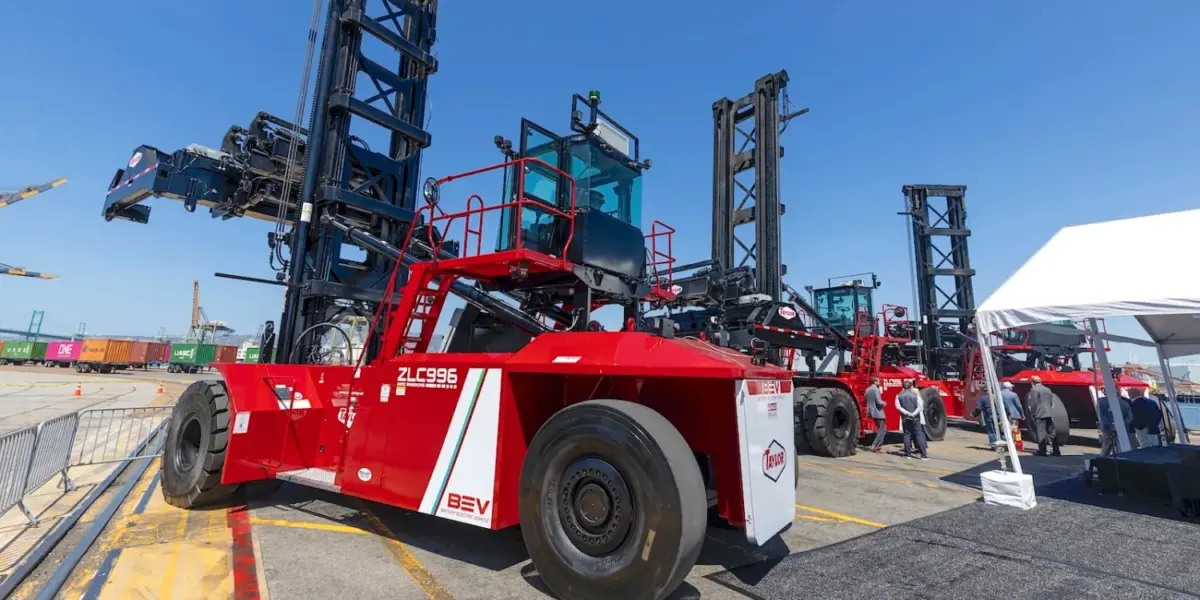
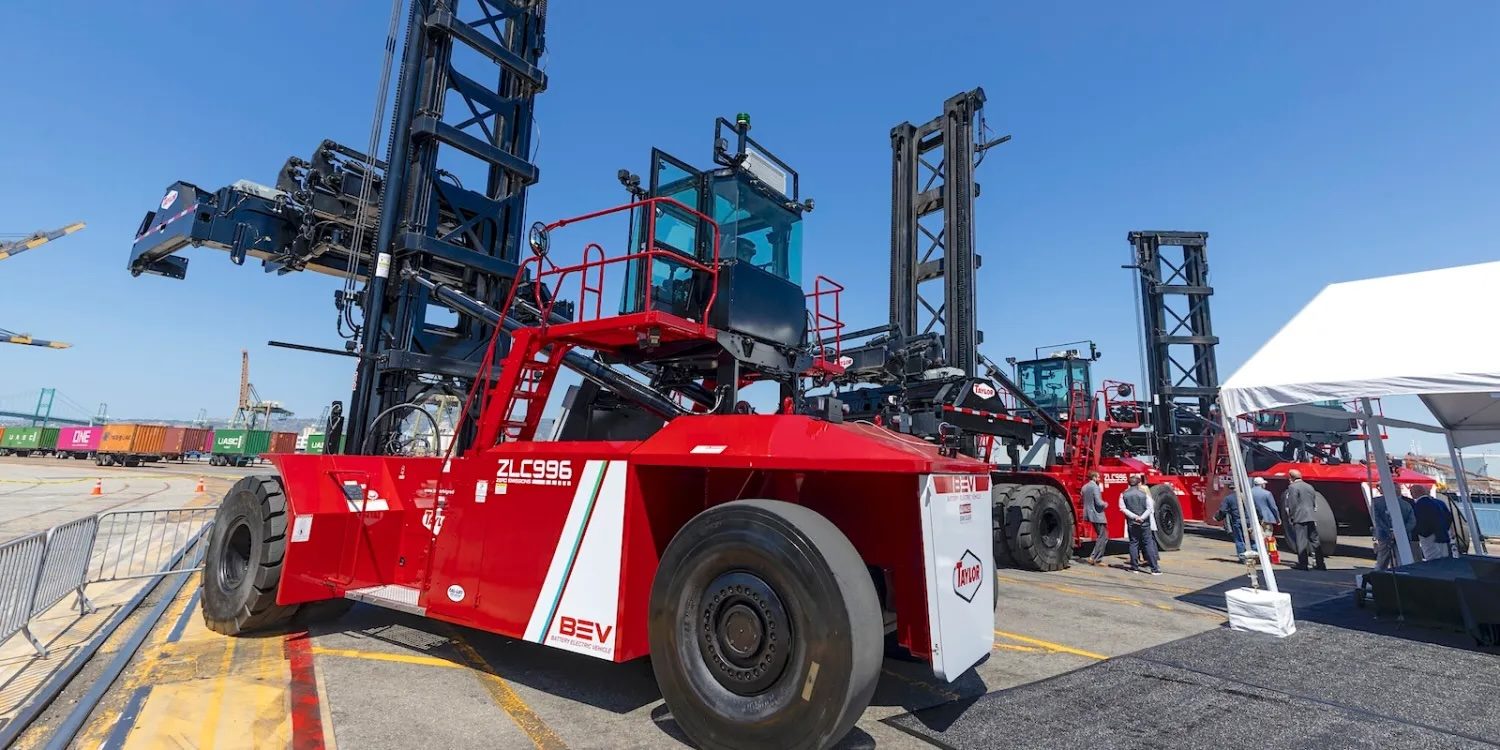
The Technology Focus: A transition away from legacy fossil-fuel machinery toward advanced battery-electric assets (alongside alternative localized power deployments).
The infusion of $200 million will drastically overhaul the day-to-day operations at Yusen’s facility. Heavy-duty port equipment—ranging from terminal tractors and forklifts to specialized reach stackers and gantry cranes—requires immense torque and round-the-clock reliability. By directing capital straight into zero-emission alternatives, Yusen is positioning itself at the forefront of the green maritime logistics revolution.
Chronology: Three Decades of Growth and Green Transition
To understand the weight of this 30-year lease, one must look back at Yusen Terminals’ deep-rooted history within the Port of Los Angeles and its steady progression toward sustainability.
1991: Establishing the Foothold
Yusen Terminals first set up operations at the Port of Los Angeles in 1991, claiming its expansive 232-acre lot at berths 212–224. Over the next thirty years, the terminal evolved into a vital node within the international container supply chain, handling massive cargo volumes flowing from Asia into the American consumer market.
The 2020s: Accelerating Clean Port Initiatives
As environmental regulations in Southern California tightened and the urgency of the climate crisis became undeniable, the Port of Los Angeles launched aggressive clean-air initiatives. Yusen did not sit on the sidelines. Over recent years, the operator actively participated in pilot programs and phased rollouts, gradually integrating electric forklifts, advanced reach stackers, and early-generation electric terminal tractors into its fleet.
August 2026: The Landmark 30-Year Agreement
Culminating decades of collaboration, August 2026 marked a turning point. Facing the need for long-term operational certainty, Yusen and port authorities negotiated the landmark 30-year lease extension. Tied directly to this agreement is the $200 million electrification fund, ensuring that the next three decades of operations will look radically cleaner than the last three.
Supporting Data: The Case for Heavy-Duty Electrification
Skeptics of commercial electrification often point to the heavy duty cycles, continuous operation hours, and immense weight loads required in industrial settings. However, modern supply chain data demonstrates that container terminals are actually the ideal proving ground for battery-electric heavy machinery.
Short Run Distances: Terminal trucks (often called "yard dogs" or hostlers) typically travel short distances between ship berths, container yards, and rail ramps.
Low Speeds: Heavy-duty port machinery rarely operates at highway speeds, drastically reducing aerodynamic drag and energy loss.
Centralized Depots: Fleets return to predictable home bases where high-capacity, multi-megawatt charging infrastructure can be installed efficiently.
A Regional Wave of Electrification
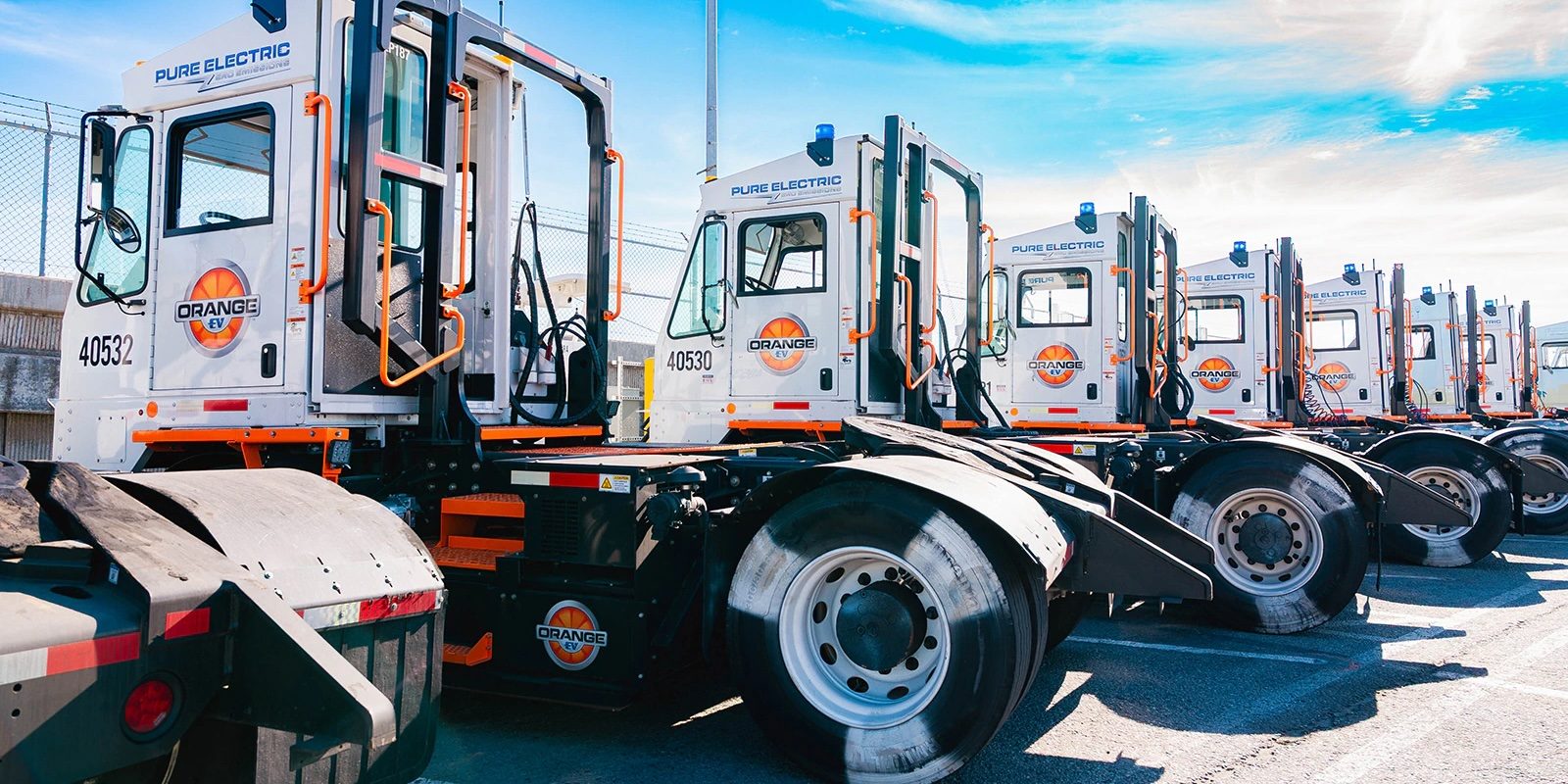
Yusen is not acting in a vacuum; the entire Port of Los Angeles ecosystem is rapidly pivoting toward electrification. Their immediate neighbors at APM Terminals Pier 400 conducted rigorous operational analyses and reached the same economic and environmental conclusions. APM integrated twenty new Orange EV yard trucks into its Los Angeles operations earlier this year. The momentum spilled over regionally when APM announced a massive electrification program for the Port of New York and New Jersey, which includes orders for 96 electric terminal tractors and 36 electric gantry cranes.
Yusen’s decision to commit $200 million confirms that electrification is no longer an experimental niche—it is the baseline standard for competitive, future-proof terminal operations.
Official Responses: Leadership Weighs In
The partnership between the Port of Los Angeles and Yusen Terminals has long been praised by municipal and corporate leaders alike. The new agreement drew enthusiastic remarks from both port administration and corporate executives.
Gene Seroka, Executive Director of the Port of Los Angeles:
"We greatly value our longstanding partnership with Yusen Terminals and the role they play in the success of our Port. Their commitment to excellence and willingness to work closely with us have been invaluable, especially in advancing our clean air initiatives. When we called on terminals to test and incorporate zero-emission equipment, Yusen Terminals immediately stepped up."
Seroka’s remarks highlight a broader collaborative framework that the Port of Los Angeles has cultivated with terminal operators. Rather than relying solely on punitive regulatory mandates, the port has fostered an environment where private enterprise and public health goals align through shared incentives and long-term planning certainty.
Alan McCorkle, President and CEO of Yusen Terminals:
"We’re proud of the operation we’ve built at the Port of Los Angeles and excited about what lies ahead. This agreement gives us the long-term certainty to continue investing in our terminal, our people, and new technology while providing the reliable service our customers expect. We look forward to building on our partnership with the Port for decades to come."
McCorkle’s emphasis on "our people" underscores the community-centric nature of the transition. Reducing diesel particulate matter inside the terminal directly protects the health of dockworkers, equipment operators, and the densely populated urban neighborhoods surrounding San Pedro and Wilmington.
Implications: Economic and Environmental Fallout
The ripple effects of Yusen Terminals’ $200 million investment and 30-year lease extension will be felt across multiple sectors, transforming local air quality, labor dynamics, and technological standards across global maritime trade.
1. Drastic Public Health Improvements
For decades, port-adjacent communities—often referred to as "fenceline communities"—have suffered disproportionately high rates of asthma and cardiovascular disease due to toxic diesel emissions from idling ships, heavy trucks, and cargo-handling machinery. By systematically replacing diesel-guzzling equipment with zero-emission alternatives over the coming years, the Yusen facility will remove millions of pounds of particulate matter and greenhouse gases from the local airshed.
2. Setting a Global Benchmark for Marine Terminals
As international shipping companies face stricter decarbonization frameworks enforced by groups like the International Maritime Organization (IMO), ports that fail to modernize risk losing business to greener competitors. By securing clean infrastructure through 2056, the Port of Los Angeles signals to global shipping lines that its terminals are equipped for the 21st-century low-carbon economy. Shippers looking to green their entire end-to-end supply chains will increasingly favor ports with robust electrification roadmaps.
3. Workforce Evolution and Safety
The deployment of advanced battery-electric and automated cargo-handling assets changes the day-to-day reality for terminal employees. Operating modern electric machinery means less noise pollution, zero cabin vibration, and no toxic exhaust fumes wafting into operator cabs. Furthermore, training the workforce to maintain, repair, and manage high-voltage charging grids upskills dockworkers, ensuring they remain resilient in an increasingly tech-driven industrial landscape.
4. Supply Chain Resilience and Efficiency
Electric fleets offer superior reliability compared to aging internal combustion engine (ICE) fleets. With fewer moving parts, electric motors require significantly less mechanical maintenance, reducing unexpected breakdowns that cause costly container dwell times. The operational predictability gained from a $200 million equipment overhaul guarantees that Yusen can maintain high velocity and throughput for its customers, shielding supply chains against bottlenecks.
Looking Ahead
The 30-year alliance between the Port of Los Angeles and Yusen Terminals demonstrates that long-term commercial viability and aggressive environmental protection are not mutually exclusive—they are deeply interdependent.
As the ink dries on this historic agreement and the multi-million-dollar equipment rollout gets underway, the Port of Los Angeles moves one giant step closer to a fully decarbonized waterfront. The transformation of berths 212–224 serves as a blueprint for ports worldwide, proving that the future of global logistics runs on pure, clean electricity.