

By Automotive and Sustainable Mobility Desk
Published August 2026
Main Facts: The Dawn of Zero-Emission Overlanding
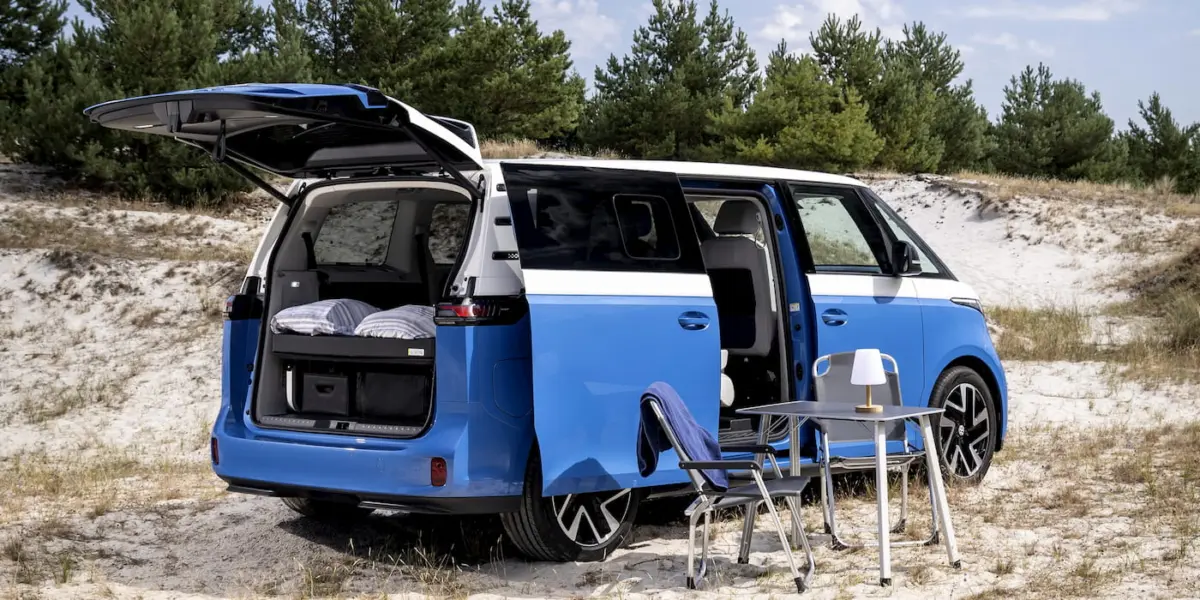
The long-awaited dream of a factory-built, zero-emission camper van has finally materialized. At the prestigious Caravan Salon 2026, Volkswagen Commercial Vehicles officially pulled the covers off the ID. California Cruise—the company’s very first fully electric California camper.
![Volkswagen unveils the first California EV camper, and it’s based on the ID. Buzz [Images]](https://electrek.co/wp-content/uploads/sites/3/2026/08/Volkswagen-ID-California-Cruise-EV-camper.jpeg?quality=82&strip=all&w=1400)
Built upon the widely praised architecture of the ID. Buzz, the ID. California Cruise represents a monumental shift for the legendary "Bulli" lineage. It marries the nostalgic, counter-culture freedom of classic Volkswagen campers with cutting-edge battery-electric mobility. Designed specifically for weekend getaways, extended road trips, and off-grid camping, this all-electric home-on-wheels bridges the gap between environmental responsibility and outdoor adventure.
Priced starting at €60,761 in Germany (roughly equivalent to $70,500 USD), the ID. California Cruise is scheduled to begin its initial customer deliveries in early 2027. Offering short- and long-wheelbase variants, flexible modular camping equipment, bidirectional charging capabilities, and smart trip-planning software, Volkswagen is positioning this vehicle not just as a mode of transport, but as a lifestyle ecosystem for a new generation of eco-conscious explorers.
![Volkswagen unveils the first California EV camper, and it’s based on the ID. Buzz [Images]](https://electrek.co/wp-content/uploads/sites/3/2026/08/Volkswagen-ID-California-EV-camper-bed.jpeg?quality=82&strip=all)
Chronology: From the Original Bulli to the ID. California Cruise
To understand the significance of the ID. California Cruise, one must look back at the historical trajectory of Volkswagen’s camper vans and the rapid evolution of its electric platform.
- The Mid-20th Century (1950s–1980s): The Volkswagen Type 2 (Transporter/Microbus) established the blueprint for modern camper vans. Conversion companies, most notably Westfalia, turned the iconic bus into the quintessential symbol of counter-culture travel and overland independence.
- The Modern Era: Volkswagen integrated the camper concept directly into its factory production lines with the internal-combustion-engine-powered California models based on the T-series vans, cultivating a dedicated global community of enthusiasts.
- March 2022: Volkswagen officially launches the ID. Buzz to global markets. Almost immediately, automotive journalists, camping enthusiasts, and long-time fans flood social media and forums with demands for an all-electric California variant.
- August 2026: Recognizing overwhelming market demand, Volkswagen Commercial Vehicles officially debuts the ID. California Cruise at the Caravan Salon 2026. The company labels the vehicle its "first concrete response" to the public’s continuous calls for an electric Bulli camper.
- Early 2027 (Projected): Volkswagen is scheduled to roll out the very first customer deliveries of the ID. California Cruise across select European markets, officially kicking off a new multi-year family of electric camping vehicles.
Supporting Data: Specifications, Dimensions, and Capabilities
Underneath its charming exterior, the ID. California Cruise is a heavily equipped technical powerhouse. Because it is derived from the robust foundations of the ID. Buzz Pro, buyers can expect a familiar range and performance profile, though tailored specifically for the demands of outdoor travel.
![Volkswagen unveils the first California EV camper, and it’s based on the ID. Buzz [Images]](https://electrek.co/wp-content/uploads/sites/3/2026/08/Volkswagen-ID-California-EV-camper-interior.jpeg?quality=82&strip=all)
Battery Packs and Range Estimates
- Standard Wheelbase (SWB): Utilizes a 79 kWh battery pack, delivering an estimated WLTP range of up to 461 km (286 miles).
- Long Wheelbase (LWB): Utilizes a larger 86 kWh battery pack, extending the WLTP range to a maximum of 487 km (302 miles).
(Note: Industry experts and early testing indicate that the addition of camping gear, aerodynamic modifications, and payload weight may marginally impact real-world range figures.)
Interior Comfort and Dimensions
- Sleeping Quarters: Features a precision-engineered bed measuring 2.03 meters (6.66 feet) long and 1.20 meters (3.93 feet) wide, easily accommodating two adults.
- Mattress Technology: Includes a newly developed 9 cm thick folding comfort mattress designed to eliminate the backaches commonly associated with makeshift vehicle bedding.
- Privacy and Ventilation: Outfitted with custom ventilation grilles on the front side windows and integrated blackout blinds on every window. A matching blackout blind is also included for buyers who opt for the panoramic glass roof.
Power and Off-Grid Living (V2L)
One of the standout technological inclusions is the PowerSocket discharge adapter, which unlocks comprehensive vehicle-to-load (V2L) capabilities:
- Continuous Power Output: Up to 2,000 watts.
- Peak Power Output: Up to 3.6 kW.
- Applications: The van effectively functions as a massive mobile power bank. Campers can run coffee makers, induction cooktops, laptops, and CPAP machines, or charge electric bicycles and e-scooters directly from the vehicle’s high-voltage battery without burning fossil fuels or running a noisy generator.
Official Responses and Strategic Partnerships
Volkswagen Commercial Vehicles did not develop the ID. California Cruise in a vacuum. Recognizing that traditional camper van conversions require specialized expertise, VW forged strategic alliances to optimize the vehicle’s utility.
![Volkswagen unveils the first California EV camper, and it’s based on the ID. Buzz [Images]](https://electrek.co/wp-content/uploads/sites/3/2026/08/Volkswagen-ID-California-electric-camper.jpeg?quality=82&strip=all)
The Stuff Bubble Partnership
Volkswagen teamed up with Stuff Bubble—a company globally renowned for inventing the world’s first inflatable camping kitchen—to design custom interior equipment. The goal was simple: transform an everyday family van into a fully-fledged, functional camper in a matter of minutes. All modular components are engineered to be lightweight, incredibly durable, and easily stowed away within dedicated compartments of the vehicle when not in use.
VW Commercial Vehicles Statement
Reflecting on the overwhelming consumer feedback since the ID. Buzz’s rollout, Volkswagen representatives noted that drivers and media have "repeatedly expressed interest in a California version of the all-electric Bulli." The ID. California Cruise serves as Volkswagen’s direct answer to that collective cry.
![Volkswagen unveils the first California EV camper, and it’s based on the ID. Buzz [Images]](https://electrek.co/wp-content/uploads/sites/3/2026/08/Volkswagen-ID-California-Cruise-camper-V2L.jpeg?quality=82&strip=all)
Furthermore, VW has integrated bespoke aesthetic touches to set the Cruise apart from standard passenger variants. The interior boasts exclusive seat covers woven with integrated California woodwork motifs, accompanied by subtle California lettering at the rear and distinctive "Cruise" badges along the vehicle’s flanks.
The California App and "Electric-Trip" Software
To alleviate the well-documented anxiety surrounding EV road trips, Volkswagen Commercial Vehicles is updating the California App with proprietary "electric-trip" functions. For the first time, users can map complex journeys with automated suggestions for charging stops along their route. Thanks to integrated Plug & Charge technology, initiating a charging session at compatible stations happens automatically, eliminating the hassle of physical credit cards or complicated smartphone apps when plugging in.
![Volkswagen unveils the first California EV camper, and it’s based on the ID. Buzz [Images]](https://i0.wp.com/electrek.co/wp-content/uploads/sites/3/2026/08/Volkswagen-ID-California-camper-bed.jpeg?ssl=1)
Implications: Market Impact, Regional Disparities, and Competitors
The arrival of the ID. California Cruise sends powerful ripples through the automotive and outdoor recreation industries, though it also highlights ongoing geographic divides in EV adoption.
The North American Exclusion
Despite the massive cult following that Volkswagen buses and modern camper vans enjoy in the United States and Canada, prospective American buyers should temper their expectations. Volkswagen does not currently sell the traditional California camper line in North America, and industry analysts confirm that the ID. California Cruise is not slated to cross the Atlantic.
![Volkswagen unveils the first California EV camper, and it’s based on the ID. Buzz [Images]](https://electrek.co/wp-content/themes/ninetofive/dist/images/google-preferred-source-badge-dark.png)
However, American buyers aren’t entirely ignored. Volkswagen has introduced a new Tourer model for the 2027 ID. Buzz lineup in the US. While not a fully equipped California, the Tourer introduces essential camper-friendly features, including a fold-out bed setup, an "Overnight mode," and factory blackout shades.
The Rising Battle of Electric Campers
The ID. California Cruise enters a nascent, highly competitive market for electric recreational vehicles.
![Volkswagen unveils the first California EV camper, and it’s based on the ID. Buzz [Images]](https://electrek.co/wp-content/themes/ninetofive/dist/images/google-preferred-source-badge-light.png)
- Kia PV5: Another major contender in the global EV van space is the Kia PV5, which has heavily marketed its own modular camping kits capable of transforming an interior into a campsite within minutes. Unfortunately, similar to VW’s camper, the PV5 faces complex regional rollout challenges.
Environmental and Lifestyle Implications
For European adventurers, the ID. California Cruise represents a paradigm shift. Traditional diesel camper vans have long faced criticism for their high carbon footprints and particulate emissions, particularly when idling at scenic national parks or campsites. The ID. California Cruise allows travelers to practice "leave no trace" camping more effectively. With zero tailpipe emissions, silent campsite operation via "California mode" (which safely powers lights, USB ports, and environmental controls for up to 48 hours overnight), and silent V2L power generation, owners can immerse themselves in nature without disturbing the tranquility—or the air quality—of the wilderness.
As the first wave of deliveries approaches in early 2027, the ID. California Cruise stands as a definitive proof-of-concept: the electric road trip era has officially found its rolling home.
