

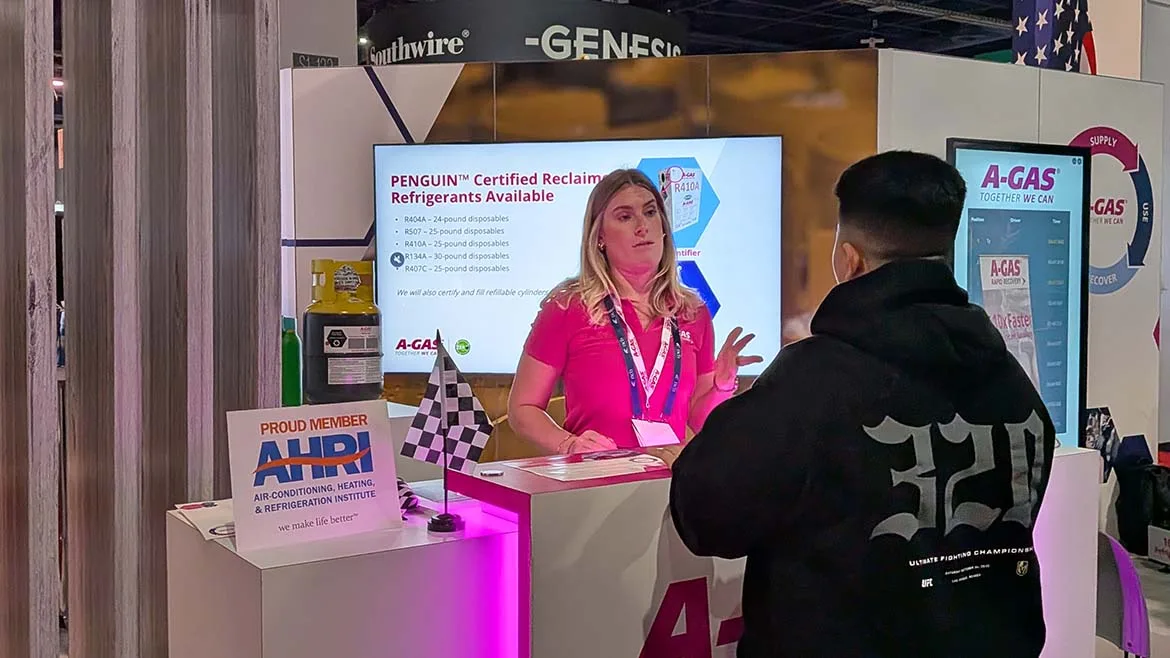
LOS ANGELES — As the heating, ventilation, air conditioning, and refrigeration (HVACR) industry navigates an increasingly complex landscape of environmental oversight, regulatory compliance has become a central focus for stakeholders across the supply chain. Leading refrigerant supplier and lifecycle management enterprise A-Gas has announced that its Penguin Certified Reclaimed Refrigerants fully comply with California’s rigorous new regulatory framework established under Assembly Bill (AB) 663.
The announcement arrives as California continues to pioneer aggressive climate policies designed to curb hydrofluorocarbon (HFC) emissions. For contractors, distributors, wholesalers, and facility managers operating in the Golden State, understanding and adapting to these legislative shifts is no longer optional—it is a mandatory prerequisite for legal operation and business continuity.
Main Facts: Decoding California’s AB 663 and the A-Gas Response
At its core, the intersection of A-Gas’s product offerings and California’s latest environmental mandates represents a significant milestone in sustainable refrigerant lifecycle management.
What is AB 663?
Signed into law in October of last year, Assembly Bill 663 serves as a vital legislative clarification and strengthening of California’s preceding Senate Bill (SB) 1206. While SB 1206 established the groundwork for phasing down high global-warming potential (GWP) HFCs and regulating the use of virgin refrigerants, it left certain operational ambiguities open to interpretation—particularly concerning inventory stockpiles, documentation, and the exact definition of a "certified reclaimed" product.
AB 663 eliminates these gray areas by establishing rigid, unambiguous criteria that a refrigerant must meet to be legally classified as a certified reclaimed product in California:
- Composition Threshold: Each cylinder must contain a minimum of 85% reclaimed material by weight.
- Industry Standards: The product must hold official AHRI 700 certification, ensuring it meets strict purity standards for fluorocarbon refrigerants.
- Purity Levels: The reclaimed substance must achieve a minimum chemical purity of 99.5%.
- Reclaimer Credentials: Processing must be executed exclusively by a reclaimer certified and recognized by the U.S. Environmental Protection Agency (EPA).
The A-Gas Solution: Penguin Certified Reclaimed Refrigerants
To support industry partners through this transition, A-Gas has positioned its Penguin Certified Reclaimed Refrigerants as a turnkey compliance solution. To guarantee that contractors and wholesalers remain entirely shielded from liability, A-Gas couples every cylinder with comprehensive documentation—most notably, a verified Certificate of Analysis (COA).
Furthermore, every container features distinct, tamper-evident labeling designed to provide complete traceability from the reclamation facility to the end-user. This rigorous tracking infrastructure ensures that HVACR professionals can verify the origin, purity, and regulatory status of the product instantly, mitigating the risk of inadvertent noncompliance.
Chronology of Regulatory Evolution: From SB 1206 to AB 663
To fully appreciate the gravity of AB 663 and the strategic positioning of A-Gas, it is essential to trace the historical timeline of California’s legislative efforts regarding HFC management.
The Foundation: The AIM Act and SB 1206
The regulatory trajectory governing refrigerants in the United States accelerated dramatically with the federal passage of the American Innovation and Manufacturing (AIM) Act of 2020, which mandated a nationwide 85% phasedown of HFC production and consumption over a 15-year period.
Sensing the need for localized action, California enacted Senate Bill 1206. SB 1206 was designed to restrict the use of virgin HFCs with high GWPs in specific servicing and manufacturing sectors, while carving out exemptions for reclaimed refrigerants to encourage a circular economy. However, as the market attempted to adjust, enforcement agencies and industry advocates quickly realized that SB 1206 lacked precise definitions regarding "grandfathered" inventories and historical stockpiles. Unscrupulous actors could potentially pass off substandard or virgin materials as "reclaimed," undermining both environmental goals and fair market competition.
The Legislative Gap and the Birth of AB 663
Recognizing these loopholes, California lawmakers drafted Assembly Bill 663 to close the gaps left by its predecessor. Throughout the legislative process, industry stakeholders—including environmental groups, refrigerant reclaimers, and equipment manufacturers—lobbied for clear, enforceable standards that would protect legitimate businesses while penalizing bad actors.
When AB 663 was signed into law, it fundamentally altered the rules of engagement for inventory management:
- Elimination of the Stockpile Loophole: Under the new law, previously acquired or stockpiled refrigerants that fail to meet the 85% reclaimed weight, 99.5% purity, and AHRI 700 standards are officially deemed noncompliant, regardless of when they were purchased or manufactured.
- Strict Enforcement Deadlines: The law established immediate clarity on enforcement, rendering grace periods for legacy noncompliant inventories virtually nonexistent.
- Severe Penalties: The commercial distribution, sale, or application of noncompliant refrigerants in California now carries severe civil and criminal penalties, escalating the stakes for negligence across the supply chain.
Supporting Data and Technical Specifications
The transition to reclaimed refrigerants is not merely a regulatory hurdle; it is a vital component of the global transition toward a circular economy within the HVACR sector. Virgin refrigerant production is energy-intensive and contributes significantly to virgin chemical demand. By contrast, reclamation extracts used fluorocarbons from closed-loop systems, purifies them to virgin specifications, and reintroduces them into the market.
Technical Parameters Table
| Parameter | Regulatory Requirement (AB 663) | A-Gas Penguin Certified Specification |
|---|---|---|
| Minimum Reclaimed Content | $ge 85%$ by weight | Fully compliant ($ge 85%$) |
| Minimum Chemical Purity | $ge 99.5%$ | Fully compliant ($ge 99.5%$) |
| Industry Testing Standard | AHRI 700 Certified | AHRI 700 Certified & Tested |
| Processing Authority | EPA-Certified Reclaimer | EPA-Certified Facility |
| Documentation Required | Certificate of Analysis (COA) | Provided with every cylinder |
| Traceability | Mandatory cylinder labeling | Unique serialization & tracking |
Market Dynamics and Supply Chain Pressures
Data from environmental analysts indicates that demand for reclaimed HFCs (such as R-134a, R-410A, and R-404A) is projected to surge exponentially over the next decade as virgin production quotas tighten under the AIM Act’s phasedown schedule. California, representing one of the largest regional HVACR markets in the world, acts as a bellwether for national regulatory trends.
With AB 663 strictly outlawing noncompliant inventories, the margin for error in supply chain logistics has evaporated. Wholesalers who fail to audit their stock risk sitting on stranded, illegal assets that cannot be legally sold or vented. A-Gas’s proactive alignment ensures that its distribution partners can maintain continuous inventory flow without facing the existential threat of regulatory penalties.
Official Responses and Industry Perspectives
The response from industry leaders, trade associations, and corporate executives to A-Gas’s compliance announcement has been overwhelmingly positive, emphasizing the necessity of proactive leadership in times of regulatory turbulence.
Corporate Strategy and Leadership Commentary
In official statements released following the implementation milestones of AB 663, representatives for A-Gas underscored the company’s commitment to long-term sustainability and market stability.
"By proactively adapting to regulatory changes and providing EPA-compliant, high-purity refrigerants, A-Gas delivers lasting value for HVACR wholesalers, contractors, and technicians," a company spokesperson noted.
The firm emphasized that Penguin Certified Reclaimed Refrigerants are designed to remove friction from the compliance process. By investing heavily in state-of-the-art reclamation infrastructure, A-Gas ensures that environmental compliance does not come at the expense of operational efficiency for its commercial partners.
Contractor and Wholesaler Reactions
For HVACR contractors and wholesale distributors on the front lines of service and installation, the clarity provided by A-Gas’s compliance framework offers immense peace of mind.
Industry trade groups have noted that many independent contractors expressed anxiety over potential liabilities tied to legacy inventories purchased prior to AB 663. Because the law states that stockpiled refrigerants failing to meet the new criteria are noncompliant regardless of purchase date, contractors faced the daunting prospect of accidental legal infractions.
With A-Gas supplying fully documented, certified, and traceable cylinders accompanied by unassailable Certificates of Analysis, technicians can perform routine maintenance, retrofits, and new installations with absolute confidence. Wholesalers, meanwhile, can clear their floors of questionable stock and replace it with certified product lines that satisfy both state inspectors and discerning end-use clients.
Implications for the HVACR Industry
The convergence of California’s AB 663 and A-Gas’s compliance offerings signals broader, long-term implications for the heating, ventilation, air conditioning, and refrigeration sectors across the United States.
1. The Death of the "Gray Market"
One of the most immediate impacts of AB 663 is the effective dismantling of secondary gray markets for refrigerants in California. Historically, unregulated or loosely monitored stockpiles allowed cheap, sub-standard, or illicitly imported virgin gases to undercut legitimate reclaimed products. By setting crystal-clear numerical thresholds (85% reclaimed weight, 99.5% purity) and threatening severe civil and criminal penalties, California has made gray-market operations financially and legally toxic. A-Gas’s transparent tracking mechanisms establish a gold standard that regulators expect the rest of the market to emulate.
2. Acceleration of the Circular Economy
Lifecycle management is transitioning from an ethical corporate talking point into an essential commercial strategy. As virgin HFC quotas continue to ratchet downward under federal schedules, the gap between supply and demand can only be bridged through robust reclamation. By proving that reclaimed refrigerants can be processed, tested, certified, and documented to match or exceed the performance of virgin chemicals, A-Gas is helping to institutionalize the circular economy within the HVACR trades.
3. A Blueprint for National Legislation
California has historically served as a regulatory laboratory for the broader United States. Environmental policies first pioneered in the Golden State—ranging from vehicle emission standards to energy-efficiency building codes—frequently serve as the template for subsequent federal legislation or adoption by other progressive states. HVACR professionals nationwide should view AB 663 not as an isolated geographic anomaly, but as a preview of where national refrigerant regulations are heading. Companies that master compliance, documentation, and lifecycle management in California today will be inherently better positioned for the nationwide regulatory environment of tomorrow.
4. Educational Imperatives for Technicians and Contractors
As regulations grow more sophisticated, the day-to-day responsibilities of the modern HVACR technician are evolving. It is no longer sufficient merely to understand mechanical thermodynamics, subcooling, and superheat; technicians must now possess a working knowledge of environmental law, refrigerant pedigree, and documentation compliance. Training programs, trade schools, and union apprenticeships must incorporate comprehensive education on standards like AHRI 700, EPA reclaimer certifications, and the legal implications of HFC management.
Conclusion
The implementation of California’s Assembly Bill 663 marks a decisive turning point in how the HVACR industry manages environmental compliance, inventory accountability, and sustainability. By eliminating statutory ambiguities, punishing noncompliant stockpiles, and enforcing stringent purity and composition requirements, California has raised the bar for chemical management.
Through its Penguin Certified Reclaimed Refrigerants, A-Gas has demonstrated that proactive corporate leadership can successfully bridge the gap between rigorous government regulation and commercial practicality. By providing guaranteed AHRI 700 certification, 99.5% purity, verified EPA-reclaimed content exceeding 85%, and transparent documentation via Certificates of Analysis, A-Gas ensures that its partners can operate securely, sustainably, and profitably.
As the broader national market looks toward a future constrained by dwindling virgin HFC quotas, the model established by California and supported by industry leaders like A-Gas offers a clear roadmap: true industry longevity relies on absolute compliance, unwavering transparency, and an unwavering commitment to the circular lifecycle of refrigerants.
