

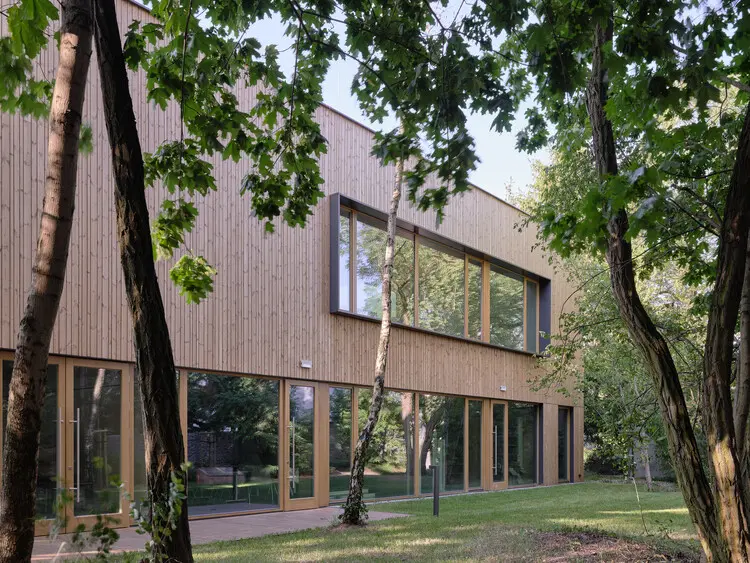
August 30, 2026 — In an era defined by rapid urbanization and digital saturation, the physical library is undergoing a radical reimagining. No longer merely a static repository for books, the modern civic library has transformed into a dynamic socio-cultural hub, an incubator for local engagement, and a sanctuary for quiet contemplation. Exemplifying this paradigm shift is the newly completed Public Library in Choszczówka, designed by the visionary architecture practice Ambient.
Photographed extensively by Marcin Czechowicz, this striking new addition to the Choszczówka neighborhood marries environmental consciousness with poetic spatial design. The project’s overarching philosophy champions inspiring architecture rooted in ecological responsibility—utilizing renewable resources, low-emission natural materials, and high-efficiency energy systems to foster an intimate dialogue with the surrounding landscape.
Main Facts
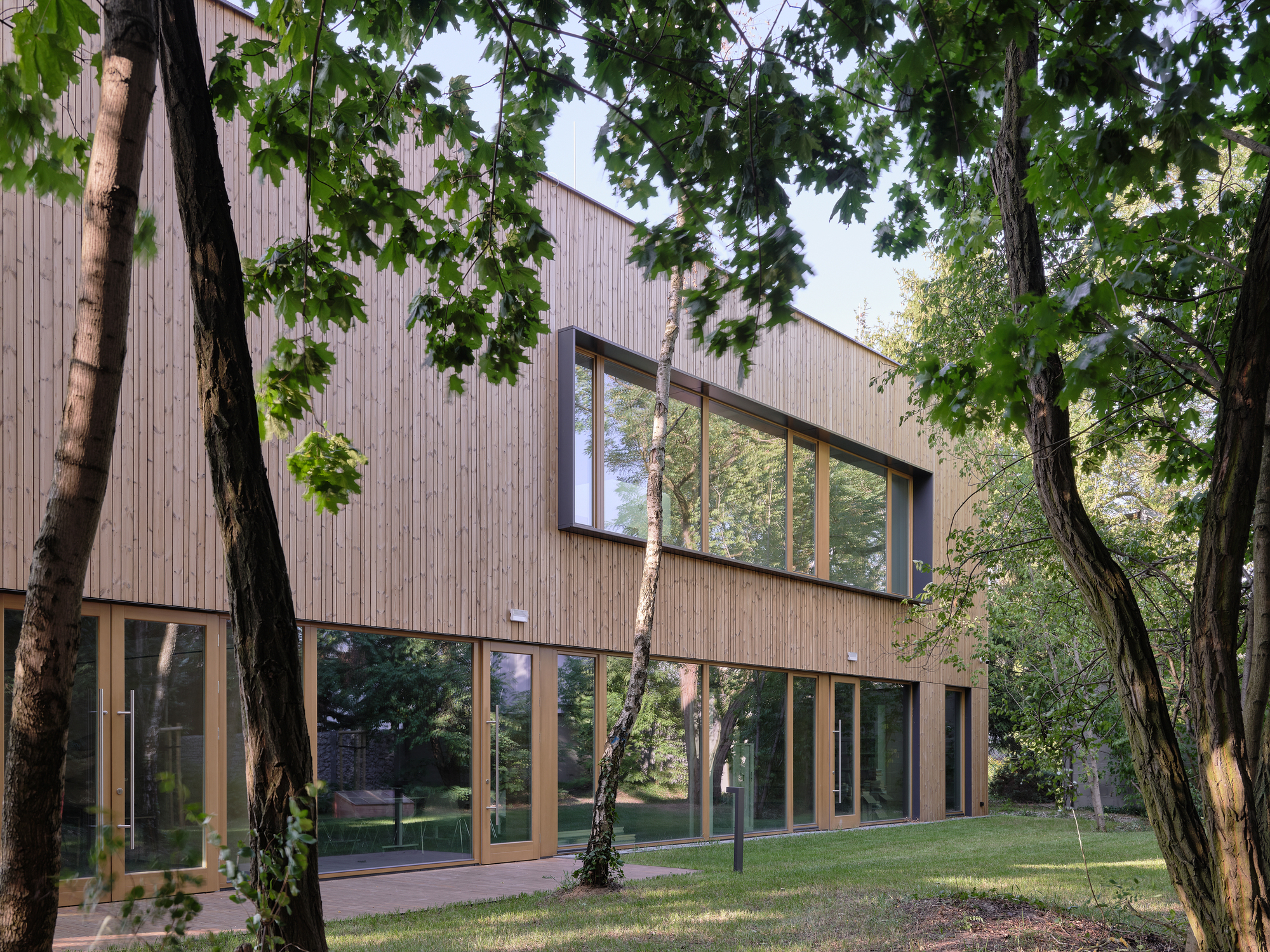
The Public Library in Choszczówka is a masterclass in contextual architecture and sustainable design. Developed by the architectural team at Ambient, the building serves as a multi-functional anchor for the local community, blending civic utility with a deep respect for its natural woodland setting.
- Project Name: Public Library in Choszczówka
- Architectural Practice: Ambient
- Location: Choszczówka (Warsaw metropolitan area, Poland)
- Photographer: Marcin Czechowicz
- Core Design Principles: Energy efficiency, renewable energy integration, low-emission natural materials, context-driven landscaping, and community-centric spatial planning.
- Typology: Civic / Public Architecture, Library, Cultural Center
Rather than imposing an alien geometric form onto the site, the architects conceived a structure that feels as though it has grown organically from the terrain. By prioritizing renewable materials—predominantly locally sourced timbers and low-carbon structural elements—the building drastically minimizes its embodied carbon footprint while providing a warm, tactile environment for its patrons.
Chronology of Development
The realization of the Choszczówka Public Library was a methodical journey spanning community consultation, meticulous sustainable design, and precise construction execution.
Phase 1: Conceptualization and Community Needs Assessment (2023–2024)
Recognizing the rapid growth of Choszczówka and the shifting demands placed on modern civic spaces, local municipal authorities initiated plans for a new public library. Ambient was selected to lead the design, tasked with moving beyond traditional library layouts to create a flexible, multi-generational hub. Initial community workshops underscored the neighborhood’s desire for a quiet reading space that would double as an educational venue and a gathering place, all while preserving the area’s distinct arboreal character.
Phase 2: Design Evolution and Sustainability Integration (2024–2025)
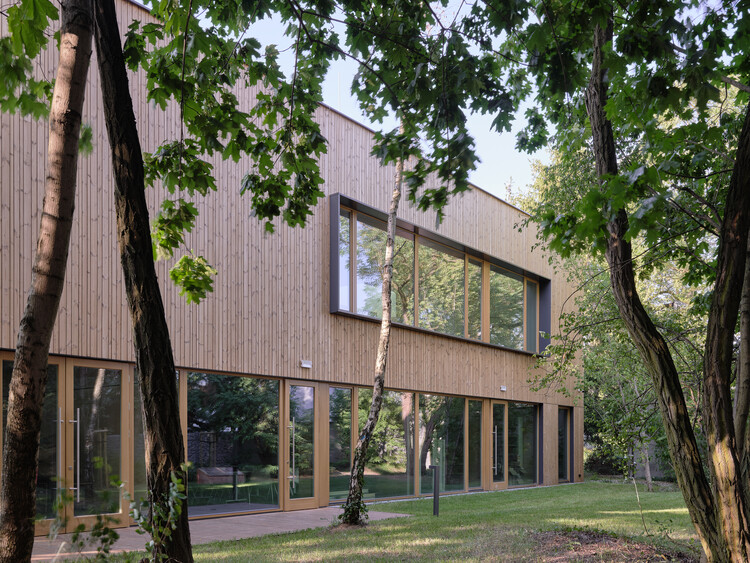
Ambient refined the building’s footprint to weave between existing mature trees, avoiding unnecessary clear-cutting. The design team focused heavily on passive energy strategies—maximizing natural daylight through strategically placed glazing while mitigating solar heat gain. Engineers integrated high-efficiency heat pumps, photovoltaic arrays, and advanced insulation systems utilizing low-emission, natural fiber materials.
Phase 3: Construction and Material Procurement (2025–Mid 2026)
Construction began with a low-impact approach, prioritizing prefabricated timber elements to reduce construction waste, noise pollution, and site disruption. Artisans and local builders worked hand-in-hand to assemble the timber framework, cladding, and interior fittings.
Phase 4: Completion and Public Opening (August 2026)
Following rigorous interior outfitting and landscaping harmonization, the library officially opened its doors to the public in August 2026. The completed project stands as a testament to what can be achieved when municipal vision aligns with cutting-edge architectural craftsmanship.
Supporting Data and Architectural Breakdown
A closer examination of the Choszczówka Public Library reveals a careful balancing act between technical performance and aesthetic warmth.
Material Palette and Embodied Carbon
Ambient’s material selection strategy heavily favored renewable, bio-based resources.
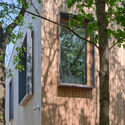
- Exterior Cladding: Utilizes treated, locally sourced timber that naturally weathers over time, allowing the building to silver gracefully and match the bark tones of the surrounding forest.
- Structural Framing: Primarily timber-based, significantly reducing the reliance on carbon-intensive reinforced concrete.
- Interiors: Finished with exposed wood surfaces, acoustic panels made from recycled and natural fibers, and polished low-VOC concrete flooring that provides thermal mass for passive temperature regulation.
Energy Performance Systems
The building operates on a near-net-zero energy model through a multi-tiered approach:
- Solar Integration: Roof-mounted photovoltaic panels harvest solar energy to offset daily operational loads, including lighting, climate control, and computing infrastructure.
- Thermal Envelope: Triple-glazed windows coupled with high-performance natural insulation (such as wood-fiber insulation boards) ensure interior comfort year-round with minimal mechanical heating or cooling.
- Lighting Strategy: Deep eaves and carefully calculated window placements flood reading areas with diffused daylight, reducing reliance on artificial illumination during peak operating hours.
Official Responses and Design Intent
In their official project statement, the architects at Ambient articulated the core mission behind the library’s conception:
"Our goal was to create a place for the local community with inspiring architecture and environmental awareness—energy-efficient, based on renewable resources, using low-emission, natural materials, and blending into the surrounding nature and local context."
Local municipal representatives have echoed this sentiment, praising the project for redefining public expectations of civic buildings. Initial feedback from community members highlights the immediate sense of calm experienced upon entering the library. The interior spaces—bathed in soft, filtered daylight and smelling faintly of natural pine—offer a stark, welcome contrast to the stress of urban commutes and digital overload.
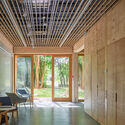
Educators and local reading clubs have similarly lauded the flexible floor plan, which allows the main reading room to easily reconfigure for evening lectures, children’s storytelling workshops, and community exhibitions without disrupting individual study zones.
Implications for Future Civic Architecture
The completion of the Public Library in Choszczówka arrives at a crucial juncture in contemporary architecture. As municipalities worldwide grapple with climate change, economic pressures, and the changing definition of public squares, the Choszczówka model offers a replicable blueprint for success.
1. Decentralized Community Resilience
By investing in high-quality, sustainable neighborhood libraries rather than centralized mega-institutions, cities can foster stronger hyper-local bonds. The Choszczówka library proves that civic architecture can be both modest in scale and monumental in its positive social impact.
2. Normalizing Bio-Philic and Low-Carbon Design
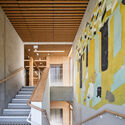
Ambient’s work demonstrates that sustainable architecture does not need to look cold, hyper-futuristic, or clinical. By embracing timber construction and vernacular material honesty, architects can create spaces that feel immediately welcoming and timelessly elegant while achieving aggressive environmental targets.
3. The Library as an Environmental Educator
Perhaps the most profound implication of the Choszczówka library is its educational pedagogy of space. Children and adults who visit the library are not just consuming literature about ecology; they are experiencing it firsthand. The building itself acts as an open book—teaching lessons on renewable energy, carbon sequestration, and respect for nature simply by existing.
As architectural practice continues to evolve in the shadow of the climate crisis, projects like Ambient’s Public Library in Choszczówka illuminate a clear, hopeful path forward: one where buildings act as stewards of the environment, champions of community, and generators of collective joy.
