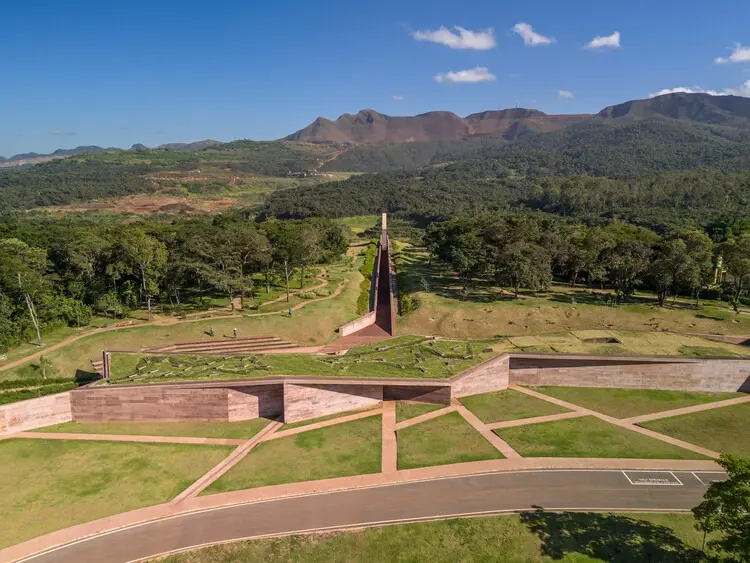
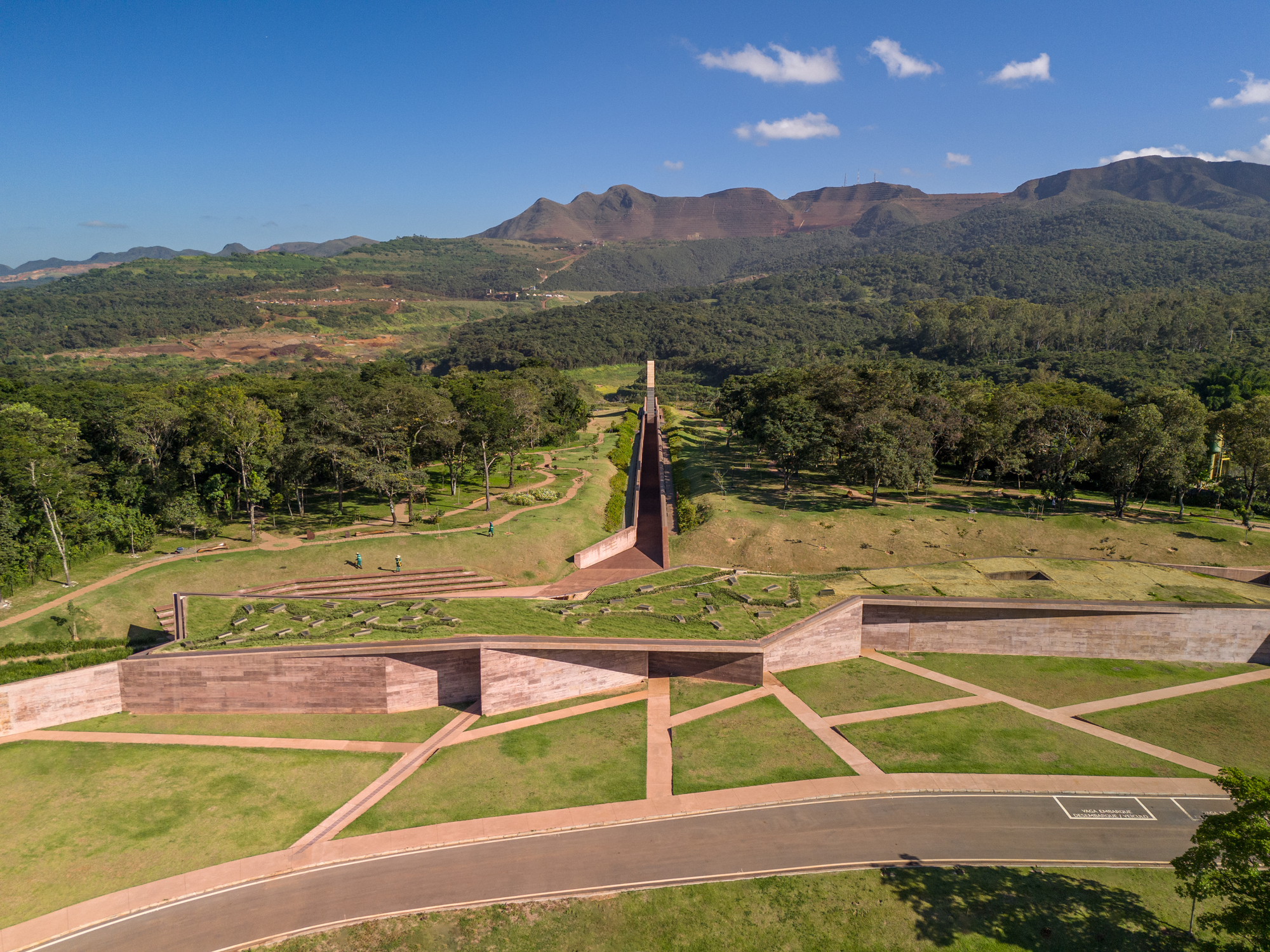
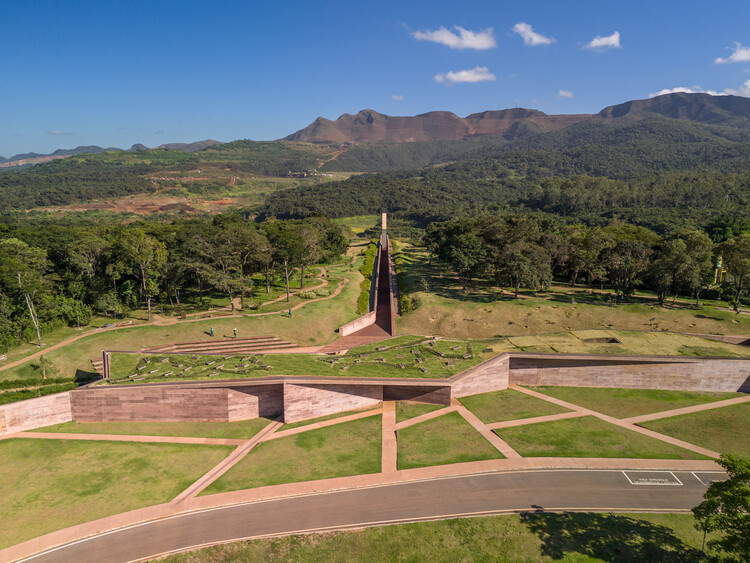
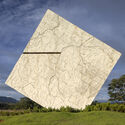
The Brumadinho Memorial stands as a solemn and profound architectural tribute to the 272 lives lost in the devastating collapse of the Córrego do Feijão iron ore mine dam in Brumadinho, Minas Gerais, Brazil. Designed by the renowned studio Gustavo Penna Arquitetos Associados (GPAA), the memorial is more than a physical structure; it is a landscape of healing, a repository of personal histories, and a permanent anchor for collective memory.
Located directly on the site of the tragic disaster—which unfolded on January 25, 2019—the project was conceived not from corporate mandate or governmental decree, but through the fierce, unwavering mobilization of the victims’ families. Developed in deeply collaborative co-design workshops with these families, the memorial ensures that the narrative of the tragedy remains authentic, centered on human loss, and permanently resistant to forgetting.
Spanning an expansive landscape marked by scars of both industrial catastrophe and natural resilience, the architectural intervention balances raw materiality, poetic spatial progression, and ecological sensitivity. It serves a multi-faceted purpose: providing a dignified sanctuary for private and public mourning, acting as a historical archive to preserve individual identities, and functioning as an educational institution dedicated to promoting awareness, social responsibility, and human rights.
Chronology: From Catastrophe to Conception
The trajectory leading to the realization of the Brumadinho Memorial is anchored in a timeline defined by sorrow, resilience, and meticulous planning:
January 25, 2019: The tailings dam at Vale’s Córrego do Feijão iron ore mine collapses, unleashing a massive wave of toxic mud that engulfs the administrative area, local infrastructure, residential neighborhoods, and natural ecosystems, ultimately claiming 272 lives—including unborn children and numerous local workers.
2019–2020: In the immediate aftermath of the disaster, grieving families, local associations, and community leaders organize to demand justice, accountability, and proper memorialization. Discussions quickly shift toward establishing a permanent physical space that would prevent the tragedy from fading into historical obscurity.
2021: Gustavo Penna Arquitetos Associados (GPAA) is selected to lead the design process. Rather than imposing a top-down architectural vision, the firm initiates a series of intensive, emotionally charged listening sessions and co-design workshops with the families of the victims. Every architectural gesture is vetted through the lens of those who suffered the most profound losses.
2022–2024: Detailed design development, environmental impact studies, and construction phases are executed. The construction process itself is handled with extreme care to respect the topography and the emotional weight of the terrain.
Late 2025 – October 2026: The memorial reaches completion and opens its doors to the public. High-profile architectural documentation by photographers such as Leonardo Finotti, Pedro Mascaro, and Jomar Bragança brings international attention to the project, culminating in its widespread publication and critical acclaim in global architectural platforms like ArchDaily.
Supporting Data and Architectural Composition
The architectural language of the Brumadinho Memorial is rooted in minimalism, phenomenological spatial sequencing, and a profound respect for the surrounding Minas Gerais landscape.
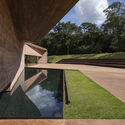
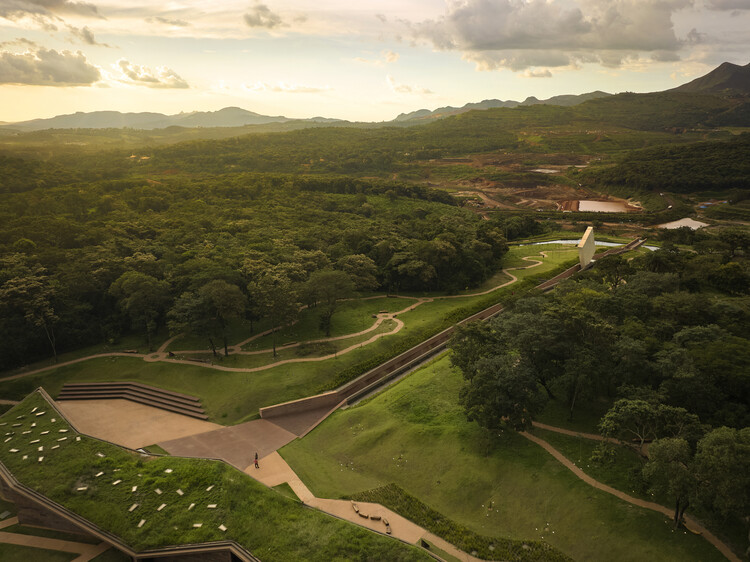
Site Context and Footprint: Integrated directly into the disaster zone, the memorial occupies a transitional boundary between the industrial past of mining and the regenerative power of nature. The design avoids monumental arrogance, opting instead for a subdued, horizontal integration into the topography.
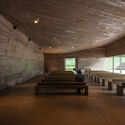
Materiality: GPAA selected a palette of raw, honest materials—predominantly locally sourced timber, exposed concrete, and dark steel. Wood brings a sense of warmth, humanity, and organic vulnerability, contrasting sharply with the cold, destructive industrial materials associated with the dam’s collapse.
Spatial Progression: The visitor’s journey through the memorial is intentionally choreographed. It moves from open, exposed exterior pathways that engage with the vastness of the landscape into enclosed, contemplative interior spaces designed for introspection. Soft, filtered natural light plays a vital role, casting shifting shadows that symbolize transience, memory, and spiritual presence.
The Archive of Lives: At the core of the memorial is an interactive, deeply personal archive. Dedicated spaces house photographs, personal items, letters, and biographical profiles of all 272 victims. This transforms statistics into individual human identities, ensuring that each person is remembered not merely as a victim of a corporate disaster, but as a beloved family member, friend, and community pillar.
Acoustic and Environmental Design: Sound is meticulously managed within the structures. Quiet corridors, dampening timber finishes, and the gentle sounds of the surrounding wind and water features create an acoustic envelope that shields visitors from the outside world, fostering an atmosphere of profound silence and reflection.
Official Responses and Stakeholder Perspectives
The realization of the Brumadinho Memorial represents a rare harmonization of architectural expertise and grassroots community activism.
Gustavo Penna, lead architect and founder of GPAA, emphasized the humbling nature of the commission:
"Designing a memorial for a tragedy of this magnitude requires stepping back as an architect and listening first as a human being. This project does not belong to us; it belongs to the families. Every line drawn, every material chosen, and every spatial threshold was dictated by the need to honor life, preserve memory, and demand that such a catastrophe never happens again."
Representatives of the victims’ families associations have consistently praised the collaborative nature of the project. In numerous public statements throughout the development phase, family members underscored the importance of having direct creative control over how their loved ones are represented. Unlike typical corporate-sponsored monuments that often serve to sanitize industrial negligence, the Brumadinho Memorial was shaped to maintain an unyielding moral stance—serving simultaneously as a sanctuary for grief and a platform for civic vigilance.
Cultural critics and architectural curators, such as those at ArchDaily, have lauded the project for its ethical clarity. By choosing an architecture of restraint over one of spectacle, GPAA demonstrated that the most powerful buildings are those driven by empathy, social consciousness, and a commitment to communal healing.
Implications: Beyond Aesthetics into Social Resistance
The Brumadinho Memorial carries profound implications for contemporary architecture, landscape design, and corporate accountability, particularly within regions scarred by extractive industries.
1. Redefining Memorial Architecture in the Anthropocene
Traditional monuments of the 19th and 20th centuries were frequently designed to project power, victory, or nationalistic pride through towering verticality and grandiose scale. In contrast, contemporary memorials—exemplified by the Brumadinho project—utilize horizontal integration, ecological sensitivity, and human-scaled interiority. Architecture here becomes an instrument of ecological healing and emotional reconciliation rather than a display of dominance over nature.
2. Architecture as an Instrument of Resistance
By explicitly embedding a mandate for education and resistance against forgetting into its spatial program, the memorial transcends its local geography. It serves as a permanent physical warning against the prioritization of profit over human life and environmental safety. It stands as an architectural witness in an era marked by climate crises, corporate malfeasance, and industrial negligence.
3. A New Paradigm for Participatory Design
The successful execution of the Brumadinho Memorial sets a high benchmark for community-led design. It proves that architectural practices can—and should—function as facilitators for marginalized or grieving communities, translating collective trauma and complex social demands into tangible, enduring spatial realities.
Ultimately, Gustavo Penna’s work ensures that the 272 lives lost in the Córrego do Feijão dam collapse are not lost to history. Through timber, light, shadow, and earth, the Brumadinho Memorial anchors their memory permanently into the Brazilian landscape—a quiet, unyielding sentinel of truth, grief, and hope.