

By Tech & Energy Desk
Published: October 2026
Main Facts
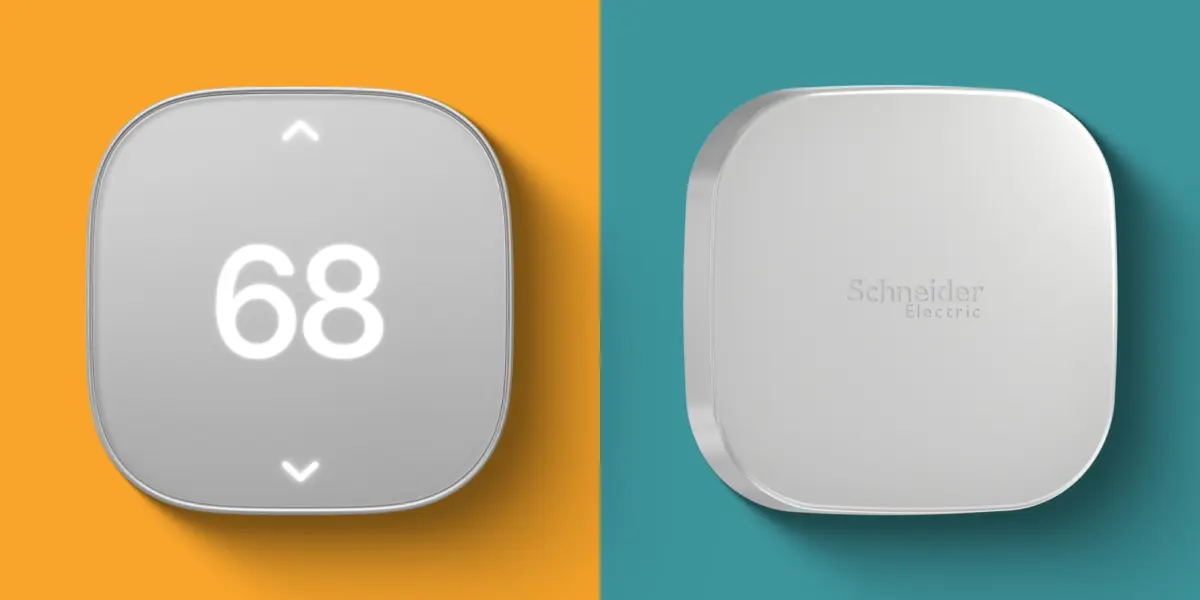
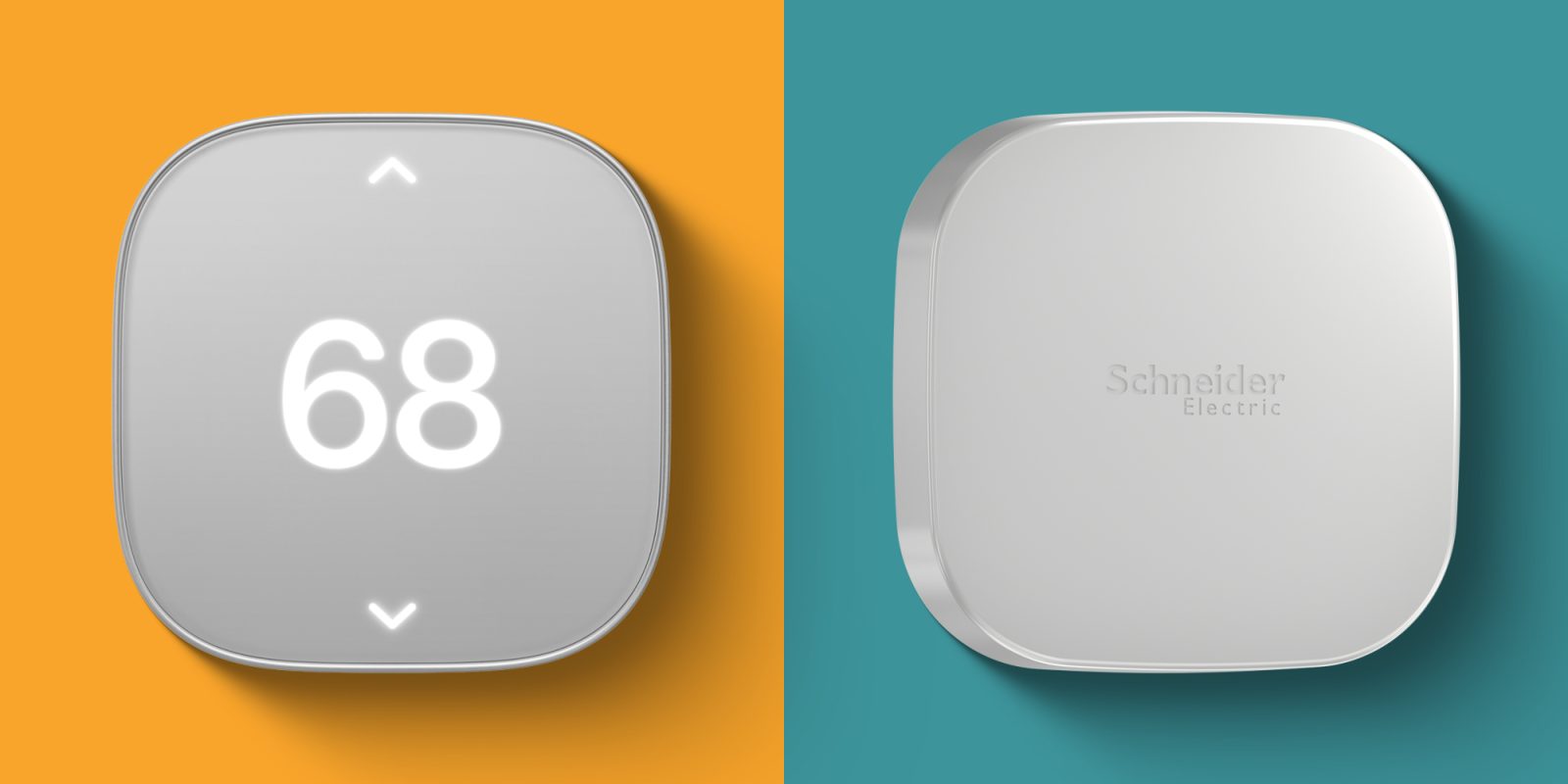
The intersection of consumer technology and home energy management is shifting rapidly. Schneider Electric, a global leader in energy management and automation, has officially unveiled a new smart thermostat co-developed alongside tech giant Apple.
Designed as part of the upcoming Apple Home Collection, the device is engineered to leverage iPhone intelligence, advanced presence detection, and automated grid-balancing software. Scheduled for an official debut in the United States and Canada in early 2027, the flagship thermostat carries a suggested retail price of $199.99, while optional individual room sensors will retail for $39.99. (In a characteristically precise pricing quirk, Apple has listed the items at precisely four cents lower than Schneider’s suggested baseline).
Positioned to compete directly with established market leaders like Google Nest and Ecobee—whose flagships generally span from $100 to nearly $280—the Apple-Schneider collaboration attempts to carve out a distinct niche. It bypasses proprietary third-party ecosystems entirely, running natively within the Apple Home application. By pairing the iPhone’s internal sensors and spatial awareness with adaptive heating and cooling algorithms, the device aims to eliminate the friction of traditional thermostat scheduling.
Beyond convenience, the hardware tackles broader macroeconomic and environmental challenges. Through Apple’s "Clean Energy Guidance" software, the system is designed to autonomously shift home climate control loads to periods when local electrical grids are operating on cleaner, lower-cost energy. By integrating peak and off-peak utility pricing data directly into the user interface, the partnership aims to lower household carbon footprints while shaving peak-hour electricity bills.
Chronology
The journey toward this hardware release spans years of quiet coordination between Cupertino’s smart home division and Schneider Electric’s industrial design teams.
- Pre-2026 (Development Phase): Engineering teams from both corporations collaborated under tight wraps to integrate Apple’s machine-learning frameworks with Schneider’s robust HVAC (Heating, Ventilation, and Air Conditioning) hardware architecture. The goal was to build a native HomeKit-first device that could bypass the typical bugs and latency associated with third-party software bridges.
- October 2026 (The Reveal): Schneider Electric officially pulls back the curtain on the new smart thermostat and its accompanying room sensors, outlining pricing, early 2027 release dates, and integration specifications. Alongside the thermostat announcement, Schneider details a line of magnetic power mounts for Apple’s wall-mounted HomeView display.
- November 13, 2026 (Initial Accessory Rollout): The first wave of Schneider’s magnetic power mounts for the Apple HomeView—specifically the USB-C ($59.99) and hardwired AC ($79.99) variations—hits physical and digital Apple Store shelves.
- Early 2027 (Market Launch & CES Showcase): Schneider Electric is slated to showcase the full product lineup in depth at the Consumer Electronics Show (CES 2027) in Las Vegas. Shortly thereafter, the smart thermostat and room sensors officially launch across the United States and Canada, accompanied by the rollout of the Power over Ethernet (PoE) mount ($129.99).
Supporting Data and Ecosystem Specifications
To understand where this new thermostat fits in the smart home landscape, it is helpful to examine the underlying hardware specifications, protocol compatibilities, and pricing structures relative to legacy competitors.
Pricing and Hardware Comparison
| Brand / Product Line | Core Thermostat Price Range | Room Sensor Cost | Primary Ecosystem Integration |
|---|---|---|---|
| Apple / Schneider Electric | $199.95 – $199.99 | $39.95 – $39.99 | Apple Home (Native) |
| Ecobee Smart Thermostats | $139.99 – $259.99 | ~$79.99 (multi-packs vary) | Apple Home, Alexa, Google Home |
| Google Nest Thermostats | $99.00 – $280.00 | ~$39.00 | Google Home, Alexa (Limited Apple) |
Connectivity and Security Architecture
- Matter Protocol Support: The thermostat fully embraces Matter, the universal, IP-based connectivity standard designed to ensure seamless interoperability across diverse smart home ecosystems.
- Thread Networking: Built-in Thread support creates a self-healing mesh network within the home. This ensures that even if a household’s primary internet connection drops out, local device-to-device communication—such as commands from a HomePod to the thermostat—remains fully operational.
- NFC Proximity Pairing: Setup is streamlined via Near Field Communication (NFC). Users can initiate configuration simply by bringing an iPhone close to the unpowered hardware unit.
- End-to-End Encryption: True to Apple’s privacy-first consumer stance, all data transmitted and stored via the Home app regarding household occupancy, temperature preferences, and energy usage is secured with end-to-end encryption.
Power Mounts and Infrastructure
Complementing the thermostat, Schneider’s newly announced magnetic power mounts for the Apple HomeView display provide versatile architectural options for permanent wall installations:
- USB-C Mount ($59.99): Available November 13, 2026. Designed for straightforward setups where an external or discrete wall-outlet wire path is preferred.
- Hardwired AC Mount ($79.99): Available November 13, 2026. Built for clean, professional installations, hiding cables completely inside the wall cavity.
- Power over Ethernet (PoE) Mount ($129.99): Launching in early 2027. Ideal for commercial or advanced residential networks, delivering both data and power through a single Ethernet cable.
Official Responses and Industry Perspectives
While executive commentary from Apple and Schneider Electric has emphasized user privacy, seamless design, and grid decarbonization, independent energy analysts are already evaluating the broader market ramifications.
Representatives for Schneider Electric have highlighted the engineering achievement of merging heavy-duty electrical infrastructure design with consumer-grade aesthetics. "Modern homeowners should not have to choose between robust climate control reliability and intuitive, elegant design," a Schneider product spokesperson noted during the initial briefings. "By bridging our industrial engineering pedigree with Apple’s software prowess, we are setting a new benchmark for what a connected home can achieve."

Apple, meanwhile, continues to frame its smart home initiatives around ambient computing and user privacy. By utilizing the iPhone’s onboard intelligence to track geo-fencing and home routines ("Adaptive Temperature"), Apple avoids the privacy pitfalls associated with cloud-stored motion-tracking data.
Industry observers note that the reliance on local device intelligence rather than continuous cloud processing is a major selling point for privacy-conscious consumers. Furthermore, utility companies across North America have quietly praised the incorporation of "Clean Energy Guidance." As grids face increasing stress from extreme weather events and surging electric vehicle adoption, consumer-facing automation tools that voluntarily shift thermal loads away from peak hours are viewed as a vital tool in preventing brownouts and reducing reliance on peaker power plants.
Implications
The launch of the Apple-Schneider Electric thermostat carries significant implications for the consumer electronics market, the smart home industry, and the electrical grid at large.
1. Mainstreaming Grid-Interactive Homes
For years, demand-response programs—whereby utilities reward consumers for reducing electricity usage during high-stress periods—have suffered from low adoption rates due to complex enrollment procedures and clunky software. By embedding Clean Energy Guidance directly into the native Apple Home application, millions of iPhone users will have access to automated grid optimization without needing to download specialized utility apps. If widespread, this capability could aggregate massive amounts of flexible residential electrical load, helping stabilize regional power grids.
2. The Maturation of Matter and Thread
The inclusion of Matter and Thread protocols highlights a growing industry consensus against walled gardens. By ensuring the thermostat can communicate across protocols while maintaining deep native integration with iOS, Apple and Schneider are acknowledging that modern smart homes must be interoperable. This reduces consumer lock-in anxiety and encourages broader experimentation with smart climate hardware.

3. Heightened Competition in Climate Control
The $199 price point places the Apple-Schneider device squarely in the crosshairs of premium offerings from Google Nest and Ecobee. While legacy competitors have the advantage of multi-ecosystem support (functioning natively across Google Assistant, Amazon Alexa, and Apple Home), the frictionless setup, robust privacy architecture, and superior industrial design of the new hardware will likely peel away affluent iOS users who prioritize a unified software experience.
Ultimately, this partnership signals that the smart thermostat is no longer just a digital dial on a wall; it is evolving into a critical node in an interconnected, decarbonized energy ecosystem. As these devices roll out across North America in 2027, they will test whether consumer convenience can successfully align with the urgent demands of modern grid management.
