

By Terrence O’Brien
Published: August 30, 2026
Main Facts
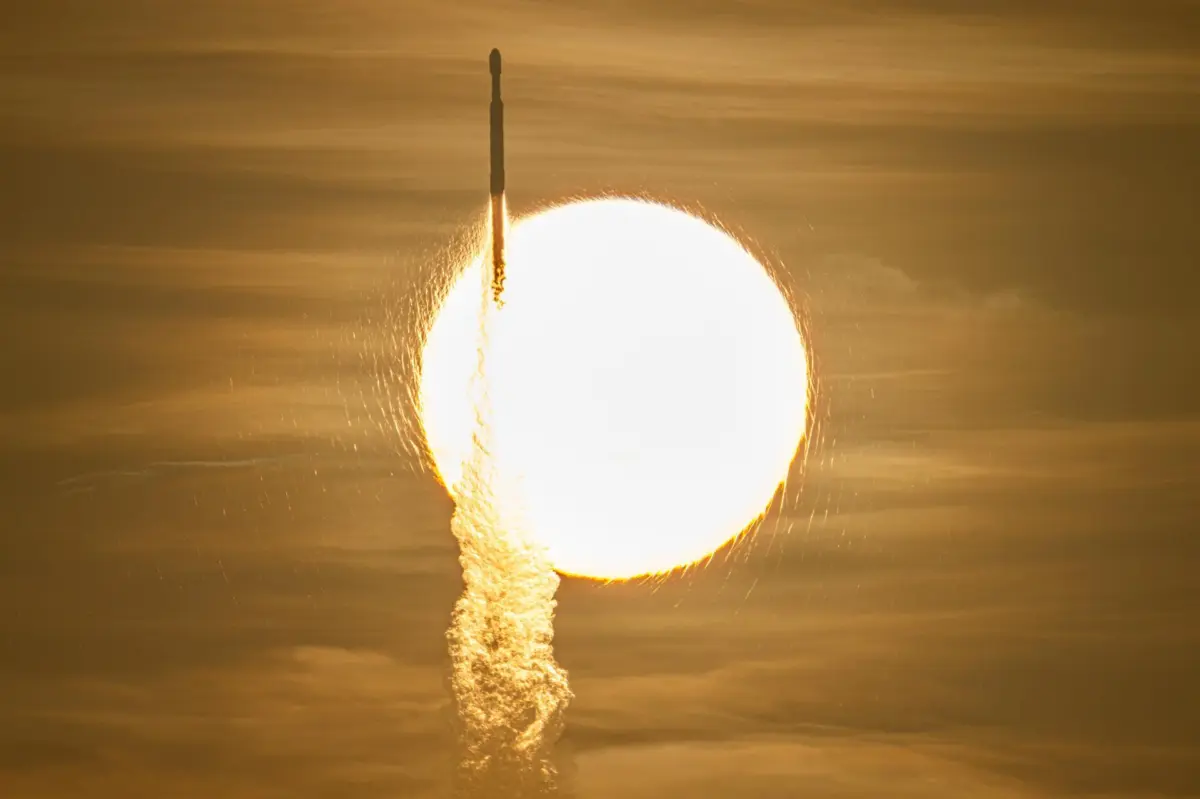
Following years of budgetary hurdles, technical restructuring, and a monumental name change, NASA’s next-generation observatory—the Nancy Grace Roman Space Telescope—has officially launched into space. The spacecraft is now undertaking a critical three-month, one-million-mile voyage to its permanent orbital home at the second Sun-Earth Lagrange point (L2), a gravitationally stable position situated far beyond the Moon.
Once fully operational at L2, the Roman Space Telescope will revolutionize our understanding of astrophysics. Equipped with a state-of-the-art 300-megapixel infrared camera, the observatory boasts a field of view 100 times larger than that of the legendary Hubble Space Telescope. According to mission parameters and NASA data, this expansive perspective allows the Roman Space Telescope to survey the cosmos at a breathtaking speed—1,000 times faster than Hubble.
Beyond its incredible survey speed and wide-field imaging capabilities, the observatory features an advanced Coronagraph instrument. This cutting-edge technological payload is engineered to block and mask the blinding glare of distant stars. By subduing stellar luminescence, Roman will be able to directly image exoplanets—including smaller, older, and colder worlds that orbit perilously close to their parent stars, which were previously obscured by stellar light.
Furthermore, the telescope is tasked with solving some of modern cosmology’s most stubborn paradoxes. By conducting comprehensive, high-resolution 3D scans of the universe, Roman will meticulously map the distribution of dark matter, helping physicists narrow down candidate particles for its elusive composition. Simultaneously, these 3D maps and precise gravitational lensing measurements will allow astronomers to reconstruct how dark energy has influenced the expansion and structural evolution of the universe over billions of years.
Chronology
The path to the launchpad for the Nancy Grace Roman Space Telescope has been a lengthy, arduous journey defined by resilience, political maneuvering, and engineering triumphs.
- Early Conceptualization (2010s): Originally conceived as the Wide-Field Infrared Survey Telescope (WFIRST), the mission emerged as a top recommendation from the National Academies of Sciences, Engineering, and Medicine’s 2010 Decadal Survey in Astronomy and Astrophysics. The goal was to create a spacecraft capable of answering sweeping questions about dark energy, exoplanets, and infrared astrophysics.
- The Funding and Cancellation Threats (2018–2020): Like many flagship space missions, WFIRST faced severe political headwinds. Between 2018 and 2020, successive federal budget proposals from the White House repeatedly attempted to cancel the program due to escalating cost projections and fears that it would cannibalize funding from the James Webb Space Telescope (JWST). However, Congress consistently reinstated funding, recognizing the mission’s irreplaceable scientific value.
- Renaming the Telescope (2020): In May 2020, NASA officially renamed WFIRST the Nancy Grace Roman Space Telescope in honor of Dr. Nancy Grace Roman, NASA’s first Chief Astronomer, widely celebrated as the "Mother of Hubble" for her instrumental role in planning space-based astronomy programs.
- Assembly and Testing (2021–2025): Throughout the early 2020s, engineers at NASA’s Goddard Space Flight Center and industrial partners integrated the telescope’s core hardware. This period involved rigorous acoustic, thermal, and optical testing to ensure the 300-megapixel camera and coronagraph could withstand the violent vibrations of launch and the extreme thermal environments of deep space.
- Launch (August 30, 2026): The spacecraft successfully cleared the atmosphere, entering its initial Earth parking orbit before firing its upper-stage engines to break free toward the L2 Lagrange point.
- The L2 Transit (September – November 2026): Over the next three months, Roman will coast across one million miles of space, systematically deploying its solar arrays, sunshades, and instrument covers while performing trajectory correction maneuvers.
- Commencement of Operations (Late 2026 / Early 2027): Upon reaching L2, controllers will spend several months calibrating the instruments, ultimately opening the aperture to begin its unprecedented survey of the dark universe.
Supporting Data
To truly appreciate the generational leap that the Nancy Grace Roman Space Telescope represents, one must examine the quantitative metrics that set it apart from its predecessors:
- Speed and Efficiency: Roman is designed to map the sky 1,000 times faster than the Hubble Space Telescope. While Hubble typically captures deep-field imagery of narrow, targeted cosmic corridors, Roman is a wide-field survey machine capable of sweeping across vast swaths of the sky in a fraction of the time.
- Field of View: The optical design provides a field of view that is 100 times larger than Hubble’s infrared instrument capacity. This means a single exposure from Roman will capture an area of the sky equivalent to many times Hubble’s operational footprint.
- Imaging Power: At the heart of Roman’s instrument suite is a 300-megapixel infrared camera, constructed from a mosaic of high-resolution detectors. This camera allows astronomers to peer through thick clouds of interstellar dust to view the obscured hearts of galaxies, stellar nurseries, and faint background objects.
- Distance to Orbit: The spacecraft will travel roughly 1,000,000 miles (1.5 million kilometers) from Earth to reach the second Sun-Earth Lagrange point (L2). This location provides an unobstructed, thermally stable view of deep space, free from the thermal glow and orbital interference of our home planet (the same orbital sanctuary utilized by the James Webb Space Telescope).
- Coronagraph Contrast: The onboard coronagraph boasts extreme starlight suppression technology, capable of reducing a parent star’s brightness by a factor of roughly one billion to one, making it possible to isolate the faint, reflected light of neighboring exoplanets.
Official Responses
The successful launch of the Nancy Grace Roman Space Telescope elicited widespread enthusiasm from leadership across NASA and the global scientific community.
Nicky Fox, associate administrator for the Science Mission Directorate at NASA, highlighted the historic nature of the mission during the post-launch press briefing:

"Roman will be a discovery machine that will bring us closer than ever before to answering humanity’s most profound questions about our cosmic history. By peering deep into the invisible mechanics of the universe, it will transform our understanding of how galaxies form, how planetary systems evolve, and what forces ultimately govern the cosmos."
Project scientists and astrophysicists have similarly emphasized the synergy between Roman and other premier observatories. While the James Webb Space Telescope excels at deep, high-resolution spectroscopy of targeted celestial objects, Roman acts as the ultimate cosmic cartographer—discovering thousands of new targets, exoplanets, and anomalous structures that JWST can later investigate in microscopic detail.
Payload managers also noted that the inclusion of the coronagraph was a calculated risk that transformed Roman from a pure cosmology mission into a dual-purpose powerhouse capable of direct exoplanet imaging—paving the way for future dedicated life-finding missions like the proposed Habitable Worlds Observatory.
Implications
The deployment of the Nancy Grace Roman Space Telescope marks the dawn of a new era in observational astronomy, with profound implications for multiple branches of physics and planetary science.
1. Solving the Mysteries of Dark Matter and Dark Energy
Approximately 95% of the universe is composed of invisible forces and substances—specifically dark matter (~27%) and dark energy (~68%)—yet scientists still do not know what they actually are. By mapping billions of galaxies across cosmic time using gravitational lensing (the bending of light by massive unseen structures), Roman will generate the most comprehensive 3D map of the universe ever constructed. This dataset will allow cosmologists to test competing theories of gravity and track how the acceleration of the universe has changed, potentially rewriting our understanding of fundamental physics.
2. A Golden Age of Exoplanet Discovery
While Kepler and TESS have discovered thousands of exoplanets using the transit method (detecting the tiny dimming of a star as a planet passes in front of it), Roman’s coronagraph will pioneer the direct imaging of these worlds. By capturing actual photons reflected from exoplanets, scientists can begin characterizing planetary atmospheres, searching for chemical disequilibrium, and refining statistical models regarding how common planetary systems are throughout our galaxy.
3. Synergistic Astronomy
Roman’s wide-field surveys will act as a foundational catalog for decades to come. When the telescope spots transient events—such as supernova explosions, colliding neutron stars, or distant quasars—it will instantly alert ground-based telescopes and space observatories like JWST and Chandra. This rapid-response capability ensures that Roman will serve not just as a standalone telescope, but as the central nervous system for time-domain and multi-messenger astronomy.
As the Nancy Grace Roman Space Telescope coasts toward its lonely station at L2, humanity stands on the precipice of a monumental leap in perspective. What was once invisible, theoretical, or obscured by cosmic dust is about to be brought sharply into focus.
