

By Vanessa Hand Orellana
Principal Writer, CNET
Introduction: The Thrill of the Tech Torture Test
There is a unique, heart-pounding thrill in taking a multi-thousand-dollar piece of cutting-edge consumer technology and deliberately pushing it to its absolute limits. For years, as the host of the CNET YouTube series Breaking Point, my job description essentially revolved around doing what every rational consumer goes out of their way to avoid: torturing tech.
While everyday users panic at the mere thought of a hairline crack or a sudden liquid spill, my days were spent dropping high-end smartphones onto concrete, submerging them in various liquids, and testing whether manufacturers’ bold marketing claims held up under real-world abuse.
It was a chaotic, exhilarating, and often expensive endeavor. But it also provided a front-row seat to one of the most transformative eras in mobile engineering. When Apple finally announced in 2016 that its upcoming flagship device would feature official water resistance—a feature standard on many Android competitors for years—tech enthusiasts and reviewers alike felt a collective surge of excitement. For the team at CNET, the message was loud and clear: Game on.
Main Facts: The Turning Point of the iPhone 7
To truly understand the magnitude of Apple’s 2016 announcement, one must look back at the precarious relationship early smartphones had with moisture. Before the launch of the iPhone 7, owning an Apple device meant living in constant dread of liquid exposure. A spilled glass of water at a restaurant, an unexpected downpour during a commute, or an accidental drop into a sink could instantly transform an expensive pocket computer into an expensive paperweight. Apple’s warranty explicitly excluded liquid damage, leaving users with zero recourse should disaster strike.
All of that changed with the introduction of the iPhone 7, which arrived bearing an IP67 dust and water-resistance rating.
- What IP67 Means: Defined by the International Electrotechnical Commission (IEC), the "6" designated complete protection against dust and particulate ingress, while the "7" signified that the device could survive immersion in fresh water up to a depth of 1 meter (approximately 3 feet) for up to 30 minutes.
- The Industry Shift: While brands like Sony and Samsung had already begun dabbling in water-resistant hardware, Apple’s entry into the space legitimized the feature for the mainstream mass market.
- The Hardware Compromise: Achieving this level of sealing required significant internal and external redesigns, most notably the controversial removal of the traditional 3.5mm headphone jack—a decision Apple defended partly as a necessary step toward achieving better internal waterproofing.
Chronology: Taking the Plunge in San Francisco
When the review units for the iPhone 7 landed at CNET headquarters, we knew a standard tabletop review wouldn’t suffice. The manufacturer was claiming a baseline of water protection that had never before officially existed in an iPhone ecosystem. We needed to see how it handled the wild, unpredictable environment of real-world use.

Phase 1: The Setup
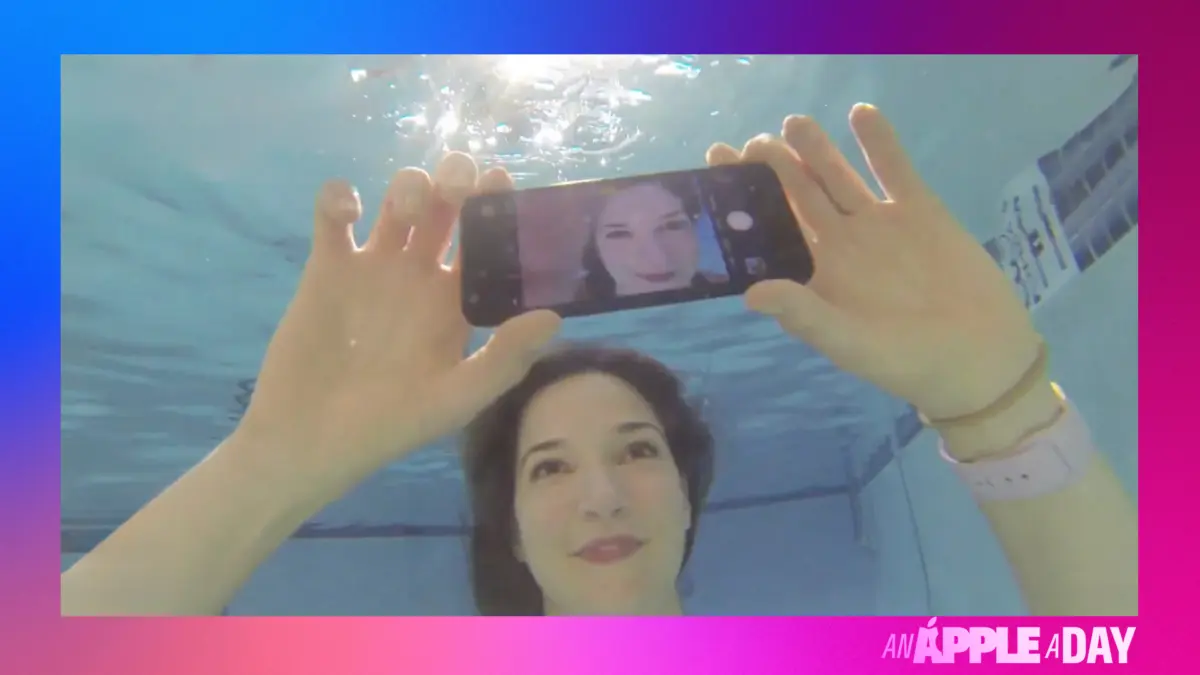
Joined by then-CNET senior editor Sean Hollister, I plotted out a field test that would push the phone past its marketing specifications. We packed our gear, secured an iPhone 7 review unit, and headed to the swimming pool located at our San Francisco apartment building.
Phase 2: The Pool Test
We didn’t just gently lower the device into a bucket of distilled laboratory water. We dove straight in. We filmed the phone submerged, tested its responsiveness underwater, and deliberately pushed past the prescribed 30-minute time limit to see where the physical breaking point truly lay.
Phase 3: The Aftermath
Spoiler alert: The iPhone 7 mostly survived. Despite our flagrant disregard for the manufacturer’s care instructions and time thresholds, the device booted back up, the screen remained responsive, and the internal components continued to function. To our cameras and our initial relief, it was an unqualified success. We walked away thinking Apple’s engineers had built an indestructible aquatic marvel.
Supporting Data: The Hidden Dangers of Liquid Exposure
Years removed from that sun-drenched afternoon in San Francisco, my perspective on mobile durability has matured significantly. Back then, I was blissfully unaware of the silent, delayed-action chemistry at play when electronic hardware meets pool and ocean water.
The Corrosion Factor
When a consumer drops a phone into a swimming pool or the ocean, they are rarely dealing with pure, clean H2O.
- Chlorine and Pool Chemicals: Public and private swimming pools are treated with chlorine, bromine, and various balancing chemicals designed to kill bacteria. These active chemical agents are highly reactive and corrosive to the microscopic metallic traces, solder joints, and internal connectors exposed inside a modern smartphone.
- Salinity in Ocean Water: Seawater presents an even greater hazard. Salt is an aggressive electrolyte. When salt water enters the microscopic crevices of a device—even after the exterior has been thoroughly dried—salt crystals remain behind. Over time, these crystals attract moisture from the air and accelerate galvanic corrosion, slowly eating away at circuit boards and ribbon cables.
The Delayed Death Sentence
A phone that successfully survives a 30-minute dip in a chlorinated pool today may not exhibit symptoms immediately. Instead, the chemical degradation silently continues beneath the surface. Weeks or months later, the user might experience sudden battery failure, erratic touch sensitivity, or complete device bricking—long after they have forgotten their water-bound adventures.
Official Responses and Manufacturer Stance
It is crucial for consumers to understand the fine print regarding modern device durability. Despite the marketing campaigns highlighting rugged action shots of surfers and runners in the rain, tech companies maintain strict boundaries when it comes to liability.
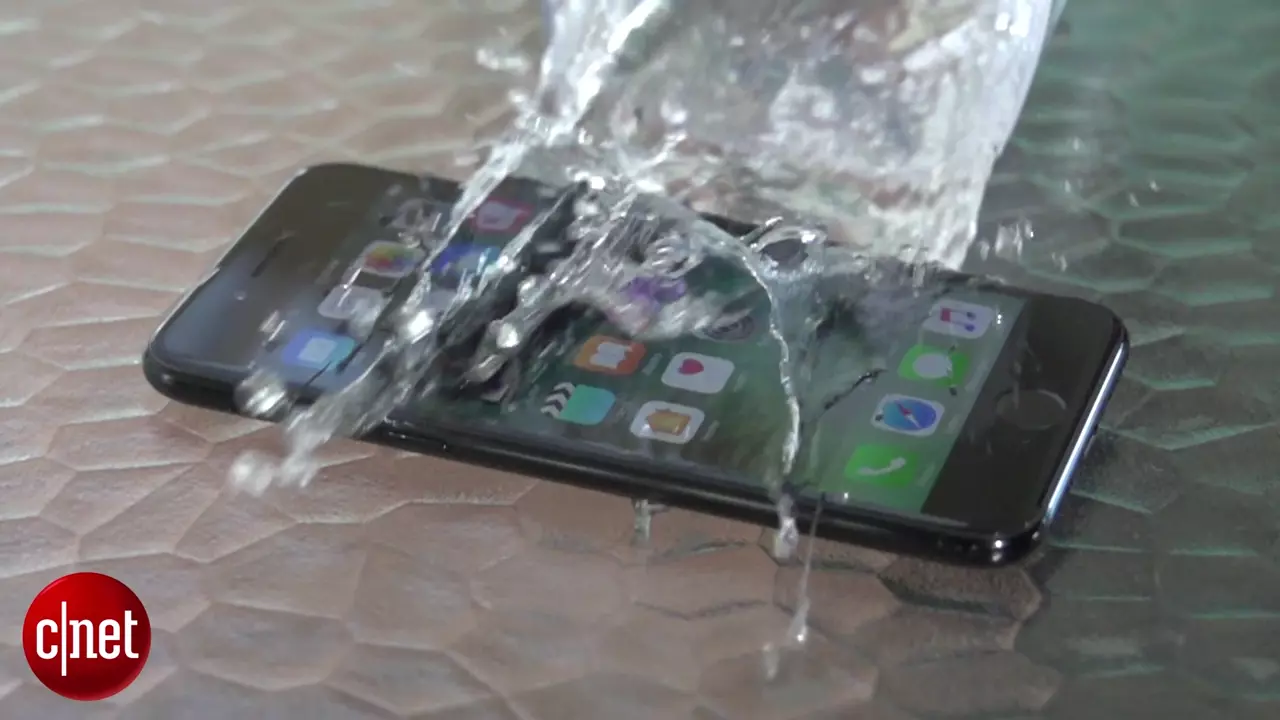
- The Warranty Exclusion: Apple’s official support documentation clearly states that liquid damage is not covered under the standard one-year limited warranty. While the device possesses an IP67 (and later IP68) rating, these ratings are the result of laboratory testing under controlled, ideal conditions using static, clean water.
- Wear and Tear Warning: Apple explicitly notes that resistance is not a permanent condition and can decrease over time as a result of normal wear and tear. Drops, impacts, exposure to soaps, lotions, acids, or salty liquids can degrade the internal rubber gaskets and adhesives designed to keep moisture out.
- The Repair Reality: If an iPhone fails due to internal liquid corrosion, authorized service providers will generally classify it as out-of-warranty damage, leaving the consumer responsible for the full cost of repair or replacement.
Implications: How "Water-Resistant" Changed Our Relationship with Tech
Looking back at that 10-year-old video of Sean Hollister and me flinging an iPhone 7 into a pool, the sentiment is overwhelmingly ironic. Today, my approach to mobile technology and water is vastly different.
Instead of taking my personal smartphone on reckless aquatic adventures under the false sense of security provided by an IP rating, I find myself treating modern devices with a much higher degree of caution.
1. A Shift in Consumer Psychology
The introduction of water resistance was meant to offer peace of mind, not a license for abuse. Yet, early marketing campaigns inadvertently trained consumers to view their phones as virtually waterproof. As reviewers and journalists, we played a role in pushing those boundaries to entertain audiences. Over time, the industry has learned to pivot toward a more balanced narrative: waterproofing is an emergency safety net, not an invitation to leave your phone at the bottom of the deep end.
2. Engineering Marvels vs. Reality
The fact that modern smartphones can survive a brief accidental drop in a toilet, a sink, or a puddle is a testament to extraordinary engineering feats involving silicone seals, mesh covers over speakers, and hydrophobic nano-coatings. However, consumer electronics remain complex, fragile assemblies of glass, silicon, and metal.
3. The Takeaway for Everyday Users
Am I less fun around water with my phone now? Perhaps. But I am infinitely more informed. Knowing what goes on at a microscopic level when electronic components meet corrosive pool chemicals changes how you view a $1,000 pocket computer.
Water resistance is one of the greatest quality-of-life upgrades modern smartphones have ever received. Treat it as a safety feature designed to protect your investment from life’s accidental spills—and leave the deep-sea diving to the GoPro cameras.
To watch the original experiment unfold, check out the full archival footage of Did the iPhone 7 Survive Our Water Test?.
