

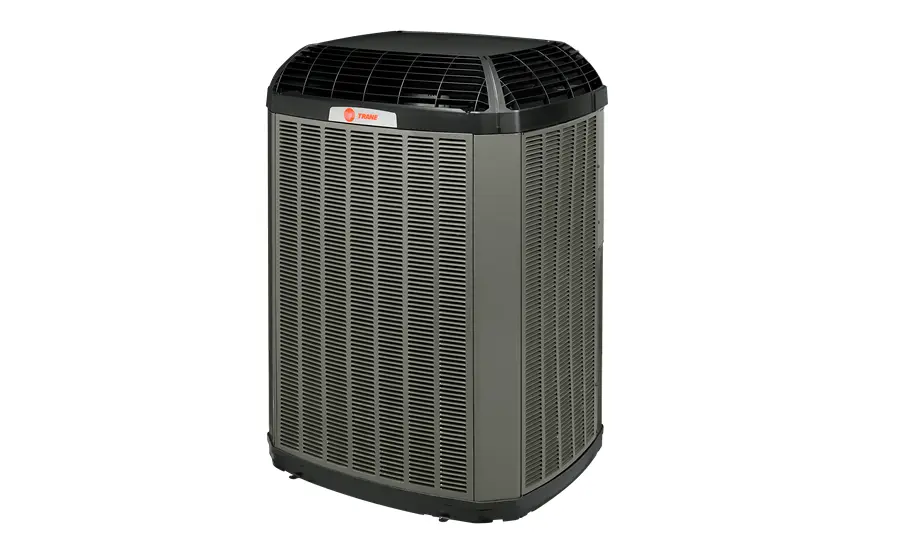
WASHINGTON — In an era defined by stringent energy efficiency standards, rising utility costs, and a heightened consumer focus on sustainable home management, manufacturers in the heating, ventilation, and air conditioning (HVAC) sector are continuously challenged to engineer systems that do more with less. Addressing this industry-wide demand, Trane Residential has introduced its flagship offering: the 20 TruComfort™ Variable Speed Heat Pump with WeatherGuard™.
Positioned at the intersection of high performance, climate-resilient engineering, and smart home integration, this advanced air source heat pump is designed to provide homeowners with precise temperature control while setting new benchmarks for energy conservation. Featuring impressive ratings of up to 22.4 SEER2 (Seasonal Energy Efficiency Ratio 2) and 10.5 HSPF2 (Heating Seasonal Performance Factor 2), the system represents a significant leap forward in residential thermal comfort technology.
Main Facts
The Trane 20 TruComfort™ Variable Speed Heat Pump with WeatherGuard™ is engineered as an all-in-one climate control solution optimized for year-round residential performance. At its core is a sophisticated variable-speed architecture that governs the compressor, outdoor fan, and indoor air handler. Unlike traditional single-stage or two-stage systems that operate in an absolute binary—running at full capacity until a setpoint is reached and then shutting off—the TruComfort technology dynamically modulates its output.
- Precise Modulation: The system incrementally speeds up or slows down to match the exact heating and cooling load of a home in real time. This continuous, low-speed operation eliminates the disruptive temperature swings and high energy spikes associated with conventional HVAC cycling.
- Industry-Leading Efficiency Ratings: The unit achieves top-tier efficiency metrics, boasting up to 22.4 SEER2 for cooling and 10.5 HSPF2 for heating. These numbers place the system among the most efficient heat pumps commercially available, translating directly into reduced monthly utility bills for homeowners.
- Smart Integration via Trane Link: The heat pump is fully compatible with the proprietary Trane Link communicating thermostat ecosystem. This platform automates critical installation and maintenance procedures—including system charging, configuration, and calibration—to ensure peak operational performance throughout the equipment’s lifecycle.
- Rugged WeatherGuard™ Protection: Built to withstand harsh environmental conditions, the unit incorporates Trane’s WeatherGuard top and side panels, safeguarding internal components from severe weather, debris, and corrosion.
- Durability Testing: Prior to commercial release, the system undergoes an intensive 16-week regime of rigorous stress testing to guarantee structural integrity, long-term reliability, and whisper-quiet acoustic performance.
Chronology of Development and Technological Evolution
The release of the 20 TruComfort™ system does not happen in a vacuum; it is the culmination of decades of research and development within the HVAC industry, driven by regulatory shifts and technological breakthroughs.
The Shift Toward Electrification and Variable Speed
For much of the late 20th century, residential HVAC was dominated by fossil-fuel furnaces paired with basic air conditioning units, or standard-efficiency heat pumps that struggled to deliver reliable heat when outdoor temperatures dropped below freezing. However, the 2010s and early 2020s marked a paradigm shift toward electrification.

As inverter-driven variable-speed compressors matured, manufacturers moved away from fixed-speed rotary and scroll compressors. Trane was an early pioneer in this space, introducing its initial iterations of variable-speed technology under the TruComfort banner. Over successive generations, engineers refined the inverter algorithms to allow compressors to operate across a vast spectrum of capacities—often modulating down to 30% or lower of total capacity.
The Introduction of SEER2 and Regulatory Adaptation
In January 2023, the U.S. Department of Energy (DOE) implemented new, more rigorous testing protocols for residential HVAC equipment, known as SEER2, EER2, and HSPF2. These new standards replaced legacy metrics to better reflect real-world installation conditions, external static pressures, and fluctuating climate dynamics.
In response, Trane accelerated its product development cycle to ensure its premier tier of heat pumps not only met but comfortably exceeded the updated federal baselines. The 20 TruComfort™ with WeatherGuard™ was engineered specifically to conquer these heightened testing standards, utilizing computational fluid dynamics (CFD) and advanced coil designs to optimize airflow and heat transfer under the new, stricter testing guidelines.
Integration of Smart Ecosystems
Recognizing that improper installation and sub-optimal refrigerant charging are leading causes of premature HVAC failure and efficiency loss, Trane integrated its "Trane Link" communication technology into the platform. Developed over the past several years, this plug-and-play electronics architecture transforms the heat pump from a standalone mechanical appliance into a smart node within the home automation network, enabling automated commissioning that minimizes human error during installation.
Supporting Data and Technical Specifications
To truly understand the value proposition of the 20 TruComfort™ Variable Speed Heat Pump, one must examine the hard metrics that define its operation. Modern HVAC efficiency is judged not just by a single peak output number, but by how well a system performs across a wide variety of seasonal conditions.
Efficiency Breakdown (SEER2 and HSPF2)
- SEER2 (Seasonal Energy Efficiency Ratio 2): Rated up to 22.4. SEER2 measures how efficiently a residential air conditioner or heat pump cools a home over an entire typical cooling season. A rating of 22.4 places this unit significantly higher than the federal minimum standards (which typically hover around 14.3 SEER2 in northern regions and 15.0 SEER2 in southern regions), indicating that it consumes a fraction of the electricity used by standard-efficiency alternatives.
- HSPF2 (Heating Seasonal Performance Factor 2): Rated up to 10.5. HSPF2 measures the heating efficiency of air-source heat pumps. A higher number indicates greater energy efficiency during the winter heating season. An HSPF2 rating of 10.5 ensures that homeowners relying on the heat pump as their primary heat source will experience optimal coefficient of performance (COP) metrics, even when ambient outdoor temperatures dip.
Acoustic Performance
Noise pollution is a growing concern in densely populated suburban neighborhoods. Traditional heat pumps often produce a jarring sound when the compressor kicks on or when the fan ramps up to high speeds. Trane’s acoustic engineering team addressed this by outfitting the 20 TruComfort™ with a specialized compressor sound insulator, optimized fan blade profiles, and a variable-speed fan motor. By running at low, whisper-quiet speeds for the vast majority of its operational lifecycle, the unit drastically reduces decibel (dB) output, often operating at sound levels comparable to a quiet library.
Durability and WeatherGuard™ Architecture
Environmental resilience is critical for equipment installed outdoors. The WeatherGuard system features heavy-gauge, galvanized steel panels coated with a corrosion-resistant powder finish. Furthermore, the internal refrigeration circuit is protected against common failure points through rigorous multi-stage quality control. The aforementioned 16-week testing protocol subjects the heat pump to accelerated life-cycle testing (ALT), exposing prototypes to extreme temperature swings, high humidity, salt spray, and severe vibrational stress to ensure a multi-decade operational lifespan.
Official Industry Responses and Expert Perspectives
The introduction of high-efficiency, cold-climate-capable heat pumps has altered the discourse among industry analysts, environmental policymakers, and contractors alike.
Industry observers note that products like the Trane 20 TruComfort™ are playing a vital role in meeting municipal and national decarbonization goals. As cities and states phase out fossil-fuel combustion appliances in new residential construction, high-capacity heat pumps that maintain their heating output in sub-freezing temperatures are no longer a luxury—they are a necessity.
Contractors and HVAC technicians have also responded favorably to the inclusion of the Trane Link automated commissioning technology. In interviews across trade forums, field technicians have highlighted that reduced setup times and automated system calibration significantly lower the risk of callbacks due to improper refrigerant charges or thermostat configuration errors.

"The evolution of inverter-driven compressors has completely transformed what we expect from an air source heat pump," notes a leading residential HVAC consultant. "Systems that can dynamically adjust capacity down to the exact BTU required—while maintaining high efficiency metrics under the rigorous SEER2 protocols—represent the gold standard of modern thermal comfort engineering."
Implications for Homeowners, the HVAC Market, and the Environment
The rollout of the Trane 20 TruComfort™ Variable Speed Heat Pump with WeatherGuard™ carries broad implications across three distinct spheres: consumer economics, market competitiveness, and environmental sustainability.
1. Consumer Economic Impact and Comfort
For the average homeowner, replacing an aging, single-stage HVAC system with a 22.4 SEER2 variable-speed heat pump yields a dual benefit: vastly superior indoor comfort and reduced energy consumption.
- Elimination of Hot and Cold Spots: Because the system runs continuously at variable speeds, it maintains a constant, even temperature throughout the home, eliminating the stratification and drafts common with older equipment.
- Long-Term Financial Savings: While high-tier variable-speed systems command a higher initial capital investment compared to base-model units, the cumulative savings on monthly utility bills—compounded by potential federal tax credits, state rebates, and utility incentives for high-efficiency heat pumps—frequently offset the price premium over the lifespan of the equipment.
2. Market Competitiveness and Industry Standards
Trane’s latest offering raises the bar for competing manufacturers. As consumer awareness regarding energy ratings (SEER2 and HSPF2) grows, HVAC brands are pressured to accelerate their own research and development into inverter technology, automated diagnostic tools, and robust exterior designs. Furthermore, the integration of smart, plug-and-play thermostat ecosystems like Trane Link signals a broader industry trend toward digitized, self-diagnosing mechanical systems that bridge the gap between hardware manufacturing and software-driven optimization.
3. Environmental Sustainability and Grid Relief
From an ecological standpoint, widespread adoption of high-efficiency heat pumps is a cornerstone of global carbon reduction strategies. By utilizing ambient thermal energy to heat and cool homes rather than burning fossil fuels (such as natural gas, heating oil, or propane), these systems drastically lower residential carbon footprints.
Additionally, the precise modulation capabilities of variable-speed heat pumps help alleviate strain on electrical grids during peak demand events (such as extreme summer heatwaves or severe winter cold snaps). By avoiding the massive electrical surge required to start a traditional single-stage compressor, these units draw power smoothly and efficiently, contributing to overall grid stability.
Conclusion
The Trane 20 TruComfort™ Variable Speed Heat Pump with WeatherGuard™ stands as a testament to the rapid advancements occurring within the modern HVAC landscape. By combining industry-leading efficiency ratings (up to 22.4 SEER2 and 10.5 HSPF2), intelligent diagnostic integration, and rugged weather-resistant construction, Trane has delivered a product that addresses the complex demands of today’s homeowners and regulatory frameworks alike. As the industry continues its march toward total electrification and maximum energy conservation, systems of this caliber will undoubtedly define the future of residential comfort.
