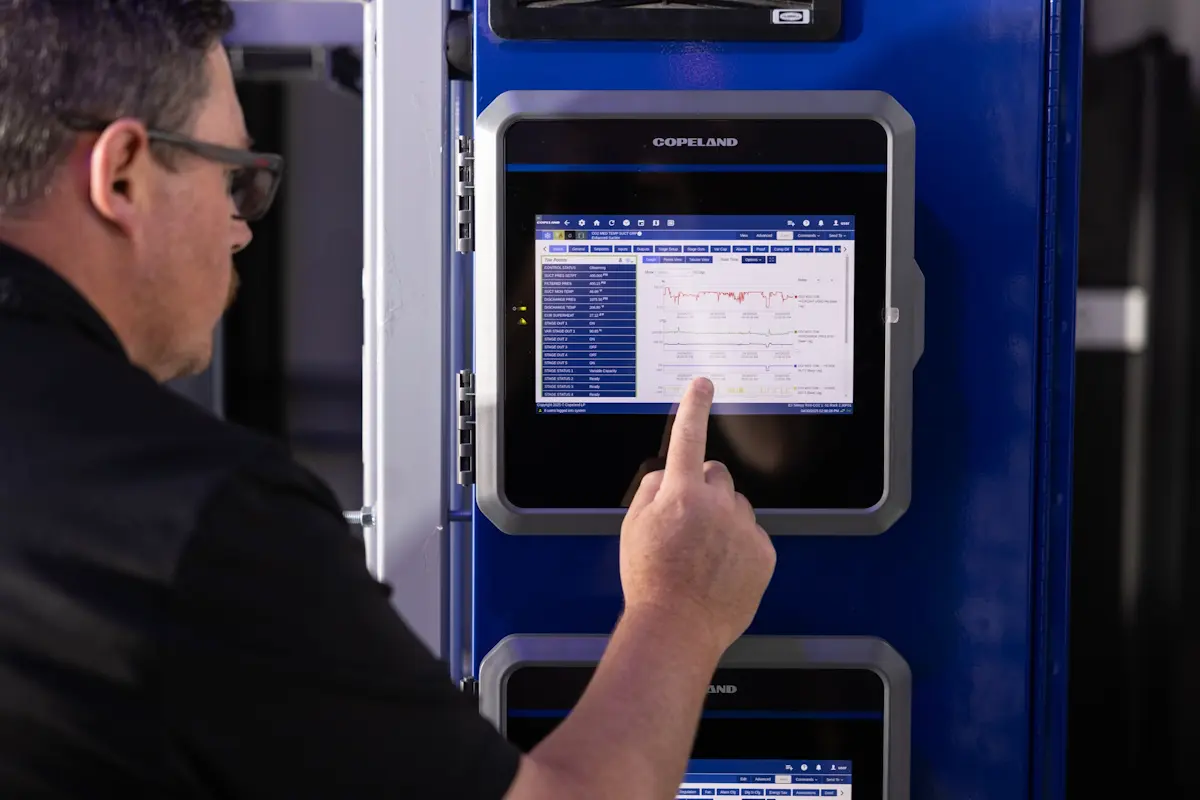
As the grocery industry undergoes a profound operational transformation driven by the rapid growth of online ordering, omnichannel fulfillment models, and smaller-format neighborhood stores, the technology keeping food fresh behind the scenes is evolving at an unprecedented pace. Modern supermarkets require cooling infrastructure that is not only highly efficient and robust but also exceptionally flexible.
To meet these multifaceted demands, equipment manufacturers, engineering firms, and contractors are aggressively redesigning commercial refrigeration systems around two powerhouse trends: ultra-low global warming potential (GWP) refrigerants and artificial intelligence (AI). Together, these innovations promise to redefine the intersection of environmental sustainability, operational performance, and long-term cost-efficiency in food retail.
Main Facts: The Dual Pillars of Modern Refrigeration
The modern supermarket refrigeration landscape is shifting away from traditional synthetic fluorinated gases toward environmentally conscious, high-tech alternatives. This evolution is underpinned by two core developments:
The Ascent of Natural Refrigerants: Driven by tightening regulatory frameworks, carbon dioxide ($textCO_2$, or R-744) has emerged as the frontrunner for long-term supermarket applications. Boasting an ultra-low GWP, nonflammable properties, and complete immunity to upcoming synthetic chemical phase-downs, $textCO_2$ is rapidly moving from early adoption into mainstream corporate fleet planning.
The Integration of Artificial Intelligence: Accounting for up to 40% of a typical grocery store’s total energy consumption, refrigeration is both mission-critical and energy-intensive. To combat skyrocketing utility costs and a persistent labor shortage among skilled HVAC/R technicians, the industry is turning to AI-driven supervisory tools, predictive diagnostics, and remote cloud monitoring to automate performance and prevent catastrophic equipment failures.
Chronology of Change: From HFCs to Natural Architectures and Smart Controls
The journey of supermarket refrigeration has moved through distinct eras, shaped largely by environmental legislation and digital innovation.
The Legacy Era (Pre-2010s)
For decades, commercial grocery stores relied primarily on centralized direct expansion (DX) systems utilizing hydrofluorocarbons (HFCs) like R-404A. While reliable, these systems featured massive refrigerant charges spanning hundreds or thousands of pounds per store. Piping stretched across the entire footprint of the supermarket, presenting a high risk of refrigerant leaks, high direct carbon footprints, and significant energy losses.
The Regulatory Pressure and Transition Phase (2010s–2020s)
As scientific consensus mounted regarding the devastating climate impact of high-GWP HFCs, global environmental agencies began rolling out aggressive phase-down schedules. The European Union led the charge with its F-Gas regulation, while the United States Environmental Protection Agency (EPA) initiated stepped reductions under the American Innovation and Manufacturing (AIM) Act.
During this period, the industry experimented with "bridge technologies," including A2L refrigerants and lower-GWP HFC/HFO blends. However, forward-thinking retailers quickly realized that these transitional substances might expose them to future regulatory liabilities, supply chain constraints, or emerging restrictions regarding per- and polyfluoroalkyl substances (PFAS). Consequently, engineering paradigms began pivoting permanently toward natural refrigerants, particularly $textCO_2$.
The Smart, Modular Era (Present Day and Beyond)
Today, the industry has entered an era defined by modularity and digital intelligence. Rather than relying solely on massive, centralized machine rooms, engineers are deploying distributed architectures—such as mini-racks and condensing units—that drastically reduce refrigerant charges. Simultaneously, the integration of edge computing, machine learning algorithms, and predictive maintenance software has transformed refrigeration racks from passive cooling machines into active, data-driven nodes within a broader corporate energy management strategy.
Supporting Data: Efficiency, Energy Use, and System Architecture
To understand why retailers are willing to invest heavily in next-generation refrigeration, one must look closely at the operational metrics driving store profitability:
Energy Consumption: Refrigeration commands up to 40% of a standard supermarket’s total energy budget. This makes it the single largest controllable energy expense for a grocery operator, eclipsing lighting and HVAC combined.
The Power of Micro-Adjustments: Because of this high energy footprint, even fractional improvements in control logic, floating head pressure optimization, defrost management, case performance, and setpoint discipline translate into massive utility savings across a multi-store corporate fleet.
Architectural Shifts: Modern innovations—such as parallel compression, ejector technology, adiabatic gas coolers, and advanced heat reclaim systems—have successfully neutralized the historical efficiency penalties of operating $textCO_2$ systems in warmer, southern climates.
Distributed Flexibility: Mini-rack $textCO_2$ systems and distributed architectures allow retailers to pursue phased store remodels. Instead of shutting down an entire store’s cooling system for a disruptive, all-at-once overhaul, operators can replace legacy HFC circuits zone-by-zone at their own financial and operational pace.
Official Responses: Industry Leaders Weigh In
Key executives and engineering experts across the commercial HVAC/R landscape shared critical insights regarding the strategic direction of supermarket refrigeration.
Avoiding Regulatory Traps with $textCO_2$
Todd Ernest, executive chairman of Climate Pros, a prominent commercial refrigeration and HVAC contracting firm based in Chicago, cautions retailers against investing in short-term chemical fixes that could become obsolete.
"CO$_2$ refrigeration will likely have the greatest long-term impact," said Ernest. "It is already moving from early adoption into broader fleet planning, especially for retailers that want a long-life refrigerant strategy that is future-proof from EPA regulations. CO$_2$ has an ultra-low GWP, is nonflammable, and gives retailers a path that is less exposed to future HFC restrictions."
Dean Groff, natural refrigerant business development manager at Danfoss, echoes this sentiment, emphasizing that natural coolants insulate retailers from unforeseen chemical bans.
"CO$_2$ — and other natural refrigerants — remain the industry’s most significant long-term refrigerant because it avoids risks tied to ozone depletion, GWP, PFAS restrictions, and flammability concerns associated with synthetic refrigerants," Groff explained.
Expanding Options Through Distributed Design
Equipment manufacturers are rapidly innovating to make natural refrigerants easier to implement across diverse store formats, from giant hypermarkets down to urban micro-markets.
Justin Miles, senior market manager of food retail at Copeland, highlights how miniaturized technology is changing retrofit strategies:
"With the emergence of distributed CO$_2$ architectures (i.e., mini racks) and condensing units, retailers will have a greatly expanded range of options to support system retrofits, replacements, and new construction… enabling them to convert their entire store refrigeration at their own pace."
Keith Wennik, business development manager at Dover Food Retail (a Hillphoenix company), points to the physical transformation of the equipment itself:
"Over the next five to 10 years, I think the biggest impact will come from systems becoming more modular, more compact, and more energy efficient. We’re moving toward more distributed architectures because they give retailers more flexibility and scalability."
A Pragmatic, Mixed-Technology Outlook
While natural refrigerants are dominating long-term strategies, engineering consultants point out that immediate compliance needs will vary depending on regional infrastructure and corporate budgets.
Kyle Klahre, director of refrigeration at engineering firm Cuhaci Peterson, notes that the near-term landscape will remain multifaceted:
"Refrigerant solutions are sure to be a mixed bag over the next five to 10 years. Some retailers will look beyond current regulations to meet broader sustainability goals, while others will focus on maintaining compliance and keeping stores operational. We expect the continued use of a variety of technologies, including transcritical CO$_2$ systems, cascade systems, self-contained hydrocarbons, HFC/HFO blends, and distributed architectures."
The AI Imperative: Bridging the Skills Gap
Beyond coolants, the integration of artificial intelligence is universally viewed as a game-changer for day-to-day store operations, particularly in light of severe workforce shortages among qualified refrigeration technicians.
"AI-driven supervisory and facility management tools enable continuous optimization of refrigeration and site- and enterprise-wide energy management," said Miles. He emphasizes that intelligent controls help bridge the critical skills gap: "Continued AI integration into these controls will help automate system performance, ultimately reducing the burden on technicians while improving system reliability."
Wennik agrees, emphasizing the value of proactive data analytics:
"Smarter controls and remote diagnostics are becoming more important because service teams want actionable information before they even arrive onsite. Anything that saves time and reduces uncertainty has real value today. That’s going to help retailers improve uptime, reduce service uncertainty, and manage stores more proactively."
Summarizing the synergy between field contractors and software developers, Ernest notes that the highest returns on investment occur when software is engineered by the people who actually turn the wrenches:
"The biggest gains come when the company servicing the equipment also writes the software. Our technicians generate the data that sharpens the software, and the same team that knows the site fixes the problem before product is lost. The retailer gets uptime and lower energy costs, while we gain efficiency and a higher first-time-fix rate."
Implications: What This Means for Food Retailers and the HVAC/R Industry
The convergence of low-GWP refrigerants and artificial intelligence carries profound implications for the future of grocery retail:
Elimination of Stranded Asset Risk: By committing to natural refrigerants like $textCO_2$, grocery chains can permanently step off regulatory treadmill cycles. They protect themselves against sudden punitive taxes, unexpected phase-downs, and supply chain bottlenecks affecting synthetic blends.
Resilience Against the Labor Crunch: With fewer experienced technicians entering the mechanical trade, AI-driven predictive maintenance, automated setpoint adjustments, and remote cloud diagnostics act as a virtual force multiplier. They minimize emergency middle-of-the-night service calls and prevent catastrophic food spoilage.
Redefined Capital Expenditure (CapEx) Strategies: Store planners can no longer view refrigeration in isolation. Instead, energy systems must be evaluated holistically—factoring in heat reclamation for store space heating, modular scalability for phased remodels, and software subscription models that continuously optimize store-wide energy profiles.
Holistic Environmental Leadership: Ultimately, the supermarket of tomorrow will achieve net-zero direct emissions from cooling while simultaneously slashing indirect emissions through intelligent, AI-guided energy conservation.
As Ernest aptly concludes:
"The future will not be driven by any single innovation. It will come from the combination of lower-GWP refrigerants, lower-charge system architectures, smarter controls, and equipment that is easier to service in the field. The direction is clear: Retailers are moving toward systems that reduce refrigerant risk, energy use, and service complexity."