


By Construction Sector Correspondent
Published: Industry Insights & Innovations
Main Facts
As cutting-edge technology rapidly infiltrates every corner of the modern economy, the construction industry faces a unique dilemma. While innovations like automation, advanced prefabrication, artificial intelligence, and digital twins offer massive efficiency gains, the financial risk of adopting unproven solutions often prices out smaller contractors. Construction has historically been an industry hesitant to embrace traditional research and development (R&D), leaving cutting-edge transformation largely in the hands of major firms with deep pockets.
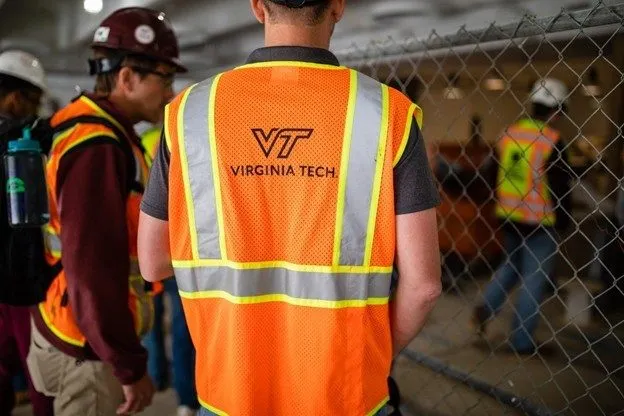
Enter the Coalition for Smart Construction, a pioneering collective based at Virginia Tech. The coalition is on a mission to reshape this paradigm by lowering the barriers to entry for tech adoption. By democratizing access to innovation, the group seeks to elevate the entire construction sector.
Key initiatives currently spearheaded by the coalition include:
- A $280,000 Grant Program: Awarded in partnership with Falls Church, Virginia-based HITT Contracting, these funds are distributed across five diverse pilot projects, pairing industry builders directly with academic researchers.
- The "Digital Commons": An upcoming, Reddit-style digital forum designed to connect contractors of all sizes, curate technical conversations, and match industry stakeholders with shared interests.
- The Smart Construction Lab: A physical research and testing hub currently under construction in West Falls Church, Virginia, designed to offer a collaborative template where private enterprise and university faculty can drive immediate, hands-on R&D.
Chronology
The movement to integrate academic rigor with hands-on construction methodologies has been years in the making, but recent milestones mark a rapid acceleration in the coalition’s timeline:
- Foundational Partnerships: Recognizing a systemic gap in industry-wide R&D, Virginia Tech established the Coalition for Smart Construction, leveraging existing relationships with major trade groups such as Associated Builders and Contractors (ABC) to ensure smaller builders had a voice at the table.
- Late 2024 (Groundbreaking): Ground was officially broken on the physical Smart Construction Lab in West Falls Church, Virginia, anchoring a tangible workspace for future technological experimentation.
- Recent Months: The coalition, in collaboration with HITT Contracting, deployed an initial round of $280,000 in targeted grants across five exploratory projects, ranging from prefabricated data center solutions to community impact studies.
- October 2025 (Projected): The coalition plans to launch its pilot and testing phase for the digital commons platform, rolling it out selectively to ABC members at various operational tiers to gather critical user feedback.
- February to April 2026 (Target Deployment): Following iterative adjustments based on autumn user testing, the digital forum is scheduled to be deployment-ready by February, with a full commercial launch anticipated between March and April 2026.
Supporting Data
The transition from a traditional, low-R&D sector into a digitally optimized industry requires deliberate financial and structural commitments. The metrics defining the coalition’s current scope illustrate a scalable, high-impact model:
- $280,000: The initial capital pool deployed across the coalition’s first five exploratory grant projects. Rather than demanding immediate, rigid returns on investment, these funds are designed to encourage discovery and lower the friction of entering academic-industry partnerships.
- 5 Pilot Projects: The current cohort of funded initiatives, featuring diverse focus areas such as prefabricated energy cell solutions for modern data centers and methodologies for measuring how data center infrastructure supports surrounding regional communities.
- 1 Dedicated Physical Hub: The Smart Construction Lab in West Falls Church, Virginia, engineered to serve as a physical catalyst where commercial builders can immediately collaborate with Virginia Tech faculty.
- Multi-Tiered Testing Schedule: A strict timeline spanning October 2025 (initial pilot testing with ABC members) to March/April 2026 (public market release) for the digital commons platform.
Official Responses
To understand the vision driving these developments, Construction Dive sat down with Andrew McCoy, interim managing director of the Coalition for Smart Construction. In an edited interview, McCoy shed light on the cultural hurdles facing the industry and the strategy behind the coalition’s initiatives.
Addressing the Industry’s R&D Deficit
When asked about the coalition’s core focus, McCoy pointed directly to a historical cultural deficiency within the built environment.
"One of the challenges here is we have an industry that is not used to research and development," McCoy explained. "We’ve got to bring the entire sea level up and get people talking about it, break down walls, get research and development as something that’s part of the culture."
To solve this, McCoy detailed the framework of the upcoming digital commons. Styled conceptually after platforms like Reddit, the digital space relies on curated professional conversations.
"We have a membership that allows you access to a portal, and you get to start having conversations. Those conversations are curated by us. We push information out, we try to get people talking, we try to match groups that have similar interests," said McCoy. "Those conversations can become communities. Then we can start funding the research the membership is interested in. That’s an industry-led, membership-research model."
Democratizing Access for Smaller Builders
Addressing the financial exclusivity that often plagues construction technology adoption, McCoy emphasized that innovation cannot remain the sole domain of multi-billion-dollar corporations.
"We started talking about ways that we can access as many different groups as possible," McCoy noted. "It was not good enough to say, ‘Only companies that can afford to drop $100,000 to $300,000 into tech should benefit from driving this industry forward.’ We wanted this to be something that would help drive change for as many companies as possible."
Through strategic alliances—such as partnerships with Associated Builders and Contractors—the coalition is deliberately tailoring its tools to accommodate smaller, independent builders who might otherwise be left behind.
Navigating the Grant and Pilot Process
Recognizing that many commercial contractors are unfamiliar with how academic research functions, the coalition structured its grant offerings to minimize intimidation.
"We have lots of companies that are interested in getting involved in research, but when we talk to them, they don’t know what that looks like," McCoy stated. "So we’ve been rolling out pilot programs as a way for them to get their feet wet. The pilot programs are meant to be discovery, not necessarily return on investment right away, but they can lead into larger grants."
Implications
The long-term implications of the Coalition for Smart Construction’s work extend far beyond software adoption or university endowments. By fundamentally altering how research is conducted, funded, and shared within the built environment, the initiative points toward several critical transformations:
1. Levelling the Playing Field for Small and Mid-Sized Contractors
For decades, major general contractors have leveraged proprietary tech investments to secure competitive advantages, sidelining regional and specialty subcontractors who lack dedicated R&D budgets. By establishing an open-access digital commons and low-barrier grant pilots, the coalition ensures that smaller firms can participate in—and benefit from—early-stage technological evolution. This democratization helps prevent a widening technological gap between industry giants and local builders.
2. Shifting Cultural Resistance to Innovation
Construction has long operated under a "risk-averse, low-margin" mindset where experimentation is viewed as a financial liability. By framing pilot projects around discovery rather than immediate financial returns, the coalition helps normalize failure, iteration, and iterative learning. Cultivating an R&D mindset transforms builders from passive consumers of third-party software into active co-creators of industry standards.
3. Workforce Enhancement vs. Replacement
A persistent fear accompanying automation, artificial intelligence, and advanced robotics in construction is job displacement. McCoy and the coalition explicitly counter this narrative, emphasizing that technology must serve to augment human capability rather than erase it.
"Safety is a huge part of this, and there’s a workforce element to this too," McCoy observed regarding the five-year outlook for the program. "Hopefully, what we’re doing is we’re not replacing, but trying to enhance the workforce with technology. We’re driving technology that grows what they can do and makes for a better industry."
4. A Template for Academic-Private Synergy
The integration of physical spaces like the Smart Construction Lab in West Falls Church with nationwide digital networking models creates a blueprint for how higher education can directly serve heavy industry. If successful, the Virginia Tech model could inspire similar regional coalitions across the United States, effectively decentralizing innovation and turning universities into perpetual economic engines for regional trade labor, engineering, and general contracting.
Looking Ahead
As the coalition prepares to launch its digital commons testing phase in October 2025 ahead of a full spring 2026 rollout, the broader construction ecosystem will be watching closely. If the initiative achieves its ultimate five-year goal—making the industry fundamentally dependent on collaborative, data-driven research to lower costs, boost productivity, and elevate safety—the Coalition for Smart Construction may well be remembered as the catalyst that permanently modernized the way we build.
