


Published: September 5, 2026
Author: Olivia Poston / ArchDaily
Category: Urban Planning, Public Health, Architecture
Main Facts
Urban planning is increasingly being recognized not merely as a discipline of civil engineering, zoning codes, and aesthetic design, but as a critical determinant of public health. When health outcomes are mapped across neighborhoods, the spatial consequences of urban form become starkly apparent.

Neighborhoods engineered to support walking, daily errands, social interaction, and seamless access to essential services naturally integrate physical activity into the daily routines of their residents. Conversely, urban environments organized around long transit distances and automobile dominance actively suppress physical vitality.
The motivation and ability to incorporate movement into daily life are directly shaped by micro-design elements:

- The exact distance to the nearest grocery store
- The safety and timing of pedestrian crossings
- The frequency and reliability of public transportation
- The width, continuity, and shade of sidewalks
- The concentration of civic and commercial services within a 15-minute walking radius
For decades, mainstream public health discourse regarding rising rates of obesity, metabolic dysfunction, and mental fatigue has placed the burden almost entirely on individual behavior. Populations are routinely instructed to "exercise more," "eat better," and "make healthier lifestyle choices."
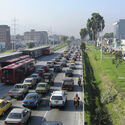
However, forward-thinking urban design challenges this narrative, arguing that individual choices are heavily bounded by systemic environmental constraints. When a neighborhood features wide, high-speed streets, intermittent sidewalks, dispersed services, and grocery stores located miles away, driving is not merely a preference—it is the only rational response to a hostile built environment.

Chronology of the Shift: From Individual Blame to Systemic Design
The realization that our built environments dictate our biological well-being did not happen overnight. It represents a decades-long paradigm shift in municipal governance, epidemiology, and architectural theory.
- The Mid-20th Century (The Auto-Centric Boom): Post-World War II planning aggressively prioritized automobile infrastructure. Urban renewal projects, highway expansions, and Euclidean zoning laws separated residential areas from commercial and industrial districts, cementing car dependency as a societal standard.
- The Late 1990s to Early 2000s (Emergence of the "Obesity Epidemic"): As public health researchers began tracking rising chronic illness rates, initial interventions focused heavily on personal accountability, diet programs, and gym memberships. Early urban pioneers, however, began noticing geographic correlations between sprawling suburbia and chronic health disparities.
- The 2010s (The Active Transit Movement): Cities globally began retrofitting bicycle lanes, expanding pedestrian zones, and questioning the social and economic costs of minimum parking requirements. Cities like Amsterdam and Copenhagen proved that infrastructure changes could radically alter daily commuter behavior.
- The 2020s (The Pandemic Catalyst and the 15-Minute City): Global disruptions forced a re-evaluation of local hyper-accessibility. The concept of the "15-minute city"—where residents can access work, groceries, healthcare, and leisure within a short walk or bike ride—shifted from a theoretical ideal to a measurable public health metric.
- 2026 and Beyond (The City as a System): Contemporary planning frameworks now view the city as an interconnected feedback loop. Planners, architects, and public health officials are collaborating to break the negative feedback loops that trap vulnerable populations in cycles of chronic stress, sedentary lifestyles, and environmental alienation.
Supporting Data and Spatial Realities
To understand how urban form dictates health, one must examine the physical data points that define daily life. Urban researchers analyzing spatial equity have highlighted several recurring metrics:

- The Parking Burden: Studies on the social cost of parking reveal that vast expanses of asphalt not only increase urban heat island effects and storm-water runoff but also physically distance destinations from one another, stretching walkable distances beyond human comfort levels.
- Active Mobility and Metabolic Health: Comparative urban data demonstrates that cities investing in robust pedestrian and cycling infrastructure see measurable drops in cardiovascular disease and type-2 diabetes among residents who substitute passive car trips with active transportation.
- Mental Health and Spatial Psychology: Architecture that lacks human scale, natural green spaces, and community gathering areas correlates with elevated cortisol levels and feelings of social isolation. Conversely, community-centered architecture—such as integrated mental health nodes and urban gardens (e.g., TM Studio’s Changli Urban Garden or localized urban healing initiatives)—actively lowers stress and fosters social resilience.
- Economic Affordability: Research from institutions like the WRI Ross Center for Sustainable Cities indicates that walkable, transit-oriented cities are often more economically resilient. Eliminating the necessity of car ownership frees up a substantial percentage of household income for nutritious food, healthcare, and leisure.
Official Responses and Perspectives from the Field
As the intersection of urban design and medicine gains institutional backing, professionals from various sectors are reshaping how cities are conceptualized.
Urban Planners and Designers
Architects and urban theorists emphasize that changing the physical layout of a city is the most effective preventative medicine available.
"When we design a street that forces a person into a car just to buy a carton of milk, we are engineering a sedentary lifestyle," notes planning advocates. "Good design removes the friction from healthy behavior and adds friction to harmful ones."
Public Health Officials
Epidemiologists are increasingly sitting on city planning boards, recognizing that hospital waiting rooms are often filled by patients whose chronic conditions are exacerbated—if not caused—by their geographic surroundings.

"We cannot treat our way out of chronic illness if our cities continue to poison our daily habits," states public health researchers. "A sidewalk with good shade and a protected crossing is as much a healthcare intervention as a prescription pad."
Municipal Leaders
Forward-looking mayors across Europe, the Americas, and Asia are implementing sweeping zoning reforms. By dismantling mandatory minimum parking rules, investing in public transit, and prioritizing pedestrian-first urban rehabilitation (such as the OUTROS BAIRROS initiative in Alto de Bomba), municipal governments are attempting to break the cycle of top-down, car-centric planning.

Implications: Breaking the Feedback Loop
The ultimate challenge facing modern urbanism is breaking the negative feedback loops embedded in twentieth-century planning models.
When a neighborhood is designed for cars, people drive. When people drive, streets become dangerous and polluted. When streets become dangerous and polluted, walking becomes unpleasant or hazardous, reinforcing the necessity of the car. This loop not only degrades the environment but systematically erodes public health, mental well-being, and community cohesion.

To dismantle this cycle, urban planning must adopt a systemic view of health. This requires:
- Zoning Reform: Moving away from strict single-use zoning toward mixed-use neighborhoods that integrate housing, commerce, and recreation.
- Prioritizing Active Infrastructure: Reallocating street space away from private vehicles and toward continuous sidewalks, protected bike lanes, and robust public transit networks.
- Equitable Distribution of Services: Ensuring that low-income and marginalized communities—historically subjected to highway placements and industrial pollution—receive equal access to green spaces, fresh food markets, and walkable civic infrastructure.
By treating the city not as a machine for vehicular throughput, but as a living, breathing system of health, architects and planners can transform neighborhoods from agents of chronic stress into catalysts for human flourishing.
