

The transition to electric vehicles (EVs) has introduced millions of motorists to a brand-new refueling ecosystem. For decades, traditional internal combustion engine vehicle owners pulled up to gas stations under a predictable framework: clearly posted price-per-gallon signs visible from the street, straightforward payment options, and federal weights-and-measures regulations preventing stations from engaging in outright predatory pricing.
Unfortunately, the modern public EV charging landscape often resembles the unregulated American frontier. Thousands of so-called "public" chargers are dotted across maps and smartphone applications, hosted by local car dealerships, commercial properties, and independent charge point operators (CPOs). But once an unsuspecting driver arrives—often enticed by third-party apps listing these ports as accessible and publicly available—they may encounter restricted operating hours, security gates, inventory blockades, and, most alarmingly, sky-high, predatory pricing structures designed explicitly to scare away outsiders.
Recent incidents involving exorbitant four-figure bills have cast a harsh spotlight on this loophole-laden sector. For first-time or transitioning EV drivers, these predatory encounters do not merely reflect poorly on an individual dealership; they inflict long-term damage on public trust in electric mobility as a whole.
The Core Crisis: Astronomical Bills and Deceptive "Public" Listings
The depth of the problem was laid bare in late summer when two separate drivers fell victim to eye-watering charging bills at franchise auto dealerships.
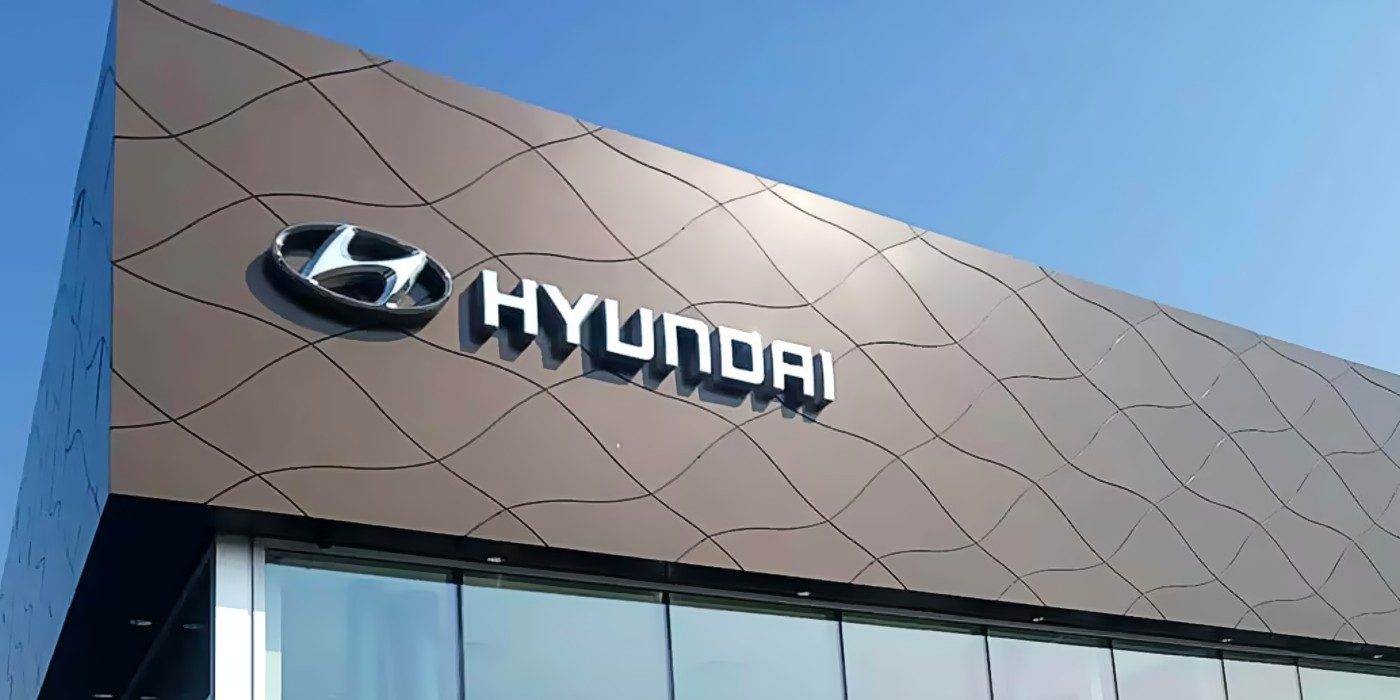
In the most recent case, a Clinton Township, Michigan resident named Stanley Kpenkann found himself facing a staggering $418 bill for a single charging session. Kpenkann, who was driving a rented Chevrolet Bolt EV, located a charger at Elder Hyundai’s Macomb Township dealership via the EVgo app. The portal listed the plug as publicly accessible. Trusting the application, Kpenkann plugged in for a routine top-up lasting approximately 40 minutes.
It was only after concluding his session that the true financial toll became apparent.
"I was flabbergasted," Kpenkann recalled when interviewed by local media. "Never in my wildest dreams did I think I would be saddled with a bill of $418 for a charging session."
When Kpenkann contacted EVgo to report what he assumed was a massive billing error, he received a startling response: the charge was entirely intentional. Elder Hyundai had set its pricing model to an astronomical $5 per kilowatt-hour (kWh), plus an additional $5 for every minute the vehicle remained connected.
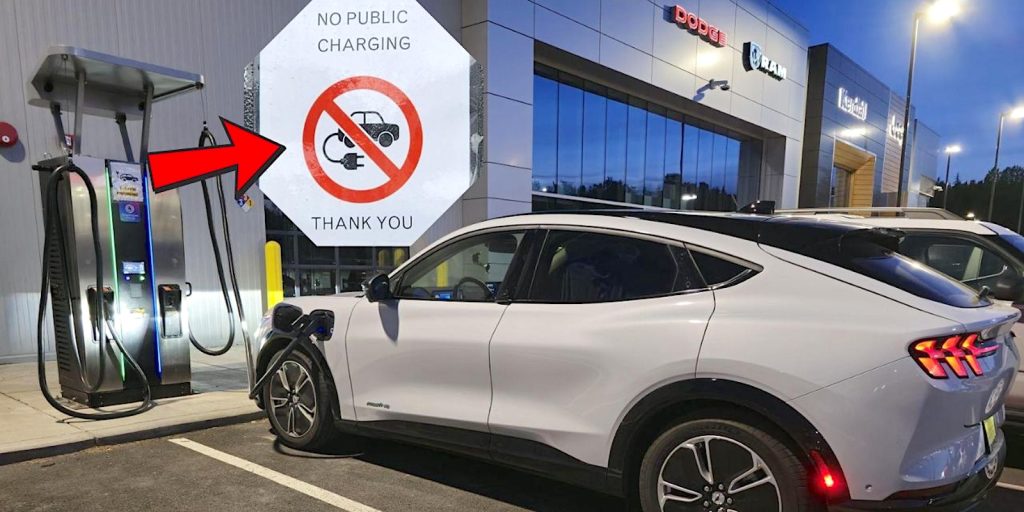
This punitive rate structure was not an isolated aberration. Just months prior, a nearly identical incident occurred in Union, New Jersey. Steve Birkett, a prominent advocate in the EV space and representative for Plug & Play EV, took to LinkedIn to expose his local Hyundai dealership. Birkett was charged an unbelievable $15 per kWh to top off his Hyundai IONIQ 5.
Beyond predatory pricing, Birkett and other consumer advocates have highlighted systemic issues plaguing dealership-hosted chargers. Many locations limit access entirely to prioritize dealership inventory or service customers. Others feature gates that lock outside of standard business hours, offer subpar charging speeds, or—most deceptively—display aggressive anti-outsider signage and window stickers while simultaneously broadcasting their plugs as "public" on major third-party apps.
A Chronology of Predatory Exploitation
To understand how the EV charging ecosystem reached this precarious state, it is necessary to examine how commercial networks and franchise dealerships have exploited regulatory gaps over time.
- Early EV Adoption Phase: As electric vehicles began penetrating the mass market, automakers and local governments incentivized dealerships to install DC Fast Chargers (DCFC) on their lots. Many of these installations were subsidized using public funds, with the underlying caveat that the infrastructure would support the broader public transition to clean transportation.
- The Rise of Third-Party Aggregators: Apps like PlugShare, EVgo, and ChargePoint integrated these dealership-owned chargers into their networks, frequently labeling them as "public access" because they sat outside physical security perimeters or lacked active enforcement during installation.
- June 2026 (The Union, NJ Incident): Steve Birkett charges his IONIQ 5 at a New Jersey Hyundai store, discovering a $15/kWh rate and documenting aggressive "no public charging" signage despite app listings. He publicly calls out the practice, contrasting it with more consumer-friendly franchise models like Ford’s national dealership charging network.
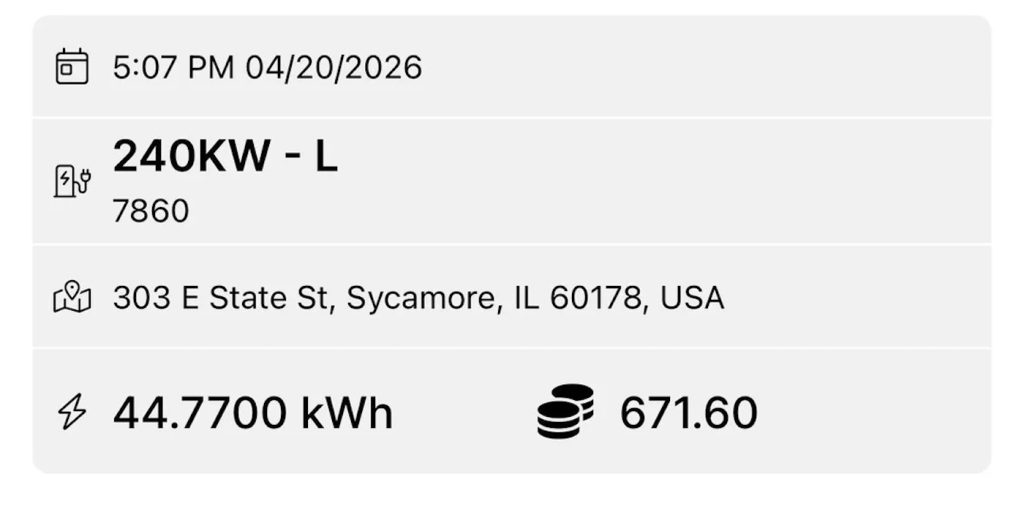
- Late June 2026 (The Illinois MES Incident): A Reddit user posting under the handle C1rcuitBoard utilizes an MES-branded charging station in Sycamore, Illinois. Failing to notice updated pricing hidden within the network’s application interface, the driver racks up a staggering $671.60 electric fuel bill for a single stop. When the user requests a refund or clarification, the operating company doubles down, sending a copy of its own commercial power bill to "prove" they were not overcharging.
- September 2026 (The Macomb Township Incident): Stanley Kpenkann is billed $418 for a 40-minute charge at Elder Hyundai in Michigan, dragging the issue back into mainstream media headlines through ABC affiliate WXYZ Detroit.
Supporting Data and the Regulatory Vacuum
The root cause of these exorbitant fees lies in a glaring regulatory double standard between traditional liquid fuels and electric vehicle charging.
In nearly every jurisdiction across the United States, traditional gasoline stations are subjected to strict weights-and-measures laws. They are legally mandated to display fuel prices clearly and legibly on large roadside signs visible to motorists before they pull up to a pump. Consumers can make an informed purchasing decision before committing a single drop of fuel to their tanks.
By contrast, Electric Vehicle Supply Equipment (EVSE) operators and Charge Point Operators (CPOs) in many states face no such roadside requirements. Drivers are frequently forced to rely entirely on digital smartphone applications to ascertain pricing. However, as demonstrated by the cases in Illinois and Michigan, these apps do not always reflect real-time, dynamic rate changes implemented by the host location.
Furthermore, many of these dealership chargers were originally constructed or upgraded using state and federal grants—taxpayer dollars meant to build out a robust public charging infrastructure. When franchise dealerships utilize public incentive money to install hardware, and subsequently weaponize that hardware with $5-to-$15 per kWh penalty pricing to keep community members away, it represents a profound subversion of public policy intent.
Industry experts note that while some automakers have handled dealer-based charging responsibly—notably Ford, which integrated standardized, predictable public charging networks across hundreds of its U.S. dealerships—others have left the door wide open for franchise owners to invent their own arbitrary, punitive fee schedules.

Official Responses and Industry Reactions
As these stories circulate across automotive forums, LinkedIn, and mainstream news outlets, pressure is mounting on charging networks, franchise networks, and regulatory bodies to address the crisis.
Thus far, the response from offending businesses has ranged from stone-walling to defiant justification. In the Illinois case, the CPO defended its $671 bill by forwarding commercial utility statements to the victim, arguing that high demand charges and peak-hour electricity rates justified passing the massive burden directly onto an unwary motorist. Dealerships engaged in similar practices often argue that their primary obligation is to service their own inventory and paying automotive customers, viewing public interlopers as a nuisance that clogs service bays or ties up real estate.
Consumer advocates, however, are pushing back hard. Industry voices are calling for immediate institutional reforms, proposing baseline ground rules for any charging station that accepts public incentive funds:
- Mandatory Upfront Pricing Transparency: Enforce strict digital and physical signage requirements, compelling CPOs and property owners to display exact per-kWh and per-minute rates clearly before a vehicle initiates a charging session.
- Clawback Provisions for Public Grants: Implement rigid oversight on government-subsidized infrastructure. If a dealership or private business lists a charger as public to secure grants but actively discourages use via hostile pricing or signage, agencies must possess the legal authority to rapidly claw back those incentive funds.
- App Integration Accuracy: Hold network providers legally and operationally accountable for ensuring that real-time pricing updates are accurately reflected in consumer-facing applications instantly.
Broader Implications for the EV Transition
The implications of these predatory pricing schemes extend far beyond a few unfortunate drivers losing hundreds of dollars on a single receipt. The broader threat targets consumer confidence.

Switching from an internal combustion engine vehicle to an electric vehicle requires a psychological shift. Mainstream consumers are already hesitant regarding range anxiety, charging speeds, and infrastructure reliability. When early adopters or curious motorists testing out an EV rental car are blindsided by a $418 or $671 bill for basic electricity, it shatters the core value proposition of electric driving—which is supposed to offer cheaper, cleaner energy than fossil fuels.
Worse still, these practices prey on demographic groups least equipped to navigate the murky waters of dynamic app-based charging. When predatory operators use tools partially funded by taxpayers to exploit the public, it breeds a profound sense of distrust.
For the electric vehicle industry to mature past its "Wild West" phase, a concerted effort must be made by regulators, charging networks, and automakers alike. Dealerships that wish to keep their chargers private should be forced to delist them from public routing apps entirely. Those that choose to participate in public charging networks must be held to the same transparent, fair-pricing standards as every other public utility and fueling station in the nation. Until then, EV drivers navigating unfamiliar territory would be wise to double-check every app entry, verify per-minute penalties, and approach dealership chargers with extreme caution.
