

Published: September 6, 2026
Author: Ananya Nayak (Adapted for ArchDaily’s Special Topic: The Lure of Escapism in Architecture and Alternative Worlds)
Main Facts
Some of India’s most compelling, culturally resonant architectural environments have never existed outside the spatial fiction of a film set. Courtyards, palaces, bustling city streets, and entire historical neighborhoods are routinely constructed, lit, and framed for the silver screen—only to be swiftly dismantled once filming wraps. Yet, their digital and psychological footprints endure. For millions of domestic and international viewers, these cinematic worlds become the primary spatial references for how cities look, how wealth and power are staged, and how distinct versions of India are remembered.
Cinema does far more than simply record physical reality; it actively constructs spatial worlds, compressing decades of complex social and urban history into instantly recognizable visual tropes. Later, these cinematic constructs loop back to fundamentally shape how physical places are understood, experienced, and maintained. From the ephemeral five-acre studio recreations of 1950s Bombay to sprawling, multi-acre tourist backlots in Hyderabad, the relationship between architecture and Indian cinema is a dynamic feedback loop where physical buildings inspire images, and those images ultimately redefine the real world.

Chronology of Cinematic Placemaking
The intertwining of Indian architecture and cinema has evolved through distinct technological, industrial, and cultural phases over the past century:

- The Early Decades (Mid-20th Century): Indian cinema initially relied heavily on a mixture of stylized studio soundstages (such as Bombay Talkies) and actual urban or rural backdrops. Architecture served primarily as a neutral or traditional container for dramatic action, relying on early painting and theatrical flat-set techniques.
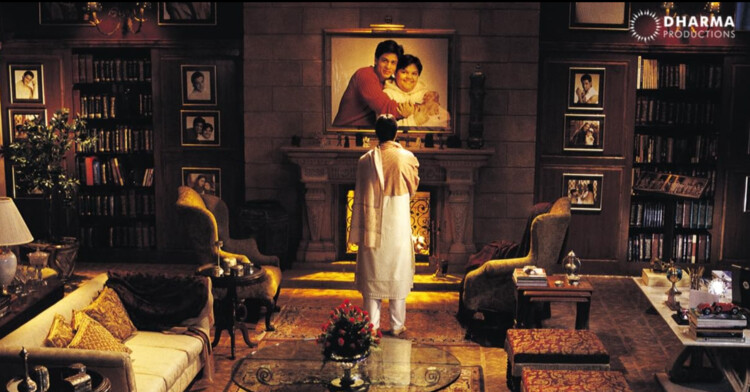
- The Liberalization and Aspiration Era (Late 1990s–Early 2000s): With economic liberalization, films like Kabhi Khushi Kabhie Gham (2001) shifted spatial narratives toward monumental opulence and globalized landscapes. Architecture became an overt symbol of social class, mobility, and Western-influenced aspiration, utilizing both massive studio-built mansions and foreign locations like London.
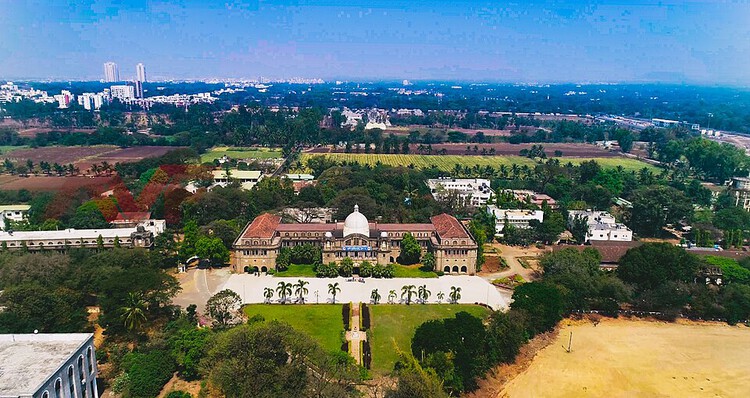
- The Institutional Integration Era (2003–2010s): Real-world institutional and heritage structures—such as the Indo-Saracenic main building of the College of Agriculture in Pune (built in 1911)—became regular filming locations. Following hits like Munna Bhai M.B.B.S. (2003), these academic and public sites began altering their administrative, touristic, and maintenance strategies to embrace their cinematic identities.
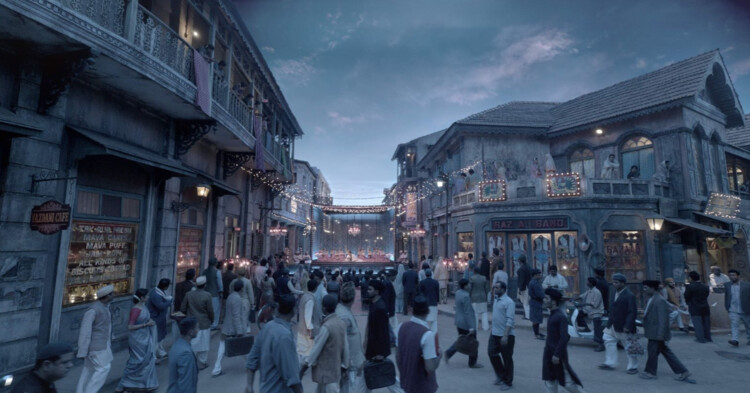
- The Megaset and Tourism Phenomenon (2010s–Present): Mega-productions ushered in an era of hyper-detailed, historical world-building. For instance, production designers Amit Ray and Subrata Chakraborty built a massive five-acre recreation of Kamathipura for Gangubai Kathiawadi (2022) at Mumbai Film City. Concurrently, destinations like Ramoji Film City in Hyderabad transformed temporary backlots (such as the sets of Baahubali) into permanent, high-traffic tourist attractions drawing 1.5 million annual visitors.
Supporting Data & Case Studies
To understand how film sets bridge the gap between temporary illusion and permanent spatial memory, architectural historians and urban researchers have analyzed several key production case studies:

1. Gangubai Kathiawadi and the Rebuilding of Kamathipura
For Sanjay Leela Bhansali’s biographical crime drama, production designers Amit Ray and Subrata Chakraborty undertook extensive archival research, combing through historical photographs, oral histories, and architectural blueprints of 1950s and 60s Bombay. Built across a five-acre plot at Mumbai Film City, the resulting set went far beyond camera-facing facades. It included a fully realized internal geography—complete with a functioning café, a local bar, and a clinic—allowing actors and camera operators to circulate naturally through a simulated urban fabric. Rather than a literal copy, it was a curated interpretation tailored to evoke a specific emotional and historical mood.

2. The College of Agriculture, Pune
Demonstrating how cinema impacts existing architectural heritage, a 2025 study published in Built Heritage examined the long-term effects of films like Munna Bhai M.B.B.S. shooting on the campus of the 1907-established College of Agriculture. While cinematic fame brought heightened public visibility, heritage-walk engagement, and institutional pride, it also introduced selective maintenance biases. Administrators began prioritizing the upkeep of spaces most useful or iconic for film shoots, occasionally overshadowing the site’s broader educational and architectural history.
3. Ramoji Film City, Hyderabad
Spanning approximately 2,000 acres, Ramoji Film City represents the industrialization of cinematic escapism. Originally built as an integrated production hub, it has evolved into a massive tourism destination welcoming roughly 1.5 million visitors every year. Permanent backlots—including the legendary sets of the Baahubali franchise (Mahishmati)—subvert the traditional film lifecycle. Here, the temporary illusion does not vanish; instead, it is preserved as built heritage infrastructure, allowing tourists to physically step inside once-fictional realms.
4. The Script Pavilion (ADFF Mumbai 2017)
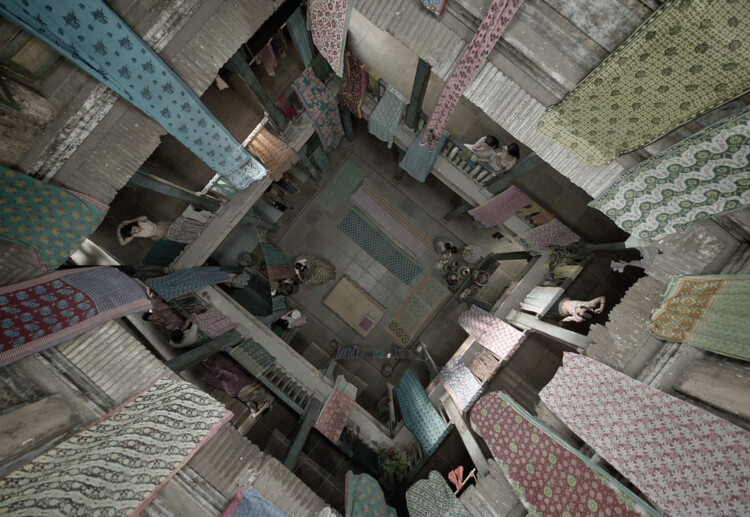
Exploring the conceptual boundaries of place and film, Field Architects designed The Script pavilion for the Architecture and Design Film Festival (ADFF) in Mumbai. Constructed from a bamboo framework layered with reused textiles, the installation invited visitors to experience fragments, thresholds, and changing views. It served as a spatial critique, highlighting how cinematic lenses shape our psychological expectations of real-world landscapes, from the congested streets of Mumbai to the remote topography of Ladakh.
Official Responses and Academic Perspectives
Architectural theorists, urban planners, and filmmakers have increasingly engaged in critical dialogues concerning how projected spaces alter public perception:
- Spatial Historians: Scholars note that cinema excels at narrative shorthand. A grand courtyard instantly signifies inherited tradition or domestic intimacy, while a glass high-rise functions as an immediate visual shorthand for upward mobility or corporate alienation. Through relentless repetition across thousands of films, these associations often eclipse the messy socio-economic realities of physical architecture.
- Production Designers: Industry professionals emphasize that designing a film set requires rigorous architectural principles—scale, circulation, material authenticity, and ergonomics—despite the compressed timeline. Designers argue that a successful set must "perform" within seconds of a camera cut, immediately telling the audience where they are, when they are, and who belongs there.
- Heritage Conservationists: While tourism boards celebrate the economic revitalization brought by cinematic framing, conservationists sound cautionary notes. They warn that heritage sites heavily reliant on film-induced tourism risk flattening their complex historical narratives into single-dimensional pop-culture caricatures.
Implications for Architecture and Urbanism
The dialogue between Indian cinema and architecture holds profound implications for the future of urban design, tourism, and cultural identity:
- The Rise of Destination Architecture: As seen in Hyderabad’s studio complexes and globally in themed environments, architecture is increasingly designed with its photogenic qualities in mind. The boundary between a real city and a designed set is blurring, with cities actively marketing their cinematic heritage to attract global tourism.
- The Power of Collective Spatial Memory: Cinema constructs an alternative geography—an "India of the imagination"—that often feels more familiar to diaspora communities and domestic viewers than their immediate physical surroundings. These shared mental maps influence real estate trends, interior design choices, and cultural aspirations.
- A Two-Way Street: Ultimately, architecture and cinema operate in a symbiotic feedback loop. Buildings provide the raw material for cinematic imagination, but cinema projects those images back into the collective consciousness, permanently altering how physical spaces are valued, maintained, and experienced. In an era dominated by the lure of escapism, the spaces we watch on screen are just as real in our cultural history as the bricks and mortar that build our cities.
