

By Dominic Preston
Published: September 2026
Main Facts: Huawei’s Third-Generation Trifold Arrives in China
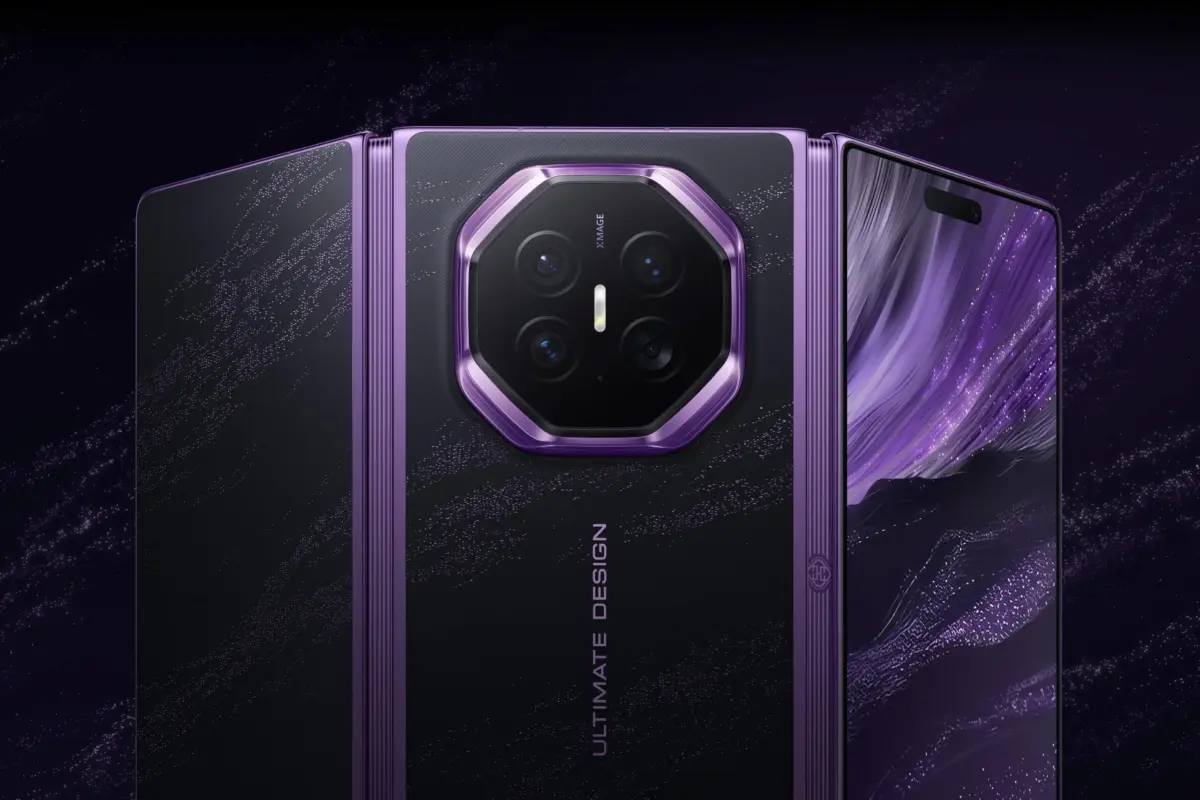
Huawei has officially launched its third-generation trifold smartphone in China, the Mate XT 2, signaling a major design shift for the company’s ultra-premium foldable lineup. Abandoning the accordion-style, outward-folding configuration of its predecessors, the Mate XT 2 adopts an inward-folding architecture that directly echoes Samsung’s competing trifold philosophy.
Beyond its restructured folding mechanism, the Mate XT 2 introduces a cutting-edge privacy OLED display technology—a feature recently popularized by Samsung’s Galaxy S26 Ultra. Packed with Huawei’s proprietary Kirin 9050 Pro chipset, upgraded IP59 water-resistance, and a versatile triple rear camera array, the device arrives with a starting price tag of ¥19,999 (approximately $3,000 USD) for the Chinese market.
While the device represents a massive leap in engineering durability and hardware capabilities, Huawei has yet to confirm any concrete international rollout plans, leaving global tech enthusiasts waiting to see if the successor to the original Mate XT will cross borders.
Chronology: The Evolution of Huawei’s Trifold Journey
To understand the engineering and strategic significance of the Mate XT 2, it is crucial to trace the rapid evolution of Huawei’s multi-foldable strategy over the past two years:
- Late 2024: Huawei disrupted the global smartphone market by launching the original Mate XT Ultimate Design in China. Utilizing an accordion-esque, dual-hinge configuration that folded into a massive 10.2-inch canvas, it eliminated the need for an external cover screen. However, this outward-folding design left vulnerable sections of the delicate flexible OLED panel permanently exposed to scratches, drops, and environmental wear.
- Early 2025: Following strong domestic demand, Huawei orchestrated a limited international release of the original Mate XT, sparking global conversations about the commercial viability of multi-foldable form factors.
- Late 2025 / Early 2026: Minor iterations of the original layout followed—most notably a second-generation variant that introduced active stylus support and a striking purple pleather finish. Despite these upgrades, the core vulnerability remained: the screen was always on the outside when folded.
- Mid 2026: Samsung entered the discourse with the introduction and subsequent rapid sell-out of the Galaxy Z TriFold, which popularized the inward-folding protective layout. Concurrently, Samsung introduced hardware-level privacy display technology on its Galaxy S26 Ultra.
- September 2026: Huawei pulls the curtain back on the Mate XT 2. By integrating inward-folding mechanics to protect its expansive 10.2-inch screen and introducing an optional hardware-level privacy display, Huawei directly responds to industry shifts and consumer demands for greater durability.
Supporting Data: Specifications, Pricing, and Configurations
The Mate XT 2 is positioned squarely at the apex of the luxury ultra-premium smartphone market. Below is a detailed breakdown of its hardware specifications, pricing structures, and configuration tiers:

| Feature / Component | Specification Details |
|---|---|
| Main Display | 10.2-inch flexible OLED screen with variable refresh rate |
| Folding Mechanism | Dual-hinge inward-folding architecture (protects display panels when closed) |
| Processor | Huawei Kirin 9050 Pro chipset |
| Durability Rating | IP59 water and dust resistance rating |
| Camera System | Triple rear camera array (Primary, Ultrawide, Periscope Telephoto) |
| Base Pricing (China) | Starts at ¥19,999 (approx. $3,000 USD) |
| Privacy Display Upgrade | Requires top-tier 16GB RAM / 1TB storage tier + ¥1,000 (approx. $150 USD) surcharge |
| Global Availability | Currently exclusive to China; international release timelines unconfirmed |
The Privacy Display Premium
One of the most heavily discussed additions to the Mate XT 2 is its optional privacy OLED display. Operating similarly to the system found on Samsung’s S26 Ultra, this technology utilizes specialized subpixel light emission at narrower viewing angles. When activated via software settings, the screen appears completely dark or black to anyone viewing it from an adjacent angle, while remaining crystal clear to the user directly facing the panel.
However, Huawei has locked this feature behind a strict paywall. It is exclusively available to buyers who select the highest-end configuration featuring 16GB of RAM and 1TB of internal storage, followed by an additional fee of ¥1,000 (roughly $150) to unlock the privacy hardware layer.
Official Responses and Industry Context
While official corporate press statements from Huawei emphasize the company’s continuous commitment to "pushing the boundaries of material science and mechanical engineering," industry analysts have been quick to point out the clear cross-pollination of design philosophies between Huawei and Samsung.
"The race for trifold dominance is no longer just about who can make a screen fold three times," notes a senior hardware analyst based in Shenzhen. "It’s about solving the practical day-to-day pain points that consumers experienced with the first generation of devices—namely, screen durability and user privacy in public spaces."
Samsung’s trajectory adds another layer of intrigue to the market. Although Samsung briefly introduced the Galaxy Z TriFold to select markets before it was quietly discontinued due to supply constraints and stock sell-outs, supply chain leaks indicate that the South Korean tech giant is actively developing a refined successor. By adopting an inward-folding design for the Mate XT 2, Huawei is effectively preempting Samsung’s next moves, neutralizing the durability criticisms leveled against its earlier accordion models.
Implications: What the Mate XT 2 Means for the Future of Mobile Hardware
The release of the Huawei Mate XT 2 carries profound implications for the trajectory of smartphone design, software integration, and global market competition:

1. The Normalization of Inward Trifolds
The abandonment of the outward-folding accordion design in favor of an inward-folding mechanism validates a core tenet of mobile engineering: protection trumps convenience. While users of the original Mate XT appreciated not needing a separate cover screen, the psychological and physical anxiety of carrying a device with an exposed, unprotected plastic-OLED screen limited its appeal to mainstream buyers. By tucking the delicate display safely inside the chassis when closed, Huawei has made trifold devices significantly more viable for daily carry.
2. Hardware-Level Privacy as a New Frontier
As smartphones increasingly double as mobile workstations, banking portals, and communication hubs, digital privacy in public spaces has transitioned from a software concern (such as screen-dimming apps or digital filters) to a hardware requirement. Huawei’s implementation of a directional OLED matrix—following Samsung’s lead—suggests that physical privacy filters integrated directly into the display panel may become a staple feature of ultra-premium flagships moving forward.
3. The Ongoing Geopolitical and Regional Divide
Despite packing state-of-the-art silicon (the Kirin 9050 Pro) and revolutionary mechanical designs, the Mate XT 2 remains confined to the Chinese domestic market at launch. This highlights the ongoing bifurcation of the global tech landscape. While Chinese consumers gain early access to cutting-edge form factors that Western markets can only read about, structural trade barriers and ecosystem limitations continue to keep Huawei’s most ambitious hardware confined within its home borders.
As Samsung licks its wounds from the discontinuation of its first-generation trifold and prepares its next iteration, the battle lines for the next generation of mobile computing have officially been drawn. Whether Western consumers will ever get to experience an inward-folding trifold with hardware privacy controls remains one of the industry’s most compelling unanswered questions.
