

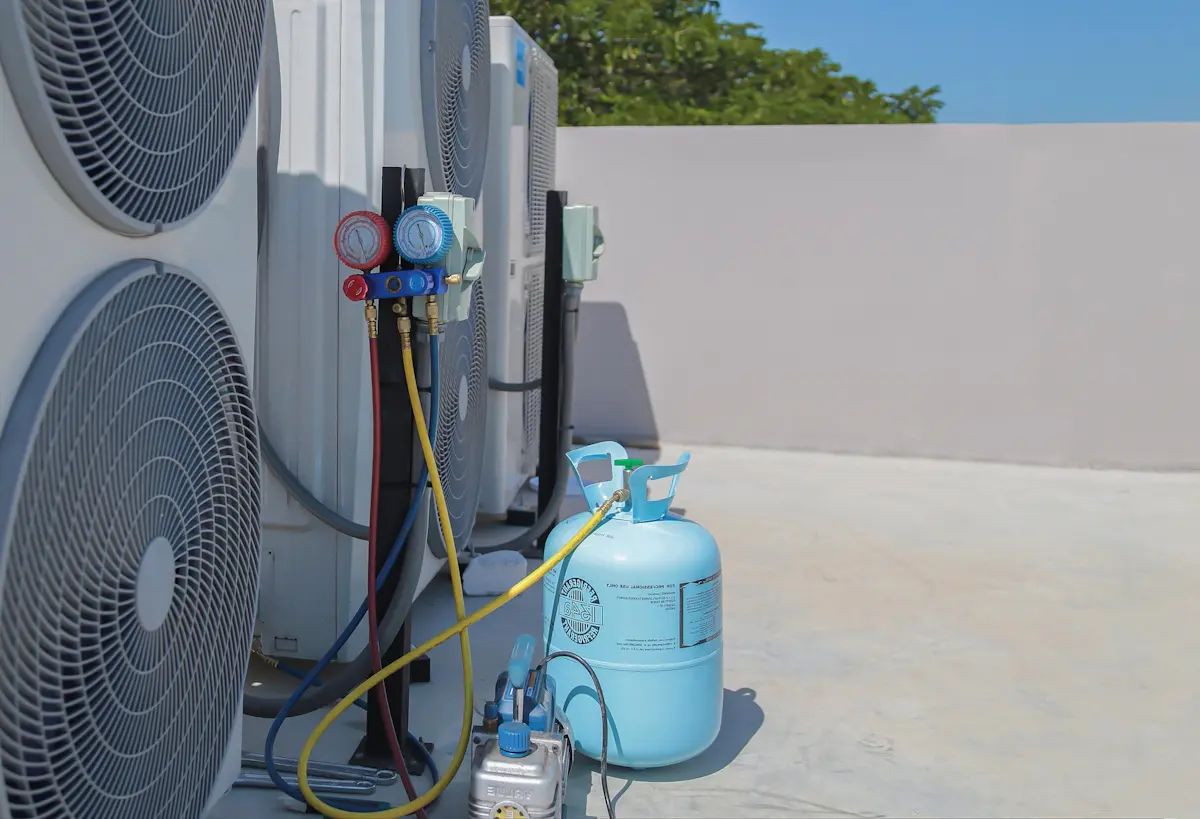
The heating, ventilation, air conditioning, and refrigeration (HVACR) industry is undergoing one of its most transformative periods in decades. Propelled by federal environmental mandates, global phase-down schedules for high-global-warming-potential (GWP) compounds, and updated safety codes, manufacturers, engineers, and contractors are rapidly pivoting toward next-generation solutions. At the epicenter of this evolution is the industry-wide transition to A2L refrigerants—mildly flammable substances that promise drastically reduced environmental footprints.
For Variable Refrigerant Flow (VRF) systems, this regulatory and technological pivot has initiated a profound design and engineering evolution. While legacy VRF systems were celebrated for their plug-and-play simplicity, straight-line piping architectures, and broad application flexibility, the introduction of A2L refrigerants—such as R-32—demands a much higher degree of technical precision. Today, VRF system layouts are increasingly defined by meticulous refrigerant charge calculations, rigorous room-size evaluations, and advanced code compliance measures.
Although these changes have introduced a steeper learning curve and temporary growing pains for the field, industry leaders emphasize that the A2L transition is ultimately unlocking new tiers of operational intelligence, energy efficiency, and environmental stewardship.
Main Facts: The Core Mechanics of the A2L Shift in VRF
At its technical core, the transition from legacy refrigerants like R-410A to A2L alternatives like R-32 alters how engineers must approach VRF system layout. Because A2L refrigerants are classified as mildly flammable, they require strict adherence to safety standards such as ASHRAE 15 and updated building codes governing occupied spaces.
Unlike traditional designs where piping and refrigerant distribution could be planned with minimal regard for localized room volume, modern VRF engineering requires a space-specific approach. Key mechanical changes include:
- Charge-to-Volume Evaluations: Designers must evaluate the total potential refrigerant charge of a circuit relative to the physical dimensions of the specific room or zone it serves.
- Leak Detection and Mitigation: Integration of continuous, active refrigerant sensors capable of identifying micro-leaks before thresholds become hazardous.
- Automated Safety Controls: Implementation of automatic shutoff valves and targeted ventilation protocols designed to isolate affected zones while keeping unaffected parts of a building fully operational.
- Cross-Disciplinary Coordination: Because of the heightened emphasis on safety compliance, successful VRF deployment now requires early, synchronized coordination between mechanical, architectural, electrical, and controls engineering teams.
Despite these added layers of complexity, manufacturers note that the fundamental advantages of VRF technology—unmatched zoning flexibility, high partial-load energy efficiency, heat recovery capabilities, and superior indoor occupant comfort—remain entirely intact.
Chronology: The Road to A2L Integration and Industry Adaptation
The integration of A2L refrigerants into North American VRF markets did not happen overnight; it represents the culmination of years of regulatory planning, safety standard updates, and manufacturing developments.
- Phase 1: Regulatory Signals and Global Commitments (Late 2010s–Early 2020s): Driven by the AIM (American Innovation and Manufacturing) Act and international agreements aimed at slashing HFC consumption, equipment manufacturers began researching low-GWP alternatives. While chillers and unitary equipment adopted A2Ls quickly, VRF systems presented unique engineering hurdles due to their extensive piping networks and large refrigerant volumes distributed across multiple zones.
- Phase 2: Code Alignment and Standard Revisions (2022–2023): Standards organizations, including ASHRAE and UL, updated safety standards (such as ASHRAE 15 and UL 60335-2-40) to legally permit the use of A2L refrigerants in comfort cooling applications, provided proper mitigation devices—like sensors and shutoff valves—were integrated.
- Phase 3: Education, Training, and Initial Resistance (2023–2024): As equipment hit the market, distributors and manufacturers faced an industry-wide knowledge gap. Mechanical contractors, accustomed to decades of R-410A simplicity, expressed apprehension regarding new safety controls, potential nuisance alarms, and unfamiliar compliance documentation. Distributors responded by scaling up intensive educational initiatives, hosting dozens of technical seminars, and rolling out "lunch-and-learn" sessions to demystify A2L codes.
- Phase 4: Current Landscape (Present Day): The industry has moved past initial panic and is settling into a routine adoption phase. Contractors are growing more comfortable with physical installations, while manufacturers continue to refine control software, sensor durability, and pre-packaged mitigation accessories to streamline field deployment.
Supporting Data & Technological Innovations
The evolution of VRF in the A2L era has spurred a wave of supporting technological advancements designed to make compliance seamless for installers and building operators alike.
Advanced Centralized Controls and Monitoring
Modern VRF architectures leverage intelligent software and hardware to manage complex systems efficiently. For example, centralized controllers—such as the Mitsubishi Electric AE-C400A—allow technicians and facility managers to operate and monitor up to 50 indoor units per controller via intuitive touchscreens or local web pages. By networking multiple controllers together, large facilities can seamlessly manage up to 400 indoor units, ensuring that any diagnostic alerts, sensor readings, or system shutdowns are tracked in real time.

Intelligent Zoning and Ducted Solutions
To minimize the concentration of refrigerant in high-traffic or small-occupancy spaces, engineers are increasingly turning toward ducted VRF systems paired with intelligent zoning technologies.
Industry experts point out that this configuration strikes an optimal balance. By utilizing zoning control boards (such as those provided by Airzone Control North America), buildings can maintain individualized room-by-room temperature control while restricting heavy refrigerant distribution primarily to mechanical or unoccupied pathways. This approach reduces regulatory compliance burdens without sacrificing comfort.
Hybrid and Chilled Water Alternatives
In parallel with direct-expansion (DX) A2L VRF systems, designers are actively evaluating hybrid VRF systems and chilled water integrations. These alternative architectures isolate the refrigerant loop entirely to central plant areas, circulating water or secondary fluids to occupied zones, thereby bypassing many of the strict room-charge limitations associated with direct A2L distribution.
Official Responses: Perspectives from Industry Leaders
The transition has prompted varied reactions from across the HVAC supply chain, balancing the acknowledgment of early hurdles with optimism for long-term value.
The Manufacturer’s Viewpoint: Value Beyond Compliance
Dave Archer, vice president of commercial business at Mitsubishi Electric Trane HVAC US (METUS), stresses that the hardware required for A2L compliance should be viewed as an upgrade rather than an encumbrance.
"There are a few different changes out there, and some of those updates, like refrigerant sensors, have added value to our systems. They’re not an inconvenience or a hindrance; they add key benefits to building owners," Archer stated. "If we design smaller systems, VRF remains the preferred solution for zoning applications, especially when prioritizing high efficiency, low noise, and a smaller footprint."
Laura Michel, ductless portfolio leader at Trane Technologies, echoes this sentiment, emphasizing that early collaboration is the key to unlocking the full potential of next-generation equipment.
"VRF still delivers the core benefits that make it attractive, including zoning flexibility, energy efficiency, heat recovery potential, and improved occupant comfort," Michel noted. "The transition does not change those advantages, but it does require more thoughtful system design and coordination early in the project."
The Distributor’s Viewpoint: Managing the Learning Curve
On the supply and distribution side, leaders have spent countless hours bridging the gap between theoretical code requirements and practical field application. Dave Heckler, president of Comfort Supply Inc., reflects on the intense educational push required over the past year and a half.

"At first it was kind of discouraging for us because we pioneered VRF in this area… and engineers were freaked out," Heckler admitted. However, after hosting roughly 50 contractor training sessions, he has watched sentiment stabilize. "I would say as the year went on, it seemed to settle down a bit more. The installation is almost exactly the same. It’s really not that much of a difference. But I think there is going to be some growing pains on the alarms—if there’s not the right control wire to it, it might go off."
The Controls Perspective: The Best of Both Worlds
Victoria Garcia Massimo, national sales and operations director for Airzone Control North America, emphasizes that smart design can alleviate much of the regulatory friction.
"It’s a best-of-both-worlds solution: simplified regulatory compliance and reduced system complexity, with the superior comfort and efficiency of VRF and individualized comfort," Garcia Massimo said.
Implications: Environmental Progress and Future Outlook
While the immediate implications of the A2L transition involve added equipment costs, mandatory control wiring precision, and necessary technician training, the long-term environmental and operational implications are profoundly positive.
Enhanced Environmental Efficiency and Leak Mitigation
Paradoxically, the strict safety mechanisms designed to handle mildly flammable refrigerants are yielding unprecedented environmental benefits. Under legacy standards, a slow, undetected refrigerant leak could persist for months, degrading system performance, driving up energy consumption, and resulting in massive atmospheric venting of greenhouse gases before maintenance was triggered.
Under modern A2L system architectures, integrated sensors change this dynamic entirely. As Archer explains, an A2L sensor detects even a minor threshold breach and immediately isolates and shuts down that specific portion of the system.
"We have the potential to shut down systems sooner, reducing the time a system operates with a low refrigerant charge," Archer explained. "This results in better environmental and energy outcomes."
Furthermore, because modern designs necessitate strict calculations for individual zone charges, the industry is naturally shifting toward smaller, more compartmentalized systems. This reduction in total charge per circuit frequently eliminates the need for complex, room-by-room active ventilation systems, streamlining installations while minimizing the total mass of refrigerant in circulation.
Conclusion
The migration to A2L refrigerants has undeniably added a layer of complexity to Variable Refrigerant Flow technology. It demands heightened engineering foresight, rigorous adherence to safety standards, and continuous education for mechanical contractors. Yet, rather than diminishing the appeal of VRF, this regulatory evolution is refining it. By pairing advanced leak-detection technology and intelligent zoning controls with VRF’s legendary energy efficiency, the HVAC industry is delivering smarter, safer, and more environmentally sustainable climate control solutions for the buildings of tomorrow.
