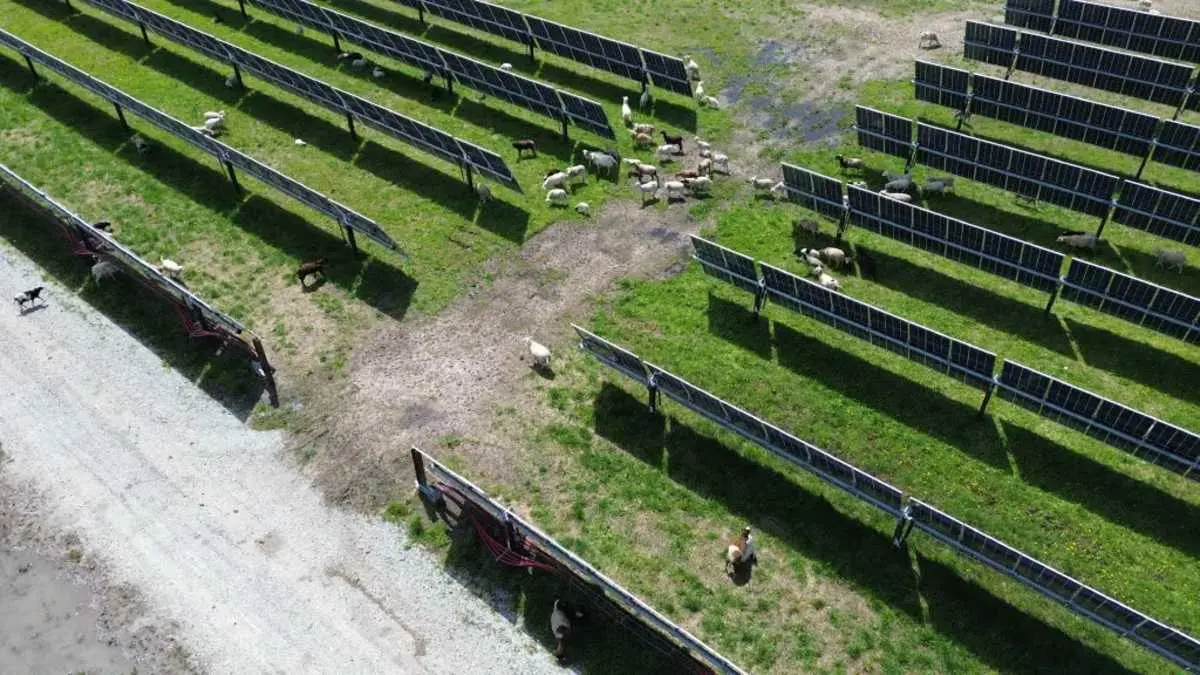
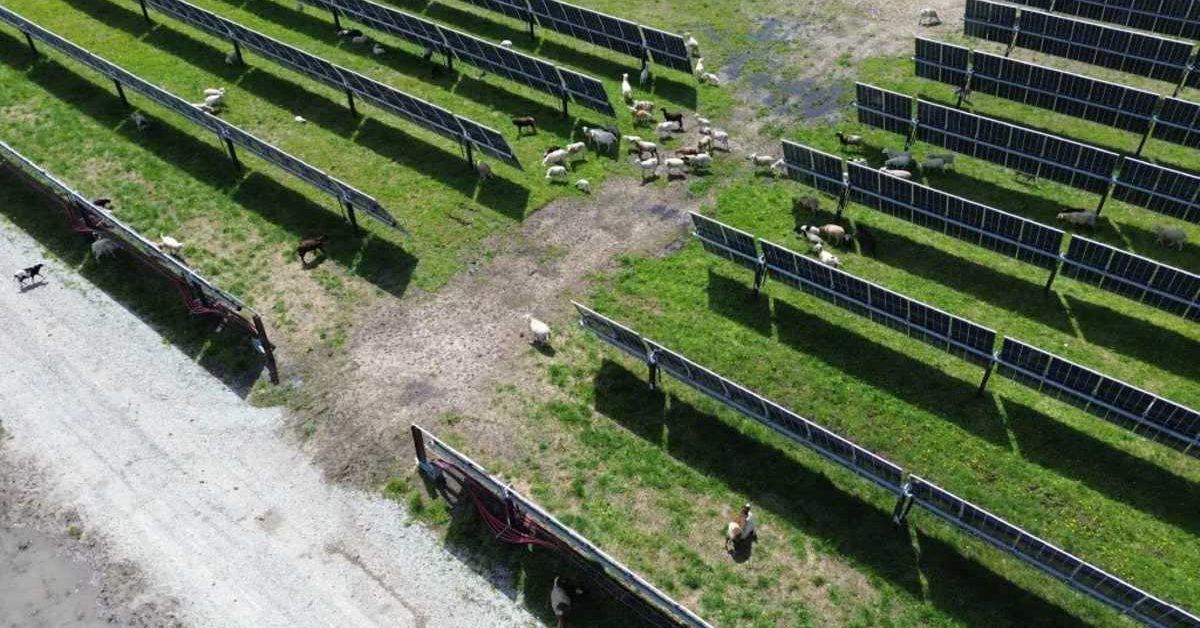
INDIANAPOLIS — For decades, one of the most stubborn and emotionally charged arguments weaponized against the expansion of utility-scale wind and solar infrastructure has been the fear of residential devaluation. Critics of clean energy transitions routinely warn homeowners that the arrival of massive rotating wind turbines or sprawling photovoltaic arrays will spell financial ruin for their neighborhoods, tanking property values and eroding local wealth.
However, a sweeping new empirical study out of Ball State University delivers a definitive counter-narrative to these anxieties.
Analyzing two decades of comprehensive residential real estate data across Indiana, researchers at Ball State’s Center for Business and Economic Research (CBER) found no statistical evidence that the construction of commercial wind turbines or utility-scale solar farms drags down nearby home sale prices. While the findings may not put an end to every hyper-local zoning debate, they strongly undercut the blanket assertion that living near a renewable energy installation automatically diminishes property worth.
Main Facts: What the Ball State Study Discovered
The exhaustive research project evaluated housing market transactions from 2004 through 2024, deploying multiple econometric models to dissect how home prices shifted before and after the deployment of major renewable energy projects.
The core takeaway of the report is straightforward: there is no widespread, statistically significant negative effect on residential sale prices near commercial wind turbines or utility-scale solar installations in Indiana.
To be precise, the researchers draw a critical distinction between localized fluctuations and systemic market decline. While an individual home sale near a project might occasionally command a lower price due to standard market variables, the data reveals no measurable, statewide trend of devaluation tied to proximity to clean energy facilities.
Wind Energy Analysis: Researchers examined home sales within a five-mile radius of turbines across three distinct Indiana regions: Northwest, North Central, and East Central. Across various statistical approaches, proximity to turbines did not result in a discernible negative drag on market values.
Solar Energy Analysis: The solar segment of the study tracked residential properties situated within four miles of utility-scale projects. Initial models suggested minor dips in specific micro-radii—such as homes within a half-mile—but these variations fell well within normal market noise and lacked statistical significance.
Project Variables: Factors such as the physical size of the solar or wind project, urban versus rural settings, proximity to brownfields, and the corporate identity of the energy supplier showed no uniform or consistent negative impact on housing valuations.
Chronology: Two Decades of Housing Data and Energy Growth
To understand how researchers reached these conclusions, it is helpful to look at the timeline and methodological evolution of the study, which mirrors Indiana’s quiet yet profound energy transformation over the last twenty years.
2004–2010s: The Early Wave of Wind Energy
Indiana’s push into large-scale renewables began in earnest during the mid-to-late 2000s, driven largely by commercial wind energy development in the northern and central agricultural expanses of the state. As multi-megawatt turbines began dominating rural skylines, local pushback quickly materialized. Real estate anxieties became central talking points at county zoning board meetings. Economists and regional planners lacked localized empirical datasets, often relying instead on extrapolations from studies conducted in other states or countries.
2020–2024: The Utility-Scale Solar Boom
Entering the 2020s, the energy landscape shifted decisively toward utility-scale solar farms, spurred by declining technology costs and corporate decarbonization goals. Projects like the massive Mammoth Solar development in northern Indiana captured headlines, bringing thousands of acres of photovoltaic panels to rural counties. Concurrently, local resistance evolved, with grassroots opposition groups organizing around property value preservation, leading to a patchwork of county-level restrictions.
2024–2026: The Ball State CBER Investigation
Recognizing a severe policy vacuum driven by emotion rather than data, researchers at Ball State University—led by CBER Director Dagney Faulk and Assistant Professor of Economics Paul Niekamp—embarked on a rigorous, long-term retrospective analysis. By capturing 20 years of actual transaction records, the team constructed a temporal framework capable of observing housing markets before a project was even proposed, during its construction phase, and years after it came online. The resulting reports provide a localized reality check for communities currently navigating the green transition.
Supporting Data: Dissecting the Numbers and Anomalies
Diving into the econometric models reveals a nuanced picture that goes beyond simple binary outcomes. While the overarching conclusion is that no widespread negative effect exists, the researchers took care to examine anomalous data points and explore why certain sub-models hinted at anomalies.
The Wind Data Breakdown
In the wind energy evaluation, specific models occasionally yielded mixed estimates. For instance, an initial model focusing on an East Central Indiana region suggested that homes positioned within one mile of a wind turbine sold for roughly 11.5% less than comparable properties located three to five miles away.
However, when subjected to rigorous statistical testing, this variance proved statistically insignificant. In the language of economics, this means the price gap could not be distinguished from ordinary, everyday housing market volatility.
The Solar Data Nuances
Similarly, the solar market models initially flagged homes within a half-mile of utility-scale arrays as trading between 0.9% and 1.4% lower in one specific subset of data. Once again, these fluctuations lacked the statistical muscle required to establish a causal link to the solar farm.
Interestingly, the study identified one standout positive correlation: homes within half a mile of solar projects owned by investor-owned utilities experienced a 7.9% increase in sale prices after the projects came online.
While the researchers cautioned against over-interpreting this as a direct causative effect, they suggested it could point to several underlying dynamics:
Higher standards of project design, landscaping, and ongoing maintenance by major utility companies.
Tangible local economic benefits, such as enhanced local tax revenues that flow back into county budgets, improving local infrastructure and schools.
Official Responses and Expert Commentary
The release of the Ball State study has injected much-needed empirical rigor into municipal planning discussions across the Midwest. Local officials, economic developers, and academic researchers emphasize that planning debates must now pivot from speculative fear to evidence-based policy.
"This research provides Indiana-specific data on an issue that often arises when communities are considering renewable-energy projects," said Dagney Faulk, director of research at Ball State’s Center for Business and Economic Research (CBER). "Property values are understandably an important consideration for homeowners and local officials. Our analysis allows those discussions to be informed by what we have observed in housing markets around existing wind and solar developments across the state."
The value of longitudinal data—tracking real market transactions rather than subjective surveys or preemptive anxieties—was underscored by the study’s co-author.
"The advantage of looking at many years of actual home-sale data is that we can examine what happened in communities before and after these projects were developed," noted Paul Niekamp, assistant professor of economics at Ball State. "Across the different approaches we used, the overall results do not indicate widespread negative effects on residential property values near solar projects in Indiana."
The researchers also highlighted the critical role that state and local regulations play in shaping these outcomes. Indiana’s established permitting frameworks, property setbacks, and environmental guidelines are designed precisely to buffer residential areas from industrial-scale sights and sounds. Where those rules are thoughtfully applied, the housing market appears entirely resilient.
Implications: Local Resistance, Zoning Bans, and the Future of Clean Energy
While the Ball State study thoroughly debunks the myth of universal property devaluation, its release arrives at a uniquely tense political and regulatory crossroads in Indiana.
Clean energy development in the state has increasingly collided with local skepticism and institutional pushback. According to data cited in the university’s research brief, local resistance has manifested heavily across county lines:
As of late 2025, 40 of Indiana’s 92 counties had enacted outright bans, moratoriums, or severe regulatory impediments restricting new wind energy developments.
Concurrently, 24 counties had implemented restrictive ordinances targeting utility-scale solar projects.
This regulatory fragmentation highlights a profound disconnect between statewide economic realities and hyper-local political sentiment. Local zoning boards are frequently dominated by vocal critics whose primary weapon is the conviction that clean energy installations will destroy neighborhood equity.
The new findings from Ball State University will not single-handedly dissolve every local zoning dispute or quiet community opposition. Siting decisions involve complex, multi-faceted considerations—ranging from rural aesthetics and agricultural land preservation to drainage management and local tax-sharing agreements.
Nevertheless, the research strips away one of the most formidable and frequently repeated talking points used to block renewable infrastructure. By proving that 20 years of housing market data does not support the fear of systemic devaluation, the study clears the path for more rational, fact-based conversations about how rural communities and clean energy developers can successfully coexist.