

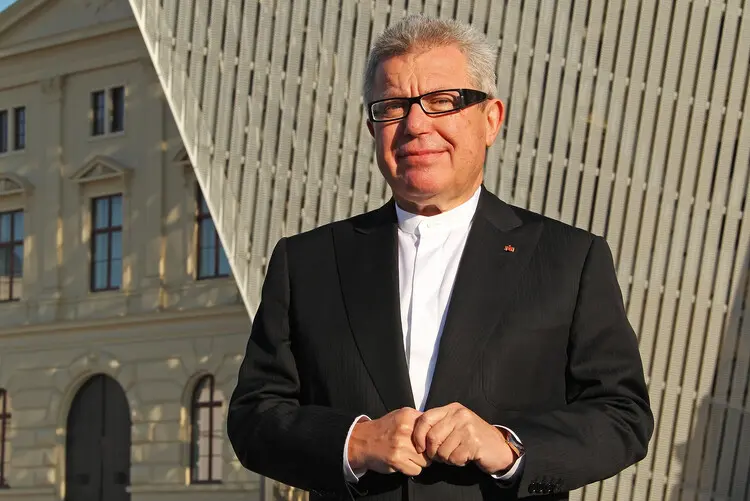
PARIS, ROME, BERLIN, NEW YORK, LONDON, TOKYO — In a simultaneous global announcement spanning major cultural capitals, the Japan Art Association has named world-renowned Polish-American architect Daniel Libeskind as the laureate of the prestigious 2026 Praemium Imperiale International Art Award for Architecture.
Recognized globally as one of the highest accolades in the arts—often considered the Nobel Prize of the creative fields—the Praemium Imperiale honors lifetime achievement across categories that transcend national and ethnic boundaries. Libeskind joins an elite cohort of 2026 laureates, which includes Cate Blanchett for theater and film, Jenny Holzer for painting, Andy Goldsworthy for sculpture, and Herbert Blomstedt for music.
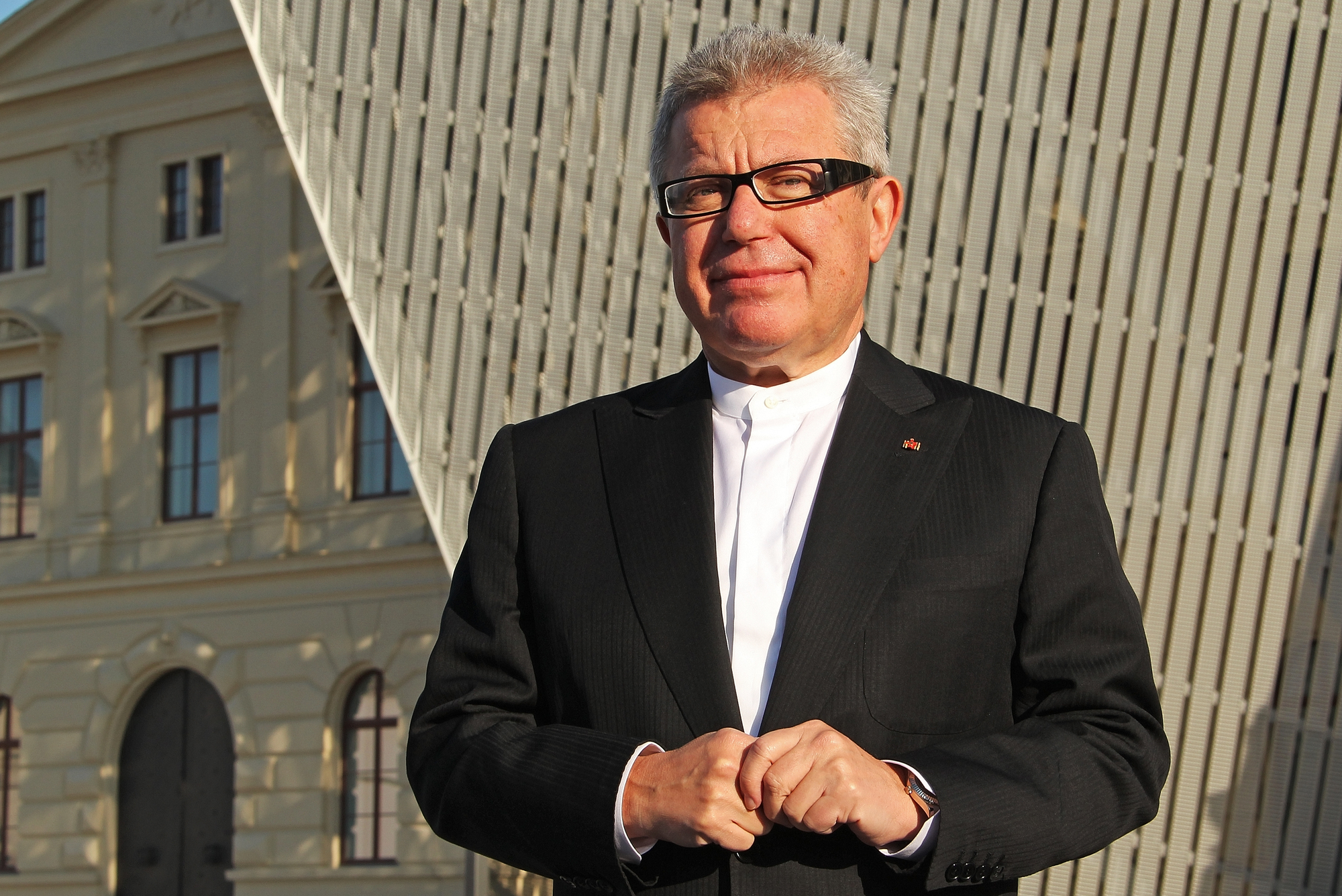
The announcement, made on Tuesday, September 8, celebrates Libeskind’s profound impact on modern architecture, urban design, and cultural memory. Each laureate receives a testimonial letter and a 15 million yen honorarium, which will be officially presented by Honorary Patron Prince Hitachi during a grand ceremony in Tokyo on October 28, 2026.
Main Facts: A Lifetime of Monumental Design
Daniel Libeskind, co-founder of Studio Libeskind alongside his wife and business partner Nina Libeskind, stands as a titan of contemporary architectural deconstructivism and emotional storytelling. Born in Łódź, Poland, in 1946 to Holocaust survivors, Libeskind’s journey to architectural mastery is as unconventional as his buildings. An immigrant to the United States and an accomplished virtuoso musician in his youth, he eventually transitioned into architecture, viewing spatial design through the rigorous lenses of philosophy, literature, and musical rhythm.
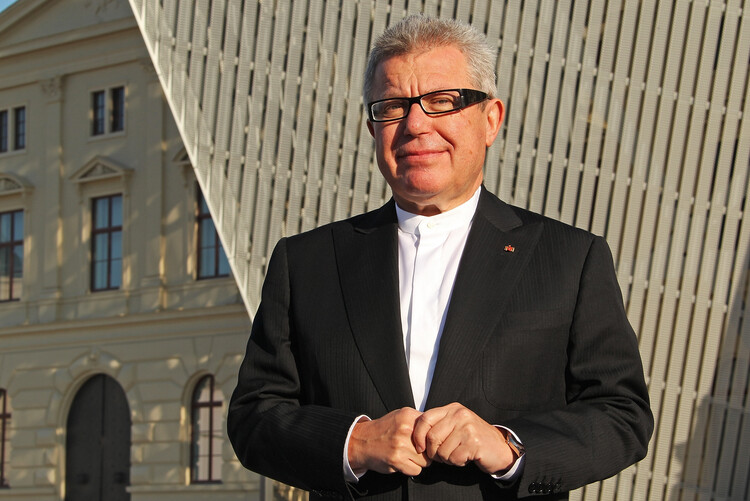
The Japan Art Association praised Libeskind for his "ability to evoke cultural memory through emotionally resonant and original architecture." His portfolio features some of the most emotionally charged and historically significant structures of the late 20th and early 21st centuries:
- The Jewish Museum Berlin (Germany): A masterpiece of spatial narrative, its jagged zinc-clad facade and subterranean voids symbolize the erasure and absence left by the Holocaust in German history.
- The World Trade Center Master Plan (New York City, USA): Following the tragedies of September 11, 2001, Libeskind’s "Memory Foundations" master plan successfully guided the revitalization of Ground Zero, balancing memorial spaces with commercial resilience.
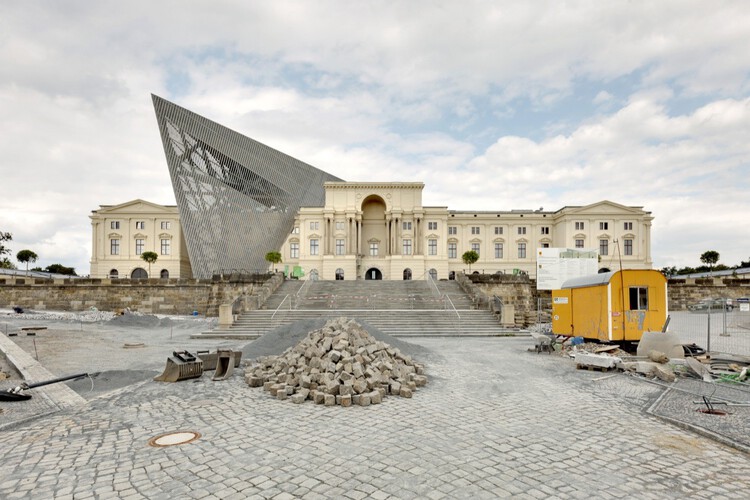
- Dresden’s Military History Museum (Germany): A striking wedge of glass and steel thrusting through a 19th-century neoclassical arsenal, challenging militaristic narratives through contrasting architectural interventions.
- The National Holocaust Monument (Ottawa, Canada): An angular, concrete interpretive space that engages visitors in quiet contemplation and collective remembrance.
Libeskind’s recent and ongoing projects showcase a firm that continually scales new heights. From the high-density Daechi Ssangyong 1 Redevelopment Project in Seoul, South Korea, to a visionary mixed-use transit-oriented development transforming the Issy-les-Moulineaux station area in Paris, and the meticulous restoration of Antwerp’s historic Boerentoren skyscraper, Studio Libeskind bridges the gap between historical preservation and forward-thinking urbanism.
Chronology: The Evolution of a Master Architect
To understand Daniel Libeskind’s impact is to trace a path through decades of intellectual rigor, theoretical breakthroughs, and monumental realizations.
Formative Years and Theory (1946–1989)
- 1946: Born in Łódź, Poland; immigrates with his family to Israel in 1957, and later to New York in 1965.
- 1970s: Earns a degree in architecture from Cooper Union and a postgraduate degree in history and theory of architecture from the University of Essex. He spends years primarily as an academic, theorist, and educator, directing architecture programs in the U.S. and Canada.
- 1989: Establishes Architecture Studio Libeskind in Berlin, Germany, after winning the international competition to design the Jewish Museum.
The Breakthrough Decade (1990–2005)
- 2001: Opens the Jewish Museum Berlin to widespread international acclaim, establishing his reputation as an architect capable of translating deep historical trauma into physical form.
- 2003: Studio Libeskind wins the master planning competition for the World Trade Center site in lower Manhattan, thrusting him into the global spotlight as an urban visionary.
- 2007: Moves the firm’s headquarters to New York City to manage the massive undertaking of the World Trade Center redevelopment alongside a flurry of international cultural and residential commissions.
Global Expansion and Contemporary Mastery (2006–Present)
- 2011: Completes the dramatic, wedge-pierced expansion of the Military History Museum in Dresden and the iconic Reflections at Keppel Bay residential towers in Singapore.
- 2017–2018: Unveils the National Holocaust Monument in Ottawa and publishes his reflective memoir and design philosophy, Edge of Order.
- 2023–2026: Expands his firm’s global footprint with landmark urban projects in Paris, Seoul, and Antwerp, culminating in the announcement of the 2026 Praemium Imperiale.
Supporting Data: The Praemium Imperiale and Its Legacy
Established in 1988 by the Japan Art Association—under the imperial patronage of the Japanese Imperial Family—the Praemium Imperiale was created to commemorate the centennial of the association and to honor the memory of Prince Takamatsu. It fills a historical void left by the Nobel Prizes, which do not feature categories for the arts.
The architecture category has a storied history of recognizing visionaries who push the boundaries of the built environment. Libeskind follows an extraordinary lineage of recent architectural laureates:
- 2025: Eduardo Souto de Moura (Portugal)
- 2024: Shigeru Ban (Japan)
- 2023: Diébédo Francis Kéré (Burkina Faso/Germany)
- 2022: Kazuyo Sejima and Ryue Nishizawa / SANAA (Japan)
- 2019: Tod Williams and Billie Tsien (USA)
- 2018: Christian de Portzamparc (France)
Selection committees operate across five international nominating cities—Paris, Rome, Berlin, New York, London, and Tokyo—consulting prominent cultural figures to curate a shortlist of candidates whose lifetime contributions have fundamentally shifted their respective disciplines.
Official Responses and Accolades
The announcement of Libeskind’s win has elicited widespread praise from international cultural institutions, architectural critics, and civil rights organizations. Over his career, Libeskind has been decorated with numerous honors, including the Goethe Medal, the Hiroshima Art Prize, the Dresden Peace Prize, and the European Civil Rights Prize of the Sinti and Roma.
In its official citation, the Japan Art Association noted:

"Daniel Libeskind does not merely build spaces; he constructs dialogues between the past and the future. His architecture challenges us to remember, to feel, and to question the world around us. Through a rare synthesis of musical discipline, philosophical depth, and spatial daring, he has redefined what monumental architecture can achieve in contemporary society."
Colleagues and cultural leaders have likewise emphasized his unwavering commitment to hand-drawn design—a signature process that prioritizes raw human emotion over algorithmic optimization. By sketching complex, angular geometries entirely by hand before translating them into digital models, Libeskind maintains an intimate, visceral connection with every line he draws.
Implications: The Future of Emotional Architecture
Libeskind’s recognition with the 2026 Praemium Imperiale arrives at a critical juncture in urban development and global architecture. As cities grapple with rapid density, climate change, and the need for sustainable construction, the architectural discourse has frequently swung toward utilitarianism, efficiency, and glass-box minimalism.
Libeskind’s victory serves as a powerful reminder of the enduring necessity of emotional resonance, narrative-driven design, and historical consciousness in the built environment. His recent ventures—such as utilizing bio-sourced materials and green integration for the Issy-les-Moulineaux development in Paris, and transforming historical relics like Antwerp’s Boerentoren into modern cultural hubs—prove that avant-garde design can successfully harmonize with ecological and historic stewardship.
Furthermore, by honoring an architect whose work deals extensively with memory, trauma, and human rights, the Japan Art Association underscores the role of the arts as an instrument for healing and global unity. As Daniel Libeskind prepares to accept his medal in Tokyo this October, his legacy remains firmly cemented not just in the skylines of Berlin, New York, and Seoul, but in the collective conscience of a world shaped by his courageous, visionary spaces.
