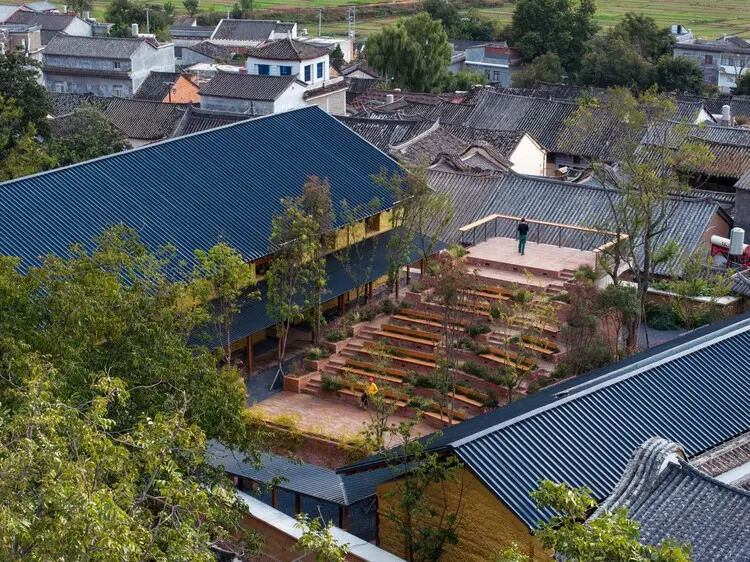
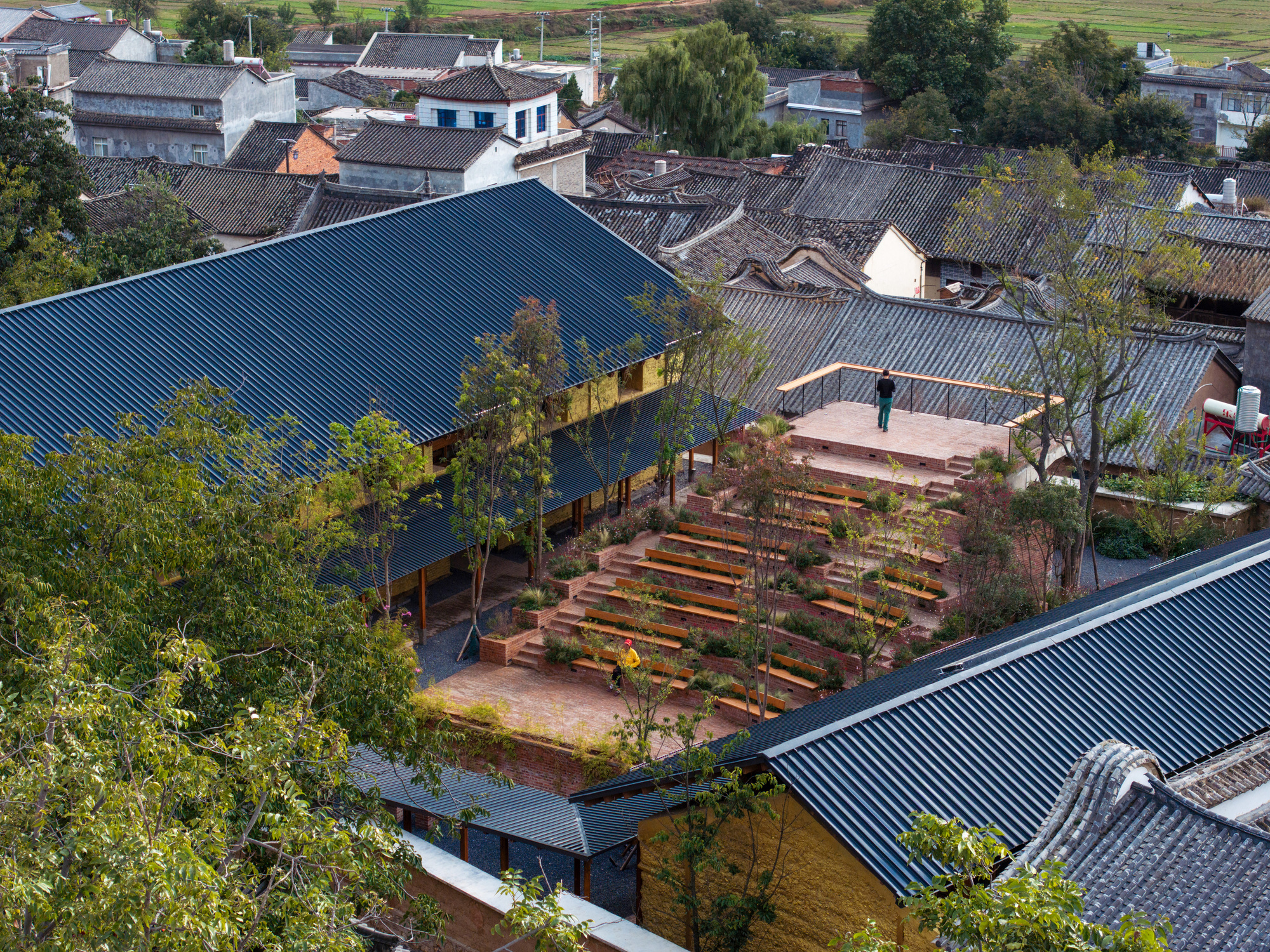
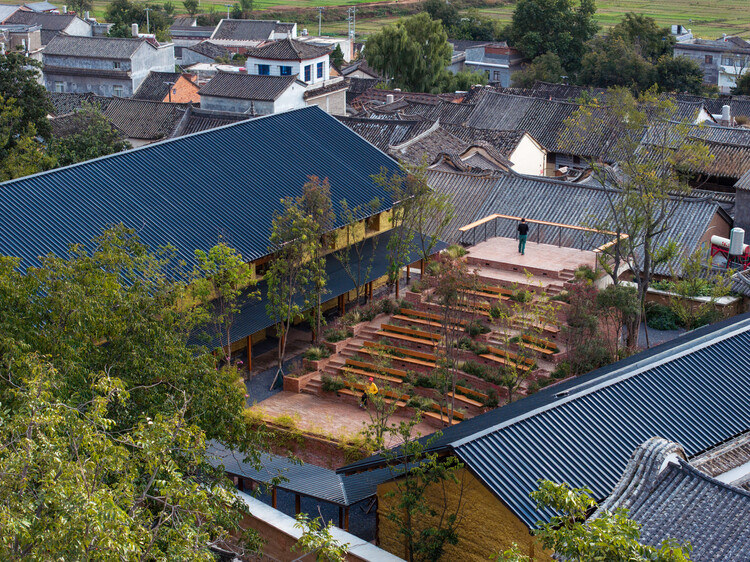
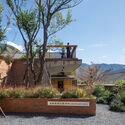
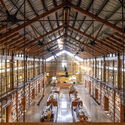
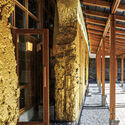
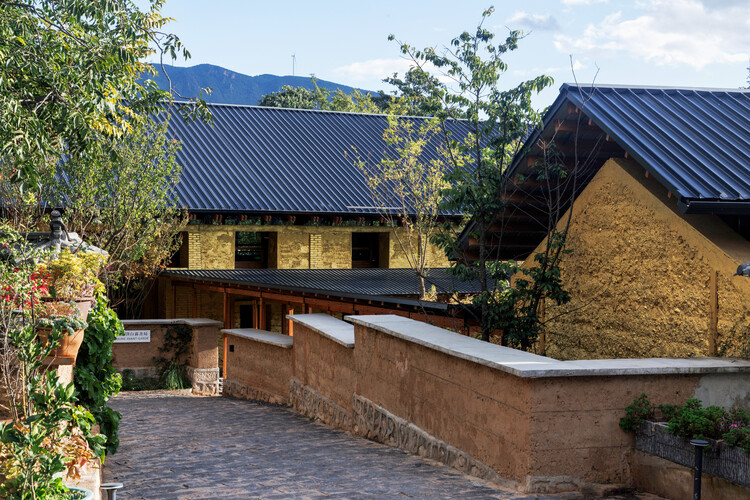
Nestled deep within the culturally rich terrain of Yunnan Province lies Baiwu Village, a historic and multi-ethnic settlement in Huize County, Qujing. Once serving as the vital first stop on the grueling long-distance copper transportation routes bound for the imperial capital—earning it the historic moniker "Copper Capital"—Baiwu Village is a melting pot of traditions. Here, communities of Hui, Yi, Bai, and Han peoples have coexisted for generations, blending a diverse tapestry of migrant cultures, architectures, and social histories.
Into this vibrant yet rural context steps a transformative architectural intervention: the Librairie Avant-Garde Huize Baiwu Bookstore, masterminded by the renowned Jiakun Architects and curated by Han Shuang. Published officially in September 2026, this architectural feat is much more than a retail space for literature; it is a strategic socio-cultural anchor designed to breathe new life into the region’s fading rural fabric.
By thoughtfully utilizing local materials, respecting vernacular typologies, and establishing a communal public hub, the bookstore bridges the gap between historical heritage and contemporary architectural expression. It serves as a physical manifestation of cultural preservation, offering locals and travelers alike a meditative sanctuary for reading, gathering, and intellectual exchange against the backdrop of southwestern China’s dramatic mountainous landscapes.
Chronology: The Evolution of Baiwu Village and the Bookstore Project
To fully grasp the magnitude of the Librairie Avant-Garde Huize Baiwu Bookstore, one must trace the timeline of the region, from its ancient economic dominance to its modern architectural rebirth.
Phase I: Historical Roots and the "Copper Capital" Era (Pre-20th Century)
The Ming and Qing Dynasties: Huize County emerges as a powerhouse of mineral wealth, specifically copper mining. Baiwu Village is established as a critical logistical node and resting point for caravans hauling copper ore northward toward the imperial capital.
Cultural Convergence: Because of its role as a transportation and trading hub, the village attracts diverse ethnic groups—including the Hui, Yi, and Bai—alongside Han migrants. This synthesis shapes the distinct vernacular architecture, localized customs, and multi-ethnic social fabric that defines the area today.
Phase II: Post-Industrial Shift and Rural Decline (Late 20th – Early 21st Century)
Shift in Trade Routes: As modern infrastructure and rail networks bypass the historical cart paths, Baiwu Village gradually loses its economic centrality.
Rural Depopulation: Like many historic villages across rural China, Baiwu experiences an exodus of younger generations toward major metropolitan areas, leaving behind aging populations and deteriorating historical infrastructure.
Phase III: The Vision and Conception (Mid-2020s)
Initiation of Rural Revitalization: Recognizing the untapped cultural tourism and historical value of Huize County, municipal leaders and cultural entrepreneurs seek interventions to revitalize public spaces.
Engagement of Jiakun Architects: Known for their deep sensitivity to local material cultures, vernacular traditions, and humanistic architectural approaches, Jiakun Architects are commissioned to design a cultural anchor in the village.
Site Analysis and Contextual Integration: The design team studies the unique geographic and cultural conditions of Baiwu Village, focusing on how a bookstore can serve as an engine for community regeneration rather than a foreign, disconnected monument.
Phase IV: Construction, Completion, and Opening (September 2026)
Materialization: Utilizing sustainable construction methods, local craftsmanship, and contextual materiality, the project takes shape, harmonizing seamlessly with the surrounding village architecture and landscape gardens.
Official Launch: The Librairie Avant-Garde Huize Baiwu Bookstore opens its doors in September 2026, instantly drawing architectural critics, literature enthusiasts, and regional travelers, establishing itself as a beacon of rural cultural renaissance.
Supporting Data: Contextual Metrics and Architectural Profile
Understanding the physical and demographic parameters of the project highlights the careful scaling required by Jiakun Architects to ensure the bookstore complements, rather than overwhelms, its historic host village.
Location: Baiwu Village, Huize County, Qujing, Yunnan Province, China
Ethnic Composition of the Area: Multi-ethnic community comprising Hui, Yi, Bai, and Han groups.
Historical Significance: Former frontline logistical and staging post for historical copper transportation networks heading to the imperial capital.
Primary Function: Rural cultural revitalizer, public community center, and destination bookstore.
Official Publication Date: September 9, 2026
Visual Documentation: Extensive photographic capture provided by architectural photography studios Arch-Exist and Ce Wang, detailing over 35 distinct interior and exterior perspectives encompassing garden integration, timber beam detailing, and localized masonry.
Official Responses and Design Philosophy
The philosophy underpinning the Librairie Avant-Garde Huize Baiwu Bookstore is deeply rooted in Jiakun Architects’ ongoing exploration of architecture as an act of empathy, memory, and localized resilience.
According to the design team’s official statements, the project was approached not as an imposition of modern urban aesthetics onto a rural canvas, but as a "listening exercise." The architects spent extensive periods understanding the vernacular spatial patterns of Baiwu Village—characterized by intimate courtyards, traditional timber framing, and masonry techniques handed down through generations.
"Drawing on the local context and conditions of the site, the project aims to revitalize the rural fabric and reshape the village’s cultural and public spaces," note the architects in their official project description.
By anchoring the bookstore within a landscape that honors local flora and historical building traditions, the design encourages visitors to slow down and connect with the layered histories of Qujing. The inclusion of open garden areas and transparent thresholds ensures that the bookstore functions as an extension of the village streetscape. Rather than closing itself off behind heavy commercial walls, the building acts as a porous threshold where local children, visiting scholars, and village elders can naturally cross paths.
Furthermore, the collaboration with Librairie Avant-Garde—a brand famously celebrated for transforming unique, historically resonant sites (such as an underground parking garage in Nanjing and abandoned village structures across China) into literary sanctuaries—brings a proven ethos of intellectual curation to Huize County.
Implications: The Broader Impact on Rural Revitalization and Architectural Heritage
The completion of the Librairie Avant-Garde Huize Baiwu Bookstore carries profound implications for architectural practice, cultural tourism, and rural development in southwestern China.
1. A Blueprint for Cultural-Led Rural Regeneration
Across China, rapid urbanization has left many historical villages economically marginalized. The Huize Baiwu Bookstore project demonstrates how high-profile cultural architectures can serve as sustainable economic and social catalysts. Instead of relying on mass-commercialized theme parks, the integration of a high-caliber bookstore attracts "slow tourism"—visitors who respect local heritage, spend time engaging with the community, and contribute meaningfully to the local micro-economy.
2. Honoring Multi-Ethnic Heritage Through Space
Because Baiwu Village represents a rich confluence of Hui, Yi, Bai, and Han traditions, the architectural detailing must avoid favoring a single cultural narrative. Jiakun Architects’ nuanced approach to spatial composition creates a neutral yet emotionally resonant ground where these overlapping histories can be celebrated. The bookstore acts as a shared communal living room for all residents, fostering social cohesion across diverse ethnic lines.
3. Elevating Regional Craftsmanship
By utilizing local construction techniques and engaging with the materiality of Qujing, the project counters the homogenization of global architecture. It proves that contemporary buildings can—and should—speak the local dialect of their geographic and cultural origins. The exposed timber beams, thoughtful use of natural light, and integration with the surrounding Yunnan landscape offer a masterclass in contextual architecture for future rural interventions.
Ultimately, the Librairie Avant-Garde Huize Baiwu Bookstore is much more than a repository for printed pages. It stands as a testament to the power of architecture to heal historical fractures, honor ancestral legacies, and write a hopeful new chapter for China’s historic villages.