

By Tyler Lacoma
Published September 2026
Main Facts: The AI-Centric Showcase That Left Smart Home Fans Empty-Handed
Apple’s highly anticipated “Surprise and Shine” event delivered an avalanche of artificial intelligence integrations, hardware redesigns, and ecosystem updates. Positioned as the company’s vision for the future of ambient computing, the presentation leaned heavily into the concept of personal hubs. Apple framed devices like the iPhone 18 Pro and the groundbreaking, foldable iPhone Duo as constant, AI-driven companions where artificial intelligence saturates every layer of the user experience—most notably through the heavily upgraded Siri AI.
However, despite months of mounting industry anticipation and persistent insider leaks, one glaring omission dominated post-event discussions: the complete absence of a dedicated Apple smart home display.
For years, smart home enthusiasts have tracked the evolution of Apple’s quiet hardware maneuvers, expecting a direct competitor to Amazon’s Echo Show and Google’s Nest Hub. Rumors leading up to the September showcase suggested that Apple was finally prepared to lift the veil on a versatile, wall-mountable or pivoting smart display featuring advanced facial recognition and deep HomeKit integration. Instead, the Apple Home ecosystem received virtually zero screen time, leaving consumers who are eager to anchor their living spaces in the Apple ecosystem wondering when—or if—a dedicated desktop or wall-mounted home hub will ever materialize.

Chronology: The Rise, Fall, and Re-Evalution of Apple’s Smart Home Push
To understand the frustration surrounding the September 2026 event, one must trace the timeline of Apple’s rumored smart home hardware ambitions:
- Late 2024 to 2025: Initial supply chain whispers and patent filings indicated that Apple was prototyping a tabletop device that combined a HomePod speaker with a motorized, pivoting iPad-like screen. Analysts began predicting a late 2025 or early 2026 release window.
- Early 2026: Reports from prominent industry insiders intensified. Publications cited sources close to Apple claiming that the delayed smart home hardware push was locked in for a fall 2026 debut, coinciding with the rollout of next-generation operating systems and early access iterations of Siri AI.
- Spring and Summer 2026: Apple introduced major software updates to the Apple Home application, including sophisticated features like AI-powered video descriptions for home security cameras. These software milestones heavily signaled to analysts that hardware harmonization was imminent.
- September 2026 (“Surprise and Shine” Event): Apple unveiled the iPhone 18 lineup, advanced AI capabilities, and the high-end foldable iPhone Duo. The rumored smart home display was entirely absent from the keynote, marking yet another delay for a product category fans have anticipated for over a decade.
Supporting Data & Ecosystem Analysis: Price Points, Competitors, and the Foldable Alternative
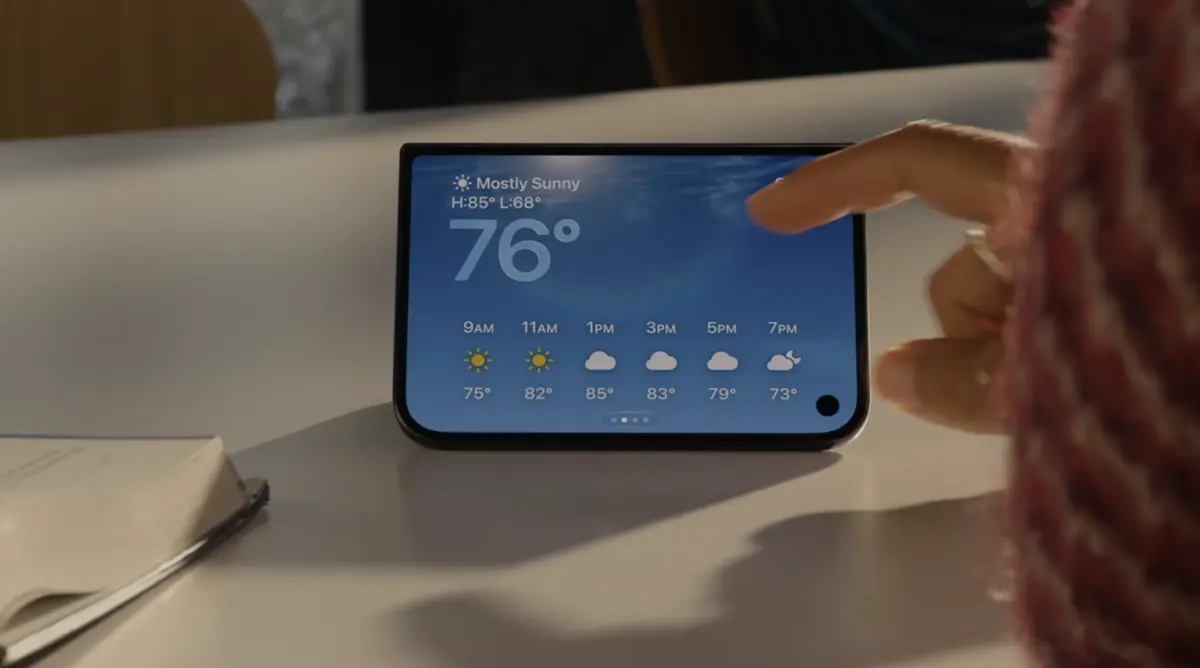
Apple’s failure to introduce a dedicated home hub forces consumers to look at the sparse alternatives currently available within the Apple hardware family. The closest substitute offered during the keynote was the new iPhone Duo. Priced at a staggering $1,999, the foldable device features the largest screen ever designed for an iPhone form factor. When placed in a "tent" configuration, it can display calendars, alarms, and widgets, superficially mimicking a smart display.
However, industry analysts point out that positioning a $2,000 foldable smartphone as a smart home substitute is economically and functionally impractical:
- Cost Disparity: Traditional smart displays from competitors routinely retail between $100 and $250. Proposing a device ten times that price as a permanent kitchen or bedside fixture defies logic for the average consumer.
- Acoustic and Visual Limitations: While the iPhone Duo boasts impressive mobile engineering, its internal speakers cannot match the room-filling audio profiles found on dedicated smart displays like the HomePod or Amazon Echo Studio. Furthermore, its screen real estate is fundamentally unsuited for functioning as a secondary television screen during household chores.
- Software Gap: While Alexa Plus and Google Assistant-powered hubs support robust third-party integrations—such as ordering food directly via voice commands or streaming expansive widget menus—Siri AI is still in its transitional growth phase, handling system-level device controls rather than sprawling ambient tasks.
Furthermore, macroeconomic pressures—specifically the persistent global fluctuations in component pricing, often colloquially referred to by technologists as "RAMageddon"—have driven hardware production costs upward. Apple historically avoids entering a commoditized market with an uncompetitively priced product unless it can justify the premium through unique design or ecosystem lock-in. The original HomePod, which launched at a hefty $349 before eventually pivoting to the more affordable HomePod mini, serves as a cautionary tale of what happens when Apple overprices ambient home audio.

Official Responses and Industry Speculation
Apple executives have maintained their traditional corporate reticence regarding unannounced products, declining to comment on why the smart home display was missing from the fall lineup. Behind closed doors, however, industry watchers and supply chain analysts have proposed several plausible theories for the delay:
- AI Readiness and Resource Allocation: Engineering teams at Apple Park were heavily taxed with finalizing the foldable iPhone Duo and stabilizing the robust Siri AI overhaul slated for upcoming OS updates. Redirecting engineering bandwidth to launch an entirely new hardware category simultaneously may have proved unfeasible.
- Competitive Entrenchment: The smart home space has matured significantly. Rivals like Amazon and Google have spent nearly a decade refining their ecosystems, creating a sticky user base deeply entrenched in Echo Shows and Nest Hubs. Breaking into this space requires a polished, flawless user experience that Apple may feel Siri AI is not yet fully equipped to deliver.
- Alternative Launch Windows: Some speculators suggest Apple could bypass traditional fall iPhone events entirely, opting instead for a quiet press release or a secondary hardware showcase (such as rumored October iPad mini updates). However, given that a standalone smart display represents a brand-new product category, historical precedent suggests Apple would prefer a dedicated keynote spotlight rather than a quiet autumn drop.
Implications: What This Means for Smart Home Consumers
The continued absence of an Apple-branded smart display leaves a noticeable void in the modern connected home. For households deeply embedded in Apple’s ecosystem—utilizing iCloud, Apple Music, Apple TV, and HomeKit accessories—controlling the home often feels fragmented, relying on a mix of iPhones, iPads, Apple Watches, and voice-only HomePod speakers.
An ideal Apple smart display would bridge these silos, offering seamless handoffs when walking into a room, serving as an intuitive FaceTime portal for family members, and providing glanceable access to security cameras powered by Apple’s new AI video descriptions.
Until Apple decides to pull the trigger on this product category, smart home enthusiasts are left waiting at the altar. While the company reaps strategic advantages by taking its time to refine artificial intelligence and hardware reliability, these recurring delays risk ceding the ambient computing space permanently to competitors. Whether Apple’s patient strategy will ultimately yield a masterclass in smart home integration or a case of arriving too late to a crowded party remains one of the tech industry’s most compelling unanswered questions.
