

By Tech Desk Analysis
Published September 2026
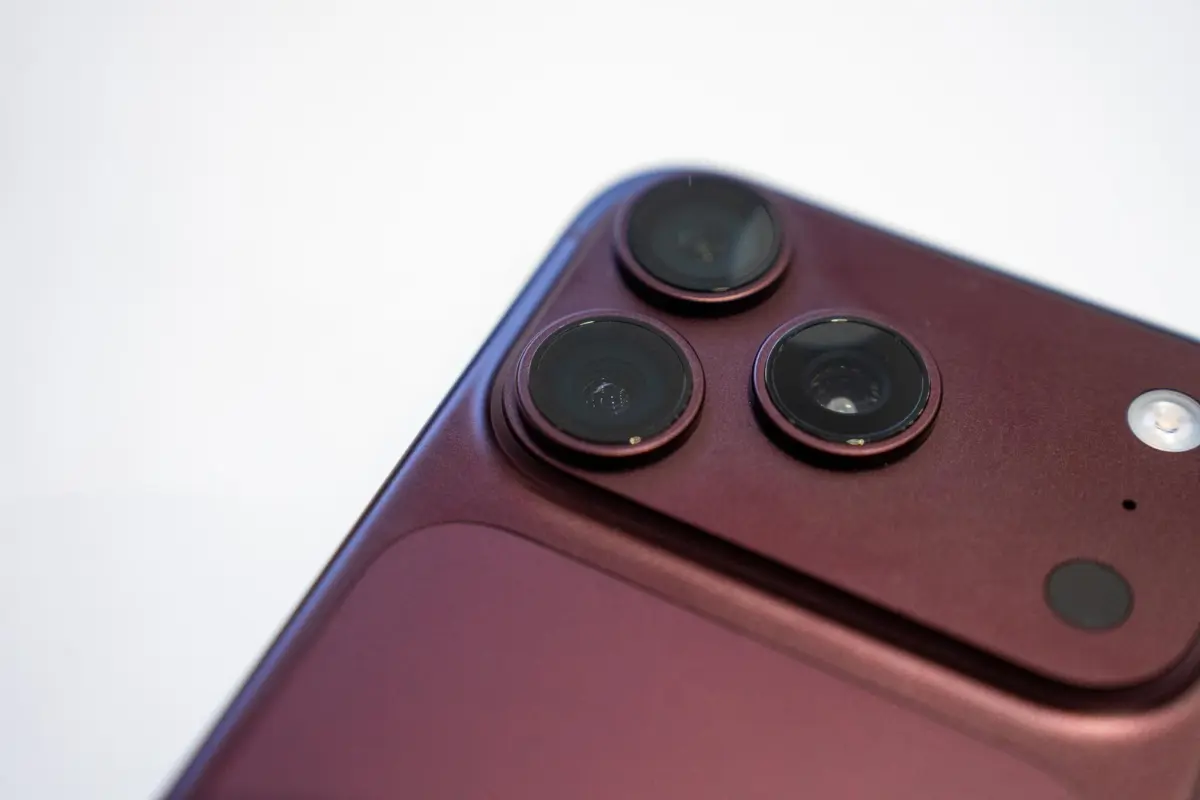
Apple has once again staked its annual product cycle on the transformative power of mobile photography. At the company’s September 2026 hardware event, the crown jewel of the presentation was the introduction of the iPhone 18 Pro and iPhone 18 Pro Max. Apple executives made a grand show of detailing the devices’ cutting-edge camera arrays, focusing heavily on a single headline-grabbing feature: a newly engineered variable mechanical iris housed within the main camera module.
Yet, beneath the marketing gloss of adjustable f-stops and native professional-grade controls, mobile photography analysts are already asking a harder question: Is Apple’s shiny new hardware feature actually useful, or is it a solution in search of a problem? While the industry buzzes about the mechanical aperture ring, the real star of the show may be quietly sitting at the wide-open end of the glass, delivering the optical characteristics consumers actually crave.
Main Facts: The iPhone 18 Pro’s Optical Overhaul
The core of the conversation centers on the main camera modules of both the iPhone 18 Pro and the larger iPhone 18 Pro Max. For the first time in an iPhone, Apple has integrated a true physical, adjustable mechanical iris.
- The Variable Aperture Range: Users can manually or automatically toggle the main 48-megapixel sensor between four distinct apertures: f/1.48, f/1.8, f/2.8, and f/4.
- Native Pro Controls: Accompanying the aperture settings are granular, native controls for shutter speed, white balance, and manual focusing. These features are baked directly into the default iOS Camera app, eliminating the historical reliance on specialized third-party software like Halide.
- The Low-Light Bump: Compared to the previous generation’s f/1.7 aperture on the iPhone 17 Pro, the new maximum opening of f/1.48 allows significantly more light to hit the sensor.
Chronology: How Apple Built Up to the iPhone 18 Pro
The journey toward a variable aperture iPhone has been a long time coming, driven by both internal engineering milestones and external industry shifts.
- Early Experiments (2018–2024): Rival Android manufacturers, most notably Samsung with the Galaxy S9 series and later Xiaomi with the 14 Ultra, experimented with physical variable apertures. However, due to complex moving parts, thickness constraints, and marginal real-world benefits, those features were quietly abandoned in subsequent iterations.
- The Software Era (2020–2025): Apple heavily relied on computational photography—Smart HDR, Deep Fusion, and software-driven Portrait Mode—to simulate depth and exposure control. Meanwhile, third-party apps like Halide built dedicated audiences by offering manual controls that Apple refused to put in its native UI.
- The Talent Acquisition (Late 2024–2025): Industry eyebrows were raised when Apple poached key design and engineering personnel directly from Halide’s parent company, Lux, signaling an impending pivot toward native pro-level photography interfaces.
- September 2026: Apple officially pulls back the curtain on the iPhone 18 Pro, introducing both the mechanical iris and the overhauled, all-in-one native camera app interface.
Supporting Data and Technical Realities: Why Stopping Down Might Disappoint
While consumers are conditioned to equate physical controls on high-end cameras with superior performance, smartphone physics operate under entirely different rules.

The Tiny Sensor Problem
In traditional full-frame mirrorless or DSLR photography, stepping down a lens from f/1.4 to f/4 yields dramatic improvements in edge-to-edge sharpness, eliminates optical aberrations, and dramatically expands the depth of field.
Smartphones, however, use exceptionally tiny physical sensors. Because of this scale, almost everything in a frame is already in sharp focus unless the subject is positioned mere inches from the lens. Stopping down an iPhone 18 Pro to f/4 will not deliver the sweeping, tack-sharp landscape revelations associated with full-frame glass.
The Diffraction Trap
Physics introduces another hurdle: lens diffraction. When light passes through a very small aperture opening (such as f/4 on a micro-sensor), light waves bend around the edges of the diaphragm, which can actually reduce overall image sharpness. Consequently, photos shot at f/4 on the iPhone 18 Pro may look marginally softer than those captured at f/1.8 or f/2.8.
Where the Variable Aperture Actually Helps
To be fair, the mechanical iris is not entirely without merit. It offers genuine utility in three specific, niche scenarios:
- Extreme Close-Up Macro Photography: Providing a slightly wider depth of field to keep complex subject matter fully in focus.
- Bright Daylight Group Shots: Assisting in keeping multiple subjects sharp when they aren’t standing on the exact same plane, provided there is an abundance of natural light.
- Video overexposure management: Acting as a physical neutral-density (ND) style limiter when shooting video in glaring, direct sunlight without blowing out highlights.
Despite these use cases, industry consensus suggests that once the "honeymoon phase" of the new phone wears off, most users will leave the aperture selector on automatic—or simply forget it is there.
Official Responses and Industry Reception
Apple’s engineering team has framed the introduction of the variable aperture as a watershed moment for mobile creators, bridging the gap between pocket-sized convenience and studio-grade physical customization. During the keynote, Apple emphasized the empowerment of the creator economy, positioning the native inclusion of shutter speed, white balance, and aperture selection as the ultimate toolkit for mobile videographers and photographers.

Independent photography critics, however, have adopted a more tempered perspective. Reviewers note that while having these controls natively integrated—saving users from subscription fees or clunky third-party interfaces—is a major quality-of-life win, the variable aperture itself is largely "mid" compared to the sheer impact of the wider baseline lens.
Implications: Why f/1.48 is the Real Winner
If the variable aperture down to f/4 is a specialized tool for the few, the push to f/1.48 is a masterstroke for the masses.
The Power of Bokeh
Consumers love bokeh—the aesthetic, creamy blur of background elements that isolates a subject and gives portraits an emotional, artistic depth. For years, smartphone companies have relied on computational algorithms (Portrait Mode) to fake this effect, frequently resulting in blurred hair strands or artificial-looking edge cutouts.
By pushing the physical hardware to f/1.48, combined with the slightly larger sensor footprint of the Pro series, the iPhone 18 Pro achieves genuine, optical background separation. While it still cannot match the surreal, dreamlike falloff of a dedicated 50mm f/1.2 full-frame lens, it gets significantly closer than any previous iPhone.
The Psychology of the Snapshot
Photography enthusiasts coming from full-frame systems know the intoxicating draw of ultra-fast glass. It is a look that users universally swoon over. By prioritizing a brighter, faster wide lens rather than focusing solely on the gimmick of a closing iris, Apple has delivered a feature that enhances everyday snapshots without requiring the user to fiddle with technical settings.
Looking Forward
The iPhone 18 Pro is undoubtedly a triumph of mobile engineering. The inclusion of native pro controls represents a mature acknowledgment that Apple’s user base includes working professionals who demand granular oversight. Yet, as the hype settles, the legacy of the iPhone 18 Pro’s camera will likely not be defined by how well it stops down to f/4, but by how brilliantly it lets the light in at f/1.48.
