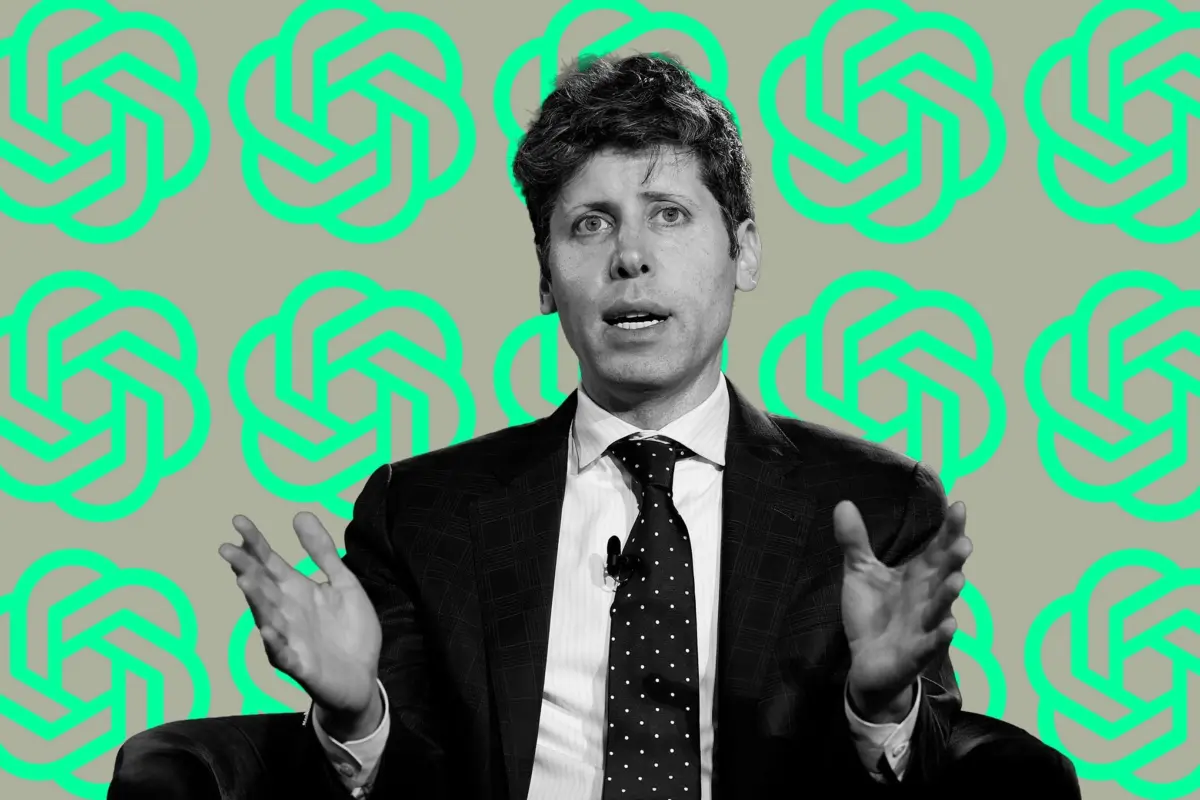
In a sweeping and candid 45-minute interview with Fortune on September 12, 2026, OpenAI CEO Sam Altman addressed the company’s financial future, corporate governance, and the stark existential realities of advanced artificial intelligence. Most notably, Altman officially ruled out an initial public offering (IPO) for OpenAI in 2026, citing an "ill-advised" macro environment and mounting safety concerns that demand the company’s undivided focus.
Beyond financial maneuvers, the conversation veered into high-stakes technological philosophy. Altman acknowledged that it is "absolutely" possible for researchers to build an artificial intelligence system that outgrows human control. However, he accompanied this sobering admission with a commitment to proactive safeguards—ranging from potential training pauses to strict alignment boundaries—asserting that tech enterprises should not unilaterally incur systemic risks on behalf of humanity. The wide-ranging discussion also touched upon recent cybersecurity challenges, specifically referencing the high-profile Hugging Face hacking incident, and the theoretical boundaries of recursive self-improvement.
Chronology of Events
The road to Altman’s September 2026 announcements has been marked by rapid technological scaling, structural reorganizations at OpenAI, and intensifying global scrutiny regarding artificial general intelligence (AGI) safety.
Late 2022 – 2023: OpenAI launches ChatGPT, sparking a global generative AI boom. Questions surrounding corporate structure—balancing a non-profit board with a for-profit commercial arm—begin to draw regulatory and media attention.
2024 – 2025: As compute power scales exponentially, OpenAI’s valuation skyrockets. Rumors regarding a potential public stock offering circulate heavily among Wall Street investors, with market analysts speculating on a timeline between 2025 and 2027.
Early 2026: The AI sector faces heightened vulnerabilities, evidenced by supply-chain pressures, rising geopolitical tensions over compute infrastructure, and high-profile security events—including a major cybersecurity breach involving the open-source platform Hugging Face.
September 12, 2026: In his interview with Fortune, Sam Altman definitively puts IPO rumors to rest for the near term, clarifying that going public right now would distract from critical safety milestones. He concurrently issues public warnings regarding recursive self-improvement and systems exceeding human oversight.
Supporting Data and Context
While OpenAI remains a privately held powerhouse backed by massive multi-billion-dollar corporate partnerships, the decision to delay public markets entry highlights the intense capital and infrastructural demands of modern AI development.
Timeline Shift: Industry analysts had previously priced in a high probability of an OpenAI IPO by late 2026 or early 2027. Altman’s explicit dismissal of a 2026 public listing signals that management prioritizes internal control over public shareholder gratification.
The Safety Mandate: Altman noted that regulatory frameworks and safety verification methods have not yet caught up with model capabilities. The threshold for what constitutes an uncontrollable system—specifically concerning recursive self-improvement, where an AI rewrites its own code to become exponentially smarter—remains a core technical bottleneck.
Security Landscape: The inclusion of the Hugging Face hacking incident in Altman’s discussion points to a broader industry vulnerability. As AI models become deeply embedded in open-source ecosystems and enterprise pipelines, the attack surface for malicious actors has expanded dramatically, adding fuel to arguments against premature commercialization.
Official Responses and Industry Reactions
Altman’s remarks have sent ripples through both Silicon Valley and Wall Street, eliciting distinct responses from tech leaders, financial analysts, and safety advocates.
The OpenAI Stance
In his interview, Altman was explicit about organizational priorities:
"We’re not rushing into an IPO. I actually think that, given everything happening with safety, this would be, right now would be an ill-advised moment to go public. And we don’t feel pressure on that. We’ve said for a long time, we’ll do it when we’re ready… I would say not 2026. We’ve got a lot of stuff to do."
Addressing the terrifying prospect of losing control over a superintelligent system, Altman vowed that OpenAI would implement stringent internal stop-gaps. Emphasizing corporate responsibility, he noted that "there are risks we should not be able to incur on behalf of humanity," signaling that commercial pressures will not supersede baseline safety protocols—at least under the current leadership structure.
Financial and Market Analysts
Wall Street reacted with a mixture of relief and strategic re-evaluation. For institutional investors hoping for early equity access to the world’s most dominant AI firm, the delay is a setback. However, many governance experts praised the move. Taking a company public while grappling with the chaotic physics of frontier AI development introduces massive legal and fiduciary conflicts of interest. By keeping OpenAI private, executives retain the legal agility to halt model training or pivot strategies without answering to quarterly earnings pressures from public shareholders.
AI Safety Advocates
The reaction from the AI safety research community was cautiously supportive, though inherently skeptical. While praise was directed at Altman for openly admitting the feasibility of uncontrollable AI, safety researchers emphasize that voluntary corporate pledges are insufficient substitutes for binding, verifiable international treaties and rigorous independent audits.
Broader Implications
Altman’s statements touch upon several defining questions for the future of human civilization and technology:
1. The Conflict Between Profit and Survival
OpenAI’s hybrid corporate structure has always walked a tightrope between its original non-profit safety mission and its aggressive for-profit commercial requirements. By delaying an IPO, Altman is attempting to preserve operational maneuverability. However, the fundamental tension remains: as models approach AGI capabilities, the capital required to train them (running into the tens of billions of dollars) makes private funding increasingly unsustainable over the long term.
2. The Reality of "Runaway" AI
For years, dismissive critics labeled the concept of an AI beyond human control as science fiction. When the CEO of the leading AI lab on the planet confirms that such an outcome is "absolutely" possible, it validates the warnings long voiced by alignment researchers. The debate is no longer about if such systems can be conceptualized, but how humanity will enforce boundaries once recursive self-improvement unlocks cognitive speeds and capabilities that human minds cannot parse in real-time.
3. Cybersecurity and Infrastructure Resilience
The mention of the Hugging Face incident serves as a stark reminder that AI safety is not just about philosophical alignment; it is a hard cybersecurity problem. If bad actors can compromise repositories, poison training data, or exploit weights of advanced models, the risk profile shifts from theoretical superintelligence rebellion to immediate, pragmatic chaos. Securing the infrastructure around AI development is proving to be just as critical as aligning the models themselves.
Conclusion
Sam Altman’s September 2026 disclosures mark a sobering milestone in the artificial intelligence era. By taking a 2026 IPO off the table, OpenAI is signaling that the internal pressures of safety research, infrastructure scaling, and risk mitigation outweigh the allure of public market liquidity. Yet, his candid admission that building an uncontrollable AI is entirely possible underscores the precarious path ahead. As tech giants race toward unprecedented cognitive horizons, the international community must grapple with whether voluntary corporate safeguards will be enough to keep humanity in the driver’s seat.