

By Financial and Insurance Industry Desk
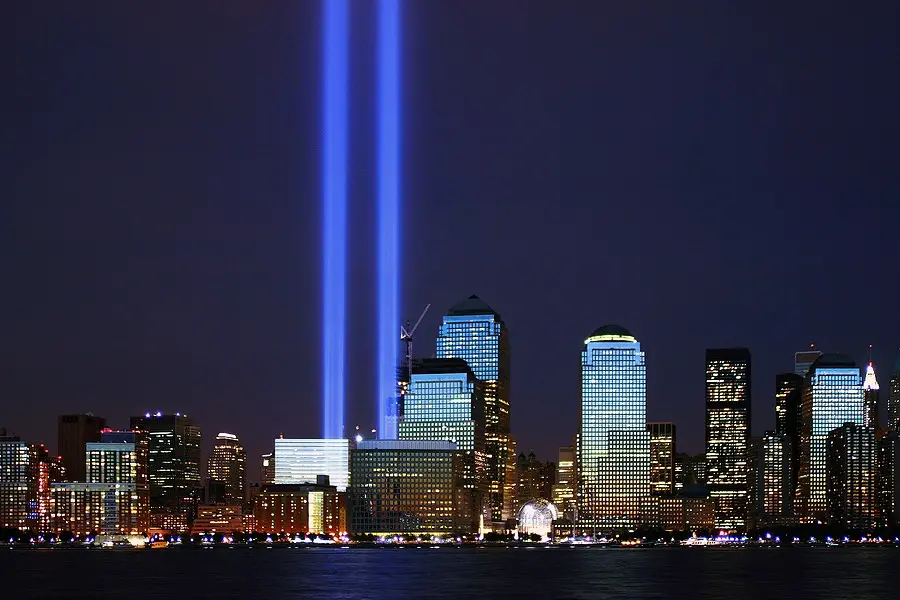
As the United States pauses to solemnly reflect on a quarter-century since the dark morning of September 11, 2001, the nation remembers the nearly 3,000 innocent lives tragically cut short. Beyond the profound human grief, the geopolitical shifts, and the enduring national scars, the events of that fateful Tuesday morning triggered an immediate, existential shockwave across an entirely different landscape: the global commercial insurance and reinsurance markets.
In a matter of hours, the skyline of lower Manhattan was forever altered, and the fundamental mechanics of how humanity measures, prices, and absorbs catastrophic risk were rewritten. What followed was a high-stakes scramble involving courtroom battles, unprecedented policy exclusions, legislative intervention, and the birth of a unique public-private partnership that continues to underpin the American real estate and financial sectors to this day.
As we look back at decades of archive reporting from Insurance Journal, we trace the trajectory of an industry forced to evolve overnight, the ongoing legal and economic fallout, and why the statutory safety nets forged in the wake of 9/11 remain vital as new, asymmetric threats emerge on the horizon.
1. Main Facts: The Catalyst That Shattered Industry Assumptions
Prior to September 11, 2001, standard commercial property and casualty insurance policies across the United States routinely included terrorism coverage as an unpriced or nominal background feature. Underwriters operated under the assumption that catastrophic, multi-billion-dollar terror events were anomalies native to war-torn regions abroad, not occurrences that could shatter the heart of the American financial capital.
That illusion vanished when commercial airliners were hijacked and weaponized against the World Trade Center towers and the Pentagon.
The immediate financial toll was staggering. In today’s adjusted dollars, the 9/11 attacks generated approximately $60 billion in insured losses—a sum that instantly threatened the solvency of numerous global reinsurers. Property, casualty, business interruption, life, and workers’ compensation claims poured in simultaneously, testing the limits of risk aggregation in ways actuaries had never modeled.
"September 11 changed the insurance industry in profound ways," reflects Loretta Worters, vice president of media relations with the Insurance Information Institute (Triple-I). "It demonstrated that terrorism could produce losses on a scale that was difficult for the private insurance market to absorb on its own, while also showing how essential insurance is to the broader economy."
2. Chronology of a Crisis: From Sudden Exclusions to Legislative Rescue
The timeline of the insurance industry’s post-9/11 transformation is a masterclass in regulatory panic and rapid legislative maneuvering:
- September 11, 2001: Coordinated terrorist attacks result in nearly 3,000 deaths and trigger approximately $60 billion in modern-equivalent insured losses.
- Late 2001 to Early 2002: Facing unprecedented exposure and the potential withdrawal of international reinsurance capacity, insurance carriers flood state regulators with emergency filings requesting permission to explicitly exclude terrorism coverage from standard commercial property and casualty policies. State insurance commissioners rapidly approve these exclusions.
- Late 2002: Recognizing that the absence of terrorism insurance threatens to freeze commercial real estate development, construction financing, and major infrastructure projects nationwide, the federal government intervenes. Congress passes, and the President signs, the Terrorism Risk Insurance Act (TRIA).
- 2002–2019: TRIA establishes a federal backstop, proving successful enough to warrant multiple bipartisan reauthorizations with periodic structural adjustments, culminating in a renewal at the close of 2019.
- June 2026: Demonstrating enduring bipartisan consensus, the U.S. House of Representatives overwhelmingly passes the TRIA Program Reauthorization Act of 2026 (HR 7128) by a 373-15 vote, aiming to extend the program through 2034.
- Present Day: The industry awaits Senate action, racing against the clock as the current iteration of TRIA is scheduled to expire on December 31, 2027.
3. Supporting Data and Mechanics: How the TRIA Backstop Operates
To understand why the insurance industry views federal partnership as non-negotiable, one must examine the specific mechanics of the Terrorism Risk Insurance Act.
TRIA functions as a federal reinsurance backstop. It does not provide free insurance; rather, it creates a transparent, tiered sharing of risk between private insurers and the federal government following a certified act of terrorism.
Key Structural Components of TRIA:
- Trigger Event: For the backstop to activate, an event must be officially certified as an act of terrorism by the Secretary of the Treasury, in consultation with the Secretary of Homeland Security and the Attorney General.
- Loss Thresholds: The event must generate aggregate industry insured losses exceeding specific statutory minimums ($5 million for the event, scaling up under recent proposals).
- Insurer Deductibles: Individual insurance companies must absorb a mandatory deductible equal to a specified percentage (currently 20%) of their direct earned premium from the preceding year for covered lines.
- The Federal Share: Once an insurer clears its deductible, the federal government covers 80% of losses exceeding that deductible, up to a statutory cap, while private insurers retain the remaining 20%.
Crucially, TRIA mandates that participating insurers must make terrorism coverage available on terms not differing materially from other policy terms, preventing carriers from simply pricing the coverage out of reach. According to economic analysts, TRIA has never been triggered by a certified terrorism event, yet its mere existence has provided the foundational confidence required to finance virtually every major commercial real estate development across the United States over the past two decades.
4. Official Responses and Legislative Momentum: The Path to 2026 and Beyond
As the 25th anniversary of 9/11 approaches, the insurance sector finds itself once again engaged in intensive legislative advocacy. The current authorization of TRIA is set to expire on December 31, 2027, prompting stakeholders to push for early congressional action to prevent market jitters.
Those efforts received a massive boost in June 2026, when the House of Representatives passed the TRIA Program Reauthorization Act of 2026 (HR 7128) by a decisive, bipartisan vote of 373-15. The legislation proposes extending the public-private partnership through December 31, 2034, while introducing modest structural adjustments—including an amendment that raises the individual event trigger threshold to $10 million starting in 2029.
Industry leaders are now directing their focus toward the U.S. Senate, hoping the measure will clear the upper chamber and land on the president’s desk well before the expiration deadline.
"The overwhelming bipartisan vote in the House proves that lawmakers recognize the irreplaceable value of TRIA," notes a senior insurance lobbyist tracking the bill. "Without this backstop, the commercial property market would face immediate contraction, soaring premiums, and a catastrophic shortage of capacity."
5. Industry Implications: Evolving Threats in a Complex World
While the framework established in 2002 was designed primarily to address kinetic, physical attacks akin to the destruction of the World Trade Center, the threat landscape has grown infinitely more sophisticated over the past 25 years.
Modern underwriters must account for asymmetric warfare that extends far beyond physical bombs and hijacked aircraft.
"The nature of terrorism risk has evolved," Worters emphasizes. "The industry today is thinking not only about physical attacks, but about increasingly complex and interconnected risks, including the potential for cyberattacks to cause widespread economic disruption. The challenge is to make sure our risk-management tools continue to evolve as the threats evolve."
Today, state-sponsored cyber operations, attacks on critical infrastructure grids, supply chain disruptions, and algorithmic financial sabotage represent the new frontier of terror. Insurers are tasked with pricing risks where attribution is notoriously difficult to prove, and where a single malicious line of code executed by a hostile foreign actor could theoretically cause billions of dollars in multi-sector business interruption losses globally.
Lessons in Resilience
As the generation that lived through the immediate trauma of 2001 passes the torch to a new cohort of risk professionals, the core takeaways of 9/11 remain permanently etched into the corporate DNA of the insurance industry:
- Preparedness Matters: Catastrophe modeling can never be static; it must continuously stress-test for the unimaginable.
- Resilience Requires Partnership: Private capital alone cannot absorb systemic, macro-level shocks without public sector backstops.
- Proactive Frameworks are Vital: Having mitigation and financial mechanisms codified before a catastrophe occurs is the only way to prevent total market paralysis.
"As we remember the nearly 3,000 people who lost their lives on September 11, 2001, we should also remember the lessons that followed," Worters concludes. "Preparedness matters, resilience matters, and having mechanisms in place before a catastrophe occurs matters."
Twenty-five years later, the insurance industry stands as both a chronicler of history and a guardian of economic continuity—forever shaped by a tragic Tuesday, and permanently dedicated to ensuring that the nation can rebuild, adapt, and endure whatever threats tomorrow may bring.
