

The commercial roofing industry is undergoing a significant transformation, driven by the search for sustainable, cost-effective, and long-lasting restoration solutions. At the forefront of this evolution is silicone roof coating, which has rapidly emerged as one of the fastest-growing segments in liquid-applied roofing membranes.
While the benefits of silicone—such as its resistance to ponding water, exceptional UV stability, and energy-saving reflectivity—are well-documented, the operational realities of applying these high-performance materials are highly complex. For roofing contractors, entering this lucrative market requires a deep understanding of specialized application equipment, rigorous crew training, and substantial capital allocation.
According to industry experts, equipping a crew for silicone application is not a one-size-fits-all proposition. Capital expenditures can range from as little as $1,000 for basic manual setups to upwards of $30,000 for high-end, automated spray systems. Selecting the wrong setup can lead to catastrophic application failures, ruined equipment, or unprofitable projects.
Main Facts: The Technical and Financial Divide in Silicone Application
Silicone coatings differ fundamentally from traditional acrylic or asphaltic coatings. They are highly viscous, moisture-curing materials that demand specialized handling. Contractors looking to enter this market must choose between two primary application methodologies: manual roll application and high-pressure hydraulic spray application.
+---------------------------------------------------------------------------------+
|                         SILICONE APPLICATION EQUIPMENT                          |
+--------------------------------------------------+------------------------------+
| ROLL-APPLIED SYSTEMS                             | SPRAY-APPLIED SYSTEMS        |
| • Cost: ~$1,000 to $3,000                        | • Cost: $15,000 to $30,000+  |
| • Ideal for: Small/mid-size roofs, high winds    | • Ideal for: Large-scale,    |
| • Mechanism: Gravity-fed vats, wheeled frames    |   high-volume commercial jobs|
| • Widths: 14" to 40" (6" diameter rollers)       | • Mechanism: Hydraulic pumps |
+--------------------------------------------------+------------------------------+
Manual Roll Application: Low-Cost Entry with Physical Constraints
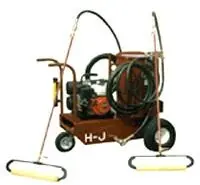
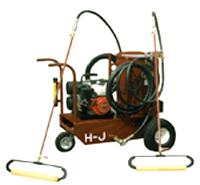
The manual, roll-applied method represents the lowest barrier to entry. For an investment of approximately $1,000 to $3,000, contractors can equip their teams with commercial-grade roller assemblies.
These systems typically feature:
- Heavy-duty, wheeled metal frames.
- Rollers ranging from 14 to 40 inches in width with a uniform 6-inch diameter.
- Integrated gravity-fed vats with calibrated flow-control apertures to regulate material distribution.
While highly cost-effective and immune to mechanical breakdowns, manual rolling is labor-intensive and slower than spraying. However, it remains an indispensable tool for smaller projects, highly congested roofs with numerous penetrations, or as a critical backup system when wind conditions prevent spraying.
Spray Application: High-Yield, High-Cost Engineering
The most productive yet technically demanding method is spray application. Professional-grade silicone sprayers are highly specialized machines, with price tags ranging from $15,000 to more than $30,000.
A standard paint sprayer cannot handle the extreme viscosity and solids content of commercial silicone. These advanced systems rely on high-output hydraulic piston pumps capable of delivering pressures upwards of 3,500 to 4,000 PSI.
The wide cost disparity in spray units is driven by:
- Hose Length and Material: High-pressure, moisture-resistant hoses designed to prevent the silicone from curing inside the line.
- Structural Durability: Heavy-duty, job-site-ready chassis and cart designs.
- Advanced Instrumentation: Digital pressure monitors, diagnostic sensors, and automated control systems.
- Hydraulic Auxiliaries: Integrated mixers to keep the material homogeneous and hydraulic lifts designed to effortlessly raise and lower the pump’s fluid section out of 55-gallon drums.
Chronology: The Evolution of Silicone Roof Coatings
Understanding the current equipment landscape requires looking back at how silicone technology developed within the commercial roofing sector.
  1970s-1980s              1990s-2000s              2010s-Present
+--------------+         +--------------+         +----------------+
| Early        |         | High-Solids  |         | Global Cool    |
| Solvent-     | ------> | Formulas     | ------> | Roof Boom &    |
| Based        |         | (Low-VOC,    |         | Advanced       |
| Silicones    |         | Moisture-    |         | Hydraulic      |
|              |         | Cure)        |         | Sprayers       |
+--------------+ +--------------+ +----------------+- The 1970s to 1980s (The Solvent Era): Early silicone coatings were heavily solvent-based, characterized by lower solids content and high volatile organic compound (VOC) levels. They were primarily applied using standard industrial paint rollers or early pneumatic sprayers. These systems were prone to frequent clogging, and the solvent evaporation often led to pinholing in the cured membrane.
- The 1990s to 2000s (The High-Solids Revolution): Environmental regulations, particularly in regions like California (SCAQMD), forced manufacturers to develop high-solids, low-VOC formulations. These new moisture-cure silicones were much thicker and more challenging to pump. The industry had to move away from standard pneumatic pumps toward heavy-duty, direct-immersion hydraulic piston pumps.
- The 2010s to Present (The Cool Roof Boom): As municipal building codes increasingly mandated "cool roofs" to combat urban heat island effects, silicone became a dominant restoration technology. The demand for rapid, high-volume installations catalyzed the development of modern $30,000+ spray rigs, featuring automated drum-lifting mechanisms and advanced fluid dynamics designed to minimize wear on internal pump packings.
Supporting Data: Operational and Financial Comparison
To help contractors evaluate the return on investment (ROI) of these equipment packages, the following table compares the operational metrics of entry-level rolling systems, mid-range sprayers, and high-end industrial spray rigs.
Comparative Equipment Performance Metrics
| Metric | Roll-Applied System (Gravity Vat) | Mid-Range Spray System ($15k–$20k) | High-End Hydraulic Spray Rig ($25k–$30k+) |
|---|---|---|---|
| Initial Capital Cost | $1,000 – $3,000 | $15,000 – $20,000 | $25,000 – $30,000+ |
| Daily Production Rate | 3,000 – 5,000 sq. ft. | 10,000 – 15,000 sq. ft. | 20,000 – 30,000+ sq. ft. |
| Crew Size Required | 3 – 4 technicians | 4 – 5 technicians | 5 – 6 technicians |
| Maximum Hose Length | N/A | 150 – 250 feet | 250 – 400+ feet |
| Primary Limitation | Low daily output; labor-intensive | Moderate hose length limits; struggles with ultra-high viscosity in cold weather | High initial investment; intensive cleanup and maintenance requirements |
| Wind Tolerance | High (up to 20+ mph) | Low (must stop at 10–12 mph to prevent overspray drift) | Low (must stop at 10–12 mph to prevent overspray drift) |
Material Viscosity and Pump Dynamics
Silicone coatings typically exhibit a viscosity ranging from 8,000 to over 20,000 centipoise (cP), depending on temperature and solids content. For comparison, water has a viscosity of 1 cP, while motor oil is around 250 cP.
Pumping a material as thick as silicone requires a pump with a high pressure ratio (typically 45:1 to 73:1). A 45:1 ratio pump, for instance, uses 100 PSI of incoming air pressure to generate 4,500 PSI of fluid pressure at the spray tip.
Without this extreme pressure, the silicone cannot be properly atomized, resulting in an uneven, textured finish known as "orange peeling," which compromises the membrane’s protective qualities.
Official Responses and Expert Perspectives
Industry leaders emphasize that equipment selection must align with a contractor’s technical competency and market strategy.
Pat Amicucci, an industry expert with Roofmaster®, a leading manufacturer and distributor of commercial roofing equipment with 70 years of industry experience, stresses that purchasing equipment is not simply a transactional decision.
"Fitting your company with the right options is not all black and white," Amicucci explains. "Crews need to be highly familiar with the operations and unique dangers associated with these systems. Our goal is to leverage our seven decades of experience to custom-fit contractors with equipment that matches their specific operational scale and technical capabilities."
Organizations like the Roof Coatings Manufacturers Association (RCMA) and the Single Ply Roofing Industry (SPRI) consistently publish safety and application guidelines highlighting the unique hazards of silicone applications:
- High-Pressure Injection Injuries: Spray systems operating at 4,000 PSI can easily puncture human skin, injecting toxic silicone directly into deep tissue. This is a medical emergency requiring immediate surgical intervention.
- Overspray Drift: Atomized silicone particles can drift significant distances in the wind. A 10 mph breeze can carry silicone mist hundreds of feet, settling on parked cars, nearby buildings, and HVAC air intakes, leading to costly liability claims.
- Moisture-Curing Hazards: Because silicone cures by reacting with moisture in the air, any humidity inside the pump or hoses can cause the material to solidify internally, ruining expensive hoses and pump components.
Implications: Market Outlook and Strategic Planning
The rapid growth of the silicone roof coating market has profound implications for commercial roofing contractors, labor dynamics, and environmental sustainability.
                    MARKET GROWTH DRIVERS

    +---------------------------------------------------+
    |  ENVIRONMENTAL REGULATIONS                        |
    |  • Landfill diversion (no roof tear-offs)         |
    |  • Reflectivity mandates (Cool Roof Rating Council)|
    +---------------------------------------------------+
                             │
                             ▼
    +---------------------------------------------------+
    |  CONTRACTOR ADOPTION                              |
    |  • Lower capital entry vs. full roof replacement  |
    |  • High-margin service offerings                  |
    +---------------------------------------------------+
                             │
                             ▼
    +---------------------------------------------------+
    |  LABOR & EQUIPMENT CHALLENGES                     |
    |  • Need for highly specialized technician training|
    |  • Rigorous maintenance and safety protocols      |
    +---------------------------------------------------+
Environmental and Regulatory Drivers
As landfills reach capacity and municipalities enact stricter waste diversion mandates, tearing off old commercial roofs has become increasingly expensive and heavily regulated. Silicone coatings allow contractors to restore existing roofs in place, avoiding costly tear-offs and keeping tons of waste out of landfills.
Furthermore, the high reflectivity of white silicone coatings aligns perfectly with energy codes like California’s Title 24 and the Leadership in Energy and Environmental Design (LEED) certification standards, driving sustained demand for these applications.
Labor and Training Bottlenecks
While the market opportunity is vast, the labor pool remains a significant constraint. Operating a $30,000 hydraulic spray rig requires a highly skilled technician, not a general laborer.
Contractors must invest heavily in training their crews on:
- Substrate Preparation: Silicone will not adhere to wet, dirty, or improperly primed surfaces.
- Equipment Maintenance: Daily flushing procedures using specialized solvents (such as mineral spirits or virgin naphtha) are mandatory to prevent the system from seizing.
- Safety Protocols: Proper use of personal protective equipment (PPE), including full-face respirators and fall protection on slippery silicone-coated roofs.
Strategic Capital Allocation
For commercial roofing contractors, deciding how to scale their silicone application business is a critical strategic decision.
- The Crawl-Walk-Run Strategy: Many successful contractors begin with the $1,000 roll-applied setup to learn the chemistry of silicone, understand its curing times, and establish quality control protocols on smaller projects.
- Scaling to Mid-Range: Once a steady pipeline of 10,000 to 15,000-square-foot projects is established, upgrading to a $15,000 mid-range sprayer offers an immediate boost in productivity.
- The Enterprise Tier: Only when a contractor consistently secures large industrial warehouses, retail centers, or school district contracts (exceeding 50,000 square feet) does the investment in a $30,000+ high-end hydraulic rig make financial sense.
Ultimately, the silicone roof coating market offers a highly profitable path forward for commercial roofing contractors. However, success in this technically demanding field requires balancing capital investments in machinery with ongoing investments in crew training, safety compliance, and expert consultation. Companies like Roofmaster® remain vital partners, helping contractors navigate these complex decisions with decades of specialized industry experience.
