

Main Facts
The United States manufacturing sector is undergoing a profound structural evolution, underpinned by hundreds of millions of dollars in capital expenditure, state and federal funding initiatives, and a strategic national push to fortify domestic value chains. Spanning heavy industry, critical minerals, renewable energy, defense technology, and advanced medical devices, manufacturers are actively expanding, renovating, and constructing state-of-the-art facilities across the country.
This domestic industrial mobilization aligns with overarching economic and national security directives supported by the administration, which heavily emphasizes supply chain autonomy, the reduction of foreign dependencies, and the generation of high-paying domestic jobs. From multi-billion-dollar rare earth mega-plants to high-tech defense startups and modernized steel blast furnaces, the opening weeks of September have marked a milestone period for American production capacity. Key developments involve heavyweights and innovators alike—including U.S. Steel, Array Technologies, USA Rare Earth, Covenant, Siemens Healthineers, SteelFab, and Curia—collectively injecting billions of dollars into regional economies from Indiana and South Carolina to New Mexico, Texas, and North Carolina.
Chronology of September Openings and Investments
The industrial announcements and operational milestones that rolled out at the beginning of September highlight a rapid pace of execution across diverse industrial sectors:
- Early September 2026 (U.S. Steel): Following a monumental, months-long capital improvement project, U.S. Steel officially returned Blast Furnace 14 to active service at its flagship Gary Works facility in Gary, Indiana. The outage, which began in February, concluded with the successful revitalization of the company’s largest blast furnace.
- Wednesday, September 3, 2026 (Curia): Contract manufacturer Curia formally celebrated the grand opening of its expanded campus in Albuquerque, New Mexico. The event drew federal, state, and local leaders to mark the culmination of a massive $200 million investment aimed at scaling up domestic pharmaceutical packaging capabilities.
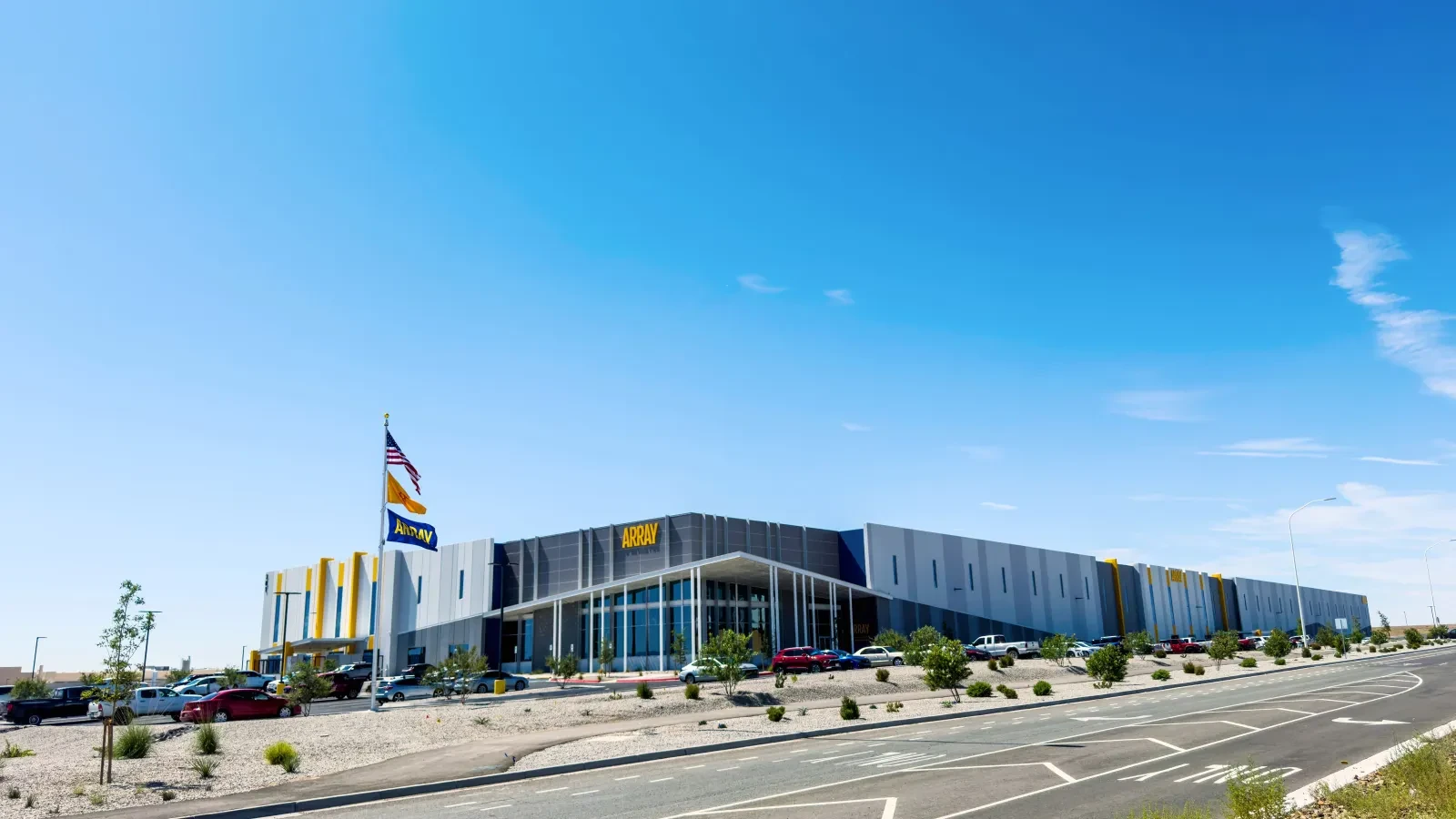
- Wednesday, September 9, 2026 (Array Technologies): Solar tracker and fixed-tilt system manufacturer Array celebrated the grand opening of its expansive new production plant in Albuquerque, New Mexico. The facility triples the company’s regional footprint and brings previously outsourced component manufacturing in-house.
- Wednesday, September 9, 2026 (USA Rare Earth): Breaking ground on what will become a cornerstone of the nation’s critical mineral supply chain, USA Rare Earth initiated construction on its massive rare earth metal and magnet manufacturing plant in Blacksburg, South Carolina.
- Wednesday, September 9, 2026 (Covenant): Defense technology innovator Covenant emerged from stealth and announced the formal opening of a 105,000-square-foot advanced manufacturing facility in Dallas, Texas. The site is slated to begin producing long-range, heavy-payload weapon systems by early 2027.
- Wednesday, September 9, 2026 (Siemens Healthineers): Medical technology leader Siemens Healthineers Molecular Imaging announced the successful completion of construction and renovation work on its Rockford, Tennessee, manufacturing campus, bolstering its capacity to produce critical diagnostic equipment.
- Wednesday, September 9, 2026 (SteelFab): North Carolina Governor Josh Stein announced that structural steel fabricator SteelFab has committed to a more than $19 million expansion project at its operations in Fayetteville, North Carolina, significantly broadening its regional fabrication footprint.
Supporting Data and Facility Specifications
The scale of the current industrial expansion is best understood through the hard metrics, square footage totals, capital outlays, and output projections tied to each project:
U.S. Steel – Gary Works, Indiana
- Investment Capital: $350 million.
- Production Capacity: Greater than 2 million tons of hot metal annually from Blast Furnace 14.
- Labor Force: Peaked at approximately 1,000 on-site employees and contractors daily during the relining process.
- Operational Scope: Replacement of the furnace’s refractory lining and extensive overhauls of furnace gas, cooling water, hoisting, and stove systems.
Array Technologies – Albuquerque, New Mexico
- Investment Capital: $50 million.
- Facility Size: 216,000 square feet (roughly three times larger than the company’s previous local footprint).
- Job Creation: Supporting over 300 roles across production, assembly, design, engineering, and customer service.
- Incentives: Components manufactured qualify for the Section 45X Advanced Manufacturing Production Tax Credit under the Inflation Reduction Act.
USA Rare Earth – Blacksburg, South Carolina
- Investment Capital: $1.2 billion.
- Facility Size: 800,000 square feet.
- Job Creation: 490 permanent, high-skilled jobs.
- Output Projections: Up to 6,400 metric tons per year of sintered neodymium-iron-boron magnets; up to 5,000 metric tons per year of strip-cast metal and alloy. Commissioning is slated for 2028.
Covenant – Dallas, Texas
- Investment Capital & Funding: Raised more than $250 million across three funding rounds led by prominent venture firms like Peter Thiel’s Founders Fund and Lux Capital, backed by roughly $150 million in advance orders.
- Facility Size: 105,000 square feet.
- Production Goals: Ramping toward 5,000 units per year of the "Anthem" heavy-payload, long-range weapon system, with production initialization expected in Q1 2027.
Siemens Healthineers – Rockford, Tennessee
- Investment Capital: $43.6 million, supplemented by a $930,000 state economic development grant.
- Facility Size: Addition of 40,000 square feet and the renovation of 7,500 existing square feet (expanding upon a base 97,000-square-foot campus).
- Job Creation: Over 90 jobs over the next five years.
- Specialization: Sole U.S. manufacturing site for positron emission tomography (PET) detectors used to scan for cancer, heart disease, and neurological disorders.
SteelFab – Fayetteville, North Carolina
- Investment Capital: Over $19 million, aided by a $125,000 state performance grant.
- Facility Size: Addition of 108,000 square feet, featuring three fabrication bays, two prep bays, two shape lines, a modern office, and a break room.
- Job Creation: 38 new positions.
Curia – Albuquerque, New Mexico
- Investment Capital: $200 million, funded in part by the U.S. Department of Health and Human Services, the Department of Defense, and the state of New Mexico.
- Facility Size: Addition of 70,000 square feet to an existing 200,000-square-foot campus.
- Technical Capabilities: Introduction of a VarioSys flexible filling line and a high-speed vial line capable of processing 1,000-liter batch sizes at speeds of up to 400 vials per minute.
Official Responses and Stakeholder Perspectives
The wave of localized industrial investments has garnered widespread commentary from corporate executives, state governors, and federal stakeholders, reflecting a shared consensus on the importance of bolstering domestic infrastructure.
Industry leaders have emphasized resilience and supply chain independence as primary drivers for their capital deployment. Representatives from USA Rare Earth highlighted that the Blacksburg mega-plant represents a decisive step toward eliminating American vulnerability to foreign choke points in critical mineral supply chains, ensuring that defense, aerospace, and semiconductor manufacturing sectors have a secure, domestic source of raw materials.
Similarly, defense startup Covenant underscored the necessity of closing the West’s deep precision-strike gap. By establishing heavy-payload missile manufacturing capabilities on U.S. soil and collaborating closely with the U.S. Navy and Army, the firm aims to deliver cost-effective, scalable deterrence solutions to the armed forces.
State and local officials have been equally vocal, leveraging economic development packages to lure advanced manufacturing hubs. North Carolina Governor Josh Stein lauded SteelFab’s expansion in Fayetteville, pointing to the tangible benefits of industrial growth for local workforce development. In Tennessee and New Mexico, state leaders praised investments by Siemens Healthineers and Curia, respectively, noting that targeted economic grants and public-private partnerships are successfully transforming regional economies into hubs of pharmaceutical, medical imaging, and advanced technical innovation.
Furthermore, following Nippon Steel’s acquisition of U.S. Steel, the successful completion of the Gary Works Blast Furnace 14 overhaul has been viewed by labor and management alike as a testament to the enduring viability and modernization potential of America’s legacy industrial base.
Strategic Implications for the U.S. Economy and National Security
The convergence of these investments points to several profound long-term implications for the United States:
- Supply Chain Decoupling and Resilience: For decades, American manufacturers relied heavily on overseas processing for foundational inputs—ranging from active pharmaceutical ingredients and rare earth elements to solar components and defense hardware. The localization of these processes, supercharged by federal acts like the Inflation Reduction Act and the CHIPS Act, structurally insulates domestic industries from geopolitical shocks, trade disputes, and international logistics bottlenecks.
- National Security Modernization: The defense and technological readiness of the United States depends directly on its industrial throughput. Initiatives such as USA Rare Earth’s magnet production, Curia’s sterile pharmaceutical vial packaging, and Covenant’s high-volume missile manufacturing ensure that the Department of Defense and critical civilian sectors have uninterrupted access to essential hardware during times of crisis.
- Regional Economic Transformation: These projects are breathing new life into both traditional manufacturing heartlands (such as Indiana and North Carolina) and emerging tech corridors (such as New Mexico, Tennessee, and South Carolina). By generating thousands of high-paying jobs for stamping press operators, tooling and die technicians, process engineers, and specialized assembly workers, these facilities are driving localized wealth creation and tax-base expansion.
- The Evolution of the American Workforce: As these facilities come online over the next several years—with projects like USA Rare Earth commissioning in 2028 and Covenant scaling through 2027—they will demand an increasingly specialized, tech-forward workforce. The integration of advanced robotics, automated filling lines, precision solar tracking machinery, and heavy metal processing necessitates robust vocational and engineering training pipelines, cementing manufacturing as a high-tech, future-proof career path in the American economy.
