

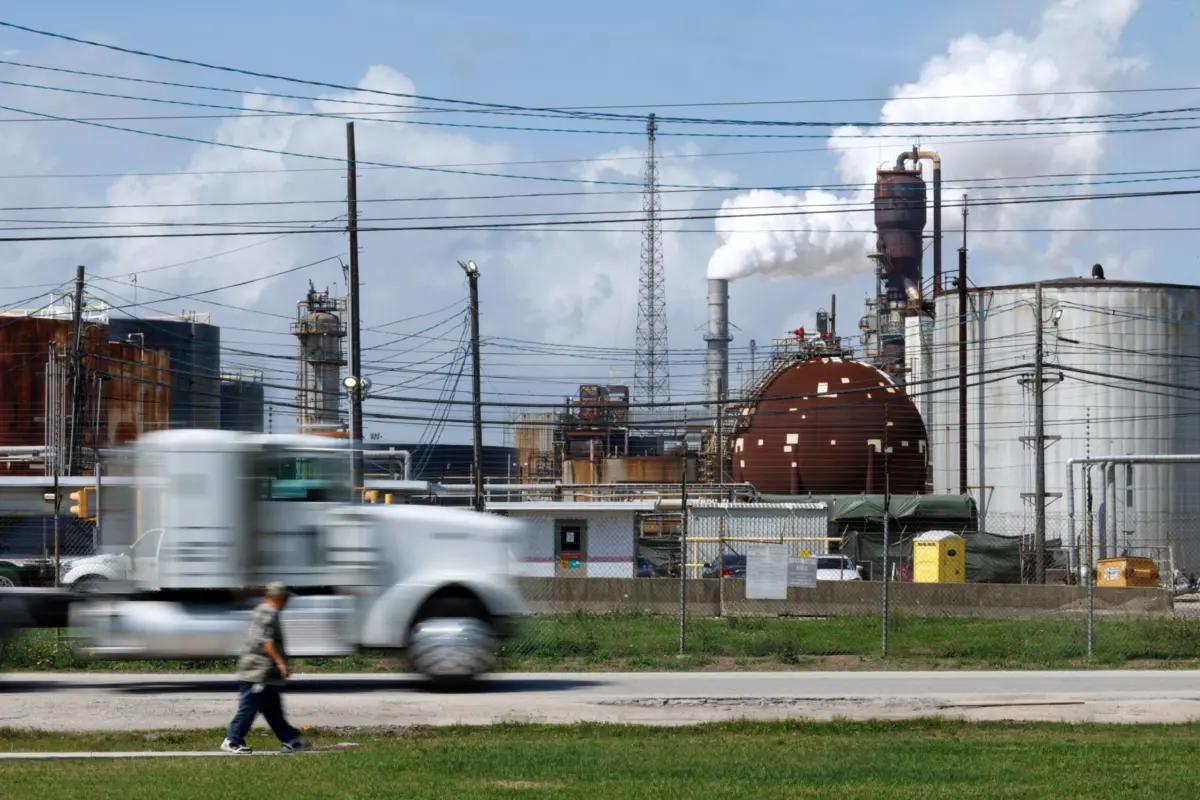
HOUSTON — In a milestone decision that underscores the accelerating intersection of traditional fossil fuels and emerging decarbonization technologies, ExxonMobil Holdings Corp. has secured crucial regulatory approval for its ambitious "Rose" carbon-capture and sequestration (CCS) project in Texas. The green light paves the way for the energy giant to advance what is projected to be one of the largest industrial carbon-storage operations of its kind in the United States.
The development represents a significant stride in ExxonMobil’s corporate strategy to commercialize emissions-reduction infrastructure, particularly along the industrialized Texas Gulf Coast. However, the path forward has not been without friction. The approval process laid bare ongoing debates surrounding the safety, viability, and regulatory oversight of storing millions of tons of industrial greenhouse gases deep beneath the earth’s surface.
Main Facts
The Railroad Commission of Texas (RRC)—the state’s primary regulatory agency overseeing the oil, natural gas, and pipeline industries, despite its legacy name—officially granted the necessary permit for the Rose project following a contentious review process.
Under the terms of the newly approved permit, ExxonMobil is authorized to inject up to 53 million metric tons of carbon dioxide ($CO_2$) underground over a 13-year operational span. The carbon dioxide will not originate from a single facility; rather, it will be aggregated from various industrial emitters situated along the strategic Texas Gulf Coast corridor—a region dense with refineries, petrochemical plants, and manufacturing facilities.
Once captured, the $CO_2$ will be transported and securely sequestered into deep subterranean rock strata located approximately one mile (1.6 kilometers) beneath the surface. This geological formation is designed to trap the greenhouse gases permanently, preventing them from entering the atmosphere and contributing to global climate change.
While proponents view the project as a critical tool for heavy industry to decarbonize without halting production, the regulatory vote itself was far from unanimous. The RRC approved the permit in a 2-to-1 decision, with Commissioner Wayne Christian casting the dissenting vote and subsequently releasing a public statement detailing his objections. ExxonMobil, meanwhile, has kept strategic details regarding the total capital expenditure and immediate construction timelines under wraps, declining an immediate request for comment following the announcement.
Chronology of the Rose Project
The approval of the Rose project is the culmination of years of technical planning, site characterization, and regulatory engagement. While public disclosures regarding the specific milestones of the Rose project have evolved gradually, its timeline reflects the broader acceleration of carbon-capture initiatives spurred by federal incentives and corporate net-zero commitments.
- Pre-Application and Site Assessment (2021–2023): ExxonMobil quietly began evaluating geological formations along the Gulf Coast capable of safely and permanently holding tens of millions of tons of $CO_2$. During this phase, geologists and engineers conducted seismic surveys, core sampling, and hydrological testing to ensure the integrity of the target rock strata approximately a mile underground.
- Permit Application Filing: ExxonMobil Holdings Corp. formally submitted its application to the Railroad Commission of Texas for the Class VI-style underground injection permits (administered under state primacy) required to construct and operate the Rose carbon-storage hub.
- Regulatory Review and Public Scrutiny (Late 2025–Early 2026): The RRC conducted technical reviews of the application, evaluating the geological containment capabilities, monitoring protocols, and potential environmental risks associated with the massive injection volume.
- The Commission Vote (2026): The three-member RRC board convened to vote on the permit. Following deliberations, two commissioners voted in favor of granting the authorization, while Commissioner Wayne Christian dissented, signaling internal regulatory debates over the scope and oversight of large-scale CCS operations.
- Current Status (2026): With the permit secured, the project moves from the regulatory phase into pre-construction development, pending final internal investment decisions by ExxonMobil and commercial agreements with potential industrial partners along the Gulf Coast.
Supporting Data and Technical Scope
The scale of the Rose project places it among the premier carbon management undertakings globally. To understand the magnitude of ExxonMobil’s endeavor, it is necessary to examine the core technical and volumetric data associated with the permit:
- Total Injection Capacity: Up to 53 million metric tons of $CO_2$ over the initial 13-year permitting window. To put this in perspective, 53 million metric tons of carbon dioxide is roughly equivalent to the annual emissions generated by more than 11.5 million gasoline-powered passenger vehicles driven over the course of a year.
- Depth of Sequestration: The targeted rock strata lie roughly 1.6 kilometers (one mile) beneath the Earth’s surface. At this depth, supercritical $CO_2$ (carbon dioxide held at a temperature and pressure where it acts like both a gas and a liquid) can be permanently trapped beneath impermeable caprock layers, ensuring it cannot migrate back to the surface or contaminate underground sources of drinking water (USDWs).
- Geographic Scope: The project serves industrial emitters along the Texas Gulf Coast—a powerhouse of American manufacturing, refining, and energy production. By clustering multiple industrial sources into a single shared storage network (often referred to as a "hub-and-spoke" model), ExxonMobil aims to achieve economies of scale that make carbon capture commercially viable for third-party manufacturers who lack their own dedicated storage sites.
- Regulatory Framework: The Railroad Commission of Texas holds primacy over Class II and Class VI injection wells in the state, meaning the agency regulates the construction, operation, and eventual closure of underground carbon storage facilities to ensure compliance with stringent environmental and structural safety standards.
Official Responses and Stakeholder Reactions
The 2-to-1 decision by the Railroad Commission of Texas has drawn varied reactions from regulators, industry observers, and environmental advocates, highlighting the polarizing nature of carbon capture as a climate solution.
The most notable official response came from dissenting RRC Commissioner Wayne Christian. In his public statement explaining his vote against the permit, Christian voiced concerns that reflect ongoing anxieties within conservative and regulatory circles regarding federal overreach, long-term liability, and the economic viability of green mandates. While Christian has historically been a staunch supporter of the Texas oil and gas industry, his hesitation on this specific permit underscores the complex web of property rights, pore-space ownership, and long-term monitoring liabilities that state regulators must navigate when approving subterranean industrial projects.
ExxonMobil, true to its corporate communication strategy regarding early-stage developments, maintained a restrained public posture. Representatives did not immediately respond to media inquiries following the RRC’s announcement, preferring to let the formal regulatory filings and the sheer industrial scale of the project speak for themselves. However, corporate executives have repeatedly emphasized in earnings calls and investor presentations that carbon capture and storage is a cornerstone of their low-carbon solutions business unit—a division designed to generate multi-billion-dollar revenue streams by helping hard-to-abate sectors reduce their carbon footprints.
Environmental groups and community watchdogs have also monitored the Rose project closely. While some energy analysts view CCS as an indispensable bridge technology required to meet global net-zero emissions targets established by the Paris Agreement, many environmental justice organizations remain deeply skeptical. Critics argue that carbon capture acts as a "lifeline" for the fossil fuel industry, allowing refineries and petrochemical plants to continue burning hydrocarbons under the guise of being "clean," while potentially posing localized risks to air and water quality along the heavily industrialized Gulf Coast.
Implications for the Energy Sector and Climate Policy
The approval of the Rose carbon-capture project carries profound implications for the future of the Texas energy landscape, federal climate policy, and the global trajectory of industrial decarbonization.
1. The Texas Gulf Coast as a Global CCS Hub
Texas is uniquely positioned to dominate the carbon-capture economy. With its vast expanse of depleted oil and gas reservoirs, highly permeable sedimentary rock formations, extensive pipeline infrastructure, and unmatched concentration of heavy industry along the Gulf Coast, the state possesses all the necessary ingredients to become a global epicenter for $CO_2$ sequestration. The success—or failure—of ExxonMobil’s Rose project will serve as a bellwether for dozens of other proposed CCS hubs across the state.
2. Commercial Viability and Federal Incentives
Large-scale carbon capture has historically struggled with economic feasibility due to the immense capital expenditures required to build capture facilities, pipelines, and injection wells. However, enhanced federal tax credits—specifically the overhauled Section 45Q tax credit under the U.S. tax code—have dramatically shifted the financial calculus. By offering robust per-ton subsidies for sequestered carbon, federal policy has turned environmental liabilities into potential revenue-generating assets, emboldening companies like ExxonMobil to commit billions of capital to projects like Rose.
3. Long-Term Liability and Regulatory Precedent
One of the most contentious issues surrounding underground carbon storage is long-term liability: Who is responsible for the injected $CO_2$ decades or centuries after a project ceases operations? By approving a 53-million-ton storage permit, the Railroad Commission of Texas is helping to write the operational playbook for how state agencies manage perpetual monitoring, financial assurance bonds, and property rights transfer. The RRC’s handling of the Rose project will likely set a legal and regulatory precedent for future applications across the United States.
4. Transition Strategy vs. Prolonment of Fossil Fuels
At a macro level, the Rose project encapsulates the central debate of the contemporary energy transition. To major oil and gas producers, CCS is a pragmatic, engineering-driven solution that preserves economic output, protects high-paying jobs, and addresses climate change without forcing a disruptive shutdown of global energy systems. Conversely, climate activists argue that pouring billions into carbon capture diverts vital capital away from true zero-emission alternatives like wind, solar, and green hydrogen.
As ExxonMobil prepares to break ground on the pre-construction phases of the Rose development, all eyes in the global energy community will remain fixed on the Texas Gulf Coast. Whether this monumental project can successfully deliver on its promise of permanently locking away millions of tons of industrial emissions—without unforeseen environmental or regulatory hurdles—will help define the next era of industrial energy policy.
