

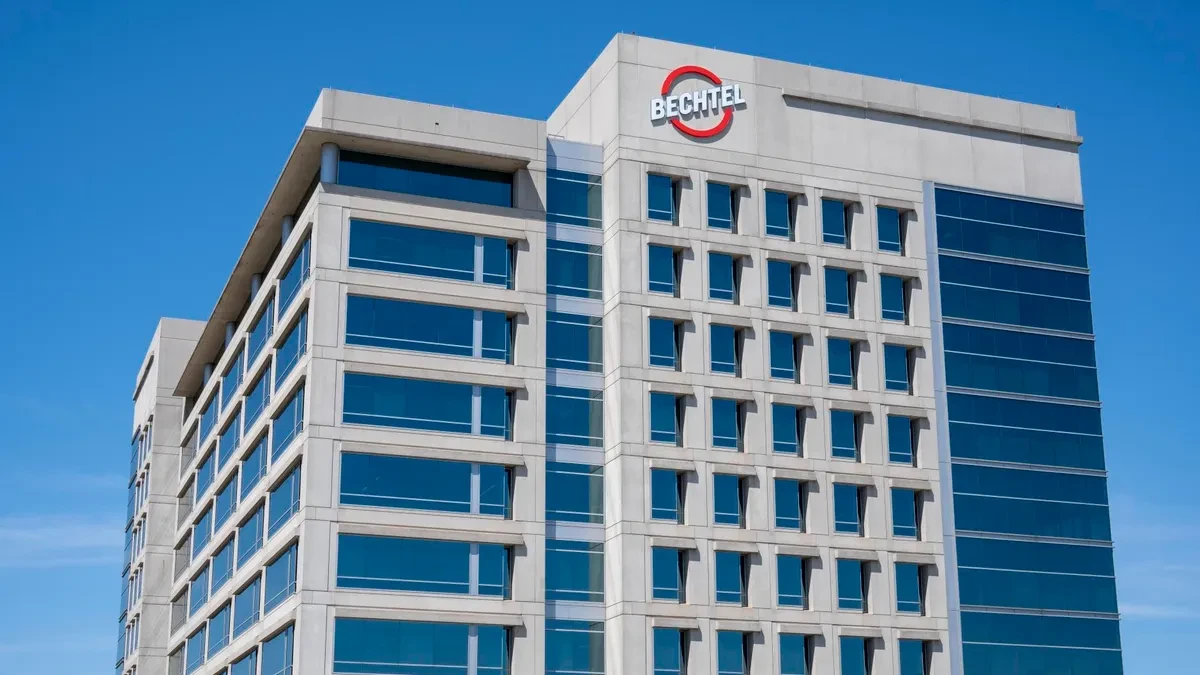
RESTON, Va. — Engineering and construction giant Bechtel has filed a Worker Adjustment and Retraining Notification (WARN) notice with the state of Virginia, indicating that approximately 200 employees at its headquarters in Reston could be impacted by upcoming organizational adjustments. However, despite the formal filing, company representatives emphasize that actual layoffs are expected to be minimal, as the firm plans to absorb and redeploy the majority of the affected workforce into its booming global nuclear energy portfolio.
The notification, filed in mid-September 2026, focuses on corporate and engineering personnel based out of Bechtel’s expanded offices in Democracy Tower in Reston—a space the company subleased earlier this year to accommodate its growing operations. While WARN notices are legally mandated to warn workers and local authorities of potential large-scale employment changes, Bechtel’s leadership has moved quickly to reassure staff and industry observers that the move is part of a shifting allocation of human resources rather than a contraction of business.
With global demand for advanced nuclear energy, sustainable infrastructure, and next-generation power generation reaching record highs, Bechtel is pivoting its talent pool to match active megaprojects spanning domestic and international markets.
Main Facts
- The WARN Notice: Filed in September 2026, the notice impacts roughly 200 workers stationed at Bechtel’s corporate headquarters in Reston, Virginia.
- The Silver Lining: Bechtel has stated that due to robust demand across its global nuclear construction portfolio, it anticipates very few, if any, ultimate job losses, aiming instead to redeploy impacted personnel.
- Core Drivers: The restructuring coincides with ongoing execution phases of high-profile initiatives, including the revolutionary Natrium Demonstration Project—backed by Microsoft founder Bill Gates’s TerraPower—alongside multi-billion-dollar domestic and international nuclear undertakings.
- Corporate Footprint: The affected employees work out of Bechtel’s newly expanded headquarters in Reston, a facility the firm secured via a strategic sublease earlier in 2026.
Chronology: From Nuclear Renaissance to Workforce Shifts
To understand the context behind Bechtel’s recent WARN filing, it is helpful to trace the rapid evolution of the company’s nuclear infrastructure portfolio over the past several years:
2023: A Historic Milestone
Bechtel cemented its reputation as a leader in modern nuclear construction by completing Vogtle Unit 3 in Georgia. This marked a monumental achievement for the U.S. energy sector, representing the first newly constructed atomic power unit built in the country in more than three decades.
2024: Breaking Ground on Advanced Nuclear
Building on its momentum, Bechtel officially broke ground on the Natrium Demonstration Project in Kemmerer, Wyoming. Developed in partnership with TerraPower—the advanced nuclear company chaired by billionaire tech pioneer Bill Gates—the project represents a massive leap forward in nuclear engineering. Unlike traditional pressurized water reactors, the Natrium plant utilizes liquid sodium as a coolant, allowing for higher operating temperatures, lower pressure systems, and enhanced safety profiles.
2025: Expanding the Domestic Portfolio
Bechtel’s dominance in the energy sector was further solidified when the company secured the contract for the $5.4 billion Clinch River nuclear site in Oak Ridge, Tennessee, in partnership with the Tennessee Valley Authority (TVA). This project underscored Bechtel’s capacity to handle complex, high-stakes federal and commercial nuclear contracts simultaneously.
2026: Execution, Subleases, and WARN Notices
- Early 2026: Bechtel expanded its physical footprint by taking on a new sublease for office space in Democracy Tower, Reston, Virginia, to house its expanding corporate and engineering teams.
- Throughout 2026: Construction officially kicked off on Unit 1 of the Natrium reactor project. Meanwhile, TerraPower continued to bolster its supply chain, awarding 12 new vendor contracts on August 31 to accelerate construction timelines.
- May 2026: Demonstrating a long-term commitment to workforce development, Bechtel signed a memorandum of understanding with the North American Building Trades Unions (NABTU) to modernize specialized apprenticeship programs tailored specifically for nuclear construction.
- Mid-September 2026: Bechtel filed a routine WARN notice with the state of Virginia affecting roughly 200 workers at its Reston headquarters, immediately followed by assurances that the firm’s overarching strategy relies on internal redeployment.
Supporting Data & Project Pipeline
The temporary adjustments at Bechtel’s Reston headquarters occur against a backdrop of historic capital expenditure in nuclear and clean energy infrastructure. Rather than signaling a slowdown, the restructuring reflects a reallocation of assets toward active, ground-level construction sites where engineering talent is urgently required.
Bechtel’s current active nuclear roster includes several massive undertakings:
-
The Natrium Demonstration Project (Kemmerer, Wyoming):
- Partner: TerraPower (founded by Bill Gates).
- Technology: Sodium-cooled fast reactor paired with a molten salt energy storage system.
- Status: Ground broken in 2024; Unit 1 construction underway in 2026, supported by a recent wave of 12 new supply chain vendor contracts awarded in late August.
-
The Clinch River Nuclear Site (Oak Ridge, Tennessee):
- Value: $5.4 billion.
- Client: Tennessee Valley Authority (TVA).
- Status: Awarded to Bechtel in 2025, serving as a cornerstone for America’s small modular reactor (SMR) and advanced nuclear deployment strategy.
-
The AP1000 Nuclear Power Plant (Poland):

- Scope: International deployment of Westinghouse’s advanced AP1000 pressurized water reactor technology.
- Status: Active engineering and construction management phases, highlighting Bechtel’s footprint in European energy security and decarbonization efforts.
-
Workforce Development Partnerships:
- NABTU Agreement: Signed in May 2026, this partnership addresses the nationwide deficit of skilled tradespeople by revamping apprenticeship models to supply certified labor for nuclear builds over the next decade.
Official Responses
Company leadership has maintained a transparent and proactive stance following the mandatory filing of the state paperwork.
Molly Edwards, head of global media relations for Bechtel, addressed the situation directly in an email statement to industry publication Construction Dive. She made it clear that the WARN notice is a legal formality driven by internal portfolio shifts rather than a reflection of diminishing workloads.
"Given the significant work underway across our company and the depth of expertise these employees bring, we anticipate redeploying many of them to projects where their skills are needed most, including the nuclear facilities we are building globally," Edwards stated.
Edwards reiterated that Bechtel’s overarching talent retention strategy prioritizes moving specialized engineers and project managers straight from corporate desks to active field operations and global project offices. Because of the vast scope of projects like Clinch River, the Natrium plant, and international ventures in Europe, the firm expects actual layoffs to remain remarkably low.
Implications for the Construction and Energy Sectors
The situation at Bechtel’s Reston headquarters shines a light on broader structural shifts occurring within the engineering, procurement, and construction (EPC) industry, particularly within the specialized niche of nuclear energy.

1. The Engineering-to-Field Pipeline
As massive nuclear projects transition from early-stage conceptual engineering and regulatory filing phases into active, physical construction (such as the ongoing work at Kemmerer and Oak Ridge), the demand profile for human capital changes. Companies often find themselves needing fewer preliminary design planners in corporate offices and a surge of field engineers, project controls specialists, and safety directors on-site. Bechtel’s ability to pivot its Reston staff into global nuclear projects demonstrates a mature, agile approach to workforce management.
2. The Nuclear Renaissance Boom
The resurgence of nuclear energy as a reliable, zero-carbon baseload power source has transformed companies like Bechtel into critical players in national security and environmental policy. With tech giants like Microsoft (via Bill Gates’s involvement with TerraPower) heavily investing in advanced nuclear solutions to power artificial intelligence data centers and modern grids, the sector is insulated from the typical macroeconomic downturns that affect commercial real estate or traditional office construction.
3. Regulatory Realities vs. Corporate Reality
The mandatory filing of a WARN notice often triggers public anxiety and media speculation about corporate health. However, in heavy civil and industrial engineering, these notices frequently serve as administrative checkpoints when shifting resources between major contract cycles. For Bechtel, the transparency of the WARN filing paired with immediate guarantees of internal redeployment serves as a case study in how major contractors are managing specialized labor during a period of unprecedented project expansion.
As construction on Unit 1 of the Natrium reactor advances and international contracts progress, Bechtel’s 200 Reston-based employees are expected to find themselves absorbed into the very frontline of the global energy transition—proving that while corporate offices may adjust their headcounts, the appetite for nuclear engineering talent has never been stronger.
