Published by ArchDaily Topic:The Lure of Escapism in Architecture and Alternative Worlds
Main Facts
Every evening, billions of people across the globe engage in a silent, overlooked ritual: arriving at a threshold, unlocking a door, and stepping out of the public sphere into a private interior. While modern psychology and anthropology have dedicated entire volumes to the structure of spatial transition, visual media—most notably the hand-drawn, deeply atmospheric animated worlds of Studio Ghibli—captures this psychological dynamic with unmatched precision.
Through meticulous attention to architectural layouts, floor plans, and spatial transitions, the films of Hayao Miyazaki and his peers provide an architectural escape. They tap into collective memories and human psychology, rendering physical spaces as enchanted yet entirely legible sanctuaries.
This architectural phenomenon reflects philosophical concepts famously mapped out by thinkers like Gaston Bachelard and Juhani Pallasmaa. In works such as My Neighbor Totoro, Spirited Away, and Howl’s Moving Castle, the built environment is never a neutral backdrop. Instead, buildings, thresholds, and rooms serve as active characters, emotional canvases, and psychological portals that mirror the profound human need for sanctuary, memory, and the sacred ordinary.
Chronology: The Evolution of Domestic Space in Philosophy and Animation
To understand how Studio Ghibli’s architecture resonates so deeply with contemporary viewers, one must trace the convergence of architectural phenomenology and cinematic world-building over the past century.
1909–1950s (The Birth of Spatial Phenomenology): Anthropologist Arnold van Gennep formalizes the concept of rites of passage in his foundational 1909 text, breaking transitions down into three distinct phases: separation, liminality (the threshold), and incorporation. Decades later, philosopher Gaston Bachelard introduces topoanalysis in his 1958 masterwork, The Poetics of Space. Bachelard posits that our childhood homes, attics, stairs, and corners are physically inscribed into our neurological and bodily memories, creating "felicitous spaces" that we spend the rest of our lives trying to subconsciously recover.
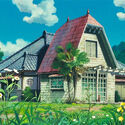
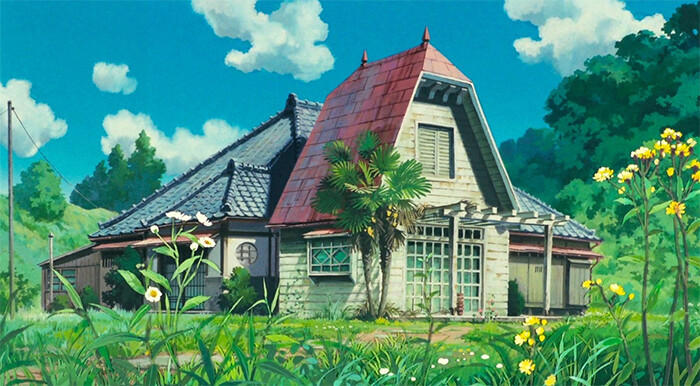
1988 (The Architectural Awakening of Totoro): Studio Ghibli releases My Neighbor Totoro, directed by Hayao Miyazaki. The film introduces modern audiences to a rural Shōwa-era Japanese farmhouse that is "pre-inhabited" by soot sprites (susuwatari), vividly visualizing Bachelard’s premise that a house is never truly empty, but rather pregnant with human expectation and imagination.
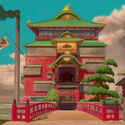
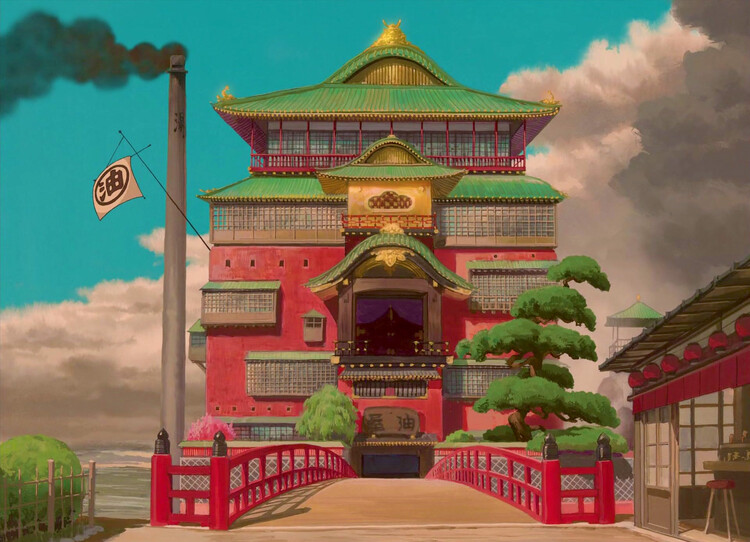
2001–2004 (Cinematic Liminality): The release of Spirited Away (2001) and Howl’s Moving Castle (2004) expands Ghibli’s exploration of architecture into structural metaphors. Chihiro’s journey across a bridge into a spirit-world bathhouse and Sophie’s navigation of a shifting, mechanical castle operationalize Arnold van Gennep’s rites of passage, placing characters in prolonged states of liminality.
Late 20th to Early 21st Century (The Modern Crisis of Space): As urban densities skyrocket and architectural trends shift toward open-plan monospaces, hybrid work models, and hyper-curated social media interiors, the distinct psychological boundary between the outside world and the home begins to dissolve.
Present Day (Ghibli Park and Architectural Nostalgia): The physical realization of Ghibli’s cinematic spaces at Ghibli Park in Japan brings these animated structures into physical reality, solidifying the studio’s legacy not just in film history, but in the annals of architectural design and environmental psychology.
Supporting Data & Architectural Analysis: The Anatomy of a Ghibli Interior
The architectural resonance of Studio Ghibli films is rooted in their rejection of sterile, minimalist, or purely functional modern spaces. Instead, Ghibli designs spaces that are tactile, cluttered with memory, and responsive to the emotional states of their inhabitants.
1. The Threshold as a Portal
In traditional architecture, thresholds dictate the psychological shift from the profane to the sacred. In Japan, this is historically exemplified by the Shinto torii gate, which visually announces that the space beyond demands a different mode of being. Ghibli films translate this domestic ritual into narrative turning points:
In Spirited Away, the bridge leading to the bathhouse is a classic liminal zone. Crossing it requires holding one’s breath—a literal suspension of identity and physical presence while moving between worlds.
In daily life, the routine of stepping over a threshold, removing shoes (genkan), and setting down a bag functions as a micro-rite of separation and incorporation, allowing the occupant to shed the armor of the professional world.
2. The Lived-In Environment vs. The "Superimposed Box"
Gaston Bachelard famously lamented in 1958 that the modern city was killing the concept of the home, replacing houses with "superimposed boxes." Contemporary living spaces—increasingly dictated by open-plan layouts and optimized for digital aesthetics—often fail to offer psychological sanctuary.
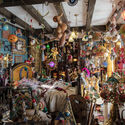
By contrast, Ghibli interiors are defined by accumulation. Howl’s bedroom is crammed with talismans, dust, fabrics, and magical trinkets, mirroring an internal psyche that is chaotic, brilliant, and deeply vulnerable. When Sophie cleans the castle, her labor is an act of psychological integration; cleaning the space heals both the physical structure and the fractured identity of its master.
3. Architecture of Stillness (Mono no Aware)
As cultural scholar Susan Napier notes in her analysis Miyazakiworld: A Life in Art, Ghibli films frequently employ extended sequences of profound stillness.
A four-minute silent shot of Chihiro sitting quietly on a train crossing a watery expanse.
A full-minute shot of Sophie gazing into a hearth fire, illuminated by the flickering architectural details of a rustic stone fireplace.
These moments embody the Japanese aesthetic concept of mono no aware—a gentle, poignant awareness of the transience of ordinary moments. In a productivity-obsessed society that devalues downtime, Ghibli’s architectural pauses offer viewers a vicarious escape into environments designed for contemplation rather than efficiency.
Official Responses and Expert Perspectives
Architectural theorists, cultural critics, and urban planners have increasingly turned to animation to critique contemporary spatial design.
Juhani Pallasmaa on Lived Space:
Pallasmaa’s phenomenological approach to architecture heavily aligns with the spatial philosophies embedded in Ghibli films. As Pallasmaa famously noted:
"Architectural constructions are built in the world of matter and Euclidean geometry, but lived space always transcends the rules of physics and geometry."
Cultural analysts point out that Ghibli’s enduring appeal lies in its ability to materialize this exact sentiment. While corporate architecture and modern real estate markets prioritize square footage, material efficiency, and marketability, Ghibli prioritizes atmosphere—the tactile grain of weathered wood, the slant of afternoon light through a multi-paned window, and the comforting clutter of a lived-in kitchen.
Curators at Ghibli Park:
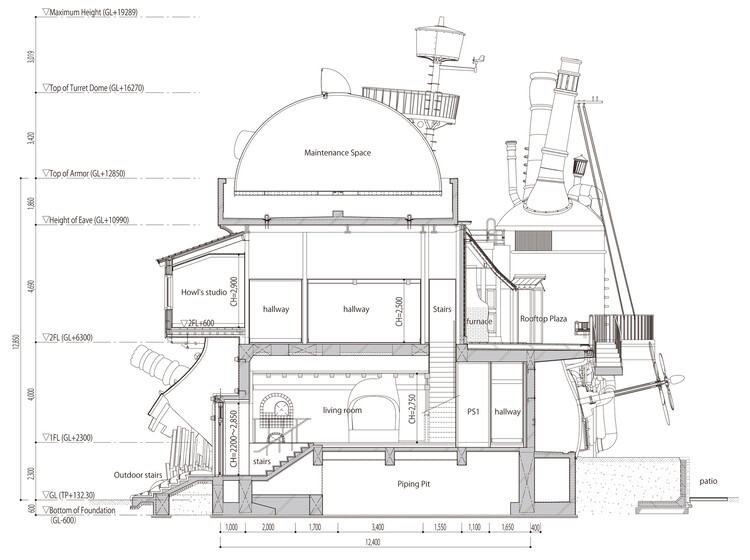
When designing the physical manifestations of these animated worlds at Ghibli Park in Aichi Prefecture, Japan, landscape and architectural planners (including firms like Nihon Sekkei) faced a unique challenge: translating two-dimensional drawings into three-dimensional realities without losing their psychological warmth.
Park representatives noted that visitors do not just look at the exhibits; they interact with them physically, opening drawers, touching books, and stepping across thresholds. This tactile interaction confirms that the public’s hunger for these spaces is fundamentally physical, requiring tangible environments that honor the ritual of coming home.
Implications for Modern Architecture and Urban Design
The cultural obsession with Studio Ghibli’s architecture is not mere nostalgia; it serves as a damning critique of modern urban design and a roadmap for future architectural interventions.
1. The Death of the Hybrid Boundary
As remote and hybrid work models merge the office with the living room, the psychological benefit of the daily commute and the threshold rite has been severely compromised. Architects are now challenged to design multi-family housing and urban apartments that reintroduce micro-thresholds—transitional entryways, mudrooms, and acoustic buffers—that allow residents to mentally "leave" their labor behind.
2. Designing for "Felicitous Space"
Urban developers must reconsider the rise of ultra-compact, sterile micro-units. Bachelard’s warning regarding "superimposed boxes" has never felt more urgent. Architecture must foster emotional attachment by incorporating elements that invite personalization, memory accumulation, and domestic ritual. Spaces that cannot be "loved" cannot provide psychological shelter.
3. Architecture as an Antidote to Burnout
In an era dominated by relentless productivity metrics, Ghibli’s emphasis on quiet corners, hearths, and slow transitions offers a radical architectural proposition: that buildings should be designed to slow time down. By integrating deliberate spaces for stillness—alcoves, reading nooks, and fire-centric gathering spaces—architects can build urban environments that actively heal, rather than drain, the human psyche.
Ultimately, Studio Ghibli reminds the architectural discipline of a fundamental truth: a house cannot add hours to a day, but through deliberate design, it can be built to hold the kind of stillness, safety, and sacred ordinary that makes returning home worth the journey.