

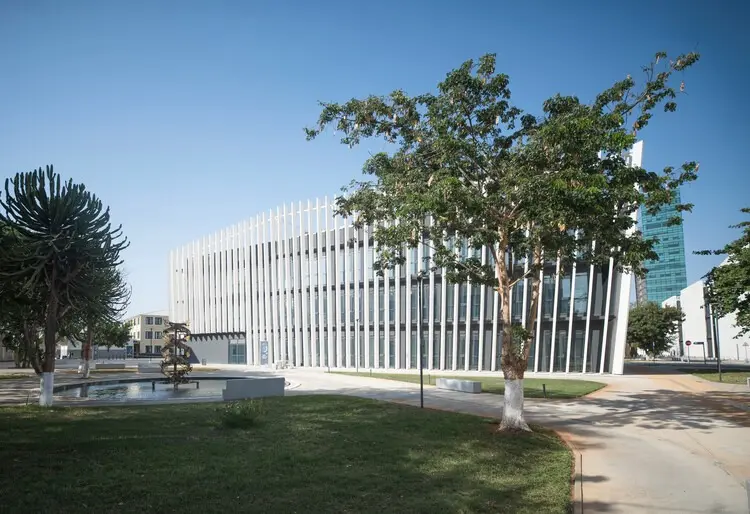
Luanda, Angola — In a landmark milestone for Southern Africa’s digital infrastructure, the newly transformed Technology Park of Luanda was officially inaugurated in June 2026. Presided over by the President of Angola alongside a high-ranking delegation of government ministers, the grand opening marks the culmination of a rigorous three-year construction and redevelopment initiative.
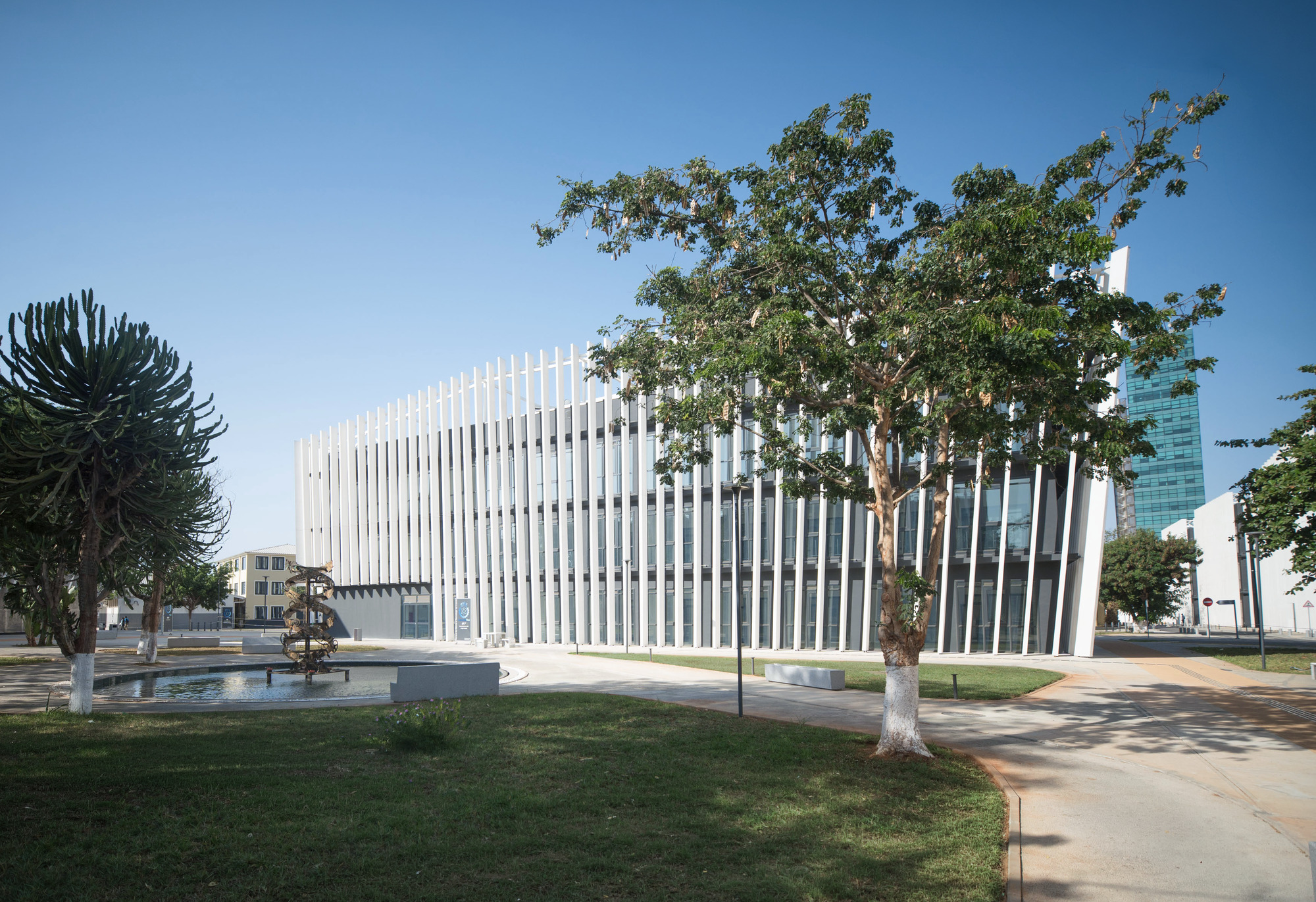
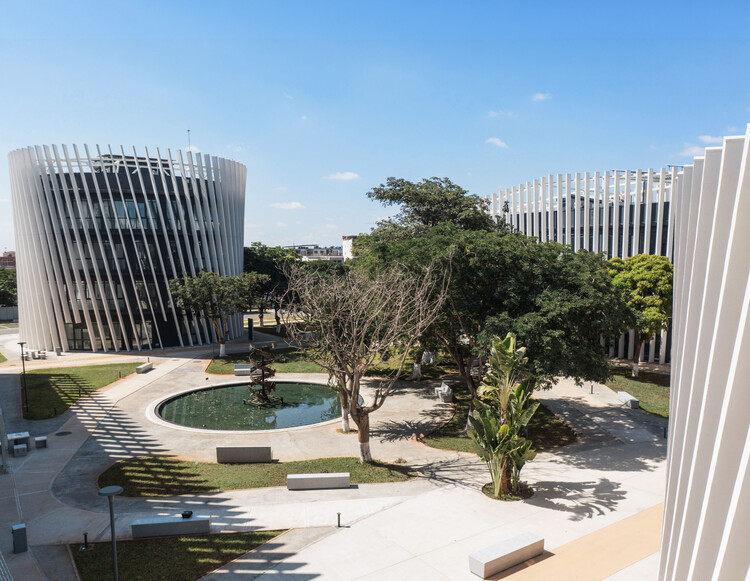
Designed by renowned international architecture and engineering firm Typsa, the project successfully revitalized an existing technological campus into a state-of-the-art epicenter for education, scientific research, and digital innovation. Captured through the striking exterior photography of Flavio Ricardo Gomes, the campus showcases a harmonious blend of striking concrete architecture and forward-thinking urban design, signaling Angola’s firm commitment to a knowledge-based economy.
Main Facts: At a Glance
- Project Name: Technology Park of Luanda
- Architectural & Engineering Firm: Typsa
- Curator: Valentina Díaz
- Inauguration Date: June 2026
- Construction Duration: 3 Years
- Core Functions: Education, scientific research, technological innovation, and startup incubation
- Key Attendees: The President of Angola and a delegation of government ministers
- Primary Visual Documentation: Flavio Ricardo Gomes
Chronology of Development: From Concept to Completion
The journey of the Technology Park of Luanda reflects a strategic national vision to transition Angola away from a purely resource-dependent economy and toward a diversified, tech-forward future.
Phase 1: Conceptualization and Master Planning (Pre-2023)
Long before ground was broken, the Angolan government, in collaboration with urban planners and international consultants, recognized the necessity of upgrading the nation’s technological capabilities. The goal was not merely to build a cluster of offices, but to create a comprehensive ecosystem where academia, private enterprise, and government initiatives could intersect. Typsa was selected to reimagine an existing, underutilized technological campus, translating modern architectural principles into an African context.
Phase 2: Construction and Structural Transformation (2023–2026)
Spanning a rigorous three-year development cycle, the construction phase faced the intricate task of upgrading legacy infrastructure while introducing contemporary, sustainable architecture. The design team utilized exposed concrete and modern spatial planning to create durable, adaptable structures capable of housing heavy server rooms, collaborative workspaces, and large-scale educational auditoriums. Despite global supply chain challenges over the years, the project remained on track, culminating in its successful delivery in early 2026.
Phase 3: The Official Inauguration (June 2026)
The ceremonial opening in June 2026 served as a national showcase. With the President of Angola and key cabinet ministers cutting the ribbon, the event underscored the government’s high-level backing of the technology sector. The inauguration transitioned the park from a construction site into a fully operational engine for national development.
Architectural Excellence and Supporting Data
Designed by Typsa, the Technology Park of Luanda stands as a testament to modern brutalist and contemporary functionalist architecture. The use of robust concrete facades provides natural thermal mass, helping to regulate interior temperatures in Luanda’s tropical climate, while expansive windows and shaded outdoor corridors encourage a seamless flow between indoor research facilities and outdoor communal spaces.
- Campus Scale: The campus integrates multiple specialized buildings designed to host research laboratories, data centers, administrative offices, and incubator spaces for tech startups.
- Materiality: Dominated by high-grade architectural concrete, the structures are engineered for longevity, low maintenance, and acoustic privacy within high-traffic innovation zones.
- Accessibility and Layout: The master plan prioritizes pedestrian mobility, featuring interconnected plazas, green zones, and barrier-free pathways that connect educational facilities with administrative blocks.
Official Responses and Leadership Perspectives
The inauguration drew widespread praise from both domestic leadership and international observers, who view the park as a vital catalyst for regional technological independence.
During the opening ceremony, government officials emphasized that the facility is a cornerstone of Angola’s long-term socioeconomic strategy. Representatives from the executive branch noted that the park is designed to curb "brain drain" by providing young Angolan engineers, computer scientists, and entrepreneurs with world-class infrastructure on home soil.
Typsa’s architectural team echoed these sentiments, highlighting the collaborative nature of the project. In statements provided alongside the architectural curation by Valentina Díaz, the designers underscored the importance of creating flexible spaces capable of adapting to the rapid, unpredictable evolution of the tech industry. By designing modular interiors and future-proof digital backbones, the architects ensured that the facility will remain relevant for decades to come.
Implications for Angola and the Regional Tech Ecosystem
The opening of the Technology Park of Luanda carries profound implications for the domestic labor market, foreign investment, and technological sovereignty in Central and Southern Africa.
1. Fostering Local Innovation and Startups
For years, promising tech startups in Angola often struggled to find adequate physical infrastructure, high-speed connectivity, and venture capital proximity. The Technology Park directly addresses this bottleneck by offering dedicated incubation hubs, mentorship programs, and shared resources. This environment lowers the barrier to entry for local entrepreneurs, enabling homegrown solutions to address local challenges in fintech, agriculture, logistics, and healthcare.

2. Strengthening Academia-Industry Partnerships
A critical failure point in many developing tech ecosystems is the disconnect between university curricula and marketplace realities. By co-locating research facilities, educational institutions, and corporate offices within the same campus, the Luanda Technology Park bridges this gap. Students can transition seamlessly from theoretical studies to practical internships and collaborative research projects with industry leaders.
3. Attracting Foreign Direct Investment (FDI)
By establishing a secure, technologically advanced, and architecturally impressive hub, Angola is signaling to multinational technology firms that it is open for business. The park provides a standardized, reliable environment for international companies looking to establish regional headquarters or African R&D centers, thereby integrating Angola more deeply into the global digital economy.
4. A Blueprint for Sustainable Urban Infrastructure
Beyond its technological ambitions, the park serves as an architectural precedent for future public works in the region. Typsa’s integration of climate-responsive design elements demonstrates that modern African infrastructure can successfully marry aesthetic sophistication with environmental pragmatism.
Conclusion
As the Technology Park of Luanda begins its operational life, it stands as more than just a collection of striking concrete buildings captured through the lens of architectural photography. It represents a bold declaration of intent by Angola—a physical manifestation of a nation stepping confidently into the digital age. With robust government backing, world-class architectural design, and a clear mandate to foster education and innovation, the park is poised to become the beating heart of technological advancement in the region for generations to come.
